Genesis 8
Luda yã takada kũ Bisã yão · Tap a verse to see its cross-references.
Í gona anduniala
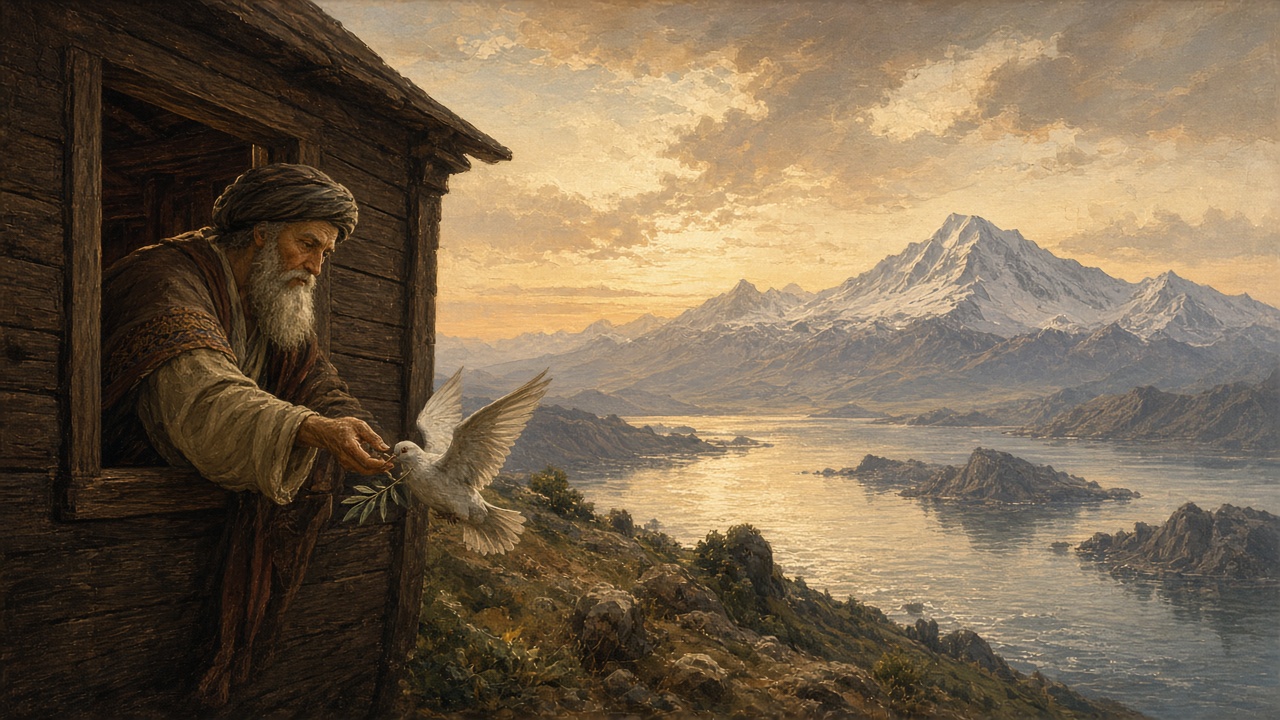
1Nuhu kũ nↄ̀bↄsɛ̃ntɛnↄ kũ bɛ pↄ́kãde kũ ò kú kãao gó gũnnↄ pínki yã dↄ̀ Ludan. Kũ à ĩa gbàrɛ zĩtɛa, akũ í nà babanaaa. 2Í kũ ò kú zĩtɛ gbárunↄ kũ ludambɛ guforonↄ tàta, akũ legũ kɛ̃̀. 3Í pì tɛn baba busɛbusɛ àtɛn lago ari gↄrↄ basuppla akuri. 4A mↄ supplade gↄrↄ gɛ̃ro awɛɛplade zĩ gó pìi dì kpi kũ òdi pi Ararataa. 5Í pì tɛn lago ari mↄ kuride gũn. Mↄ kuride pì gↄrↄ káaku zĩ kpinↄ mìsↄ̃ntɛnↄ bòbo.
6Gↄrↄ bupla gbɛra Nuhu gó wondo kũ à bòn yã wɛ̃̀, 7akũ à kãakãanna gbàrɛ. Àtɛn vura àtɛn gɛ́ àtɛn su ari í bàba zĩtɛa. 8À potɛ̃nɛ gbàrɛ dↄ de à le à dↄ̃ tó í làgo zĩtɛa. 9Kũ potɛ̃nɛ dí diki lero, akũ a ɛ̀ra à sù Nuhu kĩnaa gó gũn, zaakũ í da anduniala pínkimɛ. Nuhu ↄ bò à a kũ̀ à gɛ̃̀o gó gũn. 10À kámma bò ari gↄrↄ suppla, akũ à ɛ̀ra à potɛ̃nɛ gbàrɛ dↄ. 11Potɛ̃nɛ pìi ɛ̀ra à sù à kĩnaa ↄkↄsi à kù lá kɛ̃̀ à kpá a lɛ́i. Akũ Nuhu dↄ̃ kũ í làgo zĩtɛa. 12À kámma bò gↄrↄ suppla dↄ, akũ à ɛ̀ra à potɛ̃nɛ pìi gbàrɛ, adi ɛra à sù a kĩnaa doro. 13Nuhu wɛ̃̀ wàa aakↄ̃ awɛɛdode gũn a mↄ káaku gↄrↄ káaku zĩ, í bàba zĩtɛa, akũ à gó pìi musu gò. Kũ à gu gwà, à è í làka zĩtɛa. 14A mↄ plade gↄrↄ baraasↄↄro awɛɛplade zĩ í bàba zĩtɛa.
15Akũ Luda yã ò Nuhunɛ à pì: 16Ǹ bo gó gũn kũ n nanↄo kũ n nɛ́gↄ̃gbɛ̃nↄ kũ ń nↄnↄo. 17Ǹ pↄ́ wɛ̃̀ndide kũ ò kú kũnwonↄ bↄtɛ pínki, bãnↄ kũ nↄ̀bↄnↄ kũ pↄ́ kũ òdi táa o kũ kùaonↄ pínki, de ò fãkↄ̃a zĩtɛ ògↄ̃ nɛ́ i ògↄ̃ kara andunia gũn. 18Akũ Nuhu bò kũ a nɛ́nↄ kũ a nanↄo kũ a nɛ́ pìnↄ nↄnↄo. 19Nↄ̀bↄnↄ pínki kũ pↄ́ kũ òdi táa o kũ kùaonↄ pínki kũ bãnↄ pínki kũ pↄ́ kũ òdi táa o zĩtɛnↄ pínki bↄ̀tɛ gó gũn buri kũ burio.
20Akũ Nuhu Dikiri gbagbaki bò. À nↄ̀bↄ kũ bã kũ òdi sa oonↄ kũ̀, akũ à sa'opↄ kũ òdi ká tɛ́n à tɛ́ kũ òa. 21Kũ Dikiri a gbĩ mà, à kɛ̀nɛ nna, akũ à laasun lɛ̀ à pì: Mani ɛra mà láari bo zĩtɛa bisãsiri yãi doro, zaakũ bisãsiri laasun dìgↄ̃ vãni zaa a kɛfɛnnakɛgↄrↄamɛ. Mani ɛra mà pↄ́ wɛ̃̀ndidenↄ kakatɛ lákũ ma kɛ̀ nà doro. 22Ari andunia gɛ́ àgↄ̃ kunwo pↄ́tↄ̃na kũ pↄ́kɛkɛnaao, ĩa kũ guwãnao, bunsirɛ kũ sakareo, fãnantɛ̃ kũ gwãanio, ń ke ni lákaro.
Did you know?
The Waters Recede
- The ark came to rest on the mountains of Ararat, a name meaning “sacred land” or “high land” for a country on whose mountains the ark settled after the flood. Easton's Bible Dictionary (1897) suggests those mountains were probably the Kurdish range of southern Armenia, though the name is also commonly applied to a high, almost inaccessible peak rising from the plain of the Araxes. In 2 Kings 19:37 and Isaiah 37:38 the Authorized Version renders the name “Armenia” and the Revised Version “land of Ararat,” while Jeremiah 51:27 uses it for central or southern Armenia.Sources: Ararat · the Bible text itself
- Noah’s Hebrew name means “rest,” and in this chapter the ark itself comes to rest as the waters go down. He was the son of Lamech and the grandson of Methuselah, and the father of Shem, Ham, and Japheth. Easton's Bible Dictionary describes him as the connecting link between the old world and the new, and as a second great progenitor of the human family.Sources: Noah · the Bible text itself
- Chronological notes place the Great Flood in 2347 BC, lasting one year; the subsiding of the waters in 2346 BC, over 220 days; and the leaving of the ark in 2346 BC, as a single day. In the chapter itself, the waters have gone down after 150 days and the ark rests on the seventeenth day of the seventh month; on the first day of the first month of Noah’s six hundred and first year the waters have dried up, and by the twenty-seventh day of the second month the earth is fully dry.Sources: The Great Flood · The flood subsides · Leaving the Ark · the Bible text itself
Notes written with AI assistance from open sources (Theographic Bible Metadata, CC BY-SA 4.0; Easton’s Bible Dictionary, public domain) and reviewed before publishing.
Places in this chapter
- Ararat · Today: Urartu · 39.703, 44.300 · verse 4
Only places identified with high confidence are shown (90% or more according to the scholarly sources compiled by OpenBible). Period map: DARE (Digital Atlas of the Roman Empire), CC BY 4.0; modern map: © OpenStreetMap contributors; places: OpenBible.info (CC BY 4.0).
Credits and license for this translation
Luda yã takada kũ Bisã yão
Portions of the Holy Bible in the Busa language of Nigeria
copyright © 2005 SIM International
Language: Bisã (Busa)
Translation by: SIM
This translation text is made available to you under the
terms of the Creative Commons License: Attribution-Noncommercial-No Derivative Works.
( http://creativecommons.org/licenses/by-nc-nd/3.0/ )
In addition, you have permission to port the text to different file formats, as long as you
do not change any of the text or punctuation of the Bible.
You may share, copy, distribute, transmit, and extract portions
or quotations from this work, provided that you include the above copyright
information:
You must give Attribution to the work.
You do not sell this work for a profit.
You do not make any derivative works that change any of the actual words or punctuation of the Scriptures.
Permissions beyond the scope of this license may be
available if you contact
us with your request.
This translation is made available to you under the terms of the
Creative Commons Attribution-Noncommercial-No Derivatives license 4.0.
You may share and redistribute this Bible translation or extracts from it in any format, provided that:
You include the above copyright and source information.
You do not sell this work for a profit.
You do not change any of the words or punctuation of the Scriptures.
Pictures included with Scriptures and other documents on this site are licensed just for use with those Scriptures and documents.
For other uses, please contact the respective copyright owners.
2014-10-10
Source: http://ebible.org/bqp/ · eBible.org