Genesis 10
Luda yã takada kũ Bisã yão · Tap a verse to see its cross-references.
Nuhu burinↄ
1Nuhu nɛ́gↄ̃gbɛ̃nↄ Sɛmu kũ Hamuo kũ Yafɛtio kũ ń nɛ́gↄ̃gbɛ̃ kũ ò ì í dana anduniala gbɛranↄ yãn dí. 2Yafɛti nɛ́gↄ̃gbɛ̃nↄ tↄ́n dí: Goma, Magↄgu, Midiã, Girisi, Tubala, Mɛsɛki kũ Tirasao. 3Goma nɛ́gↄ̃gbɛ̃nↄ tↄ́n dí: Asakɛnaza, Rifa, Tↄgama. 4Girisi nɛ́gↄ̃gbɛ̃nↄ tↄ́n dí: Ɛlisa, Tasisi, Sipiru, Rodanimu. 5Buri pìnↄ mɛ́ ò dàgula ísira gɛrɛɛi, ò kↄ̃ kpàatɛtɛ bùsu kũ bùsuuo buri kũ burio danɛdanɛ, baadi kũ a buriyão.
6Hamu nɛ́gↄ̃gbɛ̃nↄ tↄ́n dí: Etiopia, Misila, Libia kũ Kanaao. 7Etiopia nɛ́gↄ̃gbɛ̃nↄ tↄ́n dí: Sɛba, Avila, Sabata, Raama kũ Sabatɛkao. Raama nɛ́gↄ̃gbɛ̃nↄmɛ Seba kũ Dedão ũ. 8Nimlↄdu bi Etiopia burimɛ dↄ. Àkũmɛ andunia gbãnazↄ̃kↄ̃de tↄ́de káaku ũ. 9Tofe sàamɛ Dikiri kĩnaa. A yã mɛ́ à tò òdi pi: Lákũ Nimlↄdu de tofe sà ũ Dikiri kĩnaa nà. 10Babilↄnia bùsu kũ à kí blèa káaku wɛ́ranↄmɛ Babɛli kũ Ɛrɛkio kũ Akadao kũ Kalanɛo ũ. 11Bona gwe à gɛ̀ɛ Asiria bùsun, akũ à Ninɛva kàtɛ kũ Reobo'irio kũ Kalao 12kũ Rɛsɛ̃ kũ à kú Ninɛva dagura kũ Kalao. Ninɛvamɛ wɛ́ra zↄ̃kↄ̃ ũ.
13Misila burinↄn dí: Ludunↄ, Anamunↄ, Lɛabanↄ, Nafatunↄ, 14Patarusinↄ, Kasalunↄ kũ Kɛrɛti kũ Filisitininↄ bò ń gũnnↄo.
15Kanaa daudu Sidↄ̃ burinↄn dí: Itinↄ, 16Yebusinↄ, Amↄrinↄ, Gigasinↄ, 17Ivinↄ, Akinↄ, Sininↄ, 18Avadanↄ, Zɛmarinↄ kũ Amatanↄo. Kanaa pìnↄ dàgula kpɛkpɛ. 19Ń bùsu lɛ́zɛkin dí. Bona zaa Sidↄ̃ gɛna Gera kũ à kú Gaza sarɛ ari Sↄdↄmu kũ Gↄmↄrao kũ Adamao kũ Zeboimu kũ à kú Lasa sarɛo. 20Hamu nɛ́gↄ̃gbɛ̃nↄn gwe buri kũ burio bùsu kũ bùsuuo danɛdanɛ, baadi kũ a buriyão.
21Yafɛti dakũna Sɛmu buri kɛ̀ dↄ. Àkũmɛ Eberunↄ dizi káaku ũ. 22Sɛmu nɛ́gↄ̃gbɛ̃nↄ tↄ́n dí: Elamu, Asiria, Apasada, Ludu kũ Aramuo. 23Aramu nɛ́gↄ̃gbɛ̃nↄ tↄ́n dí: Uzu, Hulu, Geta kũ Mɛsɛkio. 24Apasada mɛ́ à Sela ì, akũ Sela Eberu ì. 25Eberu nɛ́gↄ̃gbɛ̃nↄ ì gbɛ̃nↄn pla. A do tↄ́n Pɛlɛgi, zaakũ a gↄrↄn ò kɛ̃̀kↄ̃a andunia gũn. A dakũna tↄ́n Yↄkↄtã. 26Yↄkↄtã nɛ́gↄ̃gbɛ̃nↄ tↄ́n dí: Alamↄdada, Sɛlɛfi, Azamavɛ, Yera, 27Adoramu, Uzala, Dikala, 28Obala, Abimaɛli, Seba, 29Ofi, Avila kũ Yobabuo. Yↄkↄtã nɛ́gↄ̃gbɛ̃nↄn gwe pínki. 30Bona Mɛsa gɛna Sefa kũ kpi kũ ò kú ifãboki kpanↄ, àkũmɛ ń bùsu ũ. 31Sɛmu nɛ́gↄ̃gbɛ̃nↄn gwe pínki buri kũ burio bùsu kũ bùsuuo danɛdanɛ, baadi kũ a buriyão.
32Nuhu nɛ́gↄ̃gbɛ̃nↄ burinↄn gwe danɛdanɛ bùsu kũ bùsuuo. Ń kĩnaan andunia buri sĩnda pínki bòn ò dàgula í dana anduniala gbɛra.
Did you know?
The Nations after the Flood
- Genesis 10 follows the families of Noah’s three sons, Shem, Ham, and Japheth, and says that after the flood the nations of the earth spread out from them, grouped by clans, languages, lands, and nations. Japheth’s line is linked with peoples of eastern Europe and northern Asia: Gomer is generally regarded as an ancestor of the Celts and the Cimmerians, who in early times settled north of the Black Sea, and Javan became the Hebrew name that the peoples of the East used for the Greeks, especially those of Ionia.Sources: the Bible text itself · Japheth · Gomer (son of Japheth) · Javan
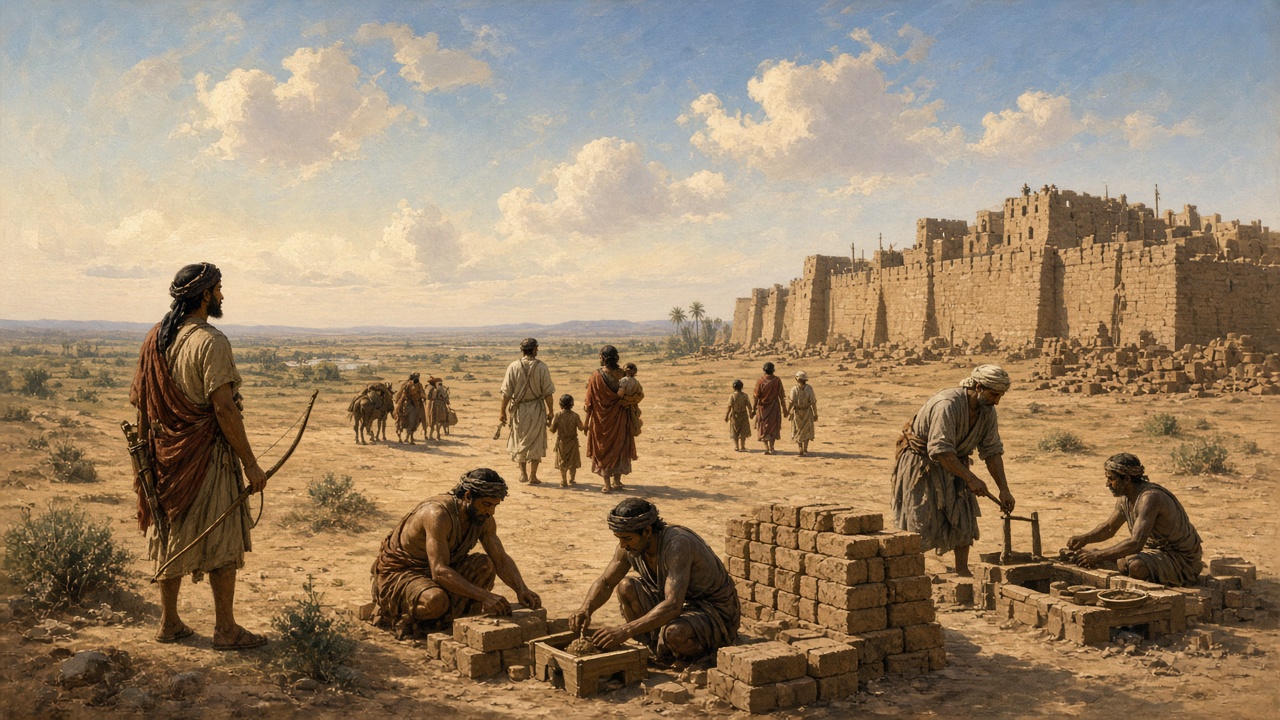
- Cush, a son of Ham, was the father of Nimrod, remembered as a mighty hunter before the Lord, whose kingdom began at Babylon, Erech, Accad, and Calneh in the land of Shinar, probably Babylonia or southern Mesopotamia. From that land he went into Assyria and built Nineveh, Rehoboth-Ir, Calah, and Resen; Calah’s site is probably the Nimrud ruins on the left bank of the Tigris.Sources: the Bible text itself · Shinar · Nineveh · Calah
- Mizraim, the dual form of a Hebrew word for a mound or fortress, may point to Upper and Lower Egypt and is the name the Hebrews usually gave that country; Arabic still calls it Muzr. Shem is called the older brother of Japheth and the forefather of all the sons of Eber, regarded as the founder of the Hebrew people, while an Arab tradition remembers Eber’s son Joktan, Kahtan in Arabic, as the ancestor of tribes of central and southern Arabia.Sources: the Bible text itself · Mizraim · Eber (Heber) · Joktan
Notes written with AI assistance from open sources (Theographic Bible Metadata, CC BY-SA 4.0; Easton’s Bible Dictionary, public domain) and reviewed before publishing.
Places in this chapter
- Erech · Today: Uruk · 31.322, 45.636 · verse 10
- Shinar · Today: Babylonia · 32.543, 44.422 · verse 10
- Assyria · 36.359, 43.153 · verse 11
- Calah · Today: Nimrud · 36.098, 43.329 · verses 11, 12
- Nineveh · 36.359, 43.153 · verses 11, 12
- Canaan · 32.767, 35.333 · verse 19
- Gaza · Today: Tell Harube · 31.504, 34.464 · verse 19
- Sidon · Today: Sandikli archaeological site in Sidon · 33.561, 35.372 · verse 19
Only places identified with high confidence are shown (90% or more according to the scholarly sources compiled by OpenBible). Period map: DARE (Digital Atlas of the Roman Empire), CC BY 4.0; modern map: © OpenStreetMap contributors; places: OpenBible.info (CC BY 4.0).
Credits and license for this translation
Luda yã takada kũ Bisã yão
Portions of the Holy Bible in the Busa language of Nigeria
copyright © 2005 SIM International
Language: Bisã (Busa)
Translation by: SIM
This translation text is made available to you under the
terms of the Creative Commons License: Attribution-Noncommercial-No Derivative Works.
( http://creativecommons.org/licenses/by-nc-nd/3.0/ )
In addition, you have permission to port the text to different file formats, as long as you
do not change any of the text or punctuation of the Bible.
You may share, copy, distribute, transmit, and extract portions
or quotations from this work, provided that you include the above copyright
information:
You must give Attribution to the work.
You do not sell this work for a profit.
You do not make any derivative works that change any of the actual words or punctuation of the Scriptures.
Permissions beyond the scope of this license may be
available if you contact
us with your request.
This translation is made available to you under the terms of the
Creative Commons Attribution-Noncommercial-No Derivatives license 4.0.
You may share and redistribute this Bible translation or extracts from it in any format, provided that:
You include the above copyright and source information.
You do not sell this work for a profit.
You do not change any of the words or punctuation of the Scriptures.
Pictures included with Scriptures and other documents on this site are licensed just for use with those Scriptures and documents.
For other uses, please contact the respective copyright owners.
2014-10-10
Source: http://ebible.org/bqp/ · eBible.org