Genesis 47
I tnalù dwata · Tap a verse to see its cross-references.
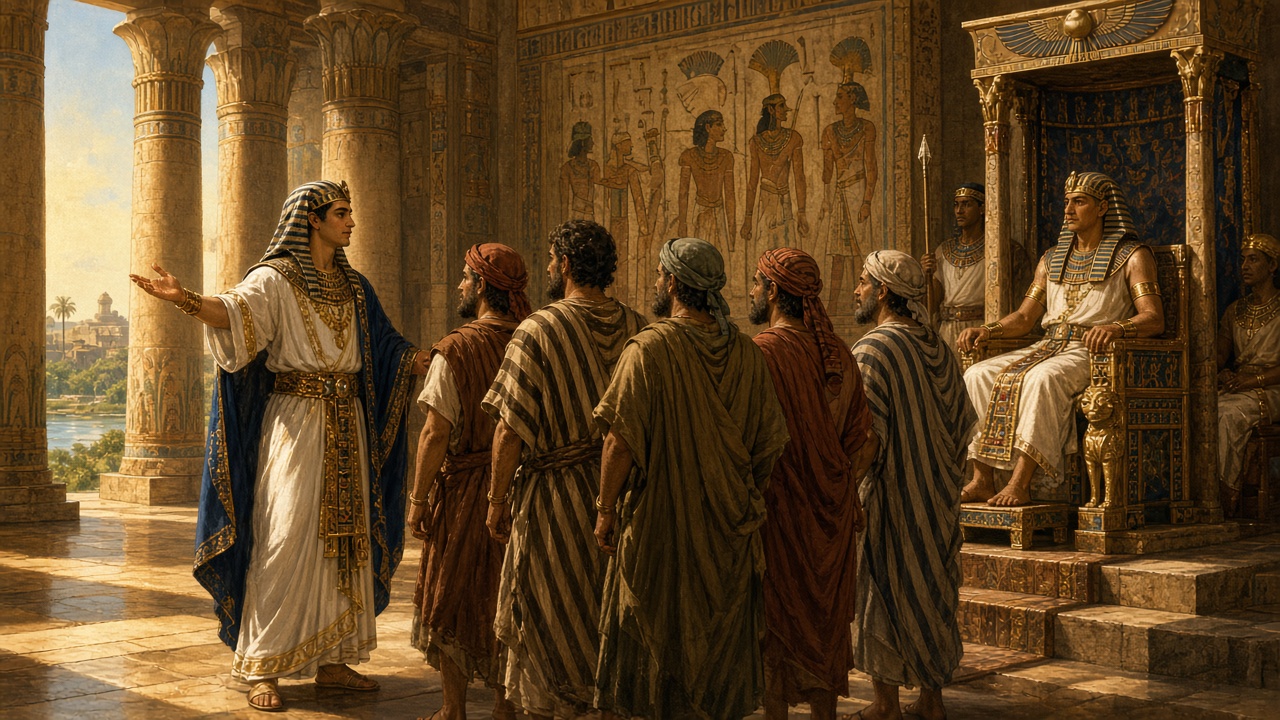
I kdasal Dyékob ku Faraon
1Kafnge én, fagin Dyosif lime di dad flanekan, na salu ale ditù di harì. Man Dyosif di kenen, “Takel nan i màgu na dad flanekgu mdà di Kanaan, gagin di dale dad bilibilila na dademe dad lmanafla na i kdee dad nfunla. Na déén ale nan di Gosén.”
Kagmanan ani, neben i dad lime flanekan di muna i harì. 3Na snalek ale Faraon, “I tan i galyu nimò?”
Na tmimel ale, “Amu, gami i dad lifanam, gal gami mifat dad bilibili, salngad i tamgimò i dad gutambulmi di muna. 4Salu gami dini du kayèmi moon flo mnè dini, du too sasè i kbitil di banwe Kanaan, du balù i dad lmanafmi landè gumtebla nan. Na taman ku beg fakay di ge, gami dad lifanam, begam gami fnè di Gosén.”
5Na man i harì di ku Dyosif, “Too fye du takel nan i maam na i dad flanekam. 6Na du ge i magot i klamang banwe Idyif, fneam ale di Gosén, du nun too fye tanà ditù. Na ku nun dad to di dale too fulung mifat dad lmanaf, fifatam ale i dad lmanafgu.”
7Kafnge én, nebe Dyosif i maan Dyékob di muna Faraon. Na dmasal Dyékob fye banlé Dwata kafye Faraon. Na di kdasal Dyékob ku Faraon, 8snalek i harì, “Man, tan i ktuam?” 9Na tmimel Dyékob, manan, “Tamlatu tlu falò i klogu lamngab di dademe banwe. Là dee i dad faligu, bay i too malima gal i gnagugu. Kabay i dad faligu là fa gasngad di kdee fali i kalngab i dad gutambulgu di muna fa.” 10Na lêman dmasal Dyékob, fye banlé Dwata kafye Faraon, na kafdu én, mdà kenen di muna i harì. 11Na fnè Dyosif i maan, na dad flanekan, di banwe Idyif. Na i tanà blén dale too fye tanà na mdadong di syudad dnagit Ramases, du kdee ani dek Faraon ku Dyosif. 12Na banlé Dyosif knaan i maan na dad flanekan, na i dad kdee dad malay i maan, gakuf i kdee dad ngàla.
Matnù ksasè i kbitil
13Na i kbitil ani too sasè, i duenan du landè kakaan i dad to, du i kdee banwe, landè là nagu i bong bitil. Taman i dad to di Idyif na Kanaan mbaling ale mlungay di kbitilla. 14Santifun Dyosif i kdee filak bayad i dad to di Idyif na Kanaan i falila, na tundan i filak ani, ditù di bong gumnè Faraon. 15Na di takti i filak i dad to di Idyif na Kanaan, salu i dad to di Idyif di ku Dyosif, na manla di kenen, “Begam gami banlé fali, du fan gami mati malnus. Tnabengam gami, du landè nan beg filakmi.”
16Na tmimel Dyosif, manan, “Ku talandè nan filakyu, nebeyu dini i dad lmanafyu, du én i bayadyu fali.” 17Taman nebela i dad lmanaf di ku Dyosif, na bnayadan fali i dad kudàla, dad bilibilila, dad kambingla, dad bakala, na i dad dongkila. I kdee dad lmanafla bléla du bayadla fali, tì salfang di fali én. 18Kabay di tmadol fali, lêman ale salu di ku Dyosif, na manla, “Amu, làmi buni dun di ge i tatoo mti nan beg i filakmi, na dad lmanafmi, du tage sa i mfun. Taman, talandè nan fakaymi blé di ge galwà alò i lawehmi na tanàmi. 19Tabyà kandom gami na tnabengam, du fan gami mati malnus, na fan malmo i tanàmi. Begam bnayad fali i lawehmi na i tanàmi. Du tatì gami nan beg flifan di harì, na kenen nan mfun i tanàmi. Banlém gami fali, du fye là gami beg mati, na léam gami banlé bnê flami, du fye i tanàmi là malmo.”
20Kafnge én, bnayad Dyosif i kdee tanà di Idyif kene harì. Kdee i dad to di Idyif bléla i tanàla, du too sasè i kbitil, taman i kdee tanà déén tanfun i harì. 21Na i dad to di klamang banwe Idyif, salig nan Dyosif di harì, du mbaling ale dad lifanan. 22Kabay i tanà nfun i dad mebe i dad to mangamfù di duh di Idyif, là bnayad Dyosif. Làla blé i dale tanà, du gal ale nifat Faraon du galan ale banlé filak.
23Na man Dyosif di dad to, “Du tabnayadgu gamu na i dad tanàyu di harì, blégu gamu i bnê flayu. 24Ku gafat kadang i faliyu, sansalelyu di lime na satu kene harì, na di fat alel gamu sa mfun dun, du gumwèyu bnê lêyu fla, na i dademe knaanyu na lê knaan i dad malayyu.” 25Na tmimel i dad to “Amu, du mdà di ktabengam gami, là gami nan mati. Too fye i mgimoam di gami. Na tamgimò gami nan lifan Faraon.”
26Na én flalò Dyosif i dad to di Idyif, di bang kgafat i falila sansalel i gwèla di lime alel, na i satu alel toola blé di harì. Na kel i ani fa toola nimen i flalò ani. Alò i tanà i dad mebe i dad to mangamfù di duh i là gfun i harì.
I kafni Dyékob
27Na i dad bel Dyékob, i satu dagitan Israél, tamnè di banwe Gosén di Idyif, na matnù i nfunla, na too ale mbel. 28Na sfalò fitu fali i klo Dyékob mnè ditù di Idyif, kel di mlatu fat falò fitu falin. 29Na di kakel i bang fan nan kenen mati, fatlon i tingaan Dyosif, na manan di kenen, “Ku kandom agu, fkaham i falelam di dungan i fuadgu, fye gadègu dnohoam i fnigu di ge. Makang ge di deg ku nangam agu lbang dini di Idyif. 30I kayègu baling, ku ditù gulambangam deg di saféd i dad gutambulgu. Taman di kfatigu nebem i lawehgu di gulambangla.”
Na man Dyosif, “Hae Mà, toogu nimò i knayeam.” 31Man Dyékob, “Makang ge di deg toom dnohò i knayègu.” Taman makang Dyosif. Kafnge én, déén di gumilean kudung Dyékob na dnayenan Dwata.
Did you know?
A Home in Goshen
- Joseph settled his father and brothers in Goshen, the region Pharaoh called the best part of the land. The same district is also called the land of Rameses; it lay east of the Nile, apparently not far from the royal residence, though the region is now desert.Sources: the Bible text itself · Goshen · Rameses
- When Pharaoh asked their occupation, Joseph’s brothers answered that they were shepherds, as their fathers had been, and they asked to stay in Goshen because the famine in Canaan had left no pasture for their flocks. Easton’s Bible Dictionary (1897) identifies the Pharaoh of Joseph’s day as probably Apopi, the last Hyksos king, and notes that shepherds were an abomination to the native Egyptians, while these Asiatic shepherds were welcomed by the Hyksos; some instead place Joseph in the reign of Thothmes III, long after the Hyksos.Sources: the Bible text itself · Pharaoh (of Joseph)
- As the famine exhausted Egypt and Canaan, Joseph took payment first in money, then in livestock, and finally in land, so that the fields became Pharaoh’s and the people were reduced to servitude. He did not take the priests’ land, since Pharaoh already supplied their rations, and he established that a fifth of the produce belonged to Pharaoh.Sources: the Bible text itself
Notes written with AI assistance from open sources (Theographic Bible Metadata, CC BY-SA 4.0; Easton’s Bible Dictionary, public domain) and reviewed before publishing.
Places in this chapter
- Canaan · 32.767, 35.333 · verses 1, 4, 13, 14, 15
- Goshen · Today: Goshen 1 · 30.799, 31.834 · verses 1, 4, 6, 27
- Egypt · 30.129, 31.308 · verses 4, 6, 11, 13, 14, 15, 20, 21, 26, 27, 28, 29, 30
Only places identified with high confidence are shown (90% or more according to the scholarly sources compiled by OpenBible). Period map: DARE (Digital Atlas of the Roman Empire), CC BY 4.0; modern map: © OpenStreetMap contributors; places: OpenBible.info (CC BY 4.0).
Credits and license for this translation
I tnalù dwata
New Testament in Blaan, Sarangani
copyright © 1998 Wycliffe Bible Translators, Inc.
Language: Sarangani Blaan (Blaan, Sarangani)
Translation by: Wycliffe Bible Translators
Contributor: Wycliffe Bible Translators, Inc.
Copyright Information
© 1998, Wycliffe Bible Translators, Inc. All rights reserved.
This translation text is made available to you under the
terms of the Creative Commons License: Attribution-Noncommercial-No Derivative Works.
( http://creativecommons.org/licenses/by-nc-nd/3.0/ )
In addition, you have permission to port the text to different file formats, as long as you
do not change any of the text or punctuation of the Bible.
You may share, copy, distribute, transmit, and extract portions
or quotations from this work, provided that you include the above copyright
information:
You must give Attribution to the work.
You do not sell this work for a profit.
You do not make any derivative works that change any of the actual words or punctuation of the Scriptures.
Permissions beyond the scope of this license may be
available if you contact
us with your request.
The New Testament
in Blaan, Sarangani
© 1998, Wycliffe Bible Translators, Inc. All rights reserved.
This translation is made available to you under the terms of the
Creative Commons Attribution-Noncommercial-No Derivatives license 4.0.
You may share and redistribute this Bible translation or extracts from it in any format, provided that:
You include the above copyright and source information.
You do not sell this work for a profit.
You do not change any of the words or punctuation of the Scriptures.
Pictures included with Scriptures and other documents on this site are licensed just for use with those Scriptures and documents.
For other uses, please contact the respective copyright owners.
2015-03-17
Source: http://ebible.org/bps/ · eBible.org