Exodus 9
I tnalù dwata · Tap a verse to see its cross-references.
I kfati dad lmanaf di Idyif
1Kafnge én, lêman talù Dwata i Amu di ku Mosis, manan, “Lêman gamu salu di ku Faraon i harì, na tulenyu i mangu ani, manyu, ‘Ani man Dwata i Amu, i Dwata fnangamfù dad to Hibru, manan, “Faloham i dad togu lamwà di banwe ani, du fye fakay ale mangamfù di dagu. 2Du ku laam ale faloh lamwà di banwe ani, 3fanlayamgu gamu fagu di sasè tduk kel di dad lmanafyu, di dad kudàyu, di dad dongkiyu, di dad kamélyu, di dad bakayu, di dad bilibiliyu, na kel di dad kambingyu. 4Kabay agu, Dwata i Amu, làgu fakuf kadang di kaflayam ani i dad lmanaf i dad bel Israél, alò i dad lmanaf i dad to Idyif gutadè i tduk ani. Bay, landè lmanaf i dad bel Israél mati kadang. 5Na fayah i kimògu dun ani.” ’ Én manyu kadang di harì.”
6Na di gamtadol duh, too glut dnohò Dwata i Amu i gmanan. Taman i kdee dad lmanaf i dad to Idyif mti mati, bay landè balù satu lmanaf i dad bel Israél mati. 7Na dek Faraon i dad dademen to ditù, du neyela dad lmanaf i dad bel Israél, na fgadèla di kenen landè balù satu lmanafla mati. Bay, knean too mgal fa i ulun, na laan faloh i dad bel Israél lamwà di banwe Idyif.
Bankukang i dad to Idyif
8Kafnge én, lêman talù Dwata i Amu di ku Mosis na Aron, manan, “Mwè gamu abu mdà di satu abu. Na Mosis, ge i smabul i abu ani salu tah di muna Faraon. 9I abu ani mbaling kadang gambet kfung na sbalét di klamang Idyif. Na i dad to na balù dad lmanaf kadang fnisa mdà di abu gsabul di dale, na dad fisa én, mbaling malbang bkukang.”
10Taman di kafnge talù Dwata, mwè ale Mosis abu mdà di satu abu, na salu ale di ku Faraon. Na sabul Mosis salu tah di muna Faraon, na fnisa i dad to na i dad lmanaf na bankukang ale. 11Na i dad to nun gnadè là gamsalu di dale Mosis, du balù ale too nun bkukang di klamang i lawehla, salngad i kdee dad to Idyif. 12Kabay Dwata i Amu, fgal i ulu Faraon na too glut i gman Dwata di ku Mosis, du laan fa fanlinge Mosis na Aron.
Fulen Dwata i dad lbatù tno
13Na fadlug talù Dwata i Amu di ku Mosis, manan, “Fayah flafus salu ge di ku Faraon, na manam di kenen ani, ‘Ani man Dwata i Amu, Dwata fnangamfù dad to Hibru, manan, “Faloham i dad togu lamwà di banwe ani, du fye fakay ale mangamfù di dagu. 14Du ku laam ale faloh lamwà, toogu fanlayam i dad ganlalam, na i dad tom, na balù ge, du fye gadeam landè nan dademe gasngad deg di klamang i banwe. 15Du di muna, ku tafitegu gamu i bong gnagangu mdà di kaflayamgu gamu fagu di satu tduk, tamati i kdeeyu nan. 16Kabay flawilgu fa i nawayu, du fye mdà di kfisangu gamu fitegu i kdatahgu na i kgal i tulusgu, du fye i dengeggu mbel di kdee dad to di klamang banwe. 17Kabay ani, toom fdatah fa i ktom, na laam faloh i dad togu lamwà di banwe ani. 18Taman fayah di salngad kagkah i duh ani, fulengu i dad lbatù tno i làyu fa lmen nagu di banwe Idyif mdà di kagatbuan kel ani, du too sasè. 19Taman ani, mdek ge i dad to fsilung i kdee dad lmanafyu na i dad lifanyu déén di dad nligoyu, du mulen kadang lbatù tno di kdee dad to na kdee dad lmanaf i làyu fsilung, na mati ale.” ’ ”
20Na di kaklinge i dad dademe ganlal i gman Dwata i Amu, likò ale. Na taman faflalla fsilung i dad lifanla na i dad lmanafla. 21Kabay nun dademe làla kah dun di nawala i gman Dwata i Amu. Tìla fbayà di lwà di nligola i dad lifanla na i dad lmanafla.
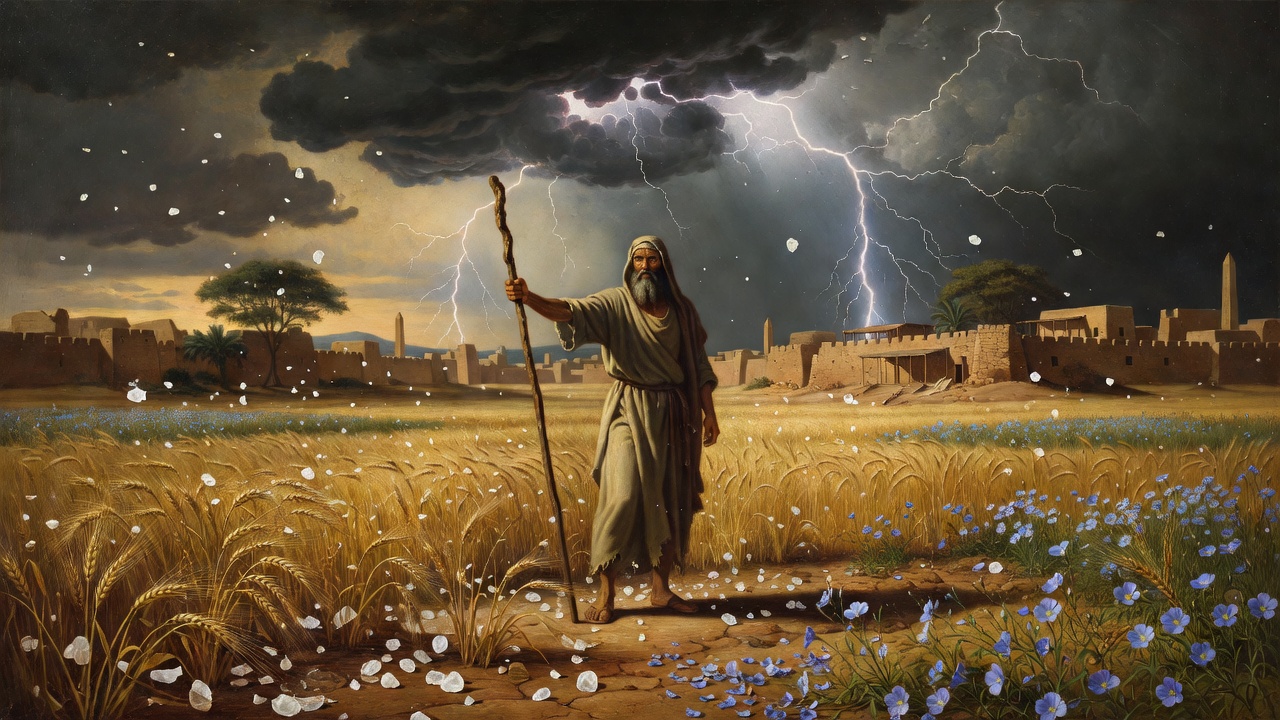
22Na man Dwata i Amu di ku Mosis, “Kayangam i sigalam salu di langit, na fulengu kadang lbatù tno di klamang banwe Idyif, di dad to, di dad lmanaf, na balù di kdee dad fulela di nligola.” 23Na di kakayang Mosis i tugadan salu di langit, na fkilet Dwata i Amu, na fulenan dad lbatù tno, na smilà mdà di tah kel di tanà. Hae, fulen Dwata i Amu i dad lbatù tno di banwe Idyif. 24Fulenan i dad lbatù tno, na fnaginan i malbang silà. Landè fa lmen salngad ani mdà di kgimò i banwe Idyif. 25Di klamang Idyif, i kdee i dad landè gugsilungla, dad to, na i dad lmanaf, tnadè ale i dad lbatù tno. Na balù i kdee dad fule i dad to na kdee dad kayu gutadè i dad lbatù tno, taman landè gdè i dad fanga i dad kayu. 26Alò i tanà di Gosén, i gumnè dad bel Israél, i là nulen dad lbatù tno.
27Na fngé Faraon Mosis na Aron, na manan, “Ani gamsalà agu, na too glut i nimò Dwata i Amu. Hae, agu na lêman i dad togu tagsalà. 28Dmasal gamu di Dwata i Amu, du fye fatlagan i kilet na i ulen lbatù tno, du glukas gami nan. Na ani falohgu gamu lamwà di banwe ani, na balù talà gamu mnè dini.”
29Na tmimel Mosis, manan, “Di kalwàgu di syudad ani kayanggu i dad sigalgu salu tah, na dmasal agu na fakdogu di Dwata i Amu, na fatlagan kadang i kilet na i ulen lbatù tno, du fye gadeam Dwata i Amu mfun i klamang banwe. 30Kabay gadègu ge na i dad ganlalam là fa likò di Dwata i Amu.” Én gman Mosis di harì.
31I dad fule i dad to Idyif dnagit flak na barli, mti malmo, du tamulek i dad flak na tamunge i dad barli. 32Bay, i dad fule gambet fali dnagit wit na sfét là malmo, du là fa tmabò di tanà.
33Kafnge én, mdà Mosis tnagakan Faraon na lamwà kenen di syudad. Na kayangan i dad sigalan salu tah di Dwata i Amu, na fnin tabeng di kenen. Na tatlag i kilet na ulen lbatù. Na talà mulen. 34Na di kite Faraon talà mulen na kmilet na talà fulen Dwata i lbatù tno, lêman gamsalà kenen. Kenen na lêman i dad ganlalan fgalla i dad ulula. 35Na too glut i gman Dwata i Amu di ku Mosis. Hae, du mgal i ulu Faraon, taman laan faloh i dad bel Israél lamwà di banwe Idyif.
Did you know?
Livestock, Boils, and Hail
- This chapter draws a sharp line between Egypt and the Israelites: all the livestock of the Egyptians die, but not one animal belonging to the Israelites dies, and the hail falls on all the land of Egypt except Goshen, where the Israelites lived. Goshen, also called the land of Rameses, lay east of the Nile and apparently not far from the royal residence, and it had been assigned to Jacob’s family as the best of the land.Sources: the Bible text itself · Goshen · Moses
- The Pharaoh whom Moses and Aaron confront is not named in the chapter. Easton's Bible Dictionary (1897) identifies him as probably Menephtah I, a son of Rameses II, who lived at Zoan, where his interviews with Moses and Aaron took place, and notes that some instead favor Seti II. After the hail, Moses leaves the city and spreads out his hands to the LORD until the thunder and hail cease.Sources: the Bible text itself · Pharaoh (of the Exodus)
- The hail destroyed the flax and the barley, but not the wheat and the spelt. The narrative explains the difference: the barley was already ripe and the flax was in bloom, while the wheat and spelt were late crops.Sources: the Bible text itself
Notes written with AI assistance from open sources (Theographic Bible Metadata, CC BY-SA 4.0; Easton’s Bible Dictionary, public domain) and reviewed before publishing.
Places in this chapter
- Egypt · 30.129, 31.308 · verses 4, 6, 9, 18, 22, 23, 24, 25
- Goshen · Today: Goshen 1 · 30.799, 31.834 · verse 26
Only places identified with high confidence are shown (90% or more according to the scholarly sources compiled by OpenBible). Period map: DARE (Digital Atlas of the Roman Empire), CC BY 4.0; modern map: © OpenStreetMap contributors; places: OpenBible.info (CC BY 4.0).
Credits and license for this translation
I tnalù dwata
New Testament in Blaan, Sarangani
copyright © 1998 Wycliffe Bible Translators, Inc.
Language: Sarangani Blaan (Blaan, Sarangani)
Translation by: Wycliffe Bible Translators
Contributor: Wycliffe Bible Translators, Inc.
Copyright Information
© 1998, Wycliffe Bible Translators, Inc. All rights reserved.
This translation text is made available to you under the
terms of the Creative Commons License: Attribution-Noncommercial-No Derivative Works.
( http://creativecommons.org/licenses/by-nc-nd/3.0/ )
In addition, you have permission to port the text to different file formats, as long as you
do not change any of the text or punctuation of the Bible.
You may share, copy, distribute, transmit, and extract portions
or quotations from this work, provided that you include the above copyright
information:
You must give Attribution to the work.
You do not sell this work for a profit.
You do not make any derivative works that change any of the actual words or punctuation of the Scriptures.
Permissions beyond the scope of this license may be
available if you contact
us with your request.
The New Testament
in Blaan, Sarangani
© 1998, Wycliffe Bible Translators, Inc. All rights reserved.
This translation is made available to you under the terms of the
Creative Commons Attribution-Noncommercial-No Derivatives license 4.0.
You may share and redistribute this Bible translation or extracts from it in any format, provided that:
You include the above copyright and source information.
You do not sell this work for a profit.
You do not change any of the words or punctuation of the Scriptures.
Pictures included with Scriptures and other documents on this site are licensed just for use with those Scriptures and documents.
For other uses, please contact the respective copyright owners.
2015-03-17
Source: http://ebible.org/bps/ · eBible.org