Acts 19
Píívyéébé ihjyu: jetsocríjyodítyú cáátúnuháámɨ · Tap a verse to see its cross-references.
Páávoro Éépetsóri
1Aabéhjáa Coríítori íjcyánáa Páávoro íjchí iiñújɨri péhíjcyaabe úújeté Éépetsóvu. Átsihyíhjyáa ijcyámé tsaate Píívyéébé cahcújtso múnaa Jóááúvú uwáábó úráávyehíjcyáme. 2Áámekéhjáa neébe:
—¿A ámuhápe Píívyéébeke mecáhcújtsótujkénúijyu tsúúca dííbyé Apííchó ámúhá pañévú úcaavéhi?
Áánélliihyéhjáa néémeé:
—Tehdu muha mewáájácúnejɨ́ɨ́va dííbyé Apííchó íjcyane.
3Áánélliihyéhjáa neebe diityéke:
—¿Acáa ɨ́ɨ́né uwáábórá ámuha mecáhcújtsóne métsójtsótsámeíhi?
Áánélliihyéhjáa néémeé:
—Mu ihdyúu éhne Jóááuvu tsótsohíjcyáné uwáábo.
4Áánélliihyéhjáa neébe:
—Ɨ́mɨáánéjucóhdée diibye Jóáa tsótsohíjcyáné ímityúné iícyahíjcyanéhjɨ́ ɨ́hvéjtsómeke. Árónáacáa ihdyu diityéké nehíjcyaabe dííbyé boone Mépájtyetétsoobe Jetsóó úwáábóííbyeke ditye icyáhcújtsoki.
5Áánélliihyéhjáa botsíi Jetsóoke icyáhcújtsóne tsiiñe tsójtsótsámeímyé dííbye mémeri. 6Áámé hallúvúhjáa Páávoro tsáápiitsá hallúvú íhyójtsɨ ipícyóóne Píívyéébema íhjyúváné tujkéveri dííbyé Apííchó diityé pañévú úcaavéhi. Aaméhjáa tsíjyúhjɨri illéébótúrójúhjɨri Píívyéébeke duurúvahíjcyáhi. Áhduréhjáa téénere túkévéjtsóneri úúbállehíjcyámé dibyée diityédívú íuwááboju bóhówajtsóne. 7Aaméhjáa diitye Píívyéébé Apííchó diityé pañévú úcaavémé 12-meva.
8Aanéhjáa Páávoro pápihchúú nuhbává imúnaa jodíómú pihcyáávéjá pañévú úwáábohíjcyá ɨ́ɨ́nerí núhnévétuubére. Aabéhjáa mɨ́amúnáake téɨ́búwátsohíjcyá Píívyéébé avyéjú icyánejcúvu. 9Árónáacáhjáa tsaate tsá ímílletú icyáhcujtsóne. Aaméhjáa nehníwu ihjyúvahíjcyá teene Jetsóodítyú íjcyáné uwáábotu pámé úmɨwávúre. Áánélliihyéhjáa Páávoro diityédítyú péé pámeemáyé cahcújtso múnáama ‘Tirááno’ némeííbyé uwáábojávu. 10Aabéhjáa tééjavúréjuco diityéké úwáábohíjcyáné míñéécú pijcyába. Aanéhjáa tsúúca pámeere Áátsiá iiñújɨ múnaa lleebójucóó Jetsóodítyú íjcyáné uwááboju dibye úwáábohíjcyáne. Áhduréhjáa tsijtye jodíómú íjcyáturómé tsúúca lleebóhi. 11Áijyúhjáa dííbyej tééveri Píívyéébe méénuhíjcyá mítyane méénúráítyúronéhjɨ. 12Ávyetáhjáa dííbyé miñúbajáánema íwajyámúúné chéméméhjɨ éllevu ditye tsájtyéróneri tsúúca bóhɨhíjcyáme. Tsaaté pañéhjáa naavémú íjcyároméhjɨ́ ichívyehíjcyáhi.
13Áijyúhjáa tsaate téhullé múnaa jodíómú naavémuke tsaaté pañétú íchívyétsohíjcyámé imíllerá Jetsóo mémeríyéjuco iíjchívyetsóne. Aaméhjáa néjcatsíhi:
—Méneé tsaaté pañétú ditye iíjchívye éhne Páávoro úwáábohíjcyaabe Jetsóo mémeri.
14Ehdúhjáa imíllerómé imyéénune jodíómuube Etséébá llúúvájté avyéjúúbej tsɨ́ɨ́mé 7-meva íjcyame. 15Aaméhjáa tehdu méénúrónáa tsáápí pañétú diibye naavéné nééhií:
—Muurá ó waajácú Jetsóoke. Áhdure ó waajácú muubá Páávoro íjcyane. Áánetu ¿muutá ámuúha?
16Ehdúhjáa néébere diibye mɨ́amúnáajpi naavéné ípañe íjcyaabe diityéké méénúnetu ílluréjuco ditye wááne tééjá pañétú íévejtéhjɨréjuco wájyamúúvatúmé dibye túúvátsónéhjɨma. 17Aanéhjáa pámeere Éépetsó múnaa jodíómumáyé tsijtye jodíómú íjcyátúmé iwáájácúneri mítyane iíllityéne Jetsóoke ávyéjujtsóhi.
18Áhduréhjáa tsaate cáhcujtsójúcóómedítyú úúbállehíjcyá ɨ́hdéhjáa ímityúné iícyahíjcyanéhjɨ. 19Áánetúhjáa ápííchojte ténéhjɨ́ waajácúhaamɨ́né ílluréjuco cóvajtsóné pámeere ɨ́ɨ́téneríye. Ááné pañéhjáa ɨjtsúcunúmé dsɨɨdsɨ wágóoovéné 50 míi. 20Ehdúhjáa téijyu Jetsóodítyú íjcyáné uwááboju tsújaavé pámehdívúre.
21Ááné boonétúhjáa Páávoro ɨ́jtsámeí Matsedóóniámá Acááyá iñújɨ́ɨ́cú iááhɨ́vetétsihdyu botsíi Jerotsaréevu ipyééiñe. Áhduréhjáa nehíjcyaabe teene Jerotsaréetu ipyééiñe Róómávuú. 22Áánélliihyéhjáa ɨ́hde wálloobe ɨ́pɨáábojtétsikye Matsedóóniávú Timotéoma Erájtomútsikye. Áánetúikyéhjáa tsúcájá coévaabe Áátsiá iiñújɨvu.
Éépetsórí ditye ííborɨ́vaténe
23Aabéhjáa Jetsóodítyú íjcyáné uwááboju úwáábohíjcyáné hallútú cáhcújtsotúmé páhduváré dárɨ́ɨ́vehíjcyá cahcújtso múnáake. 24Tsaapíhjyáa ‘Deméétrio’ némeííbyedítyú tujkéváne. Diibyéhjáa nícyohíjcyá úwáñewáánetu ‘Diána’ némeíñé níjcyota píívyélledi idíllone idyúúrúvahíjcyája nááve. Ááné hallúvúhjáa mítyane dsɨɨdsɨ́vahíjcyámé pámeere íwákimyéi múnáama. 25Aabéhjáa pámeere múhdumé téeménéhjɨ́ wákímyeíhíjcyámeke ipíhjyúcúne nééhií:
—Muurá ámuha méwaajácú íñe mewákímyeímyé tsaímíyé meícyahíjcyáné ɨ́ɨ́netú pɨ́htotúme. 26Aane ¿ɨ́veekí Páávoro nehíjcyá íñe menícyohíjcyámé píívyéébe íjcyatúne? Ehdu iñééneri muurá mítyámekéjuco dibye tsíñejcúvúré ɨ́búwajtsóne. Aane muurá tsá apátsiíyé íchii Éépetsórí dibye tehdu méénutúne. Muuráhjáubá páneeréjuco Áátsiá iiñújɨri ehdu dibye méénune. 27Aane múhdurá teene méémaá. Muurá méwákimyéí tééne tájpíjyuco meícyahíjcyáné méhdivu wágóóóvéiyáhi. Áhdure diille ɨ́htsútulle píívyélleke Áátsiá múnáama pámeere ííñújɨri íjcyáné mɨ́amúnaa dúúrúvahíjcyálle ja tsáhájuco bóhówaúcunújúcóóítyuróne.
28Ehdúhjáa dibye néénéllii tsijtye icyáyobáávaténe íllu wáñejcóhi:
—¡Ñóóooj, ehdɨ́ɨ́vájullé tsáma ɨ́htsútulle Epéétsiómú piivyéllé Diánaj! Ehdúhjáa iwáñéjcóne néémeé.
29Áijyúhjáa ihdyu kiávú técoomíyí mɨ́amúnaa iibórɨ́nújcatsíhi. Áánáacáhjáa Matsedóóniá múnáajtétsí Gááyóma Arijtáácomútsí Páávoróké náhbénuhíjcyámútsikye lliúcuíñúmé ditye píhcyáávehíjcyájá pañévu. 30Áájá pañévúhjáa Páávoro ipyééne diityémá íhjyúvatéíyónáa tsá cahcújtso múnaa dííbyeke ɨ́hvéjtsotúne. 31Áhduréhjáa tsaate Áátsiá iiñújɨ múnaa ávyéjujte dííbyeke wáájacúmé néé tsaatéké ditye iñéé dííbyeke téhullévú dibye ipyéétuki. 32Áánáacáhjáa ihdyu mɨ́amúnaa iibórɨba teene pihcyááveri íjcyame. Aanéhjáa mítyame tsá wáájácutú ɨ́ɨ́nélliihyé ímichi ipíhcyaavéne. 33Áánáacáhjáa tsaate jodíómú imúnáajpi Arejáádoróké cátujcú dibye diityé úmɨwávú ipyééne iíhjyúvaki. Ahdújucóhjáa iíhjyúva dibye íhyójtsɨri diityéké néérone cúúvéhulléréjuco ditye iíjcyaki. 34Árónáacáhjáa ‘dáij’ néétune tsiiñe íllu wáñécohíjcyáme:
—¡Ñóóooj, ehdɨ́ɨ́vájullé tsáma ɨ́htsútulle Epéétsiómú piivyéllé Diánaj! Ehdúhjáa iwáñéjcóne nehíjcyámé míñéécu hóórá hajchótá jodíómuube dibye íjcyane iwáájácúnema.
35Áámekéhjáa técoomí avyéjuube idyáíívyétsómeke nééhií:
—Ámuúha tamúnaa íñe Éépetsórí meíjcyamej, pámeere muurá waajácú éhnée cáámetu áákityéné neewáyú píívyélle Diánadi medíllóné duurúvaja méhójtsɨ́ pañe íjcyane. 36Aane tehdu múha tóónúíyónejɨ́ɨ́vari. Áánéllii ílluréjuco metáchúúréévéne cúúvéhulléréjuco meíjcya. Aame ɨɨná mémeenújúcohdí ímíñeúvú ɨ́jtsámeítyúme. 37Muurá íjtyétsikye ííllevu ámuha metsívamútsí tsá ɨ́ɨ́né imítyúné méénutúne. Áhdure tsá dityétsí méduurúvaja tútávájtsotúne. Aamútsí muurá tsá ɨɨná ímityúné íhjyúvatú mépiivyélledítyu. 38Ahdícyane Deméétrio íwákimyéi múnáama tsaatédítyú ímityúné iíjyácunúhajchíí óvíi péé ténéhjɨ́ ímibájcho múnáa éllevu teene iímíbájchoki. Muurá téénéllii ijcyáné ténéhjɨ́ ímibájchotsɨ́hjɨ. 39Áánetu ávyétá ɨhnáhó nééne íjcyáhajchíí múu ɨ́hvejtsó páñétúéhullévú tene iímíbáávyeki. 40Muurá ícyooca ápíchó nééne máhallúrí téénetu menéétsámeíiyóne. Tsá muurá ɨɨná menééítyuró íñe ícyooca pájtyene páñétúejte meke dílloca. 41Ehdúhjáa iñééne ílluréjuco dibye diityéké tsújaúcúne.
Did you know?
Paul, the Way, and Artemis in Ephesus
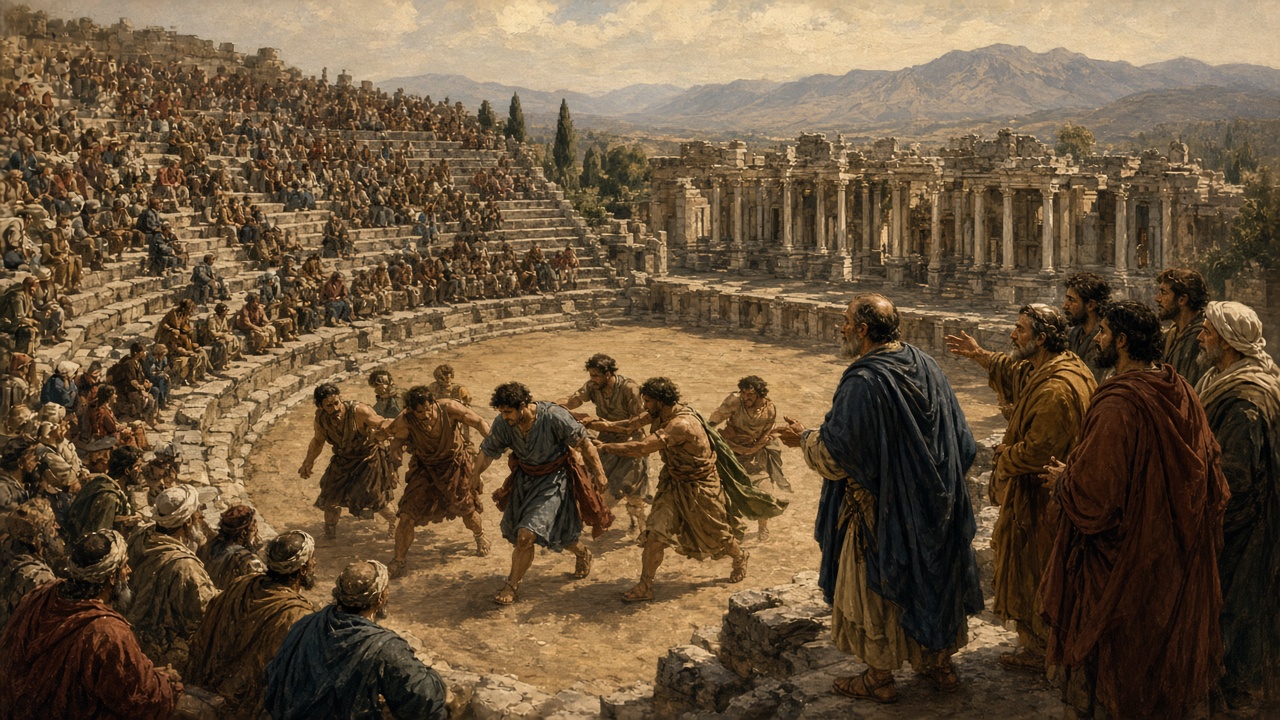
- Ephesus was the capital of proconsular Asia, the Roman province covering the western part of Asia Minor, and in Roman times it bore the title of the first and greatest metropolis of Asia. The city was distinguished for the temple of Artemis, whom the Romans called Diana, built outside the walls and reckoned one of the seven wonders of the ancient world. At its center stood an ancient image of the goddess, reputed to have fallen from the sky.Sources: Ephesus · Diana · Asia
- Demetrius, a silversmith at Ephesus, made silver shrines of Artemis, models of her temple or of her statue, which sold readily to visitors from all over Asia Minor. Acts says this trade was the craftsmen's source of prosperity, and that Demetrius warned them of danger to their business and to the honor of the temple of Artemis, the goddess he said was worshiped throughout the province of Asia and the whole world.Sources: Demetrius · the Bible text itself
- The crowd rushed into the theatre of Ephesus, which Easton's Bible Dictionary (1897) describes as the largest in the world, open to the sky and able to hold 50,000 spectators. Friends of Paul among the chiefs of Asia, wealthy citizens elected each year to preside over the games and religious festivals of their cities, begged him not to go in. The city clerk then reminded the assembly that Ephesus was guardian of the temple of the great Artemis and of her image, said to have fallen from heaven.Sources: Ephesus · Asia · the Bible text itself
Notes written with AI assistance from open sources (Theographic Bible Metadata, CC BY-SA 4.0; Easton’s Bible Dictionary, public domain) and reviewed before publishing.
Places in this chapter
- Corinth · 37.906, 22.879 · verse 1
- Ephesus · 37.939, 27.341 · verses 1, 17, 23, 26, 35
- Asia · 38.400, 28.300 · verses 10, 22, 26, 27, 31
- Achaia · 38.720, 22.540 · verse 21
- Jerusalem · 31.777, 35.234 · verse 21
- Macedonia · 41.600, 22.540 · verses 21, 22, 29
- Rome · 41.892, 12.485 · verses 21, 40
Only places identified with high confidence are shown (90% or more according to the scholarly sources compiled by OpenBible). Period map: DARE (Digital Atlas of the Roman Empire), CC BY 4.0; modern map: © OpenStreetMap contributors; places: OpenBible.info (CC BY 4.0).
Credits and license for this translation
Píívyéébé ihjyu: jetsocríjyodítyú cáátúnuháámɨ
New Testament in Bora (PE:boa:Bora)
copyright © 2008 Wycliffe Bible Translators, Inc.
Language: Bora
Translation by: Wycliffe Bible Translators, Inc.
Boara [boa], Peru
Copyright Information
© 2008, Wycliffe Bible Translators, Inc. All rights reserved.
This translation text is made available to you under the
terms of the Creative Commons License: Attribution-Noncommercial-No Derivative Works.
( http://creativecommons.org/licenses/by-nc-nd/3.0/ )
In addition, you have permission to port the text to different file formats, as long as you
do not change any of the text or punctuation of the Bible.
You may share, copy, distribute, transmit, and extract portions
or quotations from this work, provided that you include the above copyright
information:
You must give Attribution to the work.
You do not sell this work for a profit.
You do not make any derivative works that change any of the actual words or punctuation of the Scriptures.
Permissions beyond the scope of this license may be
available if you contact
us with your request.
The New Testament
in Bora
© 2008, Wycliffe Bible Translators, Inc. All rights reserved.
This translation is made available to you under the terms of the
Creative Commons Attribution-Noncommercial-No Derivatives license 4.0.
You may share and redistribute this Bible translation or extracts from it in any format, provided that:
You include the above copyright and source information.
You do not sell this work for a profit.
You do not change any of the words or punctuation of the Scriptures.
Pictures included with Scriptures and other documents on this site are licensed just for use with those Scriptures and documents.
For other uses, please contact the respective copyright owners.
2014-04-22
Source: http://ebible.org/boaNT/ · eBible.org