Acts 20
Píívyéébé ihjyu: jetsocríjyodítyú cáátúnuháámɨ · Tap a verse to see its cross-references.
Páávoro Matsedóóniámá Gréétsiá iñújɨɨcúvú pééneé
1Aaméhjáa iííbórɨ́nújcatsíñetu ɨ́hvetédú Páávoro cahcújtso múnáake ipíhjyúcúne túkévejtsóhi. Átsihdyúhjáa diityéké ipítyájcóne Matsedóóniá iiñújɨvúréjuco dibye pééneé. 2Aabéhjáa téhullé cahcújtso múnáake ááhɨ́veebe diityéké tsápɨ́tsohíjcyáhi. Átsihdyúhjáa péébe Gréétsiá iiñújɨvu iúújetétsihyi ijcyá pápihchúú nuhbáva. 3Aabéhjáa tsahííyí Tsííriá iiñújɨvu pééíyónáa tsaate imúnaa dííbyedítyú ímityúné pítyájcámeíñé iwáájácúne ɨ́jtsámeííbyé Matsedóóniá iiñújɨvúré tsiiñe ióómiíñé íjchityu. 4Áábemáa o pééíñáa múhtsikye náhbénuímyé múhtsí ɨhdéjuco Tóróóavu ipyééne téhullétú múhtsikye téhmeténé ílluúme: Beréa múnáajpi Tsóópatee, Tetsaróónicá múnáajtétsí Arijtáácomútsí Tsegóódomaa, Déébé múnáajpi Gááyoó, Timotéoo, Áátsiá iiñújɨ múnáajtétsí Tííkicyómútsí Tóróópimómaa, éhdume. 6Áánetúikyée muhtsi mecóévamútsí óórítyúne pááá májchómeíhíjcyáné wañéhjɨ́ pajtyétavu botsíi Pirípotu tsahííyí mepéémutsi méúújeté tsáhojtsɨ́j coojɨ́vatu diityédívú Tóróóavu. Átsihyíi muha méijcyá tsané tsemáána.
Páávoro Tóróóa múnáake ááhɨvéne
7Aamée muha tsemááná déjúcóóvejcóójɨ́ medóbéévéne pááa mémajchó Jetsóó dsɨjɨ́vé meɨ́tsaavéne. Áijyúu Páávoro úwaabó ávyeta pécójpɨɨnévújuco tsíijyu muha mepéjúcóóíñélliíhye. 8Téijyúu muha médóbeevé cáámééhó pañévú peetéháñej tééveri. 9Áánáacáa ováhtsáwu ‘Éóótico’ némeííbyé ácuúcunúhijcyá páhoowa nétsihyi. Aabéhjáa icyúwaíñúné hallúrí baavu áákityéébé dsɨ́jɨvéhi. 10Áánélliihyée Páávoro ɨ́ɨ́cúi iñíítyéne dííbyeke iámabúcúne nééhií:
—Méíllityédíne. Muurá ihdyu bóhɨ́ɨ́roóbe.
11Átsihdyúu tsiiñe cáámevu néríívyéébema muha pááa mémajchó Jetsóó dsɨjɨ́vé meɨ́tsaavéne. Ááné boonétúu idyé tsiiñe íuwáábó cámahjácoobe tsɨ́tsɨjnécu. Átsihdyúu ílluréjuco muha mepééneé. 12Áánetúu tétsíi múnaa ihjyáhañévuréjuco péémema diibye ováhtsáwu pééneri mítyane ímíjyuuvéme.
Tóróóatu Miréétovu ditye pééneé
13Aamée muha mepéjúcóónáa Páávoro múúhadítyú coévá tétsihvúré Tóróóavu íjchityúré ipyéé Atsóovu. Áánetúu muha ɨ́hde cúújúwámɨri mepééme méúújeté técoomívú tétsihdyu dííbyeke muha meújcuki. 14Aamée muha técoomítyú dííbyeke meújcuíñútsihdyu mepééme méúújeté Mitiréénevu. 15Átsihdyúu muha mepééme tsíijyu ‘Kííoó’ némeíñé caapáhó tujkévetu mepájtyeme tsíjcyoojɨ méúújeté ‘Tsáámoó’ némeíñé caapáhó mujcóvu. Ámujcótúu muha mepájtyeme mécúwaté Trojíírióvu. Ááné tsiíjyúu botsíi muha méúújeté Miréétovu. 16Ehdúu muha mepéhíjcyánáa Páávoro ɨ́jtsámeí Jerotsaréeri muha Pejtecojtéé wañéhjɨ́ mepájtyeíñe. Áánélliihyéikyée tsá dibye ímílletú muha Áátsiá iiñújɨri íjcyacóómí Éépetsóvú mepééne ɨ́ɨ́cúi muha téhullétú meóómíítyúrónélliíhye.
Páávoro íhjyuváné Éépetsó cahcújtso múnáá túkevéjtsojtéma
17Aabée Miréétori íjcyaabe pɨ́uvá Éépetsórí íjcyáné cahcújtso múnáá túkevéjtsojtéke. 18Áámekée neébe:
—Ámuha muurá méwaajácú muhdúhjáa Áátsiá iiñújɨvu o wátsɨ́tujkénúijyu o ícyahíjcyáne. 19Muuráhjáa tamúnaa jodíómú íjcyarómé oke páhduváré dárɨ́ɨ́véneri támeííbyéré Píívyéébé wákimyéí ó méénuhíjcyá ɨɨná néétuubére. 20Árónáacáa tsá o ɨ́hvetétú ámúhakye pɨ́ááboíñé patsɨ́hjɨvávúré úwááboobéré o péhíjcyánetu. 21Aabée ámúhakye pámeekéré tamúnaa íjcyátúróméhjɨma ó nehíjcyá ímityúné ámuha meícyahíjcyáné meɨ́hvéjtsóne Máavyéjuube Jetsocríjtoke mecáhcújtso ímí Píívyéébema ámuha meíjcyaki. 22Aabe íñe ícyooca tsiiñe o péé Jerotsaréevu Píívyéébé Apííchó oke túkévéjtsóneri muhdú táúmɨwa íjcyane wáájácútuúbe. 23Muurá pahúlleva o péhíjcyá coomíjɨvu téénere Píívyéébé Apííchó tsúúca oke waajácutsójúcoorá Jerotsaréevu oke ditye cúvéhoojánuube o ɨ́cúbáhrámeíiñe. 24Áróneri tsá o áábímyeítyúne. Apááñéré ihdyu ó imíllerá Píívyéébée meke iwájyúne mééma mepájtyetéiñe méénúné uwáábojúvú Jetsóó oke níwááveíñúné o nɨ́jkeváne.
25Ahdícyane ámúhakye o néé íñe múhdúméj pɨɨnévú Píívyéébé avyéjutu íjcyáné uwááboju úwááboobéré o péhijcyámé ámuha oke maájtyumɨ́júcóóityúne. 26Téhdure ámúhakye o néé ámuha mewágóóóvéhajchíí tsá táhallúrí tene íjcyáityúne. 27Muurá tsúúca páneere ámúhadívú ó bóhówajtsójúcoorá muhdú Píívyéébé ɨ́jtsaméí íjcyane. 28Ahdícyane tsáma téɨɨbúwá méíjcyaco ámuha uwáábojte meíjcyame. Ímíñeúvú météhmeco cahcújtso múnáake Íllíi Jetsóó tujpácyó wágóóóvénej tééveri dibye újcúmeke. Muuráhjáa diityédívú ámúhakye níwááveebe Íapííchoj tééveri diityé túkevéjtsojte ámuha meíjcyaki. 29Árónáa ó waajácú íchihdyu o pééné boone tsaate múhdurá iúwáábóneri íllure diityéké tútávájtsoíñé éhne múúne oohííbyé obééjámuke tútávajtsódu. 30Áhdure íjcyaímyé tsaate ámúhadítyúré ɨ́mɨá uwááboju tsɨjɨ́jtoríyé átéréenéhjɨ́ úwááboímye. Ááneri íllure cahcújtso múnáake mújtátsoímye. 31Áánéllii tsáma téɨɨbúwá méíjcyaco éhnée pápihchúú pijcyábá hajchótá támaatyóú o wáágóóne ámúhakye o úwáábohíjcyáné meɨ́tsáávénema.
32Ahdícyane ámuha Píívyéébeéjté meíjcyame óvíi dííbye tájpiyéjuco ámuha meíjcyane meke iwájyúne dibye ácuhíjcyáné uwáábójú pañe ɨ́htsutúmeréjuco. 33Cáhawáá méɨjtsúcunuj, tsáháa muurá o íjyácunútú oke tsaate dsɨ́ɨ́dsɨdívú áhdoobe ehnéva múnáajpi o íjcyaabe ɨ́mɨá wajyámuma o íjcyáíyóneri. 34Muuráhjáa ámuháyé wájácú menééne oore tsáávanéréi ó wákímyeíhijcyá óóma íjcyámema muha mepɨ́htone meújcuki. 35Aabée muurá ámúhakye panévatúré ó úwáábohíjcyá muhdú mewákímyeíiyóné ɨ́dáátsóméhjɨke mepɨ́áábo éhnéhjáa Ávyéjuube Jetsóó íllu néhijcyáné o ɨ́tsáávénema: “Muurá tsaatéké tsíeménevu ájcume ímíjyúúvéiyá ditye ájcume ímíjyúúvéné ehnííñevu.”
36Ehdúu diityéké iñétsihdyu Páávoro Píívyéébema iíhjyúva mɨ́móúúvénéllii muha téhdure mémɨ́móuuvéhi. 37Áábekée pámeere ikímóóvéne ámábiñúhi. 38Aamée múúhakye pícyohjé cúújúwamɨ́vú dibyée ‘tsáhájucóubá tsiiñe oke ámuha maájtyúmɨ́ityúne’ nééneri kímóóvemére.
Did you know?
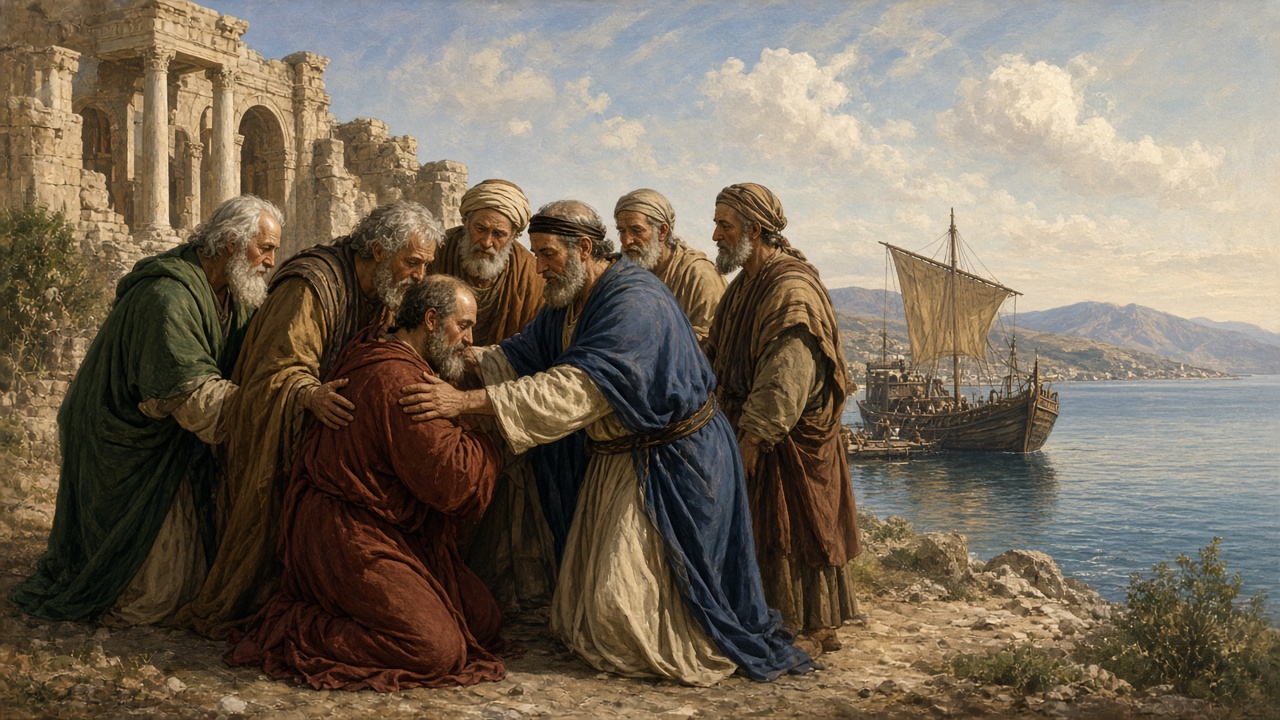
Farewell on the way to Jerusalem
- Leaving Troas, Paul sent his companions ahead by ship and walked to Assos along the Roman road. Assos was a seaport of Proconsular Asia in Mysia, on the north shore of the Gulf of Adramyttium; the walk was about 20 miles, the sea route about 30, and the island of Lesbos lay about 7 miles offshore.Sources: the Bible text itself · Assos
- Paul sailed past Ephesus to avoid spending time in the province of Asia—the Roman province in western Asia Minor, with Ephesus as its capital—because he hoped, if possible, to reach Jerusalem by the day of Pentecost. He stopped at Miletus, a seaport and the ancient capital of Ionia about 36 miles south of Ephesus, and summoned the elders of the Ephesian church.Sources: the Bible text itself · Asia · Miletus
- Seven men traveled with him: Sopater of Berea, Aristarchus and Secundus of Thessalonica, Gaius of Derbe, Timothy, and Tychicus and Trophimus from Asia. Aristarchus of Thessalonica later shared Paul’s imprisonment in Rome, and Trophimus, an Ephesian, accompanied him on this part of the journey and was with him in Jerusalem.Sources: the Bible text itself · Aristarchus · Trophimus
Notes written with AI assistance from open sources (Theographic Bible Metadata, CC BY-SA 4.0; Easton’s Bible Dictionary, public domain) and reviewed before publishing.
Places in this chapter
- Macedonia · 41.600, 22.540 · verses 1, 3, 6
- Greece · 37.972, 23.727 · verse 2
- Syria · Today: Syria 2 · 33.511, 36.306 · verse 3
- Asia · 38.400, 28.300 · verses 4, 16, 18
- Berea · Today: Veria · 40.518, 22.200 · verse 4
- Thessalonica · Today: Thessaloniki · 40.638, 22.946 · verse 4
- Troas · Today: Alexandria Troas · 39.752, 26.159 · verses 5, 6
- Philippi · 41.012, 24.285 · verse 6
- Assos · 39.491, 26.337 · verses 13, 14
- Mitylene · Today: ancient theater at Mitylene · 39.110, 26.547 · verse 14
- Chios · 38.373, 26.137 · verse 15
- Miletus · 37.531, 27.276 · verses 15, 17
- Samos · 37.750, 26.833 · verse 15
- Trogyllium · Today: Cape Mycale · 37.659, 27.003 · verse 15
- Ephesus · 37.939, 27.341 · verses 16, 17
- Jerusalem · 31.777, 35.234 · verses 16, 22
Only places identified with high confidence are shown (90% or more according to the scholarly sources compiled by OpenBible). Period map: DARE (Digital Atlas of the Roman Empire), CC BY 4.0; modern map: © OpenStreetMap contributors; places: OpenBible.info (CC BY 4.0).
Credits and license for this translation
Píívyéébé ihjyu: jetsocríjyodítyú cáátúnuháámɨ
New Testament in Bora (PE:boa:Bora)
copyright © 2008 Wycliffe Bible Translators, Inc.
Language: Bora
Translation by: Wycliffe Bible Translators, Inc.
Boara [boa], Peru
Copyright Information
© 2008, Wycliffe Bible Translators, Inc. All rights reserved.
This translation text is made available to you under the
terms of the Creative Commons License: Attribution-Noncommercial-No Derivative Works.
( http://creativecommons.org/licenses/by-nc-nd/3.0/ )
In addition, you have permission to port the text to different file formats, as long as you
do not change any of the text or punctuation of the Bible.
You may share, copy, distribute, transmit, and extract portions
or quotations from this work, provided that you include the above copyright
information:
You must give Attribution to the work.
You do not sell this work for a profit.
You do not make any derivative works that change any of the actual words or punctuation of the Scriptures.
Permissions beyond the scope of this license may be
available if you contact
us with your request.
The New Testament
in Bora
© 2008, Wycliffe Bible Translators, Inc. All rights reserved.
This translation is made available to you under the terms of the
Creative Commons Attribution-Noncommercial-No Derivatives license 4.0.
You may share and redistribute this Bible translation or extracts from it in any format, provided that:
You include the above copyright and source information.
You do not sell this work for a profit.
You do not change any of the words or punctuation of the Scriptures.
Pictures included with Scriptures and other documents on this site are licensed just for use with those Scriptures and documents.
For other uses, please contact the respective copyright owners.
2014-04-22
Source: http://ebible.org/boaNT/ · eBible.org