Genesis 3
Godeya꞉ To Nafayo꞉ We · Tap a verse to see its cross-references.
Henfelo꞉ amio꞉ mogago꞉wo꞉ mo꞉mo꞉da fa꞉la꞉dowo꞉
1Gode Yawe eyo꞉ no꞉ a꞉no꞉ tambo dimido꞉ ko꞉sega, sowa꞉ e amio꞉ dikilima꞉no꞉ asulo꞉wo꞉ alan ko꞉lo꞉, asulo꞉ a꞉na ilikiyo꞉ no꞉ nolo꞉ e tinio꞉ ko꞉lo꞉lab. Sowa꞉ eyo꞉ gamo꞉wo꞉ a꞉la꞉sio꞉, “ ‘Egelo꞉ usamilo꞉ i fo da꞉lab a꞉no꞉ tambo na꞉so꞉bo’ a꞉la꞉do꞉ Godeya꞉lo꞉ sio꞉wo꞉ hendeyo꞉?” 2Ga a꞉ma꞉yo꞉ sowa꞉ emo꞉wo꞉ a꞉la꞉sio꞉, “Na꞉no꞉ egelo꞉ usamio꞉ i fowo꞉ o꞉li ma꞉no꞉ ko꞉sega, Gode eyo꞉ na꞉nbo꞉wo꞉ a꞉la꞉sio꞉, ‘Egelo꞉ usamilo꞉ i imilise a꞉lab a꞉ma꞉ fowo꞉ na꞉so꞉bo. A꞉la꞉ta꞉ga꞉ fo a꞉no꞉ gola꞉so꞉bo. A꞉la꞉dimidalega ge soma꞉ib.’ ” 4A꞉la꞉sa꞉labiki sowa꞉ eyo꞉ gamo꞉wo꞉ a꞉la꞉sio꞉, “Ge mada mo꞉soma꞉ika꞉! 5Mo꞉wo꞉ Gode eyo꞉ a꞉la꞉asulab, ge i fo a꞉no꞉ nalega, ho꞉len a꞉namio꞉ gi siyo꞉ fage alitalikiyo꞉, Godeyo꞉ o꞉ngo꞉ dowaki, mogago꞉ o꞉lia꞉ nafa o꞉lia꞉yo꞉ aloba꞉daki a꞉la꞉ba꞉ba꞉ib,” sowa꞉ eyo꞉ a꞉la꞉sio꞉. 6A꞉la꞉fo꞉ko꞉lo꞉ ga a꞉ma꞉yo꞉ i a꞉no꞉ nafale ba꞉da꞉sa꞉ga꞉, fo elo꞉ a꞉no꞉ nalikiyo꞉ nudo꞉wo꞉ nafa doma꞉ib a꞉la꞉asulo꞉. A꞉la꞉ta꞉ga꞉ i fo a꞉no꞉ nalikiyo꞉ asulo꞉wo꞉ nafale dia꞉no꞉ a꞉no꞉ eyo꞉ dimo꞉losa꞉ a꞉lakiyo꞉, ga a꞉ma꞉yo꞉ i fo a꞉no꞉ tula꞉sa꞉ga꞉ mo꞉no꞉. Ino꞉ e o꞉lia꞉ elen ko꞉lo꞉, ga a꞉ma꞉yo꞉ i fowo꞉ inbo꞉wo꞉ dimiabiki, elo꞉ mo꞉no꞉. 7A꞉la꞉yo꞉ i fo a꞉no꞉ na꞉sa꞉ga꞉ dowabiki, a꞉la꞉ma꞉ asulo꞉wo꞉ kolaetabiki ba꞉ba꞉ amio꞉, a꞉la꞉yo꞉ hagulabo elena ba꞉ba꞉. A꞉la꞉fo꞉ko꞉lo꞉ alona꞉ fo꞉so꞉ alula꞉sa꞉ga꞉, a꞉na ko꞉lo꞉.
8Ga꞉lo dowabikiyo꞉, a꞉la꞉ma꞉yo꞉ Gode Yawe e egelo꞉ usamio꞉ sia꞉labiki dabu ko꞉lo꞉, Gode eyo꞉ a꞉la꞉yo꞉ ba꞉dabena꞉ki, egelo꞉ usamio꞉ i a꞉laba wo꞉no꞉le mesa꞉ni ane. 9Ko꞉sega Gode Yawe eyo꞉ kaluwo꞉ ho꞉idaki a꞉la꞉sio꞉, “Ge o꞉ba eleya?” 10Kaluwa꞉ a꞉ma꞉la꞉ sa꞉laki, “Ge egelo꞉ usamilo꞉ ha꞉nabo꞉ da꞉da꞉sa꞉ga꞉, ne hagulabo ko꞉lo꞉ tagilabiki wo꞉no꞉le mesa꞉ni ane.” 11A꞉la꞉sa꞉labiki Gode Yawe eyo꞉ a꞉la꞉dabu ba꞉ba꞉, “Ge hagulabo dowo꞉ a꞉la꞉bo꞉ abe sio꞉wo꞉? Ge i fo nilo꞉ na꞉so꞉boka꞉ a꞉la꞉do꞉ halaido꞉ sio꞉wo꞉ mo꞉no꞉wo꞉?” 12Kaluwa꞉ a꞉ma꞉la꞉ sa꞉laki, “Ga gilo꞉ nemo꞉lo꞉ ta꞉fo꞉ wema꞉yo꞉ i fowo꞉ nemo꞉ tu meabiki, niyo꞉ mo꞉no꞉.” 13A꞉la꞉sa꞉labiki Gode Yawe eyo꞉ gamo꞉wo꞉ a꞉la꞉sio꞉, “Gilo꞉ dimido꞉ we, waingo꞉wa꞉le?” A꞉la꞉dabu ba꞉dabiki, gaya꞉ a꞉ma꞉la꞉ sa꞉laki, “Sowa꞉ya꞉ ne dikili sio꞉ ko꞉lo꞉, niyo꞉ mo꞉no꞉.” 14A꞉la꞉ta꞉ga꞉ Gode Yawe a꞉ma꞉yo꞉ sowa꞉mo꞉ sa꞉laki,
“Giyo꞉ a꞉la꞉dimido꞉ ko꞉lo꞉, falasilo꞉ gilo꞉wo꞉ no꞉ fofan o꞉lia꞉ no꞉ ilaboda꞉ san o꞉lia꞉ma꞉lo꞉wo꞉ gilo꞉ diab a꞉ma꞉ tininima꞉ib.
Gelo꞉ dowa꞉i ha꞉na꞉mela꞉no꞉ amio꞉, ge kufa꞉ ha꞉na꞉mela꞉ib, a꞉la꞉ta꞉ga꞉ hena꞉mu na꞉mela꞉ib.
15A꞉la꞉ta꞉ga꞉ ge o꞉lia꞉ ga o꞉lia꞉yo꞉ gis dowa꞉i ha꞉na꞉melea꞉ki ta꞉to꞉l.
Gilo꞉ inso꞉ sugusula꞉li ha꞉nab i o꞉lia꞉, gaya꞉lo꞉ so꞉wa sa꞉la꞉la꞉i ha꞉nab o꞉lia꞉yo꞉ gis dowa꞉mela꞉ib.
Gaya꞉lo꞉ so꞉wa sa꞉la꞉la꞉likilo꞉ ha꞉nab iliyo꞉ ge misa꞉ya sa꞉ndalikiyo꞉, giyo꞉ ili giba꞉ doma ma꞉buluma꞉ib.”
16A꞉la꞉ta꞉ga꞉ gamo꞉wo꞉ a꞉la꞉sio꞉,
“Ge so꞉wa silikiyo꞉, hida꞉yo꞉ alan doma꞉ib a꞉la꞉ta꞉ga꞉,
gelo꞉ so꞉walo꞉ sa꞉la꞉liab amio꞉, nagalo꞉wo꞉ alan fa꞉la꞉doma꞉ib.
Giyo꞉ kalu gilo꞉wo꞉ alan asula꞉mela꞉ib,
ko꞉sega kalu gilo꞉ma꞉yo꞉ elo꞉ asulab au dimidama꞉kiyo꞉ ge mada halaido꞉ bo꞉fo꞉mela꞉ib.”
17Gode eyo꞉ kalu emo꞉wo꞉ a꞉la꞉sio꞉, “Ge gaya꞉ to sio꞉wo꞉ da꞉da꞉sa꞉ga꞉, i fo nilo꞉ na꞉so꞉boka꞉ a꞉la꞉do꞉ sio꞉ a꞉no꞉ mo꞉no꞉ ko꞉lo꞉, to we gemo꞉ sa꞉ma꞉nigo꞉l.
“Gilo꞉ dimido꞉ a꞉na ilikiyo꞉, niyo꞉ henfelo꞉ welo꞉ falasila꞉ma꞉no꞉.
Ho꞉leno꞉ tambowo꞉ ma꞉no꞉ ma꞉no꞉ gema꞉nikiyo꞉, ge nanogo꞉ halaido꞉ dimida꞉mela꞉ib.
18Hena꞉ inino꞉ me olo꞉wo꞉lo꞉, kis mogago꞉wo꞉lo꞉ gilo꞉ amio꞉ fa꞉la꞉do alifa꞉ib.
A꞉la꞉ta꞉ga꞉ ge i fo꞉s hena꞉ usamilo꞉ a꞉lab a꞉no꞉ ma꞉ib.
19Ge nanogo꞉ halaido꞉ diakiyo꞉, ha꞉fa꞉fo꞉ ha꞉na꞉sa꞉ga꞉,
ma꞉no꞉wo꞉ a꞉na dia꞉b.
Ge nanogo꞉ a꞉la꞉dimida꞉i ha꞉na꞉la꞉ga꞉,
gelo꞉ sowaba elema꞉ib ko꞉lo꞉, ge hena a꞉ma꞉la꞉ ha꞉na꞉ib. Mo꞉wo꞉ ge hen a꞉na a꞉la꞉ta꞉ga꞉ fa꞉la꞉do alifa꞉.
Ge hena dimido꞉ ko꞉lo꞉ ge a꞉ma꞉la꞉ hen doma꞉ ha꞉na꞉ib.”
20Kalu a꞉ma꞉yo꞉ inga a꞉no꞉ “If” wikilo꞉. Mo꞉wo꞉ ga we mela꞉no꞉lo꞉ a꞉lab kaluka꞉isale tambowa꞉ ini anowo꞉ e dowab. 21A꞉la꞉ta꞉ga꞉ Gode Yawe eyo꞉ no꞉ do꞉go꞉fo꞉ dubia꞉sa꞉ga꞉, kalu o꞉lia꞉ inga o꞉lia꞉ya kalifa꞉.
22A꞉la꞉ta꞉ga꞉ Gode Yawe eyo꞉ a꞉la꞉sio꞉, “Bo꞉ba! Kalu we i fo nowo꞉ na꞉sa꞉ga꞉yo꞉, e nafa o꞉lia꞉ mogago꞉ o꞉lia꞉ ele ba꞉ba꞉no꞉wo꞉ e asulo꞉ ko꞉lo꞉, e nio꞉ o꞉ngo꞉ dowo꞉. A꞉la꞉ta꞉ga꞉ eyo꞉ mela꞉no꞉lo꞉ dimia꞉sen i fo a꞉no꞉lo꞉ tula꞉sa꞉ga꞉ na꞉lalega, e ko꞉ngo꞉ mela꞉no꞉ mela꞉ib ko꞉lo꞉, eyo꞉ fo a꞉no꞉ diabena꞉ki, niliyo꞉ ka꞉ma꞉niki.” Gode eyo꞉ a꞉la꞉sio꞉.
23A꞉la꞉fo꞉ko꞉lo꞉ Gode Yawe eyo꞉ Ida꞉n egelo꞉ amilo꞉ elen a꞉no꞉ e ha꞉la꞉ya o꞉luga꞉fo꞉. Kalu a꞉no꞉ hena a꞉la꞉ta꞉ga꞉ fa꞉la꞉do alifa꞉ ko꞉lo꞉ e hen a꞉na nanogo꞉ dima꞉ki iliga꞉fo꞉. 24A꞉la꞉yo꞉ ha꞉la꞉ya o꞉luga꞉sa꞉ga꞉yo꞉, ofdo꞉ yan doba꞉da꞉lo꞉ tog egelo꞉ amilo꞉ ya꞉sen a꞉namio꞉, Godeya꞉ ene ma꞉mula꞉ kalu nolo꞉ ili wiyo꞉ ka꞉lub ko꞉lo꞉ a꞉na ta꞉felo꞉. A꞉la꞉ta꞉ga꞉ helebe sambo de wa꞉sowalo꞉ dowo꞉ a꞉no꞉ a꞉na mumagola꞉li sia꞉melea꞉ki ta꞉fo꞉. Ma꞉mula꞉ kalu o꞉lia꞉ helebe sambo o꞉lia꞉yo꞉ i mela꞉no꞉lo꞉ dimia꞉lab a꞉namilo꞉ ha꞉na꞉sen tog a꞉namio꞉ yabena꞉ki yasisen.
Did you know?
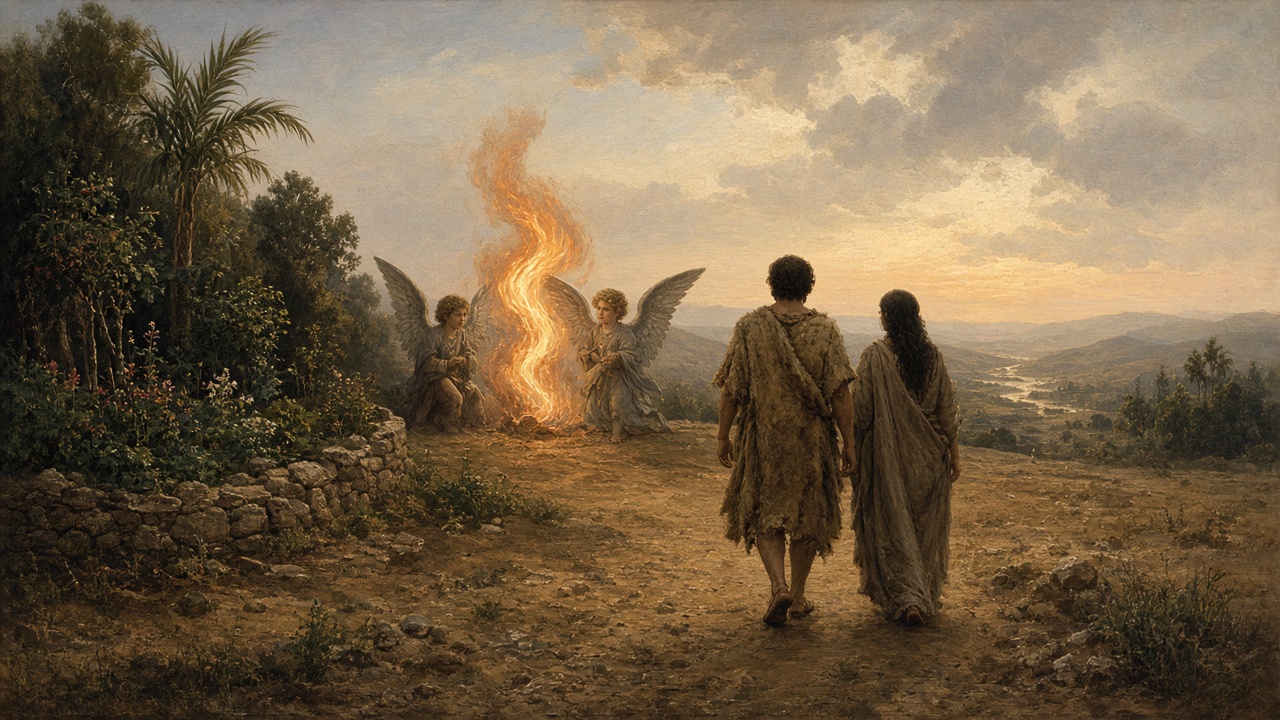
The Fall and Exile from Eden
- A traditional reference explains Adam as “red,” a Babylonian word used as the generic name for man, with the same meaning in Hebrew and Assyrian, and links the name to his being formed from the dust of the earth. In this chapter that origin returns in the judgment: he will toil for his food until he returns to the ground, for he is dust and to dust he will return, and he is sent to work the soil from which he was taken.Sources: Adam · the Bible text itself
- In this chapter Adam gives his wife the name Eve, meaning “life” or “living,” because she would be the mother of all the living.Sources: Eve · the Bible text itself
- The site of the garden of Eden, from which the man is driven in this chapter, has been much discussed and placed in Armenia, west of the Caspian Sea, in Media, near Damascus, in Palestine, in southern Arabia, and in Babylonia. A traditional geographical note looks for it along the Tigris and the Euphrates, in the land of Shinar, or Babylonia.Sources: Eden · the Bible text itself
Notes written with AI assistance from open sources (Theographic Bible Metadata, CC BY-SA 4.0; Easton’s Bible Dictionary, public domain) and reviewed before publishing.
Credits and license for this translation
Godeya꞉ To Nafayo꞉ We
The New Testament, Genesis, and Ruth in the Kaluli language of Papua New Guinea
Sampela hap Buk Baibel long tokples Kaluli long Niugini
copyright © 1998-2022 Wycliffe Bible Translators, Inc.
Language: Kaluli
Translation by: Wycliffe Bible Translators
This translation is made available to you under the terms of the
Creative Commons Attribution-Noncommercial-No Derivatives license 4.0.
You may share and redistribute this Bible translation or extracts from it in any format, provided that:
You include the above copyright and source information.
You do not sell this work for a profit.
You do not change any of the words or punctuation of the Scriptures.
Pictures included with Scriptures and other documents on this site are licensed just for use with those Scriptures and documents.
For other uses, please contact the respective copyright owners.
2025-03-12
Source: http://png.bible/bco/ · eBible.org