Genesis 26
Buk Baibel long Anuki · Tap a verse to see its cross-references.
Yawe God ivisuwona da Aisik inimiiseyeni naboni Abraham
1Kapoe ghamana ipiika magha Kenen kuburine. Bi noko kapoena, na ware naghove Abraham yana raghaniye itubughana. Na Aisik inagho Gera kwanatune, meme Abimelek, Pilistain damdi yadi kiiwawo, iyamakamakena.
2Wasina bi Yawe God irumaghatara Aisik biidi bi iwona bo, “Gegha kunanagho Ijipt ma, bi gawara anawonem na name kumakae. 3Mmko gawarine kunamake raghani gisina, bi tagu na tam gwabimve da animiiseyem. Tagu mmko tanavina tupana anaverem bi kate nosinosim yawata, bi kiiravimve anabera da awaki tamamnaki Abraham biidi avisuwoneni na inatubugha. 4Nosinosim korotodi anaverem, yadi koroto naboni ware kewokewo abame, bi mmko tanavina tupana anaveredi. Nosinosimve na dam tupana mmko kuburina debane animiiseyedi 5noko biidi mmko anabera, basuna Abraham gamogu iwaiyaneni, bi yagu sisiya tupadi ikabisisiredi, kate yagu wiiyeveveyana da yagu gwara.” 6Na Aisik nama Gera kwanatune imakae.
Did you know?
Isaac in Gerar
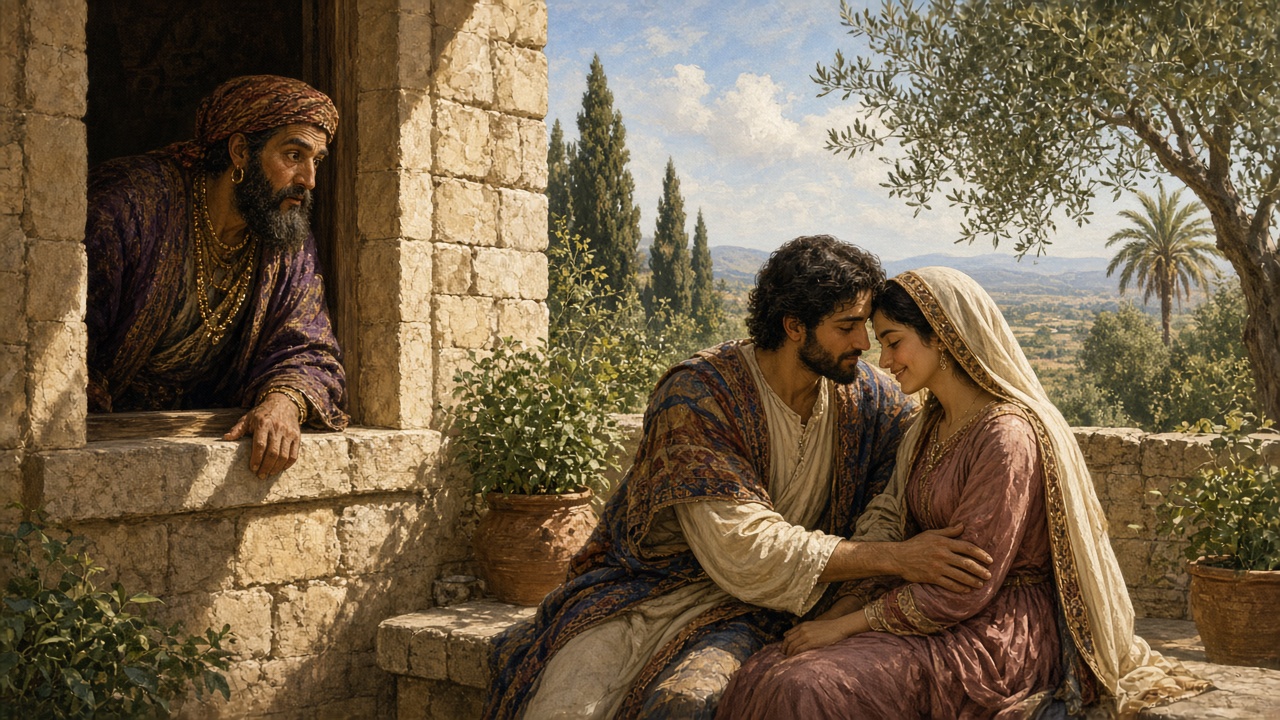
- During a famine, Isaac sought refuge with Abimelech, king of Gerar, an ancient town and district on the southern border of Palestine. Easton's Bible Dictionary (1897) notes that Isaac acted toward his wife Rebekah much as his father Abraham had acted toward Sarah there: he said she was his sister. Abimelech later rebuked him when the deception was discovered.Sources: Abimelech (King of Gerar) · Gerar · the Bible text itself
- The names of wells in the Valley of Gerar recall the disputes over them. Esek means “quarrel,” because the herdsmen of Gerar claimed the water, and Sitnah means “strife.” Isaac also reopened wells that his father Abraham’s servants had dug and that the Philistines had stopped up, and he gave them the same names his father had given them.Sources: Esek · Sitnah · the Bible text itself
- Beersheba means “well of the oath” or “well of seven.” According to Easton's Bible Dictionary (1897), Abraham dug a well there and named it after a compact with Abimelech, and Isaac gave it the same name when he reopened it. The dictionary also identifies Phicol—“great”—as chief captain of Abimelech’s army, and says he took part in Abraham’s alliance over that well.Sources: Beersheba · Phichol · the Bible text itself
Notes written with AI assistance from open sources (Theographic Bible Metadata, CC BY-SA 4.0; Easton’s Bible Dictionary, public domain) and reviewed before publishing.
Places in this chapter
- Egypt · 30.129, 31.308 · verse 2
- Valley of Gerar · Today: about 3 km around Tel Haror · 31.382, 34.606 · verses 17, 19
Only places identified with high confidence are shown (90% or more according to the scholarly sources compiled by OpenBible). Period map: DARE (Digital Atlas of the Roman Empire), CC BY 4.0; modern map: © OpenStreetMap contributors; places: OpenBible.info (CC BY 4.0).
Credits and license for this translation
Buk Baibel long Anuki
Portions of the Holy Bible in the Anuki language of Papua New Guinea
Buk Baibel long tokples Anuki long Niugini
copyright © 2010-2016 Wycliffe Bible Translators, Inc.
Language: Anuki
Translation by: Wycliffe Bible Translators
This translation is made available to you under the terms of the
Creative Commons Attribution-Noncommercial-No Derivatives license 4.0.
You may share and redistribute this Bible translation or extracts from it in any format, provided that:
You include the above copyright and source information.
You do not sell this work for a profit.
You do not change any of the words or punctuation of the Scriptures.
Pictures included with Scriptures and other documents on this site are licensed just for use with those Scriptures and documents.
For other uses, please contact the respective copyright owners.
2014-06-02
Source: http://png.bible/aui/ · eBible.org