Luke 10
Ebe-No-Pfuasẹ Ishobọ Onogbọ · Tap a verse to see its cross-references.
IJesu ọ ghie ẹgbọ egbhuẹsẹ etuogbava fiẹ
1Ona o dọsẹ se, Ọnọmhuẹ ọ zẹ ẹgbọ egbhuẹsẹ etuogbava, ọ mu wẹ ava-ava, ọ e ralo na luẹ ni e kia je ikpe ni ọọ nono ni lọli kia ramhi. 2Ọọ wẹ, “Ikhiẹsẹ oniẹmhi o la ọ, eri-tsẹ eni ẹ khiẹsẹ wẹ ẹa bu. Itobọ ighọ, a sọ lema ita ọni ọ mhuẹ okhiẹsẹ, ni ọ ghie eni ẹ khiẹsẹ bhale ishemhi oyọli. 3A ke lẹ! Eri mhia ghie ẹ abinẹ isumha ne la ifuabọ idumhi. 4A khi tsua ẹkuẹ ukpaghọ wẹ khi akpulu wẹ khi ekuẹ, a khi tsẹ ẹgbọ odẹ.
5“Ini a lo owa okhọghuo, a kpẹ to dẹ liẹ ‘Opfọmhẹ o ka la oni owa ona.’ 6Ini ọgbọ opfọmhẹ ọ la aghọ, opfọmhẹ oyẹ ẹ o deba li, ini aa mẹ, opfọmhẹ oyẹ ẹ o nyenẹ egbe deba ẹ. 7Apfẹ okhọghuo ni a da lo ne, a la aghọ le, a la aghọ da emiemini e da rọ ya na ẹ. Irari khi o ti ni ọgbakanya ọ mie ifata. A khi ke kia te owa da je owa.
8“Ini a da lo ẹoli le ni e rọ da mie ẹ ne, a le emini e rọshi ekẹ na ẹ. 9A ri eni ẹẹ ghua ni e la aghọ ze, a gueyẹ wẹ, ‘Eghiele oyi Ẹshinẹgba o she ti mama ẹ.’ 10Ẹoli ni a bhale kpa ni ẹa da mie ẹ, a je ifu apfẹ ya liẹ, 11‘Itutu oyi ekẹ oyẹ ni e la anye awẹ, anye she kpishi wẹ shi ekẹ na ẹ, ni e ya pfi ọtsẹlẹ mu ẹ. Ama ẹẹ ọyẹ ẹ, a lẹsẹ khi Eghiele oyi Ẹshinẹgba o she ti mama ẹ.’ 12Mhi gueyẹ ẹ khi ogbẹlẹ isọ-ẹzọ khi o ya somhi iSodomu egbe dọsẹ oni ẹoli oghọ.
Ẹoli ni ẹa miesuọ
13“O ma khọlọ ẹ egbe, ikhi ẹẹ ẹgbọ iKorazi! O ma khọlọ ẹ egbe, ẹẹ ẹgbọ iBẹtisaida! Irari khi ini ikanya ọnyaloa ni a la elemhi ẹ gbe khi a la ekẹ iTai ali iSidọni li gbe wẹ lọ, e kha mu nyenẹ agbọagbọ. E sọ ide eviẹ, e shitọ ukhomhi emuẹ. 14Eri-tsẹ khi Ẹshinẹgba ọ ya mhuẹ isomhelemhi na ẹgbọ iTirẹ ali ẹgbọ iSodomu dọsẹ ẹ ogbẹlẹ iguẹzọ. 15Ẹẹ ẹgbọ iKapanọmu, eri a dabi khi a ya ti ẹ nga idane? Iiye! Eri a ya ti ẹ tiemhi ilimhi iriẹriẹ.
16“Ọọ wẹ, ọni ọ da ri esọ shi ẹ ọ ne, mhẹmhẹ ọ ri esọ shi ọ. Ọni ọ da kie ẹ, mhẹmhẹ o kie. Ọni ọ da kie mhẹ ne, ọni ọ ghie mhẹ ọ kie.”
Ijele oyi ẹgbọ egbhuẹsẹ etuogbava
17Ighọ eni ẹgbọ egbhuẹsẹ etuogbava eghọ e ri oghẹlẹ jele. Ẹẹ ọli, “Ọnọmhuẹ, eri egbegbi iyẹmhẹ ọkphaghiẹ e ri irari eva oyẹ nyẹsẹ ukhomhi na anye.”
18IJesu ọọ wẹ, “Mhi mẹ khi ọkphaghiẹ ọ rọte idane de pfile abi erali akphala. 19A ghe khẹ! Mhi she ri afu na ẹ, ni a rọ lighi enyẹ ali ikpi dọsẹ, ali ni a gbo mu itoto ali ekpabọ alo ebili nyaa ọ le. Emhikhọghuo ẹa ya li ẹ. 20A khi ghẹlẹ khi ọkphaghiẹ ọ ri irari eva oyẹmhẹ nyẹsẹ ukhomhi na ẹ, ama a ke ghẹlẹ khi a kẹkẹ eva oyẹ ẹ shi iloghie.”
IJesu ọ ghẹlẹ
21Ẹghẹghẹ aghọ, oghẹlẹ o te elemhi Ayẹmhẹ-nọ-pfuasẹ vọ iJesu egbe, ọọ li, “Mhi tsẹ uwegbe, Ita ni ọ mhuẹ ekẹ ali ukhuli. Irari khi u she ri emhi ena sheli ẹgbọ ni e fia alo-a ali eni e mema wẹna ebe. Ama u rẹwẹ khasẹ ikuku eniyẹ. Ighọ lọ Ita, irari khi abi o li ghọle ẹ shi ghọ.
22“Itamhẹ ọ she ri emhikpa shi mhẹ obọ. Aa mẹ ọgbọ ni ọ lẹsẹ ọni ọmọ ọ khi, sẹ ni Ita. Aa mẹ ọgbọ ni ọ lẹsẹ ọni Ita ọ khi, sẹ ni ọmọ. Eni e ghọle ọni ọmọ ọ ri Ita a khasẹ.”
23Ighọ ọ nyenẹ alo ghue eniyẹ odukhokho eyọli, ọ bẹna nu wẹ ngme, ọọ wẹ, “Ikhivọsẹ o khi na ikpalo ni e mẹ emini ẹẹ a mẹ. 24Mhi gueyẹ ẹ khi emekẹguele ali ighie ebubu e nono ni wẹwẹ e mẹ emini ẹẹ a mẹ ali ni e suọ emini a suọ ena, ama ẹa dobẹ.”
Ekpita oyi ọngi iSamarita ọnete
25Ighọ ọsẹsẹ Ishi eyi iMosisi ọghuo ọ vule ya mu iJesu fẹ bino. Ọ mhila li, “Elọ mhi fẹ ya li ni mhi rọ ya mhuẹ agbọ na agbọagbọ?” 26IJesu ọ li, “Elọ a kẹkẹ shi ebe Ishi eyi iMosisi? Sẹ u liẹ zẹ emini a kẹkẹ shi ọ?”
27Ọ iJesu, “Rọte ekelemhi udu oyẹ nya ali ayẹmhẹ oyẹ nya ali ekpabọ eyẹ nya ali isamhi eyẹ nya nono ingme oyi Ẹshinẹgba. U gbo nono ingme oyi ọnuzava ọyi ẹ abi u nono ingme egbe ẹ.”
28IJesu ọọ li, “U ga guẹ gbaghiẹ-a. Lina ke ngeli khi u ya mhuẹ agbọ ona agbọagbọ.”
29Eri ọni ọsẹsẹ Ishi eyi iMosisi ọna ọ nono ni lọli rọkhasẹ khi lọli lẹsẹ enana nya. Ọ mhila iJesu, “Ọghuo ọ fẹ khi ọnuzava ọyẹmhẹ?”
30IJesu ọ lina sọ ọli ọ, “Ọmọse ọghuo ọ ke rọte ẹoli iJerusalẹmu tiemhi ẹoli iJẹriko. Ighọ ọ de ya pfilo ighiatọ abọ. E gbe ọli banọ-a, e kẹsẹ ukuku ayẹmhẹ shi ọli ọ, e mie ọli emini ọ mhuẹ nya. 31A bhale ya ẹ khi ọkpodalo-ugamhi ọyi Ẹshinẹgba ọ rọte oni odẹ ẹ dọsẹ. Abi ọ rọ mẹ ọni ọmọse ni ighiatọ e gbe eghọ, ọ da je ukiẹkiẹ odẹ ni o kpọle ya dọsẹ vu. 32Ighọ ọni ọ la Owa oyi Ẹshinẹgba gbe akanya ọghuo, eni a lu iLivaiti, ọ ramhi aghọ, ọ mẹ ọli, ọ li rọte ukiẹkiẹ odẹ ni ọ kpọle ya dọsẹ. 33Ọmọse ọngi iSameria ọghuo ni ọ lẹ asha, ọ ramhi ashini ọni ọmọse ọ la. Ọ mẹ ọli, elemhi ọli e lala li. 34Ọ lẹ deba li, ọ ku oili ali onyọ shi ọli ikpe ni ọ kuali utse. Ọ ri ide gẹnọ li ẹwẹ. Ọ tsua li nga akphẹrẹ ọyọli, ọ tsua li bhale owa ni a ku ẹ shi, ọọ gueyẹ wẹ e ri ẹloe khu ọli. 35Ogbeakọlọ ọ ri ifata ogbẹlẹ eva na ọni ọ mhuẹ oni ashini a ku ẹ shi. Ọ ọli, ‘Kpẹkpẹ ri ẹloe khu ọmọse ọna. Ingmẹ ni o ke ya gbe nya, ini mhia jele mhi ya fali ẹ wẹ.’
36“Ọghuo ọ elemhi ẹgbọ aasẹ ena u sa khi ọ khi ọnuzava ọyi ọni ọmọse ọna ni ighiatọ e gbe?” 37Ọni ọsẹsẹ ushi ọọ li, “Ọni ọ mhuẹ ilẹlemhi na li.”
Ighọ iJesu ọọ li, “Li lighọ ke ngeli.”
IJesu ọ je apfẹ oyi iMata ali iMeli
38Abi iJesu ali eniyẹ odukhokho eyọli e li lẹ, e bhale ẹoli oyi ọkpotso ni a lu iMata. Ọni iMata ọ mie ọli shi owa. 39Ọni iMata ọ mhuẹ inyọghuo ọkpotso ni a lu iMeli ni ọ shitọ kpẹsẹ iJesu ri esọ shi emini ọ sẹsẹ. 40Abi a li ya mu iJesu epfẹse, o zu iMata alo, ọa mẹ asha ri esọ shi emini iJesu ọ sẹsẹ. Ighọ ọ bhale deba iJesu, ọọ li, “Wa mẹ khi inyọghuo-mhẹ ọ zobẹ ikanya nya na mhẹmhẹ-ghuo a gbe? Wẹ ọ bhale ya kpaghiẹ mhẹ obọ.” 41Ọnọmhuẹ ọọ li, “IMata, iMata, u ma kphakpha egbe ke nasẹ egbe ẹ shi itobọ emhi ebubu. 42Ama emhi oghuo o mema mu egbe. IMeli ọ she zẹ oni o tinẹ ni o laọ, ọgbọ ọa ya mie ọli luẹ.”
Did you know?
The mission, the towns, and Martha and Mary
- Easton's Bible Dictionary (1897) identifies Chorazin, named in this chapter's woes along with Bethsaida and Capernaum, with Kerazeh, about two and a half miles up the Wady Kerazeh from Capernaum. It says that after Jesus was expelled from Nazareth, Capernaum became his own city. The chapter compares those towns with Tyre and Sidon; the dictionary calls Sidon the first home of the Phoenicians on the coast of Palestine and the mother city of Tyre, about twenty-five miles north of Tyre.Sources: the Bible text itself · Chorazin · Capernaum · Sidon
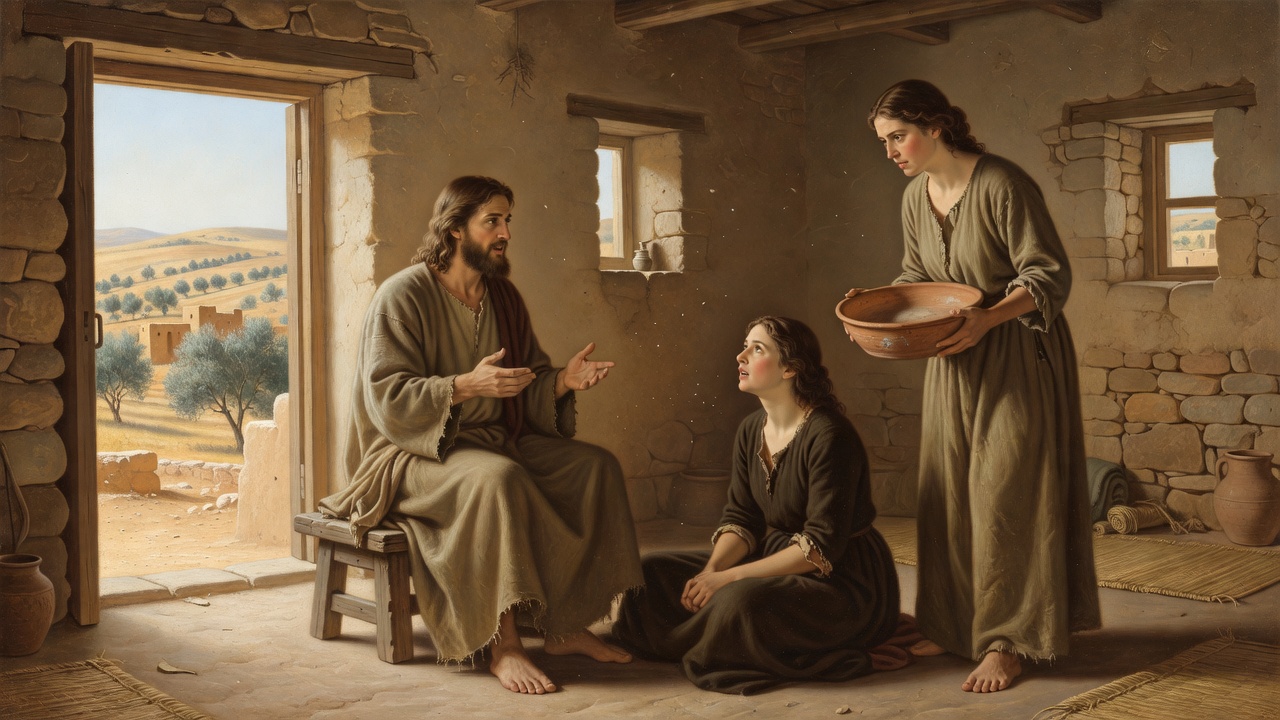
- Easton's Bible Dictionary (1897) gives the name Martha as meaning bitterness, and says that she, her sister Mary, and their brother Lazarus lived at Bethany, with Martha probably the eldest. Because this passage calls the house hers, the dictionary notes that some have supposed she was a widow and that her brother and sister lodged with her. It describes her as anxious and bustling in caring for her guest, unlike Mary, who sat at Jesus' feet and listened.Sources: the Bible text itself · Martha · Mary (sister of Lazarus)
- The Lord appoints seventy-two others and sends them two by two ahead of him, and an event chronology dates that sending to AD 29. When they return, rejoicing that even the demons submit in his name, he says he saw Satan fall like lightning from heaven. Easton's Bible Dictionary (1897) explains the name Satan as adversary or accuser, and notes that the New Testament uses it interchangeably with the devil more than thirty times.Sources: the Bible text itself · 70 Sent Out · Satan
Notes written with AI assistance from open sources (Theographic Bible Metadata, CC BY-SA 4.0; Easton’s Bible Dictionary, public domain) and reviewed before publishing.
Places in this chapter
- Sidon · Today: Sandikli archaeological site in Sidon · 33.561, 35.372 · verses 13, 14
- Tyre · 33.271, 35.196 · verses 13, 14
- Jericho · Today: Tell el Alayiq · 31.852, 35.436 · verse 30
- Jerusalem · 31.777, 35.234 · verses 30, 38
Only places identified with high confidence are shown (90% or more according to the scholarly sources compiled by OpenBible). Period map: DARE (Digital Atlas of the Roman Empire), CC BY 4.0; modern map: © OpenStreetMap contributors; places: OpenBible.info (CC BY 4.0).
Credits and license for this translation
Ebe-No-Pfuasẹ Ishobọ Onogbọ
New Testament in Ivbie North-Okpela-Arhe (NI:atg:Ivbie North-Okpela-Arhe)
copyright © 2012 Wycliffe Bible Translators, Inc.
Language: Ivbie North-Okpela-Arhe
Translation by: Wycliffe Bible Translators, Inc.
Copyright Information
© 2012, Wycliffe Bible Translators, Inc. All rights reserved.
This translation text is made available to you under the
terms of the Creative Commons License: Attribution-Noncommercial-No Derivative Works.
( http://creativecommons.org/licenses/by-nc-nd/3.0/ )
In addition, you have permission to port the text to different file formats, as long as you
do not change any of the text or punctuation of the Bible.
You may share, copy, distribute, transmit, and extract portions
or quotations from this work, provided that you include the above copyright
information:
You must give Attribution to the work.
You do not sell this work for a profit.
You do not make any derivative works that change any of the actual words or punctuation of the Scriptures.
Permissions beyond the scope of this license may be
available if you contact
us with your request.
Printed book ISBN 9789789194797
The New Testament
in Ivbie North-Okpela-Arhe
© 2012, Wycliffe Bible Translators, Inc. All rights reserved.
This translation is made available to you under the terms of the
Creative Commons Attribution-Noncommercial-No Derivatives license 4.0.
You may share and redistribute this Bible translation or extracts from it in any format, provided that:
You include the above copyright and source information.
You do not sell this work for a profit.
You do not change any of the words or punctuation of the Scriptures.
Pictures included with Scriptures and other documents on this site are licensed just for use with those Scriptures and documents.
For other uses, please contact the respective copyright owners.
2019-08-09
Source: http://ebible.org/atgNT/ · eBible.org