Jeremiah 17
Cishingini Agwara Kambari [asg] · Tap a verse to see its cross-references.
Unushi wa aza Yahuda
1<<Unushi wa aza Yahuda a ɗana ta̱ u n ɗa m macaka mi iɗani ma vuyum, n una̱u utsura, a ka̱ra̱ ka le ta̱ a ɗa a magbaganla a̱ɗa̱u e le, n gaɗi va avana a katalikalyuka, 2muku n le feu n tsuyaꞋan ta̱ ma̱za̱nga̱ ma a na a bana ubuta̱ wa atali a lyuka a̱ma̱li e le, n ubuta̱ u kululu ku Asheru ku na ikaya e le i ci tono, a kakambu ka nɗanga n aginda ugaɗi, 3n uɓon wa a nsansa a keteshe ka likuci. Ka̱ta̱ n neke udukuyan u ɗa̱ n kuzuwa ku ɗa̱ ra̱ka̱, gbani adama a ubuta̱ unushi u ka̱ra̱Ꞌi iɗika i ɗa̱ ra̱ka̱. 4Ka̱ta̱ i namba ucanuku wu uka̱ni u n nekei ekiye a̱ɗa̱, ka̱ta̱ n zuwa ɗa̱ i ga̱nda̱ ka̱ irala i ɗa̱ a iɗika i na i nambai ku yeve, adama na a ka̱tsuma̱ ka wupa u va̱, ɗa akina a tsuta̱ ka̱ta̱ a ka̱na̱ ku kula̱ ali uteku n uteku.>>
5Vuzavaguɗu u dana ta̱,
<<Una̱ u wuya u ɗa, u vuma na u nekei ka̱ɗu ka̱ ni u vuma.
A̱yi na n a̱yi derere ɗa i, a̱yi na u kpatalakai Ka̱shile kucina̱. 6Adama na wi ta̱ an mura̱ta̱i a kakamba, wi a kene kasingai ka na ka ku ta̱wa̱i ba. Wi ta̱ a kuda̱sa̱ngu agbata a kakamba, a ɗika ya mkpaɗi i na yi babu vuza.
7<<Vuza vu una̱singai ɗa vuza na u nekei ka̱ɗu ka̱ ni u Vuzavaguɗu. 8U tsu yongo ta̱ an maɗanga ma na a̱ shikpa̱i a ubuta̱ u mini, a̱ yi u tsu zuwa ta̱ aralu a̱ ni a kubana o kuɗolu, ka̱ta̱ u kpa̱ɗa̱ kupana wovon u kpandari, adama na a̱vuku a̱ ni o tsu yongo ta̱ ta̱ku, u tsu pana wovon a ayin unambi u mini ba, u tsu ka̱sukpa̱ kumatsa umaci ba. 9Ka̱ɗu ka laꞋa ta̱ ili ra̱ka̱ asuvawuya, ama tukpa n kagbanigbani, ya yi u kufuɗa ku yeve kaꞋa? 10<<Mpa Vuzavaguɗu n la̱na̱ ta̱ ka̱ɗu, ɗa n kondoi kaꞋa, adama na n neke yaba dem uteku ci ili na u yaꞋin, n uteku tsu kutoni ku ni.>> 11Uteku tsu na maroni ma tsu vaku okowo a na u zuwai ba, ta vuza vu uciyi vu na u ciya̱i udukuyan n uye u singai ba wi nannai, a ka̱tsuma̱ ka utsura u wuma u ni, u ɗa wi ta̱ o kukotso, ka̱ta̱ a ukocishi wokpo kalau. 12Kakuba ka singai kana a̱ shikpa̱i ɗe n ugiti, kaɗa ubuta̱ u ciɗa u na ci shi yaꞋin kutoni. 13O a vu Vuzavaguɗu, katsura ki Isaraila, yaba dem na u ka̱sukpa̱i nu wi ta̱ o kokpo n wono, aza na a kpatalai ɗa a̱ ka̱sukpa̱i nu aduniyan, i ta̱ a ku kece le iɗika, adama na a ka̱sukpa̱ Vuzavaguɗu, kayinva ka mini ma wuma. 14Vuzavaguɗu, potsotongu mu, isa mu, mpa tana mita̱ a ku ciya̱ wishi, adama na a vu ɗa i li kucikpi i va̱. 15La̱na̱, a tsu dana mu ta̱, <<Te ɗai kadanshi ka Vuzavaguɗu ka ki? Ɗa̱skpa̱ ka ka̱ ta̱wa̱.>> 16Mpa n suma ubuta̱ u kokpo maguɓi ma nu ba, ko n cikala ke ne kanna ka atakaci. Kpamu vu yeve ta̱ i na de ra̱ka̱ yi uta̱i una̱ u va̱, e keteshe ka i ɗa yi. 17Ka̱ta̱ vokpo mu ili wovon ba, adama a na a vu ɗa ubuta̱ u ku sheɗeku u va̱ a kanna a atakaci. 18Ka̱sukpa̱ aza na i a kutakacika mu okpo n wono, ama ka̱ta̱ vu ka̱sukpa̱ mu mokpo n wono ba, ka̱sukpa̱ wovon u ka̱na̱ le, ama ka̱ta̱ vu ka̱sukpa̱ m mpa na wovon ba. SuꞋuku le kanna ka atakaci ka̱ta̱ vuna le ali kureꞋe.
La̱na̱ kanna ka Ashibi, ciɗa
19Ɗa Vuzavaguɗu u danai mu, <<Bana vu shamgba a utsutsu a utsutsu uma a tsu uwa, u na ngono ma aza Yahuda a tsuwa n uta̱i, koɓolo n tsutsu u Urushelima n na ubuwai ra̱ka̱, 20ka̱ta̱ vu dana, <A̱ ɗa̱ ngono ma a Yahuda, n uma aza Yahuda, koɓolo n aza na i punu ida̱shi a Urushelima, a na o tsu tono u tsutsu na mpa, panai kadanshi ka Vuzavaguɗu. 21Vuzavaguɗu u dana ta̱, i la̱na̱ mayin, adama a wuma u ɗa̱, ka̱ta̱ i ɗika ucanuku a kanna ka Ashibi ko i uka n ili n tsutsu Urushelima ba. 22Ka̱ta̱ i ɗika ucanuku u ɗa yi uta̱ka̱ pulai vi uwa i ɗa̱ a kanna ka Ashibi ba, ko kpamu i yaꞋan ulinga u yoku a kanna ka ba, ama la̱na̱i kanna ka Ashibi ka, ciɗa, uteku tsu na n tonokoi ikaya i ɗa̱. 23N nannai dem ɗa a iwain kupana, ko a zuwa asuvu le a pana. Ama ɗa a votsuki atsuvu e le adama a na a̱ kpa̱ɗa̱ kupana a.
24<< <Ɗa Vuzavaguɗu u danai, ama ɗa baci i zuwai atsuvu ɗa i panai kana n dansai, ɗa i kpa̱ɗa̱i ku uwaka n ucanuku a utsutsu u likuci i na mpa a kanna ka Ashibi, ama ɗa i ɗikai kanna ka Ashibi ka okpoi kanna ka ciɗa kpamu ɗa i kpa̱ɗa̱i ku yaꞋan u linga a kanna ka, 25a ayin a nanlo ɗa ngono n na n kuda̱sa̱ngu a kakuba ka tsugono ka Dawuda, a kuwa n tsu tsutsu likuci u na mpa wa, ka̱ta̱ a kumba i keke ya odoku e le n ngono n le, koɓolo n uma Yahuza n aza na i punu ida̱shi a Urushelima. Ka̱ta̱ a̱ da̱sa̱ngu a likuci i na mpa a li a kubana uteku. 26Ka̱ta̱ uma uta̱ a likuci i Yahuda n ubuta̱ u na wi u ka̱ra̱i n Urushelima, a likuci ya aza Bayami, n Shefela vu likuci va nsansa, koɓolo n Negebu, ka̱ta̱ a ka̱na̱ ku utuka̱ n alyuka a kuneꞋe ku kusongu ku le, n alyuka o kusoꞋo, n atsa̱ka̱na̱, ka̱ta̱ kpamu a̱ tuka̱ n alyuka a kucikpa a Isa̱ a Vuzavaguɗu. 27Ama ɗa baci i iwain kupana, ɗa i kpa̱ɗa̱i ku ɗika kanna ka Ashibi ciɗa, ɗa i ɗikai u canuku ɗa i ukai utsutsu wu Urushelima a kanna ka Ashibi, n ku dyaɓa ka ta̱ utsutsu wu Urushelima akina, ka̱ta̱ a ɗa o songu efeku a Urushelima, kpamu a ɗa i a ku kima̱ ba.> >>
Did you know?
Trust, the Heart, and the Sabbath
- The iron stylus and diamond point were ancient tools used to carve deep, permanent inscriptions into hard stone or metal surfaces. Jeremiah invokes this image to emphasize that the idolatry of Judah was not a superficial slip, but deeply etched into their hearts and upon the horns of their altars.Sources: the Bible text itself
- Jeremiah contrasts a solitary shrub in the parched, salty desert with a flourishing tree planted by a stream. A tree with roots reaching into water stays green and continues bearing fruit even in years of drought, serving as an image of enduring life for those who trust in God rather than human strength.Sources: the Bible text itself
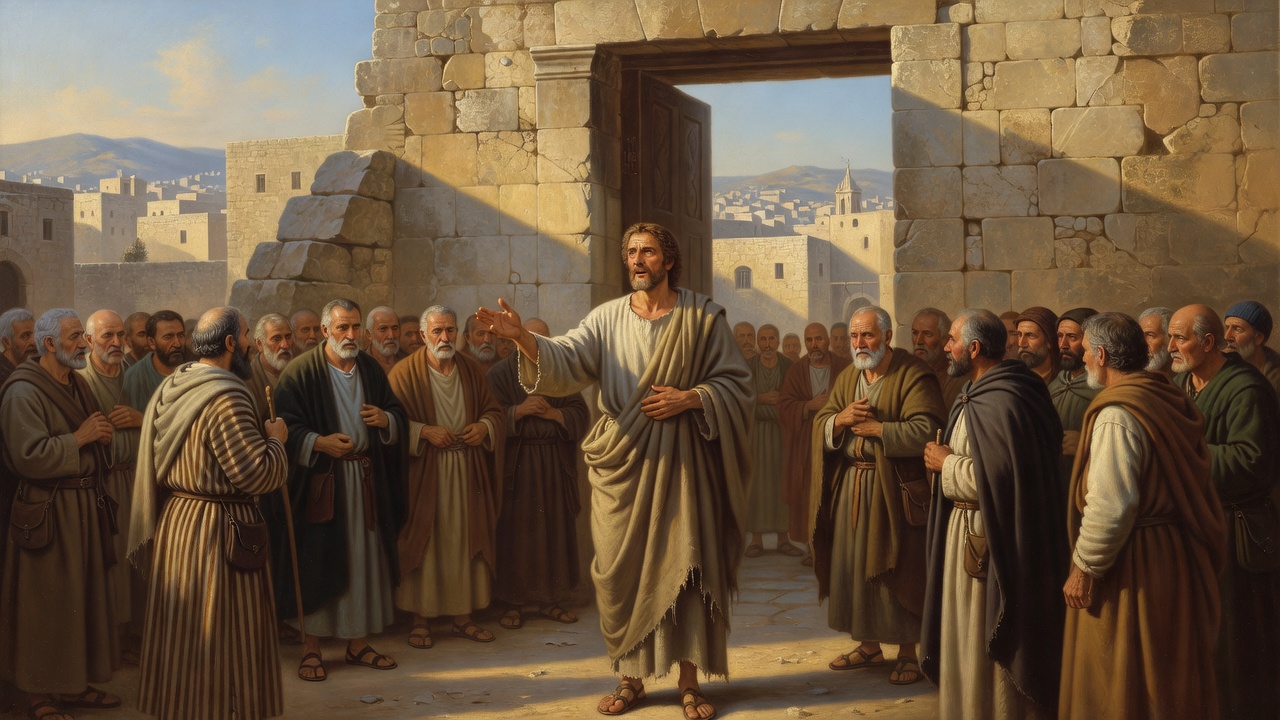
- Jeremiah was instructed to proclaim God's word at the gates of Jerusalem, specifically forbidding the carrying of commercial loads on the Sabbath. Keeping the Sabbath holy promised the continuation of kings on the throne of David and the arrival of worshippers from the territory of Benjamin, Judah, and the arid Negev.Sources: the Bible text itself · David · Benjamin (patriarch) · Jerusalem
Notes written with AI assistance from open sources (Theographic Bible Metadata, CC BY-SA 4.0; Easton’s Bible Dictionary, public domain) and reviewed before publishing.
Places in this chapter
- Arabah · 30.417, 35.151 · verse 6
- Jerusalem · 31.777, 35.234 · verses 19, 20, 21, 25, 26, 27
- People’s Gate · Today: in Jerusalem · 31.777, 35.234 · verse 19
- Negeb · 31.245, 34.841 · verse 26
- Shephelah · 31.692, 34.875 · verse 26
Only places identified with high confidence are shown (90% or more according to the scholarly sources compiled by OpenBible). Period map: DARE (Digital Atlas of the Roman Empire), CC BY 4.0; modern map: © OpenStreetMap contributors; places: OpenBible.info (CC BY 4.0).
Credits and license for this translation
Cishingini Agwara Kambari [asg]
Cishingini: Cishingini Agwara Kambari [asg] (Bible)
copyright © 2025 Language Development and Translation Initiative (LDTI)
Language: (Cishingini)
Contributor: The Seed Company
This translation is made available to you under the terms of the
Creative Commons Attribution Share-Alike license 4.0.
You have permission to share and redistribute this Bible translation in any format and to make reasonable revisions and adaptations of this translation, provided that:
You include the above copyright and source information.
If you make any changes to the text, you must indicate that you did so in a way that makes it clear that the original licensor is not necessarily endorsing your changes.
If you redistribute this text, you must distribute your contributions under the same license as the original.
Pictures included with Scriptures and other documents on this site are licensed just for use with those Scriptures and documents.
For other uses, please contact the respective copyright owners.
Note that in addition to the rules above, revising and adapting God's Word involves a great responsibility to be true to God's Word. See Revelation 22:18-19.
2025-07-09
Source: http://ebible.org/asg/ · eBible.org