Jeremiah 16
Cishingini Agwara Kambari [asg] · Tap a verse to see its cross-references.
Kambulu, Kotokobi n Ukpa̱
1Ɗa Vuzavaguɗu kpamu u doku yaꞋin kadanshi m mpa, u danai, 2<<Ka̱ta̱ vu yaꞋin yolo, vu matsa muku mo olobo ko nkere ubuta̱ u na mpa ba. 3Adama a na i na Vuzavaguɗu u dansai adama a muku mo olobo n nkere n a matsai ubuta̱ u na mpa, n isheku i na i maci le i iɗika i na mpa i ɗa na. 4I ta̱ a ku kuwa̱ n mɓa̱la̱ n kavama. Babu vuza na u kuyaꞋin ka le kpalu, be le tana a ciɗa̱ngu le. I ta̱ o kokpo keyelekpetei. Kotokobi n kambulu ki ta̱ a kuna le, ka̱ta̱ even i kyamba i le okpo ilikulya ya nnu n nama n kakamba. 5Adama na Vuzavaguɗu u dana ta̱ Ka̱ta̱ vu uwa a kpaꞋa ku na i a kuyaꞋin kpalu ko ubuta̱ u na i una̱mgbi ka̱tsuma̱ ba. Ka̱ta̱ vu na̱mgba̱ ka̱tsuma̱ adama e le ba, adama na mpa mutuka̱ ta̱ ucigi u va̱ ubuta̱ uma a na mpa, ucigi u va̱ n asuvu ayali a̱ va̱ ubuta̱ uma a na mpa. 6Uma n a̱bunda̱i i ta̱ a ku kuwa̱ a iɗika i na mpa. Aza gbagbain n aza kenken. Ka̱ta̱ a namba vuza na u ku ciɗa̱ngu le, kpamu ko vuza u ku shika̱ adama e le ba, be le tana u ɗana ka̱ci ke, ko o gbonduwo aci adama e le. 7Babu vuza na u ku ya̱na̱ tsuwa u banka vuza kpalu va, adama a na u saꞋa yi adama a ilina i ciya̱i ni, babu kpamu vuza na u ku neke yi ili kusoꞋo adama a na u saꞋa eshekpu ko a̱na̱ku a̱ ni a na amaci ni. 8Ka̱ta̱ vu bana a kpaꞋa ku kakuli ali vu da̱sa̱ngu koɓolo n na̱ le ba a kulyaꞋa n osoꞋi ba. 9Adama a na mpa Vuzavaguɗu vuzagbayin va ovonshi Ka̱shile ki Isaraila, mita̱ a ku zuwa ka̱la̱ka̱tsu ka̱ ma̱za̱nga̱, n ka ma̱ta̱na̱, n ka vuka n vali. 10<<Ɗa baci vu danai uma kadanshi ka na mpa ra̱ka̱, i ta̱ a ku dana, <Yiɗa̱i i zuwai ɗa Vuzavaguɗu u danai ukuna u gbani-gbani u na mpa ra̱ka̱ u ciya̱ tsu? Yi ɗa̱i ci yaꞋin kai ni? Unushi wene u ɗa ci yaꞋin kai Vuzavaguɗu Ka̱shile ka̱ tsu? 11Ka̱ta̱ vu dana le, <Adama na eshekpu ikaya i ɗa̱ i ka̱sukpa̱ mu ta̱ ɗa a̱ ka̱na̱i kutono a̱ma̱li na yaꞋin kai le tsugbashi ɗa a̱ ka̱sukpa̱i mu kpamu a̱ tono wila̱ u va̱ ba, 12kpamu ɗa i kucikpa ɗa i laꞋi ikaya i ɗa̱ kuyaꞋin unushi, yaba dem vu ɗa̱ o kutono kusheshe ku gbani-gbani ku ka̱ɗu ku ni, ɗa i iwain kupana ka̱ va̱. 13Adama a nannai, mita̱ a ku utuka̱ ɗa̱ a iɗika i nampa ka̱ta̱ m bono ko ɗa̱ a iɗika i yoku i na ko ikaya i ɗa̱ i yevei ba, ta ɗe yi o kuyongo o kutono a̱ma̱li o yoku kanna n kayin, adama na ko asuvu ayali a̱ɗa̱ mi a kupana ba.>
Vuzavaguɗu wi ta̱ a kusabaꞋa Isaraila.
14<<Ayin i ta̱ lo a kuta̱wa̱, Ka̱shile ka dansai, kana uma o kudoku a dana, <N kucina ta̱ n kula ku Ka̱shile ka wuma ka na ku utuka̱i a za Isaraila i ɗika i Masar ba.> 15Ama i ta̱ a kudana, <N kucina ta̱ n Ka̱shile ka wuma kana ku utuka̱i n uma Isaraila a na i uɓon ugaɗi n iɗika dem i na u wacuwai le.> Adama na mita̱ o kubono ko le i ɗika i le i na n nekei ikaya i le. 16<<N nannai dem, Vuzavaguɗu u dana ta̱, ɗa na mita̱ ofoɓuso a na n kusuku osoruku adama na e reme le. Ka̱ta̱ m megeshe n su uku le na n aza a kutambu a na a kutamba le an nsansa, n akamba, n a̱ suvu a kpanlai atali dem. 17Adama na mita̱ e kene i na i a kuyaꞋan sa ra̱ka̱. Ko i te i le yi mu sokongi ba, kagbanigbani ke le ra̱ka̱ ki ta̱ a a̱shi a̱ va̱. 18Ama a ugiti mita̱ biꞋi o kudoku le ka̱bunda̱i ka atakaci adama a ka gbanigbani nu unushi u le, adama na a̱ la̱nga̱sa̱ mu ta̱ iɗika n a̱ma̱li unata a babu wuma e le, ɗa a shatangi ubuta̱ wu uka̱ni u va̱ n ili yu unata i le.>> 19Vuzavaguɗu, utsura u va̱ m mashilya mu utsura ma̱ va̱, n ubuta̱ u kusheɗeku u va̱ a ayin atakaci, a̱ nu ɗa aduniyan a kuta̱wa̱ ka̱ta̱ a dana, <<Ikaya i tsu i ciya̱ ili yi uka̱ni ba, banda a̱ma̱li a uwa, n ili gbanigbani i yaꞋin ki le ma̱riki ba. 20Vuma lima̱, wi ta̱ a kufuɗa wa yaꞋan ka ka̱ci ka̱ ni a̱ma̱li? Ama e le A̱shile a mayun a ɗa ba.>> 21<<Adama nannai, la̱na̱, mpa n kuzuwa le ta̱ e yeve, kute ku na mpa, n kuzuwa le ta̱ e yeve ili mereve i va̱ n utsura u va̱, ta lo a kuyeve an kula ku va̱ ku ɗa Vuzavaguɗu.>>
Did you know?
A Prophet's Solitude and Signs of Judgment
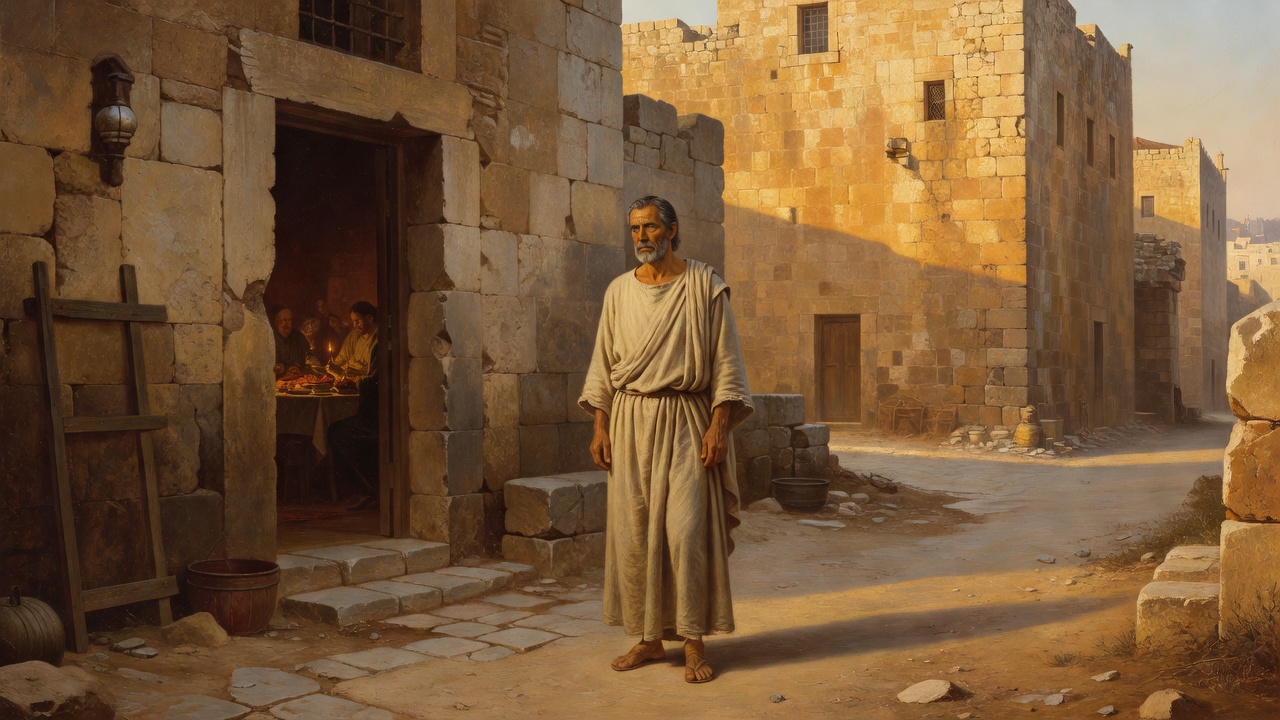
- God commands Jeremiah to abstain from marriage, funeral meals, and festive gatherings. His enforced isolation served as a living sign to the people that catastrophic loss, famine, and sword would soon eliminate both joyful celebrations and normal mourning rituals from the land.Sources: the Bible text itself
- The chapter lists customary mourning practices of the era, including sharing a cup of consolation and bread for the bereaved, as well as shaving the head and cutting the body in grief. The scale of the coming disaster would be so overwhelming that these traditional communal expressions of grief would cease completely.Sources: the Bible text itself
- Historically, the exodus from Egypt served as Israel's foundational narrative of divine deliverance. Jeremiah prophesies that a future restoration from exile in the northern lands would eclipse even the memory of the deliverance from Egypt.Sources: the Bible text itself · Egypt
Notes written with AI assistance from open sources (Theographic Bible Metadata, CC BY-SA 4.0; Easton’s Bible Dictionary, public domain) and reviewed before publishing.
Places in this chapter
- Egypt · 30.129, 31.308 · verse 14
Only places identified with high confidence are shown (90% or more according to the scholarly sources compiled by OpenBible). Period map: DARE (Digital Atlas of the Roman Empire), CC BY 4.0; modern map: © OpenStreetMap contributors; places: OpenBible.info (CC BY 4.0).
Credits and license for this translation
Cishingini Agwara Kambari [asg]
Cishingini: Cishingini Agwara Kambari [asg] (Bible)
copyright © 2025 Language Development and Translation Initiative (LDTI)
Language: (Cishingini)
Contributor: The Seed Company
This translation is made available to you under the terms of the
Creative Commons Attribution Share-Alike license 4.0.
You have permission to share and redistribute this Bible translation in any format and to make reasonable revisions and adaptations of this translation, provided that:
You include the above copyright and source information.
If you make any changes to the text, you must indicate that you did so in a way that makes it clear that the original licensor is not necessarily endorsing your changes.
If you redistribute this text, you must distribute your contributions under the same license as the original.
Pictures included with Scriptures and other documents on this site are licensed just for use with those Scriptures and documents.
For other uses, please contact the respective copyright owners.
Note that in addition to the rules above, revising and adapting God's Word involves a great responsibility to be true to God's Word. See Revelation 22:18-19.
2025-07-09
Source: http://ebible.org/asg/ · eBible.org