Jeremiah 18
Cishingini Agwara Kambari [asg] · Tap a verse to see its cross-references.
Ka maꞋin ko mgbodo n ciꞋin
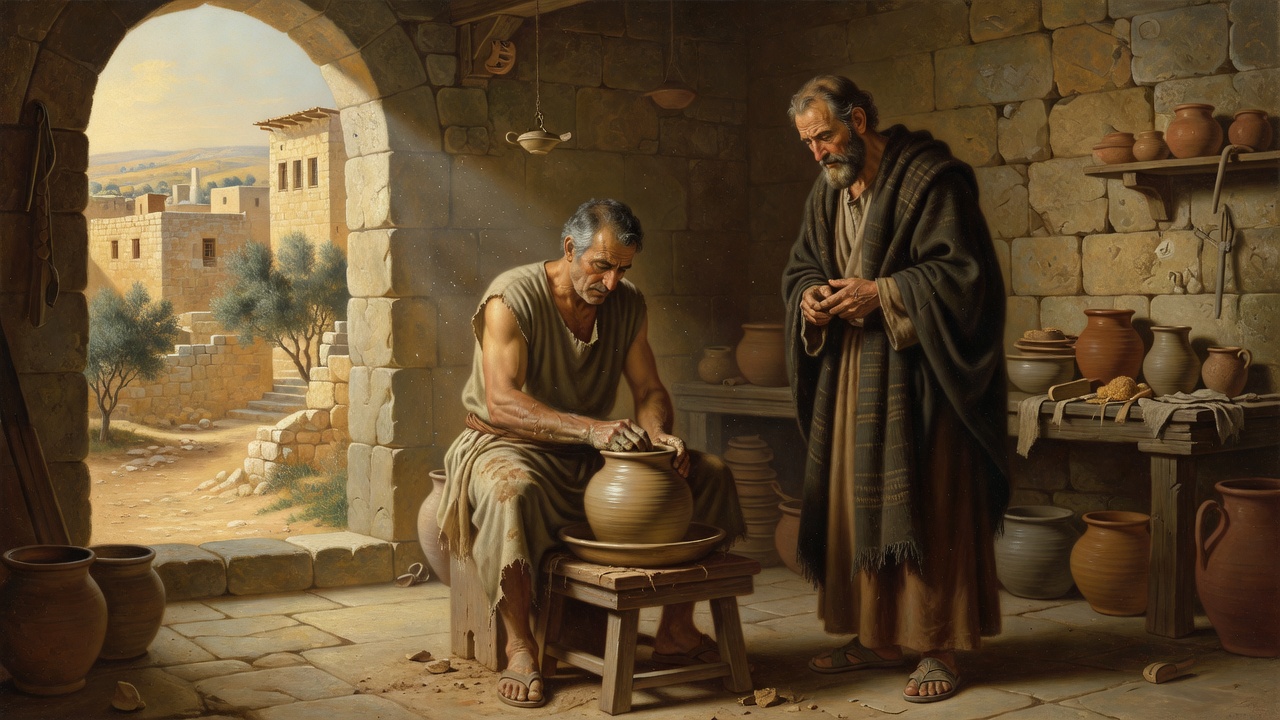
1Vuzavaguɗu yaꞋin kadanshi n Irimiya u danai, 2<<Ɗa̱nga̱ vu bana a kpaꞋa ku kamaꞋi ko mgbodo. Ta ɗe n kuyaꞋin kadanshi n a̱vu.>> 3Ɗa m banai a kpaꞋa ku kamaꞋi ko mgbodo, ɗa n cinai ni ubuta̱ wu ulinga u ni. 4Ɗa ma̱diki ma na wi a kumaꞋa va mo ɓosoi e ekiye a̱ ni, ɗa u bonoi ɗa u maꞋasakai ili yoku kau n ciꞋin tsa, tsu na ugain i ni.
5Ɗa Vuzavaguɗu u danai mu, 6<<OꞋo a̱ɗa̱ aza Isaraila ashe n kuyaꞋin n a̱ɗa̱ uteku tsu na kamaꞋi ko mogbodo ka na mpa ka yaꞋin ba? La̱na̱, uteku tsu na ciꞋin ci ekiye a kamaꞋi ko mogbodo ka, ta a̱ɗa̱ aza Isaraila yi nannai ekiye a̱ va̱. 7A ayin a na baci de dem n yaꞋin kadanshi ka aduniyan u yoku ko tsugono, n danai n ku utuka̱ le ta̱, ka̱ta̱ m ɓoso le muna le, 8ɗa baci aduniyan u na n yaꞋin kadanshi adama le a, a kpatalai ɗa a̱ ka̱sukpa̱i unushi u le, nannai va, u kuzuwa mu ta̱ n sabaꞋa ka̱ɗu ubuta̱ wu ukuna u wuya mi ishi n foɓusoi ku yaꞋin ka le. 9Kpamu a a yaꞋin a na baci de dem n yaꞋin kadanshi ka aduniyan u yoku ko tsugono, n danai n kumaꞋa ta̱ i ɗa ka̱ta̱ kpamu n shikpa̱ i ɗa, 10ɗa baci a yaꞋin unushi a a̱shi a̱ va̱, ɗa a iwain kupana kadanshi ka̱va̱, nannai va wi ta̱ a kuzuwa mu n sabaꞋa ka̱ɗu a ubuta̱ u kasingai ka na mishi n foɓusoi ku yaꞋan ka le. 11Adama nannai, gogo na dana aza Yahuza koɓolo n aza na i punu ida̱shi a Urushelima, ili na Vuzavaguɗu u danai i ɗa na, <N foɓusoi ka gbani-gbani adama a̱ɗa̱, n foɓusoi kawuya kana ka kuciya̱ a̱ɗa̱. Yabadem u ka̱sukpa̱ kuyaꞋan gbani-gbani ka̱ ni, ka̱ta̱ u bono u lapula ka̱cika̱ni.> 12Ama ɗa a danai <Na lo va u kuna u gbani u ɗa, a̱ tsu kusheshe ku tsu ku ɗa tsa kutono, yaba dem vu tsu ku yaꞋin ili u teku tsu na ka̱ɗu ugbamukaci ka̱ ni ko tonoi.> 13<<Adama nannai, ɗa Vuzavaguɗu u danai, ecei biꞋi aduniyan u na u buwai. Ya yi u saꞋwai kupana vu cuꞋu vu kuna tsu na mpa? Mekere ma aza Isaraila ma yaꞋin ta̱ ili gbani-gbani ka̱u. 14Mini ma atali ma sawa ta̱ ku kotso a nsansa n Lebano? Ko kpamu mini mu uta̱ni n kuyene n na mi a katali ma kotso? 15Ama uma a̱ va̱ a cinukpa ta̱ m mpa, ɗa e nekei nlulu ma a̱ma̱li le a̱tsa̱ka̱na̱, ɗa a zuwai le a ta̱ɗa̱tsa̱i u ye u le, u ye u tsukaya, ɗa o bonoi o kutono u ye u kavama, ba u ye usingai kpamu ba, 16ɗa o bonokoi iɗika i le ili i wovon, ili i ku meɗe ku una̱ ali uteku. Yaba dem na u wali lo sai u rikpa̱ ka̱ta̱ u jengeɗe kaci ka̱ ni. 17Tsu na wunla̱ u kasana u tsu uta̱ u Betuwe, ta mi a kuwacuwa le e kelime ka irala i le nannai. Ka̱ta̱ a kanna ka atakaci ke le n kpatala ka le kucina̱, n sa̱nka̱ le kene a̱shi a̱ va̱.>> 18Ɗa a danai <<Ta̱wa̱i tsu foɓoi adama a Irimiya, adama na ana n ganu a ku ka̱sukpa̱ kutono wila̱ u Musa ba, ta feu aza ugboji nannai i a ku ka̱sukpa̱ ku yaꞋin odoki ba, ta feu keniki nannai wi a ku ka̱sukpa̱ ku kadanshi ba. Ta̱wa̱i tsu kiɗikai ni afada, kpamu ka̱ta̱ tsu zuwakai a̱tsu i na wa ku dansa ba.>> 19Ɗa Irimiya u vasai u Vuzavaguɗu, ɗa u danai, <<Vuzavaguɗu pana i na irala i va̱ yi a kudansa adama a̱ va̱. 20Mayun ɗa a tsupa kasingai n ka gbani-gbani? Demu n nannai a ga̱va̱ ta̱ kpenle adama a̱ va̱. Ciɓa n tsuna n shamgbai a kelime ka nu n yaꞋin kadanshi kasingai adama e le, adama na vu cipuka̱ wupa u nu wa̱ e le. 21Adama nannai, tuka̱ muku n le n kambulu, ka̱sukpa̱ le adama na una le n otokobi, ka̱sukpa̱ amaci e le okpo babu muku ka̱ta̱ okpo agapa. Ka̱sukpa̱ ma̱dukpa̱ muna ali e le, ka̱ta̱ una olobo e le ubuta̱ u kuvon. 22Ka̱sukpa̱ a pana ma̱shi i uwa i le, adama irala i na vu bankai le gogolo. Adama na a̱ ga̱va̱ ta̱ kpenle adama na n yikpa̱ punu, ɗa a yaꞋin maza a ene a̱ va̱. 23Ama a vu Vuzavaguɗu vu yeve ta̱ o foɓuso e le ra̱ka̱ adama na una mu. Ka̱ta̱ vu cinukpa ka le unushi u le ba, ka̱ta̱ kpamu vu ura unushi u le wa̱ nu ba. Ka̱sukpa̱ a taɗuku le a kelime ka̱ nu, takacika le a ayin a wupa a̱ nu.
Did you know?
The Potter and the Clay
- At the potter's house, Jeremiah observes an artisan reshaping a spoiled vessel on the wheel into another pot. The passage uses this craft to illustrate divine authority and conditional judgment: if a nation turns from evil after being warned, disaster is averted, but if a nation turns to evil, intended blessings are withheld.Sources: the Bible text itself
- The prophecy contrasts Israel's abandonment of God with the constancy of the natural world, asking if the snow of Lebanon ever departs from its rocky crags. The mountain range of Lebanon, whose name means white, was notable for its lofty peaks and enduring cold streams.Sources: Lebanon · the Bible text itself
- The conspiracy against Jeremiah was driven by opponents who assumed religious security, arguing that instruction would never be lost to the priest, counsel to the wise, or the divine word to the prophet. Jeremiah's message of impending ruin directly challenged this institutional confidence.Sources: Jeremiah · the Bible text itself
Notes written with AI assistance from open sources (Theographic Bible Metadata, CC BY-SA 4.0; Easton’s Bible Dictionary, public domain) and reviewed before publishing.
Places in this chapter
- Jerusalem · 31.777, 35.234 · verse 11
- Lebanon · 33.540, 35.584 · verse 14
- Mount Hermon · 33.400, 35.850 · verse 14
Only places identified with high confidence are shown (90% or more according to the scholarly sources compiled by OpenBible). Period map: DARE (Digital Atlas of the Roman Empire), CC BY 4.0; modern map: © OpenStreetMap contributors; places: OpenBible.info (CC BY 4.0).
Credits and license for this translation
Cishingini Agwara Kambari [asg]
Cishingini: Cishingini Agwara Kambari [asg] (Bible)
copyright © 2025 Language Development and Translation Initiative (LDTI)
Language: (Cishingini)
Contributor: The Seed Company
This translation is made available to you under the terms of the
Creative Commons Attribution Share-Alike license 4.0.
You have permission to share and redistribute this Bible translation in any format and to make reasonable revisions and adaptations of this translation, provided that:
You include the above copyright and source information.
If you make any changes to the text, you must indicate that you did so in a way that makes it clear that the original licensor is not necessarily endorsing your changes.
If you redistribute this text, you must distribute your contributions under the same license as the original.
Pictures included with Scriptures and other documents on this site are licensed just for use with those Scriptures and documents.
For other uses, please contact the respective copyright owners.
Note that in addition to the rules above, revising and adapting God's Word involves a great responsibility to be true to God's Word. See Revelation 22:18-19.
2025-07-09
Source: http://ebible.org/asg/ · eBible.org