Genesis 21
Cishingini Agwara Kambari [asg] · Tap a verse to see its cross-references.
A matsai Ishaku
1Vuzavaguɗu u yaꞋanka ta̱ Saratu ili i singai tsu na u danai. Ɗa u yaꞋankai ni tsu na u yaꞋin uzuwakpani. 2Ɗa Saratu u yaꞋin ka̱tsuma̱, ɗa u matsakai Ibirahi maku mo kolobo n tsukutsa ci ni. Derere a ayin a na Ka̱shile ka yaꞋankai ni uzuwakpani. 3Ɗa Ibirahi u neꞋi maku ma na Saratu u matsakai ni va kula Ishaku. 4Ana maku ma̱ ni Ishaku u yawai ayin kunla̱i, ɗa Ibirahi u kiɗai ni kavaja, uteku u na Ka̱shile ka danai ni. 5Ibirahi wi ta̱ n a̱ya̱ amangatawun (100), ana a matsakai ni Ishaku.
6Ɗa Saratu u danai, <<Ka̱shile ka̱ tuka̱ mu ta̱ n izoshi. Adama a na vuza na baci u panai nannai, wi ta̱ o kuzoso nu mpa.>> 7Ɗa u doku u danai, <<Yayi u saꞋwai kudana Saratu u kumatsaka ta̱ Ibirahi maku? Ama m matsaka yi ta̱ n tsukutsa ci ni.>>
8Ɗa maku ma mo gbonguroi ali ɗa a kasai ni mani. A kanna ka na a kasai ni mani, ɗa Ibirahi u yaꞋin ka̱ɗiva̱ ka gbayin.
O lokoi Hajara n IshimaꞋilu
9Ana Saratu we enei IshimaꞋilu maku ma na Hajara va aza a Masar u matsakai Ibirahi a kuyaꞋanka Ishaku ulami, 10ɗa u danai Ibirahi, <<Uta̱ka̱ n kabara ke mekere ka a kpaꞋa ku nampa m maku ma̱ ni. Adama a na maku ma nanlo me kupece ili yi uka̱ni a kpaꞋa a nampa m maku ma̱ va̱ Ishaku ba.>>
11Ili ya i la̱nga̱sa̱ ta̱ Ibirahi ka̱ɗu wuya-wuya, adama a na ili i ya i saꞋwa ta̱ maku ma̱ ni. 12Ama ɗa Ka̱shile ka danai ni <<Ka̱ta̱ ka̱ɗu ka̱ nu ka̱ na̱mgba̱ adama a maku ma n kabara ka nanlo ba. Pana ili i na Saratu u kudana wu dem. Adama a na a̱ ubuta̱ wi Ishaku ta lo e kuyeve ntsukaya n nu. 13Mi ta̱ o kubonoko muku n kabara ke mekere ka, o okpo ngono mu utsura n uma feu a̱ gba̱ra̱-gba̱ra̱. Adama a na a̱yi feu maku ma̱ nu maꞋa.>>
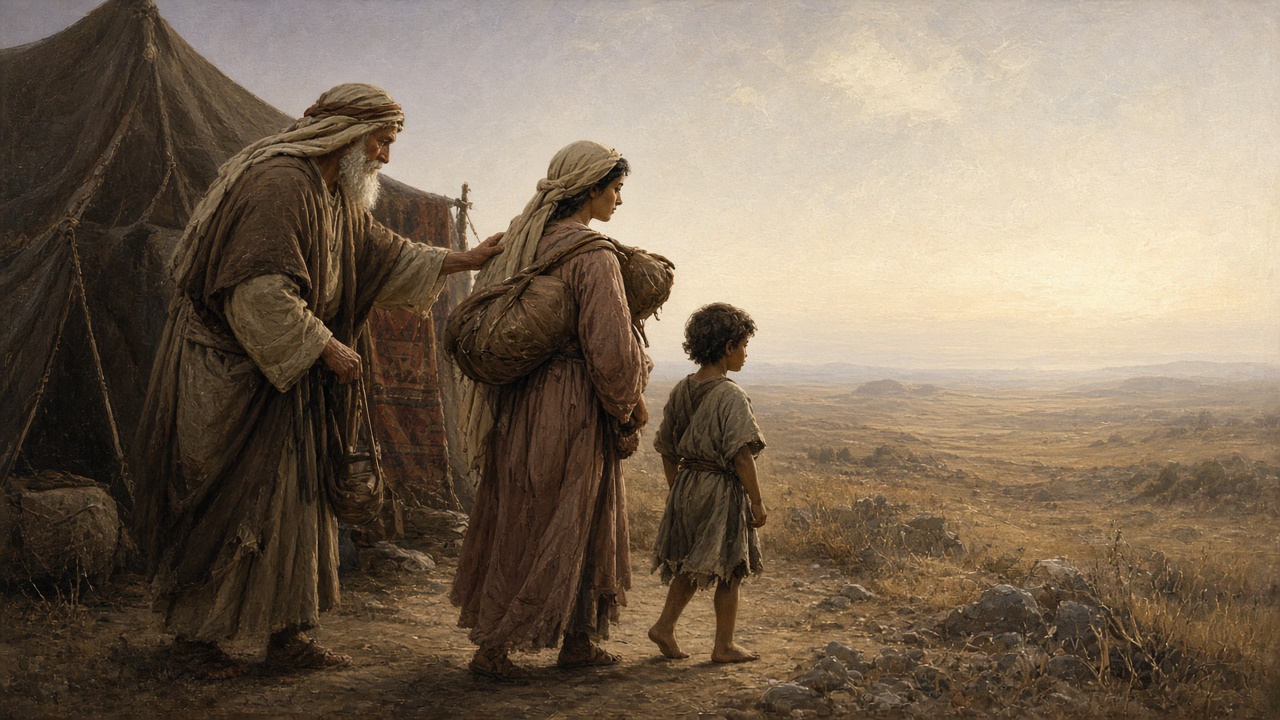
14N usana ɗa Ibirahi u nekei Hajara ilikulyaꞋa n kedele ku ukpan tukpa m mini, u woꞋokoi ni kaꞋa a kavangatsu ɗa u lokoi ni m maku ma. U lazai ɗa u yongoi a̱ kuka̱ra̱Ꞌa̱sa̱ punu a kakamba ka Biyasheba.
15Ana mini ma mo kotsoi punu e kedele ka ra̱ka̱, u ka̱sukpa̱i maku ma a̱ kumiꞋi ku ka̱vuku. 16U da̱sa̱ngi daꞋin a agisana udashi amangatawun. U danai ka̱ci ka̱ ni, <<Mi a kufuɗa ma kinda maku ma̱ va̱ ma̱ kuwa̱ ba.>> A̱yi lo ida̱shi ɗa u ɓosoi ka̱da̱wuri u gita̱ngi ma̱shi.
17Ka̱shile ka panai maku ma a̱ ma̱shi, ɗa kalingata ka̱ Ka̱shile na ɗe gaɗi ka yaꞋin kadanshi n Hajara, <<Yiɗa̱i i ɓa̱la̱i nu, Hajara? Ka̱ta̱ vu pana wovon ba. Ka̱shile ka pana ta̱ ma̱shi ma maku mo kolobo ma. 18Ɗenga̱, bana vu ɗika maku ma̱ nu ka̱ta̱ vu ɓa̱na̱ e kukiye. Mi ta̱ a kuzuwa ntsukaya n ni mo okpo likuci i gbayin.>>
19Ɗa Ka̱shile ka̱ ɓa̱yuwa̱i a̱shi a vuka a, ɗa we enei kayinva. U banai u shatangi kedele ku ukpan ka m mini ɗa u banai u neꞋi maku ma.
20Ka̱shile ko yongo ta̱ koɓolo m maku ma ali u gbonguroi, u yongoi a kakamba ka Param, ɗa kpamu wo okpoi katain ku usuɓi. 21Ayin a na a̱yi ɗe ida̱shi a kakamba ka Param ɗa a̱na̱ku a̱ ni a zamakai ni vuka mekere ma aza a Masar.
Uzuwakpani wi Ibirahi n Abimeleki
22A ayin a nanlo Abimeleki n Fikolu, kovonshi vo osoji a̱ ni, ɗa u danai Ibirahi, <<Ka̱shile ki ta̱ koɓolo n avu a̱ ubuta̱ wi ili dem i na vi a kuyaꞋan. 23Kucinaka mu n Ka̱shile na, vu dana vo kudoro mu ba, muku n va̱, ko ntsukaya n va̱. Mi ta̱ kutono kadanshi ka̱ nu mayin, yaꞋan uzuwakpani vi ta̱ o kutono kadanshi ka̱ va̱, koɓolo n iɗika i na vi o kuyongo na.>>
24Ibirahi u danai, <<N yaꞋan ta̱ uzuwakpani wa.>>
25Ibirahi u tuka̱i m mavura ma̱ ni u Abimeleki adama a ukuna u kayinva u na agbashi a Abimeleki a isai. 26Abimeleki u danai, <<N yeve vuza na u yaꞋin kaꞋa ba. Vu dana mu feu ba, anana ɗa n gita̱i kupana kaꞋa.>>
27Ɗa Ibirahi u nekei Abimeleki nkyon n anaka o yoku, ɗaɗa ele aza e re le a yaꞋankpanai uzuwakpani. 28Ibirahi wu uta̱ka̱i nshan mi nkyon ali n cindere a̱ ubuta̱ wu ushiga u ni, 29ɗa Abimeleki we ecei ni, <<Yiɗa̱i tamkpamu nshan n cindere n nampa mi a kadanshi?>>
30Ibirahi wu ushuki, <<Isa nkyon n cindere n nampa ma. Nannai va wi ta̱ a kuzuwa vu ushuku a na mpa ɗa n ga̱va̱i kayinva ka nampa ka.>>
31Ɗaɗa e ɗekei ubuta̱ wa Biyasheba, adama a na ta ɗe ele aza e re e le a yaꞋankpanai akucina.
32Ana o kotsoi kuyaꞋan uzuwakpani u nampa a Biyasheba, ɗa Abimeleki n Fikolu kovonshi vo osoji a̱ ni o bonoi a iɗika i a Filisitiya. 33Ɗaɗa Ibirahi u shikpa̱i maɗanga ma matana a Biyasheba ɗa u cikpai Vuzavaguɗu lo, Ka̱shile MalaꞋimili. 34Ibirahi u yongoi a iɗika i a Filisitiya ali ayin n a̱bunda̱i.
Did you know?
Isaac’s birth, Hagar’s departure, and Beersheba
- Abraham was a hundred years old when Sarah bore him Isaac, their only son together, and he circumcised the child at eight days old, as God had commanded. Sarah said that God had made her laugh, and that everyone who heard of this would laugh with her. Easton's Bible Dictionary (1897) notes that a great feast was held when Isaac was weaned, probably when he was about two years old.Sources: the Bible text itself · Isaac
- Hagar, whose name is explained as “flight” or, according to others, “stranger,” was an Egyptian and Sarah’s handmaid, whom Sarah gave to Abraham as a secondary wife. After Isaac’s birth, Abraham sent Hagar and their son Ishmael into the Wilderness of Beersheba with bread and a skin of water. Ishmael later settled in the Wilderness of Paran, a desert tract in the northeastern Sinai Peninsula between the Arabah on the east and the wilderness of Shur on the west, became a great archer, and his mother got him a wife from Egypt.Sources: the Bible text itself · Hagar · Paran
- Beersheba, “well of the oath” or “well of seven,” was named when Abraham and Abimelech swore an oath there over a well that Abraham said he had dug; he set apart seven ewe lambs as a witness, and the two made a covenant. Phicol, chief captain of the army of Abimelech, the Philistine king of Gerar, entered that alliance with Abraham. Abraham then planted a tamarisk at Beersheba and lived for a long time in the land of the Philistines.Sources: the Bible text itself · Beersheba · Phichol
Notes written with AI assistance from open sources (Theographic Bible Metadata, CC BY-SA 4.0; Easton’s Bible Dictionary, public domain) and reviewed before publishing.
Places in this chapter
Only places identified with high confidence are shown (90% or more according to the scholarly sources compiled by OpenBible). Period map: DARE (Digital Atlas of the Roman Empire), CC BY 4.0; modern map: © OpenStreetMap contributors; places: OpenBible.info (CC BY 4.0).
Credits and license for this translation
Cishingini Agwara Kambari [asg]
Cishingini: Cishingini Agwara Kambari [asg] (Bible)
copyright © 2025 Language Development and Translation Initiative (LDTI)
Language: (Cishingini)
Contributor: The Seed Company
This translation is made available to you under the terms of the
Creative Commons Attribution Share-Alike license 4.0.
You have permission to share and redistribute this Bible translation in any format and to make reasonable revisions and adaptations of this translation, provided that:
You include the above copyright and source information.
If you make any changes to the text, you must indicate that you did so in a way that makes it clear that the original licensor is not necessarily endorsing your changes.
If you redistribute this text, you must distribute your contributions under the same license as the original.
Pictures included with Scriptures and other documents on this site are licensed just for use with those Scriptures and documents.
For other uses, please contact the respective copyright owners.
Note that in addition to the rules above, revising and adapting God's Word involves a great responsibility to be true to God's Word. See Revelation 22:18-19.
2025-07-09
Source: http://ebible.org/asg/ · eBible.org