Genesis 20
Cishingini Agwara Kambari [asg] · Tap a verse to see its cross-references.
Ibirahi N Abimeleki
1Ana Ibirahi u ka̱sukpa̱i uɓon u nanlo ɗa u lazai a kubana a uɓon u ɗaka vu KanaꞋana ɗa u yongoi e mere me Kadeshi n Shuru. U yongoi ɗe ali ayin ukeci an komoci a Gera, 2ɗa Ibirahi u danai le ukuna u vuka vi ni Saratu, <<Taku vu va̱ ɗa.>> Ɗa Abimeleki mogono ma Gera u danai a banka yi n Saratu.
3Ama n kayin ko yoku, Vuzavaguɗu u yotsongi ka̱ci ka̱ ni u mogono Abimeleki tsa alatani ɗa u danai ni, <<Vi ta̱ a̱ kukuwa̱ adama a na vi ɗika ta̱ vuka vu nampa, vu na vi yaꞋin ɗe yolo.>>
4Ama a̱yi Abimeleki ka̱ta̱ u saꞋwa kuyawa ɗevu n Saratu ba. Ɗa u danai, <<Vuzavaguɗu mi n unushi punu na ba! Vi ta̱ a kuna mu n uma a̱ va̱ dem? 5Ibirahi n ka̱ci ka̱ ni u danai, na va taku vi ni ɗa. Ɗa vuka va feu vu danai nannai. N yaꞋan ta̱ ili i nampa ya n ka̱ɗu ke te mpa n nusa ba.>>
6Ɗa Vuzavaguɗu u danai ni punu a̱ ubuta̱ wa alatani wa, <<E n yeve ta̱ vi yaꞋan ta̱ nannai n ka̱ɗu ke te, n sa̱nka̱ wu ta̱ kuyaꞋan unushi a kubana wa̱ va̱, n ka̱sukpa̱ wu vu saꞋwa yi ba. 7Ama gogo na bonoko n vuka va u vali vi ni. A̱yi keneki kaꞋa, wi ta̱ a kuyaꞋanka wu avasa adama a na vi yongo n wuma. Ama mi ta̱ a kudana wu vu bonoko yi baci ba, vi ta̱ a̱ kukuwa̱ avu n uma a̱ nu.>>
8Ana kayin kasai ɗa Abimeleki u ɗekei aza gbagbaꞋin a̱ ni dem a bana, ɗa u danai le ili i na i yaꞋin dem ɗa ra̱ka̱ vi le ɗa a panai wovon. 9Ɗa Abimeleki u ɗekei Ibirahi ɗa we ecei ni, <<Yiɗa̱i i zuwai ɗa vi yaꞋankai tsu nahannai? Unushi we ne u ɗai n yaꞋankai nu ɗa vi a kuyaꞋanka mu atakaci a nampa, mpa n ubuta̱ u tsugono u va̱ dem? Vi yaꞋanka mu ta̱ ili i na i kpa̱ɗa̱i kugaꞋan vi yaꞋanka mu.>> 10Ɗa Abimeleki we ecei ni, <<Yiɗa̱i i zuwai ɗa vi yaꞋin nannai?>>
11Ɗa Ibirahi wu ushuki u danai, <<N yaꞋan ta̱ nannai adama a na n zuwa ta̱ uma a nampa a i n wovon u Ka̱shile ba, ta lo a kuna mu ka̱ta̱ a isa mu Saratu vuka vu va̱. 12Ko n nannai taku vu va̱ ɗa mayun, adama a na mekere me esheku a̱ va̱ maꞋa mma ɗa de vi tsu vi te ba, ɗa n ɗikai ni yolo. 13A ayin a na Ka̱shile ka zuwai mu n ka̱sukpa̱ kpaꞋa ke esheku a̱ va̱ a kubana a iɗika i yoku, ɗa n danai ni, <Uteku u na vo kuyotsongu ucigi u nu a kubana wa̱ va̱ u ɗaɗa na, ubuta̱ u na baci tsu banai dem, vu dana, <<A̱yi taku vu va̱ ɗa.>> > >>
14Ɗa Abimeleki u bonokoi Ibirahi n vuka vi ni Saratu, ɗa u nekei ni anaka, nlala koɓolo n agbashi a ali n a̱ma̱ci. 15Ɗa Abimeleki u danai ni, <<La̱na̱ na iɗika i va̱ i ɗa ra̱ka̱ zagba ubuta̱ u na u gaꞋin nu kuyongo ka̱ta̱ vi yongo ɗe.>>
16Ɗa Abimeleki u danai Saratu, <<Mi ta̱ e kuneke tavu Ibirahi Azurufa ka̱kpa̱n adama a na wo okpo urotu mpa n yaꞋan ili n avu ba, e kelime ka uma dem. Babu vuza na kpamu u kinda wu adanshi vi yaꞋan ta̱ unushi.>>
17Ɗa Ibirahi u yaꞋankai Abimeleki kavasa ɗa Ka̱shile ko potsokpoi ni n a̱ma̱ci a̱ ni n agbashi a̱ a̱ma̱ci a̱ ni dem adama a na a matsa muku kpamu. 18Adama a na Vuzavaguɗu u ɓa̱ya̱ngu ta̱ amatsatsu dem a kpaꞋa ku Abimeleki adama a vuka vi Ibirahi Saratu.
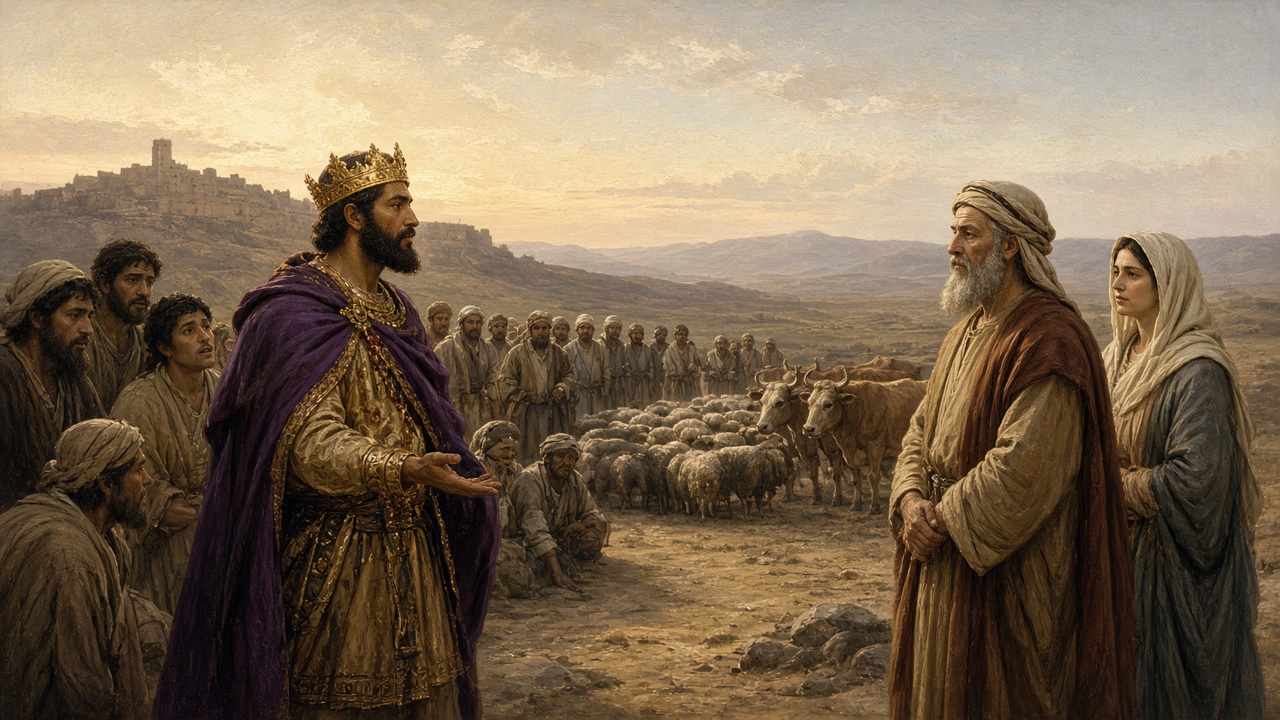
Did you know?
Sister and Wife in Gerar
- Abraham was staying in Gerar, a very ancient town and district on the southern border of Palestine, then ruled by a king named Abimelech. He had journeyed to the Negev, the arid district south of Palestine on the caravan route toward Egypt, and settled between Kadesh and Shur. Shur, a name meaning “wall,” was a desert region on Egypt’s northeastern edge, probably named for the frontier wall the Egyptians built there.Sources: the Bible text itself · Gerar · Negeb · Shur
- When Abraham said that Sarah was his sister, the kinship was not wholly invented: she was also his half-sister, the daughter of his father but not of his mother. Easton's Bible Dictionary (1897) gives the name Sarah as meaning “princess,” and says that name was given when it was announced that she would be the mother of the promised child.Sources: the Bible text itself · Sarah
- The name Abimelech appears again at Gerar in Isaac’s story. Easton's Bible Dictionary (1897) describes that later king as probably the son of the Abimelech Abraham met, and says he rebuked Isaac for a similar deception about his wife Rebekah, which the king discovered by accident. The same work says Gerar seems to have been a rich pastoral country.Sources: Abimelech (King of Gerar) · Gerar
Notes written with AI assistance from open sources (Theographic Bible Metadata, CC BY-SA 4.0; Easton’s Bible Dictionary, public domain) and reviewed before publishing.
Places in this chapter
- Negeb · 31.245, 34.841 · verse 1
Only places identified with high confidence are shown (90% or more according to the scholarly sources compiled by OpenBible). Period map: DARE (Digital Atlas of the Roman Empire), CC BY 4.0; modern map: © OpenStreetMap contributors; places: OpenBible.info (CC BY 4.0).
Credits and license for this translation
Cishingini Agwara Kambari [asg]
Cishingini: Cishingini Agwara Kambari [asg] (Bible)
copyright © 2025 Language Development and Translation Initiative (LDTI)
Language: (Cishingini)
Contributor: The Seed Company
This translation is made available to you under the terms of the
Creative Commons Attribution Share-Alike license 4.0.
You have permission to share and redistribute this Bible translation in any format and to make reasonable revisions and adaptations of this translation, provided that:
You include the above copyright and source information.
If you make any changes to the text, you must indicate that you did so in a way that makes it clear that the original licensor is not necessarily endorsing your changes.
If you redistribute this text, you must distribute your contributions under the same license as the original.
Pictures included with Scriptures and other documents on this site are licensed just for use with those Scriptures and documents.
For other uses, please contact the respective copyright owners.
Note that in addition to the rules above, revising and adapting God's Word involves a great responsibility to be true to God's Word. See Revelation 22:18-19.
2025-07-09
Source: http://ebible.org/asg/ · eBible.org