Genesis 22
Cishingini Agwara Kambari [asg] · Tap a verse to see its cross-references.
Ka̱shile ka pityai Ibirahi
1A yaꞋin megeshe kenu, ɗa Ka̱shile ko kondoi Ibirahi. U danai ni, <<Ibirahi.>>
Ɗa wu ushuki, <<Mpa ɗa na.>>
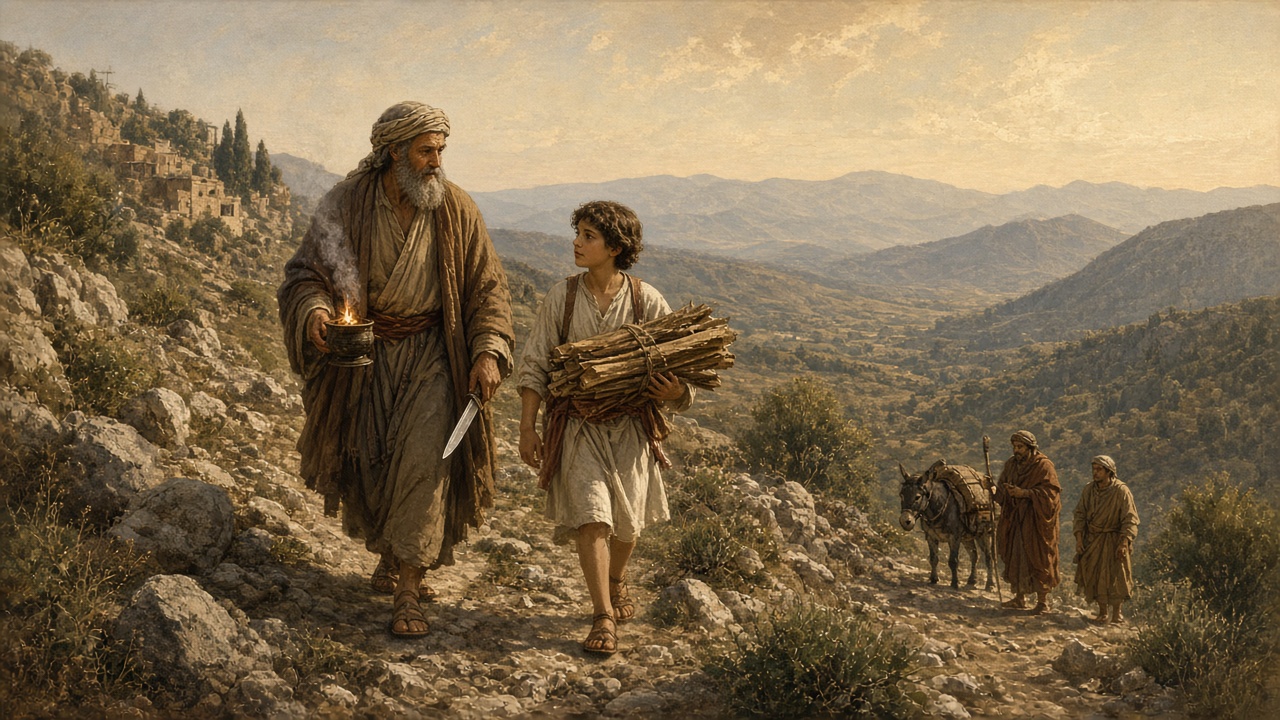
2Ɗa Ka̱shile ka danai ni, <<Ɗika maku ma̱ nu me te ma na vi m maꞋa Ishaku, vuza na kpamu vi a kuciga, vi ɗika a kubana a uɓon u Moriya. Vu bana vi lyuka yi tsa alyuka o kusongu a̱ ubuta̱ u masasan mo yoku ma na mi ɗe a̱ ubuta̱ u na n kuyotsongu wu.>>
3Ana kayin ka asai n usana, ɗa Ibirahi u ɗa̱nga̱i u lapulai majaki ma̱ ni. Ɗa u ɗikai abara a̱ ni e re m maku ma̱ ni Ishaku. Ɗa u zamai nɗanga kpamu n na u kuyaꞋanka alyuka o kusongu. Ɗa u lazai a kubana a̱ ubuta̱ u na Ka̱shile ka danai ni. 4A kanna ka tatsu ka̱ ka̱tsuma̱ ka nwalu ke le, ɗa Ibirahi u la̱na̱i, ɗa we enei ubuta̱ wa daꞋin. 5Ɗa u danai abara a̱ ni, <<Shamgbai na m majaki. Mpa n kolobo ka̱ va̱, ci ta̱ a kubana na ɗe. Ci ta̱ a kubana tsa cikpa Ka̱shile, ka̱ta̱ tsu bono.>>
6Ɗa Ibirahi u ɗikai nɗanga n na u kuyaꞋanka alyuka o kusongu a, ɗa u zuwakai Ishaku maku ma̱ ni u canuku. Ɗa u ɗikai akina m mawun. Ana a kulaza aza e re e le, 7ɗa Ishaku u ɗekei esheku Ibirahi, <<Dada.>>
Ɗa Ibirahi wu ushuki, <<Yiɗa̱i, maku ma̱ va̱?>>
Ɗa Ishaku we ecei ni, <<Nɗanga n ɗa na n akina, te ɗai malala mi adama a alyuka o kusongu?>>
8Ɗa Ibirahi u danai ni, <<Ka̱shile ki ta̱ e kuneꞋe tsu malala ma na tsa kuyaꞋanka alyuka o kusongu, maku ma̱ va̱.>> Ɗa a lazai aza e re e le.
9Ɗa u yawai a̱ ubuta̱ u na Ka̱shile ko yotsongi ni u bana va, ɗa Ibirahi u shikpa̱i katalikalyuka, ɗa u recei nɗanga gaɗi. Ɗa u shiyai maku ma̱ ni Ishaku, ɗa u kiyangi gaɗi vu nɗanga va. 10Ɗa u ba̱ra̱kpa̱i kukiye, ɗa u ɗikai mawun adama a na u kiɗa maku ma̱ ni Ishaku. 11Ɗa kalingata ka Vuzavaguɗu ke ɗekei ni gaɗi, <<Ibirahi, Ibirahi.>>
Ɗa wu ushuki, <<Mpa ɗa na.>>
12Ɗa u danai ni, <<Ka̱ta̱ vu gbatyangu mawun e kuɗeku ku maku ma ba. Ka̱ta̱ vi yaꞋanka yi muna ba. N yeve ta̱ gogo na vi ta̱ a kupana wovon u Ka̱shile. Adama a na vu sa̱nga̱ mu maku me te ma na vi n maꞋa ba.>>
13Ɗa Ibirahi u ganukpai kaci, ɗa we enei ka̱giri n avana a̱ ni a̱ kumiꞋi ku koworo usaɓatangi. Ɗa u banai, ɗa u ɗikai kaꞋa. Ɗa u lyukai kaꞋa a̱ ubuta̱ u Ka̱shile ɗa u ka̱sukpa̱i maku ma̱ ni. 14Ɗa Ibirahi u ɗekei ubuta̱ u nanlo wa, <<Vuzavaguɗu wi ta̱ a̱ kutuka̱.>> A uteku n kanna ka nanlo ɗa a danai, <<Punu a kusan ku Vuzavaguɗu, wi ta̱ a̱ kutuka̱.>>
15Ɗa kalingata ka Vuzavaguɗu na ɗe gaɗi ke ɗekei Ibirahi uɗeki u ire. 16Ɗa u danai ni, <<Vuzavaguɗu u danai, <N kucina ta̱ n ka̱ci ka̱ va̱, ali vu fuɗai vi yaꞋin nannai, vu sa̱nga̱ mu maku me te ma̱ nu ba. 17Mi ta̱ a kuzuwaka wu una̱singai. Mi ta̱ a kuzuwa ntsukaya n nu n yimkpa mo okpo an azangata a gaɗi. I ta̱ a kuyimkpa kpamu o okpo an kayala ka mala. Ntsukaya n nu mi ta̱ a kisa likuci yi irala i le. 18A̱ ubuta̱ wu ntsukaya n nu n ɗa uma a aduniyan dem a̱ kuciya̱ ili i singai. Adama a na avu vu tono mu ta̱ mayin.> >>
19Ɗa Ibirahi u bonoi a̱ ubuta̱ wa agbashi a̱ ni, ɗa a lazai koɓolo a kubana Biyasheba. Ɗa Ibirahi u shamgbai ta na ɗe a Biyasheba va.
Muku n Nufu
20A kubana megeshe ɗe ɗa a danai Ibirahi, <<Milika feu u matsaka ta̱ vuza nu muku. 21Uzu ɗa magaji, Buzu ɗa vangu vi ni, Kemuwe tamkpamu esheku a Aram, 22Keseda, n Hazo, m Pilidasha, n Jidilafa, koɓolo m Betuwe.>> 23Betuwe ɗa esheku e Rebeka. Milika u matsakai Nahoru Ibirahi vuza ni muku kunla̱i n nampa. 24Vuka vu gbani vi ni vu na vi n kula Reyuma, u matsakai ni muku feu, ula e le a ɗa Teba, n Gaham, n Tahasha, koɓolo m MaꞋaka.
Did you know?
God Tests Abraham
- Isaac was Abraham’s only son by Sarah. The next memorable event recorded in his life, after he was weaned, is God’s command that Abraham offer him as a burnt offering on a mountain in the land of Moriah.Sources: Isaac · the Bible text itself
- Easton's Bible Dictionary (1897) notes that some contend the land of Moriah is Mount Gerizim, but regards it as most probably one of the hills of Jerusalem, northeast of Zion, where Solomon’s temple was built on the threshing-floor of Ornan the Jebusite.Sources: Moriah
- The chapter ends with news of Abraham’s relatives: his brother Nahor had remained in Haran, east of the Euphrates, and Milcah had borne him eight sons, among them Bethuel, Rebekah’s father. Rebekah became Isaac’s wife, and contact between the family in Canaan and the kin at Haran lasted until Jacob left Haran.Sources: Nahor (brother of Abraham) · Bethuel · the Bible text itself
Notes written with AI assistance from open sources (Theographic Bible Metadata, CC BY-SA 4.0; Easton’s Bible Dictionary, public domain) and reviewed before publishing.
Credits and license for this translation
Cishingini Agwara Kambari [asg]
Cishingini: Cishingini Agwara Kambari [asg] (Bible)
copyright © 2025 Language Development and Translation Initiative (LDTI)
Language: (Cishingini)
Contributor: The Seed Company
This translation is made available to you under the terms of the
Creative Commons Attribution Share-Alike license 4.0.
You have permission to share and redistribute this Bible translation in any format and to make reasonable revisions and adaptations of this translation, provided that:
You include the above copyright and source information.
If you make any changes to the text, you must indicate that you did so in a way that makes it clear that the original licensor is not necessarily endorsing your changes.
If you redistribute this text, you must distribute your contributions under the same license as the original.
Pictures included with Scriptures and other documents on this site are licensed just for use with those Scriptures and documents.
For other uses, please contact the respective copyright owners.
Note that in addition to the rules above, revising and adapting God's Word involves a great responsibility to be true to God's Word. See Revelation 22:18-19.
2025-07-09
Source: http://ebible.org/asg/ · eBible.org