Genesis 10
Cishingini Agwara Kambari [asg] · Tap a verse to see its cross-references.
Ntsukaya n Nufu
1Ele na ɗa ntsukaya n Shem, Ham, n Jafe muku n Nufu. Muku n tatsu n nampa a matsa ta̱ feu muku ayin a na mini ma na ma lyaꞋi uma a iɗika ra̱ka̱ mo kotsoi.
Aza a Jafe
2Muku n Jafe ele ɗa Gomaru, Mogogu, Madai, Javan, Tubalu, Mesheku, n Tirasu. 3Muku n Goma ele ɗa Ashekenaza, Rifata, n Togaruma. 4Muku n Javan ele ɗa Elishahu, Tarishi, Kitimu, n Dodanimu. 5A̱ ubuta̱ u le u ɗa uma a na o yongoi o kotogu a̱ ka̱kina̱ ka mala a̱ uta̱i. Ele ɗa muku n Jafe o kuyongo umaci kakau, kelentsu kakau, n iɗika kakau feu.
Ntsukaya n Ham
6Muku n Ham, ele ɗa Kush, Masar, Putu, n KanaꞋana. 7Muku n Kush ele ɗa Sheba, Havila, Sabotu, Rama, Sabateka. Muku n Rama ele ɗa Seba n Dedanu.
8Kush u matsai maku ɗa u neꞋi ni kula Namura, vuza na wo okpoi kovonshi vu utsura vi iyain va aduniyan. 9Wo okpoi katain ka gbayin a̱ ubuta̱ u Vuzavaguɗu, i ɗaɗa i zuwai ɗa uma a danai, <<YaꞋan Vuzavaguɗu u bonoko wu katain ka gbayin tsu Namura!>> 10Tsugono ci iyain ci ni ci gita̱ ta̱ n likuci i Babila, Ereci, n Akadu, n Kaline dem vi le a iɗika i Shina. 11U gita̱i punu a iɗika i nanlo, ɗa u banai a Asiriya a̱ ubuta̱ u na u maꞋi likuci i Niniva, Rehobotu-iri, n Kalashi 12n Reshena, i na yi e mere ma Niniva n likuci i gbayin i Kalashi. 13Masar ɗa esheku a Ludu, Anama, Lehabu, Nafutu, 14Paturusu, Kasulu, n Karita, aza a na a matsai aza a Filisitiya.
15KanaꞋana ɗa esheku a Sida maku ma iyain ma̱ ni, n Hiti, 16koɓolo kpamu n aza a Jebusiya, Amoriya, Girigeshiya, 17n aza a Hiviya, n Akita, n aza a Siniya, 18ali n aza a Avadi, n Zamarita, n aza a Hamo.
Umaci kakau wa aza a KanaꞋana e pecekushi daꞋin kakau, 19ali sai a na uteku wa aza a KanaꞋana u yawai uɓon u gaɗi vu Sida a kubana a uɓon u ɗaka vu Gera ɗevu n Geza, n Sodom, n Gomora, n Aduma, koɓolo n Zeboyim ɗevu n Lasha.
20Na ɗa muku n Ham, o kuyongo umaci kakau, kelentsu kakau, n iɗika kakau feu.
Aza e Shem
21A matsaka ta̱ Shem, Jafe mokoshi ma̱ ni muku, a̱yi ɗa tsukaya tsu muku n Eberu ra̱ka̱. 22Muku n Shem ele ɗa Elim, Ashuru, Afakasha, Luda, n Aram. 23Muku n Aram ele ɗa Uzu, Hulu, Getaru, m Mesheku. 24Afakasha a̱yi ɗa esheku a Shela, Shela esheku a Eberu. 25Eberu wi ta̱ m muku n re: vuza te kula ku ni ku ɗa Pelegu, adama a na a ayin a̱ ni a ɗa uma a aduniyan e pecuki, ɗa vuza te va e neꞋi ni kula Jokuta. 26Jokuta ɗa esheku a Alamodadu, Shela, Hazamavetu, Jera, 27Hadoram, Uzala, Dikila 28Obali, Abimale n Sheba 29koɓolo n Ofiri, n Havila, n Jobabu. Ra̱ka̱ vi le muku n ɗa n na mu uta̱i u Jokuta. 30Iɗika i na o yongoi i ɗa i gita̱ ta̱ a Mesha ali a kubana Sefa a uɓon wu nsasan a kasana.
31Ele na ɗa muku n Shem, o kuyongo umaci kakau, kelentsu kakau, n iɗika kakau feu.
32Na ɗa umaci wu muku n Nufu, iɗika kakau, uteku u na kefeku ke le ki. Ana mini ma na ma lyaꞋi aduniyan mo kotsoi, iɗika dem yu uduniyan i ciya̱i tsukaya a̱ ubuta̱ wu muku n Nufu.
Did you know?
The Nations after the Flood
- Genesis 10 follows the families of Noah’s three sons, Shem, Ham, and Japheth, and says that after the flood the nations of the earth spread out from them, grouped by clans, languages, lands, and nations. Japheth’s line is linked with peoples of eastern Europe and northern Asia: Gomer is generally regarded as an ancestor of the Celts and the Cimmerians, who in early times settled north of the Black Sea, and Javan became the Hebrew name that the peoples of the East used for the Greeks, especially those of Ionia.Sources: the Bible text itself · Japheth · Gomer (son of Japheth) · Javan
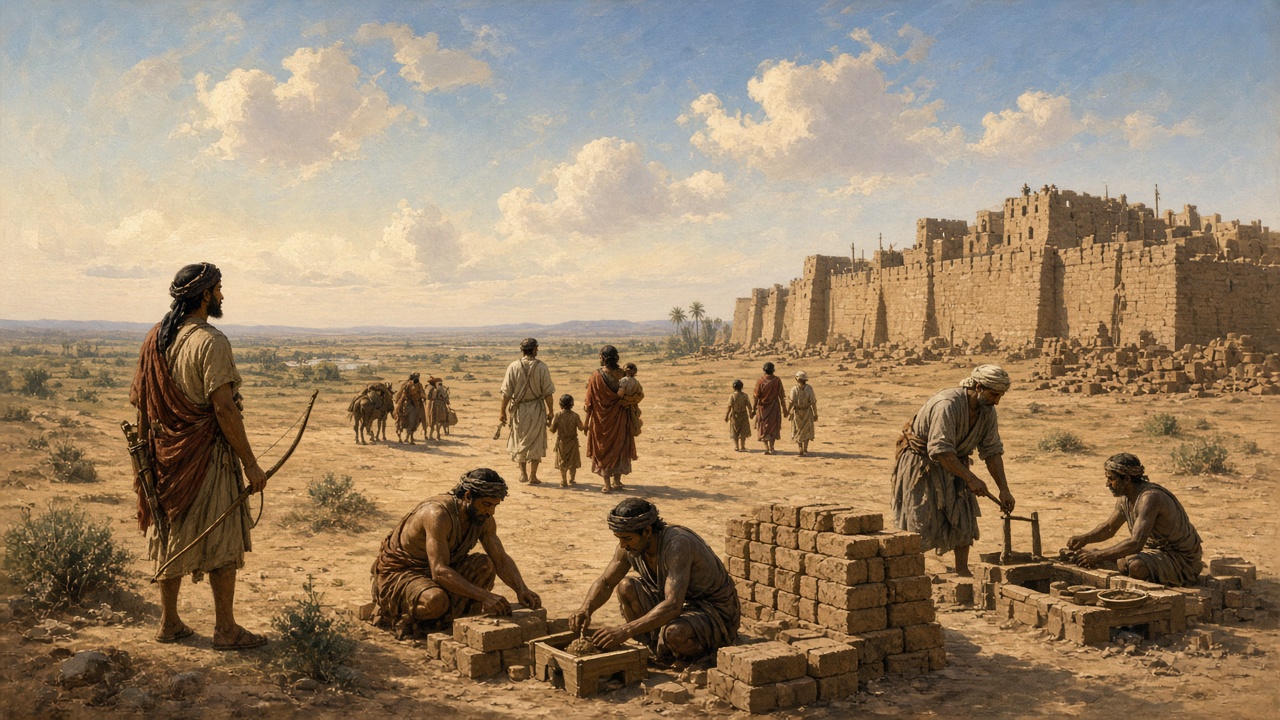
- Cush, a son of Ham, was the father of Nimrod, remembered as a mighty hunter before the Lord, whose kingdom began at Babylon, Erech, Accad, and Calneh in the land of Shinar, probably Babylonia or southern Mesopotamia. From that land he went into Assyria and built Nineveh, Rehoboth-Ir, Calah, and Resen; Calah’s site is probably the Nimrud ruins on the left bank of the Tigris.Sources: the Bible text itself · Shinar · Nineveh · Calah
- Mizraim, the dual form of a Hebrew word for a mound or fortress, may point to Upper and Lower Egypt and is the name the Hebrews usually gave that country; Arabic still calls it Muzr. Shem is called the older brother of Japheth and the forefather of all the sons of Eber, regarded as the founder of the Hebrew people, while an Arab tradition remembers Eber’s son Joktan, Kahtan in Arabic, as the ancestor of tribes of central and southern Arabia.Sources: the Bible text itself · Mizraim · Eber (Heber) · Joktan
Notes written with AI assistance from open sources (Theographic Bible Metadata, CC BY-SA 4.0; Easton’s Bible Dictionary, public domain) and reviewed before publishing.
Places in this chapter
- Erech · Today: Uruk · 31.322, 45.636 · verse 10
- Shinar · Today: Babylonia · 32.543, 44.422 · verse 10
- Assyria · 36.359, 43.153 · verse 11
- Calah · Today: Nimrud · 36.098, 43.329 · verses 11, 12
- Nineveh · 36.359, 43.153 · verses 11, 12
- Canaan · 32.767, 35.333 · verse 19
- Gaza · Today: Tell Harube · 31.504, 34.464 · verse 19
- Sidon · Today: Sandikli archaeological site in Sidon · 33.561, 35.372 · verse 19
Only places identified with high confidence are shown (90% or more according to the scholarly sources compiled by OpenBible). Period map: DARE (Digital Atlas of the Roman Empire), CC BY 4.0; modern map: © OpenStreetMap contributors; places: OpenBible.info (CC BY 4.0).
Credits and license for this translation
Cishingini Agwara Kambari [asg]
Cishingini: Cishingini Agwara Kambari [asg] (Bible)
copyright © 2025 Language Development and Translation Initiative (LDTI)
Language: (Cishingini)
Contributor: The Seed Company
This translation is made available to you under the terms of the
Creative Commons Attribution Share-Alike license 4.0.
You have permission to share and redistribute this Bible translation in any format and to make reasonable revisions and adaptations of this translation, provided that:
You include the above copyright and source information.
If you make any changes to the text, you must indicate that you did so in a way that makes it clear that the original licensor is not necessarily endorsing your changes.
If you redistribute this text, you must distribute your contributions under the same license as the original.
Pictures included with Scriptures and other documents on this site are licensed just for use with those Scriptures and documents.
For other uses, please contact the respective copyright owners.
Note that in addition to the rules above, revising and adapting God's Word involves a great responsibility to be true to God's Word. See Revelation 22:18-19.
2025-07-09
Source: http://ebible.org/asg/ · eBible.org