Genesis 11
Cishingini Agwara Kambari [asg] · Tap a verse to see its cross-references.
KumaꞋa ku ugaɗi ku Babila
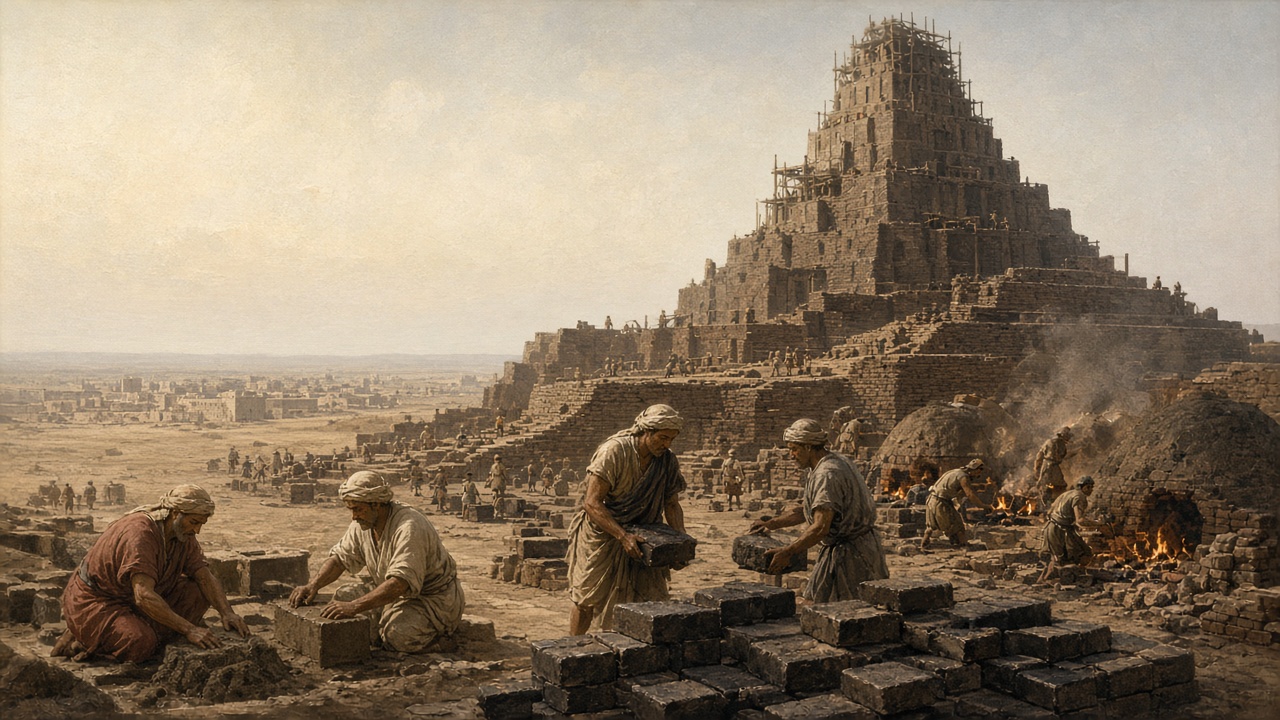
1Ayin o yoku, uma ishi ta̱ a tsu dansa kelentsu ke te n ukuna u te feu. 2Ana e sheruwengi kenu a uɓon u kasana, ɗa a̱ ciya̱i ka̱ba̱nga̱ ka singai a iɗika i Shina, ɗa a shamgbai ɗe.
3Ɗa dananai <<Ta̱wa̱i. Ci yaꞋin iputa̱ n a̱bunda̱i ka̱ta̱ tsu songu ci ɗekpetengi i ɗa.>> Ɗa kucikpa a yaꞋin ulinga n iputa̱ a na a yaꞋan n atali. Cirupa̱ kpamu ci ciꞋin. 4Ɗa a danai kpamu, <<Ta̱wa̱i. Tsu maꞋakai ka̱ci ka̱ tsu likuci n mashilya mu ugaɗi ma gbangam punu ma na ma kuyaꞋan ugaɗi sai a̱ Ka̱shile. Adama a na ci yaꞋan kula, ci ciya̱ tsu pecukusu punu a iɗika ya ba.>>
5Ama Vuzavaguɗu u cipa̱ ta̱ adama a na u kondo likuci n kumaꞋa ka, ku na uma a yaꞋin va. 6Ɗa Vuzavaguɗu u danai, <<Uma e kelentsu ke te ka nampa, a fuɗa baci a yaꞋan ili i nampa. Babu ili i na e kusheshe kuyaꞋan dem, ka̱ta̱ a̱ kpa̱ɗa̱ kufuɗa kuyaꞋan i ɗa. 7YaꞋan ci cipa̱ adama a na tsu shulyuku kadanshi ke le, ka̱ta̱ a̱ ciya̱ o doku a dansa ili i te ba.>>
8Vuzavaguɗu u gba̱ra̱i le u pecuki le punu a aduniyan ra̱ka̱, ɗa a̱ ka̱sukpa̱i kumaꞋa ku likuci ka. 9I ɗaɗa i zuwai ɗa e ɗekei ubuta̱ wa Babila, adama a na ta ɗe Vuzavaguɗu u shulyuki kadanshi ka uma ra̱ka̱. Ta ɗe Vuzavaguɗu u gba̱ra̱i le u pecuki le punu a aduniyan.
Shem a kubana u Iburam
10Na ɗa ntsukaya n Shem. Ayin a na a̱ya̱ e re a lazai a̱ mini ma̱ a̱bunda̱i ma na mu unai uma, ayin a na Shem wi n a̱ya̱ amangatawun (100), ɗa u matsai Afakasha. 11Ana Shem wo okpoi esheku a Afakasha ɗa u doku u yaꞋin a̱ya̱ amangatawantawun (500). A̱ ka̱tsuma̱ ka ayin a nanlo, u doku u matsai muku mu nkere n olobo.
12Ana Afakasha u yaꞋin a̱ya̱ kamangankupa n a tawun (35), ɗa u matsai Shela. 13Ɗa Afakasha u yaꞋin kpamu a̱ya̱ amangatawa̱na̱shi n a tatsu (403). A̱ ka̱tsuma̱ ka ayin a nanlo, u doku u matsai muku mu nkere n olobo.
14Ana Shela u yaꞋin a̱ya̱ kamangankupa (30), ɗa u matsai Eberu. 15Ana u matsai Eberu ɗa u yaꞋin kpamu a̱ya̱ amangatawa̱na̱shi n a tatsu (403). A̱ ka̱tsuma̱ ka ayin a nanlo, u matsai muku mu nkere n olobo.
16Ana Eberu u yaꞋin a̱ya̱ kamangankupa n a̱ na̱shi (34), ɗa u matsai Fele. 17Ana Eberu u matsai Pelegu, ɗa kpamu u yaꞋin a̱ya̱ amangatawa̱na̱shi n kamangankupa (430). A̱ ka̱tsuma̱ ka ayin a nanlo, u matsai muku mu nkere n olobo.
18Ana Fele u yaꞋin a̱ya̱ kamangankupa (30), ɗa u matsai Reyu. 19Ayin a nanlo, ɗa u yaꞋin kpamu a̱ya̱ amangatawenre n kuci (209). A̱ ka̱tsuma̱ ka ayin a nanlo, u matsai muku mu nkere n olobo.
20Reyu u yaꞋin a̱ya̱ kamangankupa n e re (32), ɗa u matsai Seru. 21U doku u yaꞋin kpamu a̱ya̱ amangatawenre n e cindere (207). A̱ ka̱tsuma̱ ka ayin a nanlo, u matsai muku mu nkere n olobo.
22Ana Seru u yaꞋin a̱ya̱ kamangankupa (30), ɗa u matsai Nahoru. 23U doku u yaꞋin kpamu a̱ya̱ amangatawenre (200). A̱ ka̱tsuma̱ ka ayin a nanlo, u matsai muku mu nkere n olobo.
24Ana Nahoru u yaꞋin a̱ya̱ kamanga n kuci, ɗa u matsai Tera. 25U doku u yaꞋin a̱ya̱ amangatawun n kupa n kuci (119). A̱ ka̱tsuma̱ ka ayin a nanlo, u matsai muku mu nkere n olobo.
26Ana Tera u yaꞋin a̱ya̱ amangatatsunkupa (70), ɗa u matsai Iburam, n Nahoru, n Haran.
Arabali e Tera
27Na ɗaɗa ntsukaya n Tera, vuza na u matsai Iburam, Nahoru n Haran. Haram tamkpamu u matsai Lotu. 28Ɗa Haran u kuwa̱i a̱ likuci i ni i Ur punu a Kaldiya, esheku tamkpamu biꞋi n wuma. 29Iburam n Nahoru a zuwai a̱ma̱ci, kula ku vuka ku Iburam ku ɗaɗa Saraya, kula ku vuka vu Nahoru tamkpamu ku ɗaɗa Milika. A̱yi Milika n Isikaya muku n Haran n ɗa. 30Saraya u ciya̱ kucina̱ ba.
31Tera u ɗikai maku ma̱ ni Iburam, m matsukaya ma̱ ni Lotu (maku ma Haram), n kejene ka̱ ni kpamu Saraya (vuka va Iburam), ɗa a̱ ka̱sukpa̱i Ur vu Kaldiya, a kubana a KanaꞋana. A banai ɗa a̱ da̱sa̱ngi a Haran, a shamgbai ɗe. 32Tera u yaꞋan ta̱ a̱ya̱ amangatawenre n a tawun (205), ɗa u kuwa̱i ɗe a Haran.
Did you know?
Babel and the Road from Ur
- Travelers in this chapter settle on a plain in Shinar and build with baked brick and tar instead of stone and mortar. A dictionary treats Shinar as probably Babylonia or southern Mesopotamia, extending almost to the Persian Gulf, says the tower of Babel was built there, and describes the land's early inhabitants as people who made bricks and built cities.Sources: the Bible text itself · Shinar
- The unfinished city is named Babel because, the narrative says, there the Lord confused the language of the whole world and scattered its people. A dictionary explains the name as 'confusion' and suggests the tower was probably meant as a rallying-point on the wide plain of Shinar, after a migration from the uplands of Armenia, so the builders would not be scattered.Sources: the Bible text itself · Babel
- The chapter ends with Terah leaving Ur of the Chaldeans for Canaan with Abram, Sarai, and his grandson Lot, then settling in Haran, where he dies at 205; his son Haran had already died in Ur. A dictionary calls Ur that son's birthplace, the largest city of Shinar or northern Chaldea, and a center of trade and political power, and places Haran, now Harran and called Charran in the Greek Old Testament and in Acts, on the Belik, a Euphrates tributary in Upper Mesopotamia, where Abram stayed until Terah died.Sources: the Bible text itself · Terah · Ur of the Chaldees · Haran
Notes written with AI assistance from open sources (Theographic Bible Metadata, CC BY-SA 4.0; Easton’s Bible Dictionary, public domain) and reviewed before publishing.
Places in this chapter
- Shinar · Today: Babylonia · 32.543, 44.422 · verse 2
- Chaldea · 30.962, 46.104 · verses 28, 31
- Canaan · 32.767, 35.333 · verse 31
- Haran · Today: Harran · 36.864, 39.033 · verses 31, 32
Only places identified with high confidence are shown (90% or more according to the scholarly sources compiled by OpenBible). Period map: DARE (Digital Atlas of the Roman Empire), CC BY 4.0; modern map: © OpenStreetMap contributors; places: OpenBible.info (CC BY 4.0).
Credits and license for this translation
Cishingini Agwara Kambari [asg]
Cishingini: Cishingini Agwara Kambari [asg] (Bible)
copyright © 2025 Language Development and Translation Initiative (LDTI)
Language: (Cishingini)
Contributor: The Seed Company
This translation is made available to you under the terms of the
Creative Commons Attribution Share-Alike license 4.0.
You have permission to share and redistribute this Bible translation in any format and to make reasonable revisions and adaptations of this translation, provided that:
You include the above copyright and source information.
If you make any changes to the text, you must indicate that you did so in a way that makes it clear that the original licensor is not necessarily endorsing your changes.
If you redistribute this text, you must distribute your contributions under the same license as the original.
Pictures included with Scriptures and other documents on this site are licensed just for use with those Scriptures and documents.
For other uses, please contact the respective copyright owners.
Note that in addition to the rules above, revising and adapting God's Word involves a great responsibility to be true to God's Word. See Revelation 22:18-19.
2025-07-09
Source: http://ebible.org/asg/ · eBible.org