Exodus 14
Cishingini Agwara Kambari [asg] · Tap a verse to see its cross-references.
Aza a Isaraila a kupasa Mala ma shili
1Ɗaɗa Vuzavaguɗu u danai Musa, 2<<Dana aza a Isaraila a kpatala o bono ka̱ca̱pa̱ a vaku a Pi-hahiro ɗevu n likuci i Bal-zefon. Ubuta̱ wa wi ta̱ e mere ma̱ likuci i Magidolu m mala. 3FiriꞋauna u sheshe ta̱, <Uma a Isaraila i ta̱ ɗe a̱ kuka̱ra̱Ꞌa̱sa̱ keberiketi a iɗika ya, meremune ma̱ ka̱na̱i le ta̱.> 4Mi ta̱ a kuzuwa FiriꞋauna u yaꞋan ugbamukaci, wi ta̱ a kuguva le, utsura u na n kulyaꞋa FiriꞋauna n osoji a̱ ni wi ta̱ o kokpo ukuna u tsugbayin a kubana wa̱ va̱. Nannai ɗa aza a Masar e kuyeve a na mpa ɗa Vuzavaguɗu.>> Ɗa aza Isaraila a yaꞋin tsu na a danai le.
5Ana a danai mogono ma Masar uma a a laza ta̱, a̱yi n aza a̱ gba̱ra̱-gba̱ra̱ a̱ ni a yaꞋansakai a̱ɗu e le ɗa a danai. <<Yiɗa̱i i zuwai ɗa ci yaꞋin ili i tsulau nannai, ɗa tsu ka̱sukpa̱i aza a Isaraila a lazai? Ɗa tso okpoi na babu aza a na a kuyaꞋanka tsu tsugbashi!>> 6Ɗa FiriꞋauna u zuwai o foɓusoi ekeke o odoku o kuvon a̱ ni n osoji a̱ ni kpamu. 7Ɗa u ɗikai ekeke o odoku o kuvon amangatawa̱nta̱li (600) a singai, koɓolo n ekeke o odoku a Masar a na a buwai dem. Yaba dem n kovonshi vi ni. 8Ɗa Vuzavaguɗu u doku u zuwai FiriꞋauna mogono ma Masar ma yaꞋin ugbamukaci, adama a nannai, ɗa u ka̱na̱i kukiyangu aza a Isaraila a na i a kulaza n ka̱ɗu ke le ida̱shi. 9Ɗaɗa aza a Masar n ekeke o odoku o kuvon a FiriꞋauna ra̱ka̱, n aza a na a tsu kumba odoku a. A kiyangi aza a Isaraila ɗa a cinai le a vaki a̱ ka̱kina̱ ka Mala ma Shili ɗevu m Pi-hahiro a kapashi ko yoku ka Bal-zefon.
10Ana FiriꞋauna wi a kuyawa ɗevu, ɗa aza a Isaraila a kpatalai a̱shi ɗa enei aza a Masar a̱ kuta̱wa̱ a̱ ka̱ca̱pa̱ ke le. Ɗa wovon u ka̱na̱i le n a̱bunda̱i, ɗa a lapai una̱ a kubana u Vuzavaguɗu. 11Ɗa aza a Isaraila a danai Musa, <<Yiɗa̱i i zuwai ɗa vi yaꞋankai tsu nannai, vu uta̱ka̱i tsu a iɗika i Masar, vu tuka̱i tsu na adama a na tsu kuwa̱ e meremune? Asaun i ɗe a Masar a na a̱ kuciɗa̱ngu tsu ba? Yiɗa̱i i zuwai ɗa vu zuwai tsu tsu ka̱sukpa̱i iɗika i Masar? 12Tsu dana wu ukuna u nampa a̱ tsu biꞋi na ɗe a Masar ba? Wi ishi ta̱ a kulaꞋa n kugaꞋan vu ka̱sukpa̱ tsu ci yaꞋanka aza a Masar tsugbashi, an tsa̱ kuwa̱ na e meremune.>>
13Ama Musa u danai uma a, <<Ka̱ta̱ i pana wovon ba. Shamgbai de bini a̱ ubuta̱ u na yi de dem, Vuzavaguɗu wi ta̱ a kisa ɗa̱ anana. Uteku n anana yo kudoku ye kene aza a Masar a nampa ba. 14Vuzavaguɗu n ka̱ci ka̱ ni wi ta̱ a̱ kushilika̱ka̱ ɗa̱, a̱ɗa̱ ka̱ta̱ i yaꞋan ili i yoku ba.>>
15Ɗaɗa Vuzavaguɗu u danai Musa, <<Yiɗa̱i i zuwai ɗa vi a̱ kushiꞋa̱ka̱ mu? Dana uma a lyaꞋa kelime nu nwalu. 16Ka̱ta̱ vu ɗengusa̱ kalangu ka̱ nu vu sapangu mala ma, ma mi ta̱ e kupece adama a na aza Isaraila a wala punu e mere a iɗika yu uɗekpu. 17Mi ta̱ a kuzuwa aza a Masar o okpo n ugbamukaci ka̱u ali ka̱ta̱ a̱ ɗa̱nga̱ adama a na o tono le. A ayin a nanlo ɗa ma̱ kuciya̱ tsugbayin a̱ ubuta̱ u FiriꞋauna n osoji a̱ ni dem n ekeke o odoku a̱ ni n akumbi e ekeke o odoku a feu. 18A ayin a na baci n ciya̱i tsugbayin u FiriꞋauna n ekeke o odoku a̱ ni ali n akumbi e le, ɗaɗa aza a Masar e kuyeve a na mpa ɗa Vuzavaguɗu.>>
19Kalingata ka̱ Ka̱shile ka na ka tsu wala kelime ka aza o kuvon a Isaraila, ɗa u bonoi ka̱ca̱pa̱ ke le. Ɗa feu kabashi ke keleshu ka na ki o kutono le va feu ke sheruwengi ko bonoi ka̱ca̱pa̱ ke le. 20Ɗa keleshu ka ka shamgbai e mere ma aza a Masar n aza a Isaraila. E kuneke ka̱yimbi a kakambu ka aza a Masar, kutashi tamkpamu a kakambu ka aza a Isaraila. Ta keleshu ke pecei uma a nannai n kayin babu uteku u na a kuyawanai ɗeɗevu.
21Ɗa Musa u tsu ɗengusa̱ kukiye ku ni a gaɗi vu mala. Ɗa Vuzavaguɗu u suki n wunla̱i wu utsura u kasana u na u gita̱i kulapa a̱ ka̱tsuma̱ ka kayin ka nanlo dem, ali ɗa mini ma me pecei ugboku u re. Ɗa mere ma mo okpoi uɗekpu. 22Ɗa aza a Isaraila a walai punu e mere a mala ma a iɗika i ɗekpu m mashilya ma̱ mini a kakambu ku usingai n ku ugula̱ dem.
23Ɗa aza a Masar a kiyangi le, koɓolo n odoku a FiriꞋauna, koɓolo n ekeke o odoku o kuvon n akumbi a, ɗa o tonoi le a kuꞋuwa punu e mere ma mala ma.
24Ama n usana ka̱u kafu kayin ka asa, ɗa Vuzavaguɗu ɗe gaɗi vi keleshu ka akina ɗa u la̱na̱ki osoji a aza a Masar, ɗa u ka̱na̱i kuzuwa wovon a̱ a̱ɗu e le, ɗa a̱ ripula̱i. 25Ɗa anci e ekeke e le a̱ ka̱na̱i kuliɓa o kolyoꞋo, o doku a fuɗa a wala ba. Adama a nannai, ɗa aza a Masar a̱ ka̱na̱i ku dananai, <<YaꞋan tsu suma tsu ka̱sukpa̱ uma a nanlo nannai, adama a na Vuzavaguɗu wi ta̱ a̱ vishili n a̱ tsu adama e le.>>
26Ɗaɗa Vuzavaguɗu u danai Musa, <<Ɗengusa̱ kukiye ku nu a gaɗi vu mini va adama a na mo bono ma pala aza a Masar ra̱ka̱ n ekeke o odoku e le koɓolo n akumbi o odoku a dem.>> 27Ubuta̱ biꞋi ka̱li-ka̱li ɗa Musa u ɗengusa̱i kukiye ku ni ɗa u sapangi mala, gogo lo ɗa mini mo bonoi uteku u na ma mi ishi. Aza a Masar a gbagbalai adama a na a isa ka̱ci ke le, ɗa Vuzavaguɗu u niꞋwa̱nta̱ngi le punu ra̱ka̱ a mala ma. 28Ɗa mini ma mo bonoi ɗa ma palai ekeke o odoku a FiriꞋauna n akumbi a dem koɓolo n osoji a FiriꞋauna a na o tonoi aza a Isaraila a kuꞋuwa a mala ma. Ko vuza te u laꞋa ba.
29Ama aza a Isaraila a walai a iɗika i ɗekpu, ɗa mini ma ma yaꞋin nshilya n re me te a̱ ugula̱ me te a usingai.
30A kanna ka nanlo, ɗa Vuzavaguɗu wi isai aza a Isaraila e ekiye aza a Masar. Ɗa aza a Isaraila e enei even a ikyamba ya aza a Masar a̱ ka̱kina̱ ka mala ka. 31Ana aza a Isaraila e enei utsura u gbangam u na Vuzavaguɗu u yotsongi aza a Masar, ɗa a panai wovon u Vuzavaguɗu. Ɗa o doku ɗa e nekei a̱ɗu e le u Vuzavaguɗu m Musa kagbashi ka̱ ni.
Did you know?
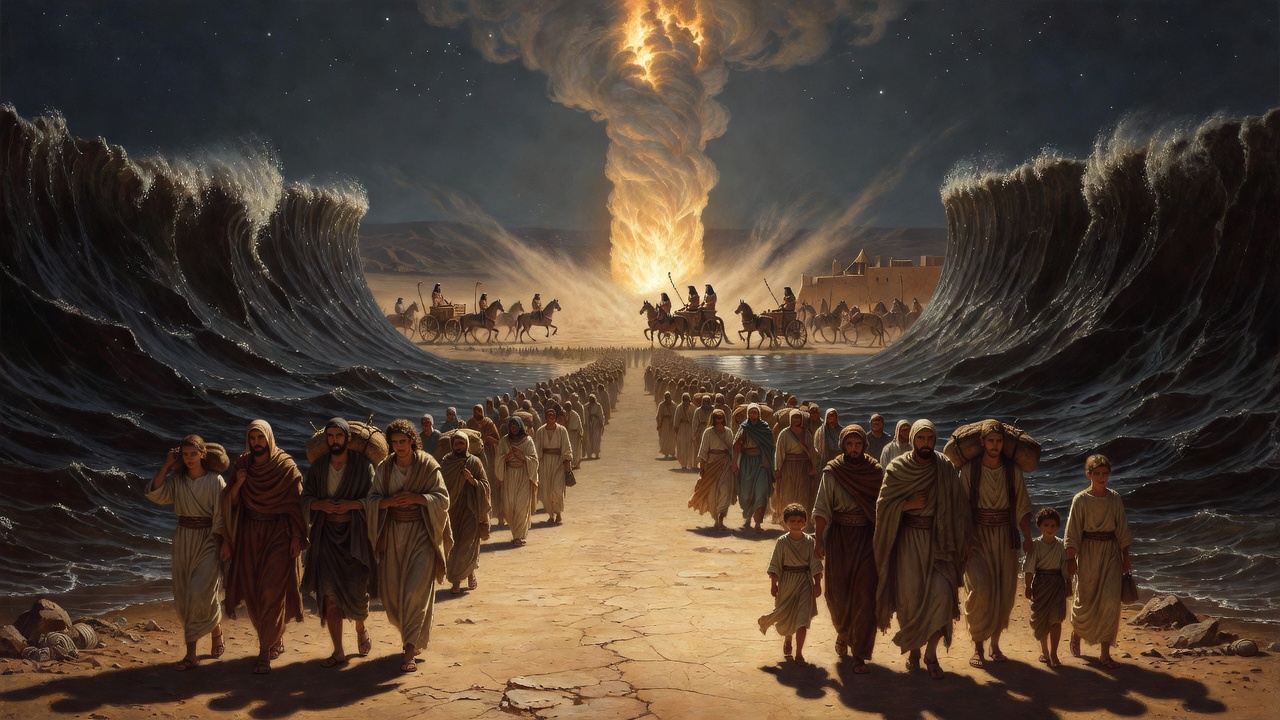
Israel trapped between Pharaoh and the sea
- Israel was told to turn back and camp before Pi-hahiroth, between Migdol and the sea, directly opposite Baal-zephon, so that Pharaoh would think the wilderness had boxed them in. Pi-hahiroth means place where the reeds grow, though the Septuagint and the Coptic read farmstead, and Baal-zephon means Baal of the north.Sources: the Bible text itself · Pi-hahiroth · Baal-zephon
- Easton's Bible Dictionary (1897) describes Baal-zephon as an Egyptian town on the shores of the Gulf of Suez, probably modern Jebel Deraj or Kulalah on the western shore, and notes that Egyptian Baal-zapuna was a place of worship. Some have identified Pi-hahiroth with Ajrud, a fortress between Etham and Suez. The entry on Pi-hahiroth adds that the condition of the Isthmus of Suez at the time of the Exodus is not exactly known, so Pi-hahiroth and Israel's other camps in Egypt cannot be definitely located; the isthmus has been formed by deposits of the Nile.Sources: Baal-zephon · Pi-hahiroth
- Easton's Bible Dictionary (1897) says the Pharaoh of the Exodus was probably Menephtah I, the fourteenth and eldest surviving son of Rameses II, and that he resided at Zoan, where his interviews with Moses and Aaron recorded in Exodus took place. The same entry still treats it as an open question whether Seti II or his father Menephtah was that king, and notes that some judge the evidence to favor Seti II.Sources: Pharaoh (of the Exodus)
Notes written with AI assistance from open sources (Theographic Bible Metadata, CC BY-SA 4.0; Easton’s Bible Dictionary, public domain) and reviewed before publishing.
Places in this chapter
Only places identified with high confidence are shown (90% or more according to the scholarly sources compiled by OpenBible). Period map: DARE (Digital Atlas of the Roman Empire), CC BY 4.0; modern map: © OpenStreetMap contributors; places: OpenBible.info (CC BY 4.0).
Credits and license for this translation
Cishingini Agwara Kambari [asg]
Cishingini: Cishingini Agwara Kambari [asg] (Bible)
copyright © 2025 Language Development and Translation Initiative (LDTI)
Language: (Cishingini)
Contributor: The Seed Company
This translation is made available to you under the terms of the
Creative Commons Attribution Share-Alike license 4.0.
You have permission to share and redistribute this Bible translation in any format and to make reasonable revisions and adaptations of this translation, provided that:
You include the above copyright and source information.
If you make any changes to the text, you must indicate that you did so in a way that makes it clear that the original licensor is not necessarily endorsing your changes.
If you redistribute this text, you must distribute your contributions under the same license as the original.
Pictures included with Scriptures and other documents on this site are licensed just for use with those Scriptures and documents.
For other uses, please contact the respective copyright owners.
Note that in addition to the rules above, revising and adapting God's Word involves a great responsibility to be true to God's Word. See Revelation 22:18-19.
2025-07-09
Source: http://ebible.org/asg/ · eBible.org