Genesis 8
Uisneno In Kabin ma Prenat: Rais Manba'an Fe'u nok Reta' Ahun-hunut · Tap a verse to see its cross-references.
Auf gui nmurai nmeot
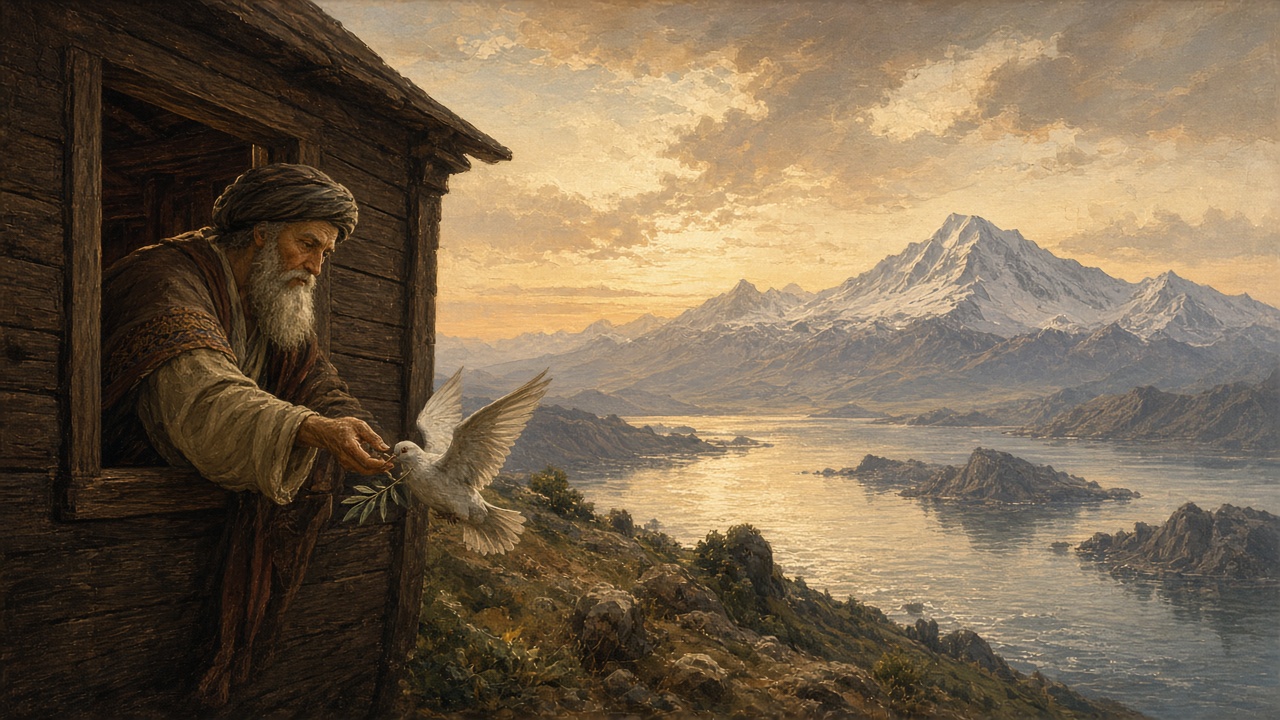
1Mes Uisneno ka nnikaꞌ fa naiꞌ Noh ma areꞌ muiꞌt ein anbin abnao naan. Onaim In npaek anin he nfuu nameit oe naan. 2In nkeeh nain oe maat ein, ma nasnasab uran. 3Onaim oe naan ansaun piut. Neno nautn es boꞌ niim (150) namsoup on nai te, oe naan in asraatn ii nheer on aꞌkreꞌo. 4Nateef fuun hiut ii ntaam neno boꞌes am hiut on nai te, bnao naan naꞌraeꞌt on nbi ꞌtoeꞌ aꞌraats es, kaan ee, Ararat. 5Oe naan ansaun piut. Oras naan fuun boꞌ ii ntaam neno meseꞌ, aꞌtoeꞌf ein sin aꞌpuupk ein mamniit ein een.
6Ankoon naꞌko neno boꞌ haa on naan ate, naiꞌ Noh nasoit abnao naan in eno sneer. 7Rarit in nafetin kor-kaaꞌ es. Koro naan natpeen neu-mneem tar antea oe naan ansaun batuur-batuur. Ma in ka nfain fa on abnao naan. 8Onaim naiꞌ Noh nafetiꞌ ntein kor-kefi he nriun ma nahiin niit kar-karu aiꞌ oe naan nmeit inrair. 9Mes oe naan feꞌ nmemun pah-pinan, etun koro naan ka napein fa bare he ntook. Onaim in nfain on abnao. Naiꞌ Noh annonaꞌ in aꞌniman, ma ntoup nataam koro naan anfain neu bnao.
10Naiꞌ Noh anpao ntein neno hiut. Onaim in nafetiꞌ ntein kor-kefi naan. 11Maans ee nmaeb on naan ate, kor-kefi naan anfain neem. In nteo neik hau noo saitun es. Rarit naiꞌ Noh nahiin nak oe naan ansaun batuur een. 12In npao ntein neno hiut. In nafetiꞌ ntein kor-kefi naan. Mes neot reꞌ ia, kor-kefi naan ka nfain neem af.
13Fuun mees ii ntaam neno meseꞌ, oras naiꞌ Noh nmoin naan toon natun nee mtoon meseꞌ (601), oe naan anmeit inrair. Naiꞌ Noh nasoit antein eno sneer. In napeen ete, auf gui nmeto nrair. 14Anbi fuun nuaꞌ ii ntaam neno boꞌ nua mhiut, afu naan anmeto nkoon goen.
15Rarit Uisneno nreun naiꞌ Noh am nak, 16“Noh! Oras ia, hi msaun nai miꞌko bnao naan. 17Misanut muiꞌt ein naan ok-okeꞌ! Esan reꞌ: muiꞌ aem, muiꞌ fui, anonok, ma koro. Maut he sin namsaꞌin, he naheun pah-pinan.”
18Rarit naiꞌ Noh, in fee, in aanh ein, ma in aan naenf ein, ansanun okeꞌ naꞌkon abnao naan. Muiꞌt ein naan ansanun amsaꞌ, es-es ate natuin in nonot.
Naiꞌ Noh anfee fuaꞌ-turuꞌ he nseun banin Uisneno In manekan
20Rarit naiꞌ Noh nbakin fatu he ntao mei fuat neu UISNENO. Naꞌko muiꞌt ein reꞌ nabeiꞌ he npaek sin anjarin fuaꞌ-turuꞌ, naiꞌ Noh nheek mes-meseꞌ. Rarit in nroor sin ma nout sin anbin mei fuat, he njair tanar nak in nasaeb seun-banit neu UISNENO. 21Oras UISNENO nafoi niit fuaꞌ-tuurꞌ ein naan sin foo meink ein, In nmariin. Onaim In natenab am nak,
“Anmurai oras ia, Au ka ꞌkaas aꞌteniꞌ fa pah-pinan natuin mansian ein sin ꞌmoeꞌ reꞌuf. Maski sin nateenb ahaa rais reꞌuf naꞌkon aanꞌ-anaꞌ, mes Au of ka ureꞌu ꞌtein fa areꞌ kanan amonit, on reꞌ Au feꞌ ureuꞌ urair je naan. 22Anbi oras pah-pinan ia feꞌe nbi naa, oors ein nanaob ok piut, natuin ahaa sin atreek ein. Esan reꞌ: oras senat ma sekit, oras mainikin ma maputuꞌ, oras fauk-nais ma uur napu, fai ma manas.”
Did you know?
The Waters Recede
- The ark came to rest on the mountains of Ararat, a name meaning “sacred land” or “high land” for a country on whose mountains the ark settled after the flood. Easton's Bible Dictionary (1897) suggests those mountains were probably the Kurdish range of southern Armenia, though the name is also commonly applied to a high, almost inaccessible peak rising from the plain of the Araxes. In 2 Kings 19:37 and Isaiah 37:38 the Authorized Version renders the name “Armenia” and the Revised Version “land of Ararat,” while Jeremiah 51:27 uses it for central or southern Armenia.Sources: Ararat · the Bible text itself
- Noah’s Hebrew name means “rest,” and in this chapter the ark itself comes to rest as the waters go down. He was the son of Lamech and the grandson of Methuselah, and the father of Shem, Ham, and Japheth. Easton's Bible Dictionary describes him as the connecting link between the old world and the new, and as a second great progenitor of the human family.Sources: Noah · the Bible text itself
- Chronological notes place the Great Flood in 2347 BC, lasting one year; the subsiding of the waters in 2346 BC, over 220 days; and the leaving of the ark in 2346 BC, as a single day. In the chapter itself, the waters have gone down after 150 days and the ark rests on the seventeenth day of the seventh month; on the first day of the first month of Noah’s six hundred and first year the waters have dried up, and by the twenty-seventh day of the second month the earth is fully dry.Sources: The Great Flood · The flood subsides · Leaving the Ark · the Bible text itself
Notes written with AI assistance from open sources (Theographic Bible Metadata, CC BY-SA 4.0; Easton’s Bible Dictionary, public domain) and reviewed before publishing.
Places in this chapter
- Ararat · Today: Urartu · 39.703, 44.300 · verse 4
Only places identified with high confidence are shown (90% or more according to the scholarly sources compiled by OpenBible). Period map: DARE (Digital Atlas of the Roman Empire), CC BY 4.0; modern map: © OpenStreetMap contributors; places: OpenBible.info (CC BY 4.0).
Credits and license for this translation
Uisneno In Kabin ma Prenat: Rais Manba'an Fe'u nok Reta' Ahun-hunut
Genesis and the New Testament in the Amarasi language of Indonesia
Kejadian dan Perjanjian Baru dalam bahasa Amarasi dari
copyright © 1999-2014 Unit Bahasa dan Budaya, Kupang NTT, Indonesia
Language: Amarasi
Translation by: Wycliffe Bible Translators
This translation is made available to you under the terms of the
Creative Commons Attribution-No Derivatives license 4.0.
You may share and redistribute this Bible translation or extracts from it in any format, provided that:
You include the above copyright and source information.
You do not make any derivative works that change any of the actual words or punctuation of the Scriptures.
Pictures included with Scriptures and other documents on this site are licensed just for use with those Scriptures and documents.
For other uses, please contact the respective copyright owners.
2022-03-11
Source: http://ebible.org/aaz/ · eBible.org