Gênesis 8
Uisneno In Kabin ma Prenat: Rais Manba'an Fe'u nok Reta' Ahun-hunut · Toque num versículo para ver as referências cruzadas.
Auf gui nmurai nmeot
1Mes Uisneno ka nnikaꞌ fa naiꞌ Noh ma areꞌ muiꞌt ein anbin abnao naan. Onaim In npaek anin he nfuu nameit oe naan. 2In nkeeh nain oe maat ein, ma nasnasab uran. 3Onaim oe naan ansaun piut. Neno nautn es boꞌ niim (150) namsoup on nai te, oe naan in asraatn ii nheer on aꞌkreꞌo. 4Nateef fuun hiut ii ntaam neno boꞌes am hiut on nai te, bnao naan naꞌraeꞌt on nbi ꞌtoeꞌ aꞌraats es, kaan ee, Ararat. 5Oe naan ansaun piut. Oras naan fuun boꞌ ii ntaam neno meseꞌ, aꞌtoeꞌf ein sin aꞌpuupk ein mamniit ein een.
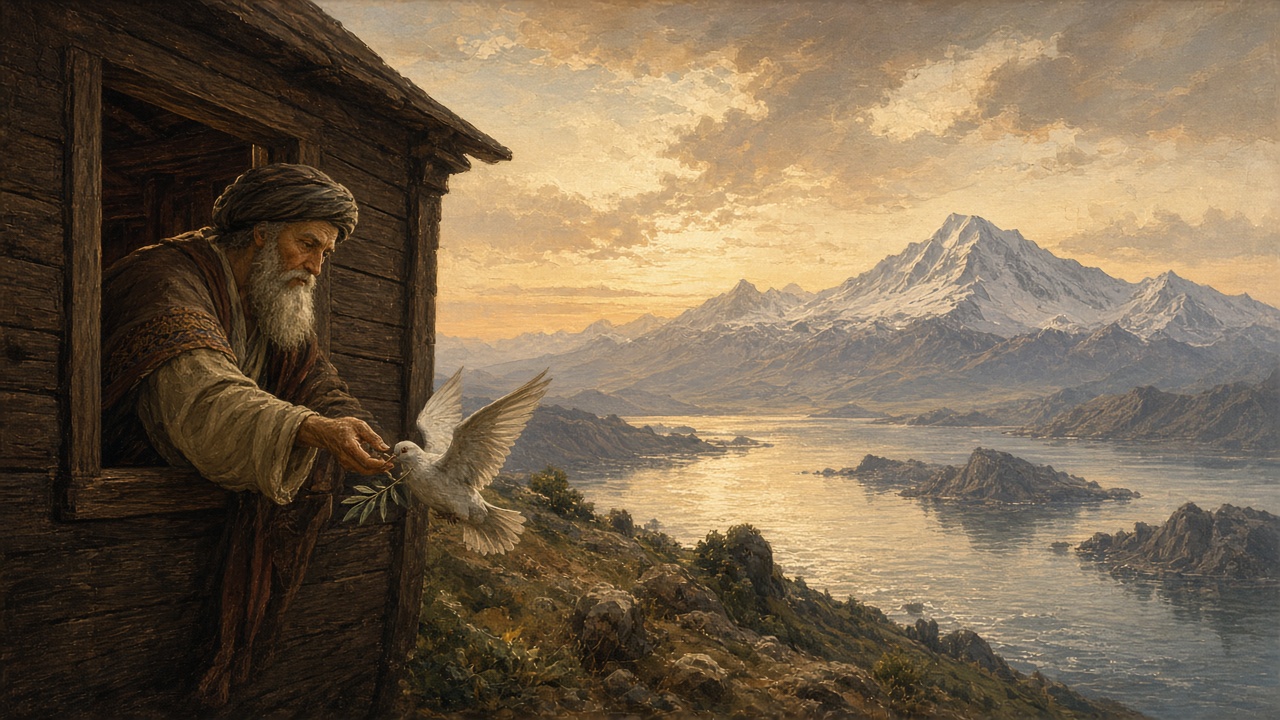
6Ankoon naꞌko neno boꞌ haa on naan ate, naiꞌ Noh nasoit abnao naan in eno sneer. 7Rarit in nafetin kor-kaaꞌ es. Koro naan natpeen neu-mneem tar antea oe naan ansaun batuur-batuur. Ma in ka nfain fa on abnao naan. 8Onaim naiꞌ Noh nafetiꞌ ntein kor-kefi he nriun ma nahiin niit kar-karu aiꞌ oe naan nmeit inrair. 9Mes oe naan feꞌ nmemun pah-pinan, etun koro naan ka napein fa bare he ntook. Onaim in nfain on abnao. Naiꞌ Noh annonaꞌ in aꞌniman, ma ntoup nataam koro naan anfain neu bnao.
10Naiꞌ Noh anpao ntein neno hiut. Onaim in nafetiꞌ ntein kor-kefi naan. 11Maans ee nmaeb on naan ate, kor-kefi naan anfain neem. In nteo neik hau noo saitun es. Rarit naiꞌ Noh nahiin nak oe naan ansaun batuur een. 12In npao ntein neno hiut. In nafetiꞌ ntein kor-kefi naan. Mes neot reꞌ ia, kor-kefi naan ka nfain neem af.
13Fuun mees ii ntaam neno meseꞌ, oras naiꞌ Noh nmoin naan toon natun nee mtoon meseꞌ (601), oe naan anmeit inrair. Naiꞌ Noh nasoit antein eno sneer. In napeen ete, auf gui nmeto nrair. 14Anbi fuun nuaꞌ ii ntaam neno boꞌ nua mhiut, afu naan anmeto nkoon goen.
15Rarit Uisneno nreun naiꞌ Noh am nak, 16“Noh! Oras ia, hi msaun nai miꞌko bnao naan. 17Misanut muiꞌt ein naan ok-okeꞌ! Esan reꞌ: muiꞌ aem, muiꞌ fui, anonok, ma koro. Maut he sin namsaꞌin, he naheun pah-pinan.”
18Rarit naiꞌ Noh, in fee, in aanh ein, ma in aan naenf ein, ansanun okeꞌ naꞌkon abnao naan. Muiꞌt ein naan ansanun amsaꞌ, es-es ate natuin in nonot.
Naiꞌ Noh anfee fuaꞌ-turuꞌ he nseun banin Uisneno In manekan
20Rarit naiꞌ Noh nbakin fatu he ntao mei fuat neu UISNENO. Naꞌko muiꞌt ein reꞌ nabeiꞌ he npaek sin anjarin fuaꞌ-turuꞌ, naiꞌ Noh nheek mes-meseꞌ. Rarit in nroor sin ma nout sin anbin mei fuat, he njair tanar nak in nasaeb seun-banit neu UISNENO. 21Oras UISNENO nafoi niit fuaꞌ-tuurꞌ ein naan sin foo meink ein, In nmariin. Onaim In natenab am nak,
“Anmurai oras ia, Au ka ꞌkaas aꞌteniꞌ fa pah-pinan natuin mansian ein sin ꞌmoeꞌ reꞌuf. Maski sin nateenb ahaa rais reꞌuf naꞌkon aanꞌ-anaꞌ, mes Au of ka ureꞌu ꞌtein fa areꞌ kanan amonit, on reꞌ Au feꞌ ureuꞌ urair je naan. 22Anbi oras pah-pinan ia feꞌe nbi naa, oors ein nanaob ok piut, natuin ahaa sin atreek ein. Esan reꞌ: oras senat ma sekit, oras mainikin ma maputuꞌ, oras fauk-nais ma uur napu, fai ma manas.”
Você sabia?
As águas recuam
- A arca pousou sobre os montes de Ararate, nome que significa “terra sagrada” ou “terra alta” e designa um país em cujas montanhas a arca parou depois do dilúvio. O Easton's Bible Dictionary (1897) sugere que esses montes eram, provavelmente, a cordilheira curda do sul da Armênia, embora o nome também seja comumente aplicado a um pico alto e quase inacessível que se ergue da planície do Araxes. Em 2 Reis 19:37 e Isaías 37:38, a Authorized Version traduz o nome por “Armênia” e a Revised Version por “terra de Ararate”, enquanto Jeremias 51:27 o usa para a Armênia central ou meridional.Fontes: Ararat · o próprio texto bíblico
- O nome hebraico de Noé significa “descanso”, e neste capítulo a própria arca encontra descanso enquanto as águas baixam. Ele era filho de Lameque e neto de Matusalém, e pai de Sem, Cam e Jafé. O Easton's Bible Dictionary o descreve como o elo entre o mundo antigo e o novo, e como um segundo grande progenitor da família humana.Fontes: Noah · o próprio texto bíblico
- Notas cronológicas situam o Grande Dilúvio em 2347 a.C., com duração de um ano; o recuo das águas em 2346 a.C., ao longo de 220 dias; e a saída da arca em 2346 a.C., num único dia. No próprio capítulo, as águas já baixaram depois de 150 dias e a arca pousa no décimo sétimo dia do sétimo mês; no primeiro dia do primeiro mês do ano seiscentos e um de Noé as águas secaram, e no vigésimo sétimo dia do segundo mês a terra está completamente seca.Fontes: The Great Flood · The flood subsides · Leaving the Ark · o próprio texto bíblico
Notas escritas com auxílio de IA a partir de fontes abertas (Theographic Bible Metadata, CC BY-SA 4.0; Easton’s Bible Dictionary, domínio público) e revisadas antes de publicar.
Lugares deste capítulo
- Ararat · Hoje: Urartu · 39.703, 44.300 · versículo 4
Só aparecem lugares com identificação de alta confiança (90% ou mais segundo as fontes acadêmicas reunidas pelo OpenBible). Mapa da época: DARE (Digital Atlas of the Roman Empire), CC BY 4.0; mapa atual: © colaboradores do OpenStreetMap; lugares: OpenBible.info (CC BY 4.0).
Créditos e licença desta tradução
Uisneno In Kabin ma Prenat: Rais Manba'an Fe'u nok Reta' Ahun-hunut
Genesis and the New Testament in the Amarasi language of Indonesia
Kejadian dan Perjanjian Baru dalam bahasa Amarasi dari
copyright © 1999-2014 Unit Bahasa dan Budaya, Kupang NTT, Indonesia
Language: Amarasi
Translation by: Wycliffe Bible Translators
This translation is made available to you under the terms of the
Creative Commons Attribution-No Derivatives license 4.0.
You may share and redistribute this Bible translation or extracts from it in any format, provided that:
You include the above copyright and source information.
You do not make any derivative works that change any of the actual words or punctuation of the Scriptures.
Pictures included with Scriptures and other documents on this site are licensed just for use with those Scriptures and documents.
For other uses, please contact the respective copyright owners.
2022-03-11
Fonte: http://ebible.org/aaz/ · eBible.org