Genesis 45
Uisneno In Kabin ma Prenat: Rais Manba'an Fe'u nok Reta' Ahun-hunut · Tap a verse to see its cross-references.
Naiꞌ Yusuf natoon in tuan, ma ntoit in aamf ee he nfooꞌ neem neu pah Masir
1Anneen on naan ate, naiꞌ Yusuf in neekn ee kratiꞌ-kratiꞌ, tar antea in ka ntahan naan fa in tuan ii ntein nbi in ameupt ein sin maatk ein. Etun in nreun sin he npoin, he in bisa nmees nok in orif-tataf sin. Nok ranan naan ate, in bisa natoon in tuan ee neu sin. 2Rarit ameupt ein npoin okeꞌ. Onaim naiꞌ Yusuf ankae nmeꞌ-meꞌur ma npin-pinus. In ameupt ein, atoin Masir, reꞌ nhaken nbin moen ee, anneen amsaꞌ. Ma abitan uisf ee in soonf ee nnenan amsaꞌ.
3Rarit naiꞌ Yusuf natoon namneo goah neu in orif-tataf sin am nak, “Airoo, tua. Au reꞌ ia, naiꞌ Usu kau. Hi oriꞌ. Hit arkit atmaꞌori-tatan. Hit amaꞌ feꞌ nmoni, oo?”
Annenan on naan ate, in orif-tataf sin namtau nmaten, tar antea sin ka fefaꞌ meseꞌ fa.
4Rarit naiꞌ Yusuf nak sin am nak, “Hae! Amsiriꞌ iim he mpaumaak kau feꞌ!”
Onaim sin nsiir ein antaman ma npaumaak naiꞌ Yusuf. Onaim in naꞌuab nafanik am nak, “Au reꞌ ia, naiꞌ Yusuf, reꞌ neon goes ii, hi miꞌsosaꞌ mpoirn ee meu pah Masir ia. 5Amneon ii, hi miꞌsosaꞌ kau goen. Mes kais mimtau, ma kais ammatoe ma mmasanan es nok es. Natuin Uisneno es neik kau ꞌuum aꞌtea ia, he ꞌjair ahunut ꞌeu ki. Nok ranan naan, In npaek kau he In nafetin naan too mfaun ii, he sin kaisaꞌ namnaah anmaten.
6Oras ia, amnaahs ii feꞌ nnao naan toon nua. Aar toon niim feꞌ. Oras naan, ka tiit tain fa tuaf es he ntoof aiꞌ nkaun, nseen, ma ka tiit fa reen jes reꞌ he nmuiꞌ penaꞌ-makaꞌ. 7Nok ranan reꞌ hit ka tahiin tain je fa reꞌ ia, Uisneno neik kau ꞌuum uhuun uꞌko ki. Henatiꞌ naꞌko hi arki, ma hi anah-upuf sin napenin aꞌhonis.
8Onaim in batuurn ii, ka hi es ammoeꞌ kau fa he au ꞌuum aꞌtea ia, mes Uisneno In aꞌmoꞌen. In es nait kau ꞌjair uisf ee in tua pirsaꞌi ꞌbi pah Masir ia. Onaim au ꞌjair aꞌnakat aꞌbi uisf ee in sonaf. Ka tiit tain fa es he nneis naꞌko kau.
9Onaim oras ia, hi mfain rabah nai, he mitoon au uabak reꞌ ia meu hit amaꞌ, mak on nai: ‘Aam honiꞌ, ho anah naiꞌ Yusuf anmoin feꞌ! In njair kaes koꞌu et pah Masir. In naskau ko aam honiꞌ, he mnao meu pah Masir rabah nai, tua. 10Aam honiꞌ of ho mupein mainuan he mutua mbi pah Gosen mpaumaak ee. Bare naan mainuan. Onaim hi bisa mituuk ma miꞌekuꞌ hi ꞌbib-kasen, aꞌbibin, ma bijae ngguin ok-okeꞌ. In ntoit ko msaꞌ, he uum meik ho anah-upuf sin, nok nain sin uim je naan ee, ma sin baer pusaak ein ok-okeꞌ he mitua mibaar ambi nee, tua. 11Karu aam honiꞌ mutua mbi Gosen ate, in bisa npairoir ko nbi nee. Natuin amnaahs ii aar toon niim antein feꞌ. Onaim in of anꞌator he aam honiꞌ mok ho nonot-asar sin, ma ho muiꞌt ein ok-okeꞌ ka nkuran ma nrabuꞌ fa saaꞌ-saaꞌ, tua.’ ”
12Naiꞌ Yusuf natoon anrair on naan ate, in naꞌuab antein am nak, “Oras ia, hi miit meik hi matam, aa oo? Ho msaꞌ, Min. Au reꞌ ia, ho tataꞌ naiꞌ Yusuf teb-tebe. 13Onaim mitoon meu hit amaꞌ mak, au kuasat aꞌbi pah Masir reꞌ ia, kouꞌ reꞌuf. Ma miretaꞌ meu hit amaꞌ saaꞌ-saaꞌ reꞌ hi miit sin. Rarit hi meik je neem rabah nai meu ia!”
14Rarit in nhoo ma nneek in orif naiꞌ Benjamin, ma sin nua sin ankaen. 15In anhoo ma nneek in taatf ein meseꞌ-meseꞌ msaꞌ. Rarit naꞌ sin nmurai naꞌuab ein nok ne.
Usif pah Masir antoup naiꞌ Yusuf in orif-tataf sin
16Rarit, oras uisf ee nok in aꞌnaak meupn ein annenan nak naiꞌ Yusuf in orif-tataf sin neman, sin nmariin anmaten. 17Onaim uisf ee naꞌuab neu naiꞌ Yusuf am nak, “Yusuf! Mutoon meu sin ho benuꞌ, he sin nasaeb ein penaꞌ-makaꞌ neu sin bikaes keledai ngguin, he neikin nnaon neun pah Kanaꞌan. 18Rarit amreun sin he neik ho amaꞌ ma nonot-asar sin neman okeꞌ, he sin nfooꞌ neman neun ia nai. Au of aꞌfeen sin afu ma bare reꞌ reko nneis nbi pah Masir ia, he sin natuan ma nmonin nbin naan, ma sin napenin amnahat naꞌko bare naan. 19Amreun sin he sin neik nanin akreet bikaseꞌ fauk naꞌko ia, he sin nasaeb riꞌaan ein, ma ho amaꞌ. 20Kais sin natenab baer pusaak ein reꞌ sin ka bisa neik sin fa. Natuin pah Masir ia, naheun nok bareꞌ reꞌ arekot. Sin of anpaar sin.”
21Anneen on naan ate, naiꞌ Yusuf anfee kreet bikaseꞌ fauk, ma betiꞌ nbi ranan, natuin uisf ee in kabin. Ma in orif-tataf sin nabaarb ein he nfanin natuin uisf ee in kabin. 22Naiꞌ Yusuf anfeen sin tai feꞌu msaꞌ, es ate paasn es. Mes in nfeen naiꞌ Benjamin roi mutiꞌ fuaꞌ natun teun, ma tai feꞌu pasan niim. 23In nsonuꞌ neu in aam hoin fe baer saaꞌ-saaꞌ reꞌ nareok naꞌko pah Masir, ma nasaeb sin nbi bikaes keledai mone boꞌes. In nfee naꞌbabaꞌ ntein penaꞌ-makaꞌ, utunuꞌ, ma mnahat humaꞌ-humaꞌ, nasaeb sin neun bikaes keledai ainaf boꞌes. In nꞌook-beit sin neu oras sin ntebi nfain neman neun pah Masir. 24Rarit in nnao naseonaꞌ sin, ma namnaub sin am nak, “Natiꞌ hi kaisaꞌ mmatoe mbi raan ee, joo!”
Naiꞌ Yakop anneen nak naiꞌ Yusuf anmoin feꞌ
25Rarit sin nnaon nfanin neun sin aamf ee et pah Kanaꞌan. 26Antean ne te, sin natonan sin aamf ee mnak, “Aam honiꞌ! Ho anah naiꞌ Yusuf anmoin feꞌ. In kaes koꞌu et pah Masir! In nnaaꞌ aprenat.”
Oras naiꞌ Yakop anneen ate, in ntakaꞌnanaꞌ ma ka npirsai fa sin uabk ein naan. 27Mes oras sin natonan nrair naiꞌ Yusuf in uab ein naan, ma in niit akreet bikaseꞌ reꞌ naiꞌ Yusuf ansoun ee he nasaeb neik je neu pah Masir te, naꞌ in npirsai. 28Onaim in naꞌuab am nak, “Airoo! Au aanh ee nmoin feꞌ! On reꞌ naan ate, naꞌ au ꞌmariin. Au ro he ꞌnao ꞌkius ꞌaan ee feꞌ, naꞌ au ꞌmate msaꞌ, reko.”
Did you know?
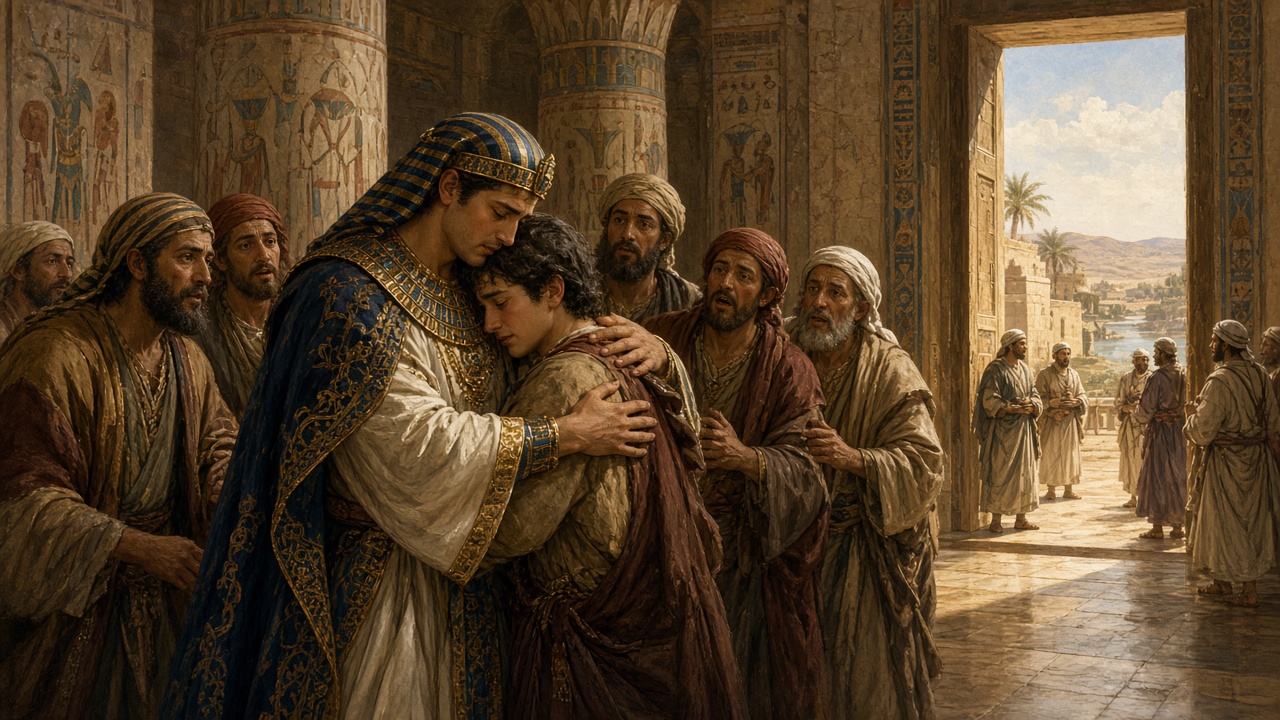
Joseph Reveals Himself to His Brothers
- Goshen, the district where Joseph tells his brothers to settle near him with their children, grandchildren, flocks, and herds, lay east of the Nile and apparently not far from the royal residence. Easton's Bible Dictionary (1897) notes that it is first mentioned in Joseph's message to his father, and that it was also called the land of Rameses, because the towns of Pithom and Rameses lay within its borders.Sources: Goshen · the Bible text itself
- Joseph weeps so loudly that the Egyptians hear him, and Pharaoh's household soon hears of it; Pharaoh and his servants are pleased when they learn the brothers have come, and he offers them the best of the land of Egypt. Easton's Bible Dictionary (1897) says the Pharaoh of Joseph's days was probably Apopi, or Apopis, the last of the Hyksos kings. It adds that Hyksos kings welcomed Asiatic shepherds, whereas older native Egyptians regarded shepherds as an abomination, though some argue that Joseph came to Egypt in the reign of Thothmes III, long after the Hyksos were expelled.Sources: Pharaoh (of Joseph) · the Bible text itself
- Benjamin was the younger son of Jacob by Rachel, and Joseph the elder of her two sons; their mother died giving birth to Benjamin at Ephrath and named him Ben-oni, meaning son of my pain, a name his father changed to Benjamin. At the reunion Joseph embraces Benjamin and weeps, giving him three hundred shekels of silver and five sets of clothes, while each of the other brothers receives a new garment.Sources: Benjamin (patriarch) · Joseph (son of Jacob) · the Bible text itself
Notes written with AI assistance from open sources (Theographic Bible Metadata, CC BY-SA 4.0; Easton’s Bible Dictionary, public domain) and reviewed before publishing.
Places in this chapter
- Egypt · 30.129, 31.308 · verses 4, 8, 9, 13, 18, 19, 20, 23, 25, 26
- Goshen · Today: Goshen 1 · 30.799, 31.834 · verse 10
- Canaan · 32.767, 35.333 · verses 17, 25
Only places identified with high confidence are shown (90% or more according to the scholarly sources compiled by OpenBible). Period map: DARE (Digital Atlas of the Roman Empire), CC BY 4.0; modern map: © OpenStreetMap contributors; places: OpenBible.info (CC BY 4.0).
Credits and license for this translation
Uisneno In Kabin ma Prenat: Rais Manba'an Fe'u nok Reta' Ahun-hunut
Genesis and the New Testament in the Amarasi language of Indonesia
Kejadian dan Perjanjian Baru dalam bahasa Amarasi dari
copyright © 1999-2014 Unit Bahasa dan Budaya, Kupang NTT, Indonesia
Language: Amarasi
Translation by: Wycliffe Bible Translators
This translation is made available to you under the terms of the
Creative Commons Attribution-No Derivatives license 4.0.
You may share and redistribute this Bible translation or extracts from it in any format, provided that:
You include the above copyright and source information.
You do not make any derivative works that change any of the actual words or punctuation of the Scriptures.
Pictures included with Scriptures and other documents on this site are licensed just for use with those Scriptures and documents.
For other uses, please contact the respective copyright owners.
2022-03-11
Source: http://ebible.org/aaz/ · eBible.org