Genesis 46
Uisneno In Kabin ma Prenat: Rais Manba'an Fe'u nok Reta' Ahun-hunut · Tap a verse to see its cross-references.
Naiꞌ Yakop sin nabaarb ein he nfoꞌon neun pah Masir
1Rarit naiꞌ Yakop nakbuaꞌ in aꞌbruaꞌ ein, ma nnao nasaitan pah Kanaꞌan. Sin ntean kuan Barseba te, in nroor muꞌit ma nafuat sin neu Uisneno, reꞌ in amaf naiꞌ Isak naꞌbees neu Ne naꞌko unuꞌ.
2Fai jes ate, naiꞌ Yakop namnei. Anbi mneit naan, in nneen Uisneno noeꞌn ee mnak, “Hoe! Yakop! Ho mfeen he mneen feꞌ!”
Onaim in nataah am nak, “Tua!”
3Ma Uisneno nak, “Au reꞌ ia, Uisneno reꞌ ho amaꞌ naꞌbees neu Na naꞌko unuꞌ. Ho kais mumtau he mnao meu pah Masir. Au of aꞌmoeꞌ ho sufam-kauꞌm ein anjarin too reꞌ masoꞌik anbin bare naan. 4Au of ꞌok ko tnao teu pah Masir. Ma Au of ꞌok ufaniꞌ ho sufam-kauꞌm ein nfanin neun pah Kanaꞌan amsaꞌ. Oras ho mmate te, of ho anah naiꞌ Yusuf anhake nbi ho bnapam.”
5Rarit naiꞌ Yakop nok in aanh ein, nnaon nasaitan kuan Barseba. Onaim sin nasaeb ee, ma sin fee-anah sin anbin kreet bikaes ein reꞌ usif pah Masir ansonuꞌ sin. 6Sin nait neik sin baer pusaak ein ma muiꞌt ein ok-okeꞌ reꞌ sin nmuiꞌ sin, oras sin nbin pah Kanaꞌan. Rarit naiꞌ Yakop ma in aan feto-aan mone sin, ma in uupf ein ok-okeꞌ, nnaon neun pah Masir.
Naiꞌ Yakop nok in noont ein reꞌ nokan nnaon neun pah Masir
8Naiꞌ Yakop in nonot-asar reꞌ nok anfoꞌon neun pah Masir, esan reꞌ ia:
Naiꞌ Ruben, aan moen unu. 9In aanh ein esan reꞌ: naiꞌ Henok, naiꞌ Paru, naiꞌ Hesron, ma naiꞌ Karmi.
10Naiꞌ Simeon nok in aanh ein esan reꞌ: naiꞌ Yemuel, naiꞌ Yamin, naiꞌ Ohat, naiꞌ Yakin, ma naiꞌ Sohar. Ma naiꞌ Saul amsaꞌ, reꞌ nahoins ee naꞌko bifee Kananas.
11Naiꞌ Lewi nok in aanh ein esan reꞌ: naiꞌ Gerson, naiꞌ Kehat, ma naiꞌ Merari.
12Naiꞌ Yahuda nok in aanh ein esan reꞌ: naiꞌ Sela, naiꞌ Peres, ma naiꞌ Sera. Naiꞌ Yahuda in anah bian, naiꞌ Er ma naiꞌ Onan, nmate nrarin nbin Kanaꞌan. In neik naiꞌ Peres in aanh ein amsaꞌ, esan reꞌ: naiꞌ Hesron ma naiꞌ Hamur.
13Naiꞌ Isaskar nok in aanh ein esan reꞌ: naiꞌ Tora, naiꞌ Pua, naiꞌ Ayup, ma naiꞌ Simron.
14Naiꞌ Sebulon nok in aanh ein esan reꞌ: naiꞌ Seret, naiꞌ Eron, ma naiꞌ Yahreel.
15Sin ok-okeꞌ reꞌ naan, naiꞌ Yakop nok in fee bi Lea sin aan hoin ein, oras sin natuan nbin Mesopotamia. Anmuꞌi ntein sin aan feto, kaan ee bi Dina. Onaim naiꞌ Yakop nok in mahoin ii, tuaf boꞌ tenu mteun.
16Onaim anmuiꞌ in anah naꞌko in fee bian es reꞌ: naiꞌ Gat, nok in aanh ein esan reꞌ: naiꞌ Sifion, naiꞌ Hagi, naiꞌ Suni, naiꞌ Esbon, naiꞌ Eri, naiꞌ Arodi, ma naiꞌ Areli.
17Naiꞌ Aser, nok in aanh ein esan reꞌ: naiꞌ Yimna, naiꞌ Yiswa, naiꞌ Yiswi, naiꞌ Beria, nok sin feotf es, kaan ee bi Sera.
Anmuꞌi msaꞌ naiꞌ Beria in aanh ein, esan reꞌ: naiꞌ Heber ma naiꞌ Markiel.
18Sin arsin reꞌ naan, tuaf boꞌes am nee. Esan reꞌ naiꞌ Yakop ma in fee bi Silpa in anah-upuf sin. Bi Silpa naan, ate reꞌ naiꞌ Laban anfee je neu in aan feto bi Lea, naiꞌ Yakop in fee mnasiꞌ.
19Naiꞌ Yakop in fee jes antein, kaan ee bi Rahel. In nahoniꞌ riꞌanaꞌ nua, esan reꞌ: naiꞌ Yusuf ma naiꞌ Benjamin. 20Oras naan, naiꞌ Yusuf ansao nrair bi Asnat nbi pah Masir. In aam baabf ee, aꞌnaak rais pirsait anbi kota On, kaan ee naiꞌ Potifera. Naiꞌ Yusuf ma bi Asnat sin aanh ein esan reꞌ: naiꞌ Efraim ma naiꞌ Manase.
21Naiꞌ Benjamin nok amsaꞌ neu pah Masir. In nok in aanh ein, esan reꞌ: naiꞌ Bera, naiꞌ Beker, naiꞌ Asibel, naiꞌ Gera, naiꞌ Naꞌaman, naiꞌ Ehi, naiꞌ Ros, naiꞌ Mupim, naiꞌ Hupim, ma naiꞌ Aret.
22Rarit naiꞌ Yakop ma in fee bi Rahel sin mahoink ein tuaf boꞌes am haa.
23Naiꞌ Yakop in nmuꞌi ntein fee jes, kaan ee bi Bilha. Sin aanh ein esan reꞌ: naiꞌ Dan ma naiꞌ Naftali.
Naiꞌ Dan in aanh ee, naiꞌ Husim.
24Naiꞌ Naftali nok in aanh ein esan reꞌ: naiꞌ Yaser, naiꞌ Guni, naiꞌ Yeser ma naiꞌ Sirem.
25Naiꞌ Yakop nok in fee bi Bilha sin mahoink ein tuaf hiut. Bi Bilha naan, es reꞌ bi Rahel in ate, reꞌ in napein je naꞌko in amaf naiꞌ Laban.
26Onaim naiꞌ Yakop in mahoin ein reꞌ nnaon neun pah Masir naan, tuaf boꞌ nee mnee. In aan naenf ein ka nsoiꞌ sin fa feꞌ. 27Sin nmaꞌbaab ein nok naiꞌ Yusuf in aanh ein reꞌ nahoniꞌ sin anbin pah Masir, sin tuaf nua. Onaim naiꞌ Yakop in nonot-asar reꞌ natuan nbin Masir, sin ar-arsin tuaf boꞌ hiut.
Naiꞌ Yakop nateef in anah naiꞌ Yusuf
28Oras sin he noi ntean pah Masir ate, naiꞌ Yakop anreun in anah naiꞌ Yahuda he nnao nahuun, he noꞌen naiꞌ Yusuf, he neem nateef nok in aamf ee nbi pah Gosen. Oras sin ntean nrarin nbin Gosen, 29on naan ate, naiꞌ Yusuf ansae neu in aꞌkreet, he nnao nateef in aamf ee nbi naan. Oras sin natefan, naiꞌ Yusuf anhoo in aamf ee, ma nkae ꞌroo reꞌuf.
30Rarit naiꞌ Yakop naꞌuab nok naiꞌ Yusuf am nak, “Usu! Oras ia, au ꞌiit ko goen. Onaim au uhiin ꞌak ho mmoin feꞌ. Maski oras ia au ꞌmate msaꞌ, reko.”
31Rarit naiꞌ Yusuf natoon neu in orif-tataf sin am nak, “Au ro he ꞌnao ꞌbaiseun uisf ee, he utoon ꞌak au nonot-asar sin naꞌkon pah Kanaꞌan neman ntean nggoen. 32Onaim au of utoon ꞌak hi reꞌ ia, atuuk muꞌit. Etun hi meik hi muiꞌt ein ma hi pusaak ein naꞌkon Kanaꞌan. 33Karu uisf ee noꞌen ki, ma nataan hi meupm ein saaꞌ, 34hi mitaah am mak, hi arki reꞌ ia, atuuk muꞌit ammurai miꞌko hi aanꞌ-anaꞌ feꞌ, on reꞌ hi beꞌi-naꞌi sin. Nok ranan naan, in of anreun ki he mitua mbi Gosen.” Naiꞌ Yusuf natoon on naan, natuin abitan pah Masir anmaiꞌnisin karu sin natua nabuan nok atuuk muiꞌt ein.
Did you know?
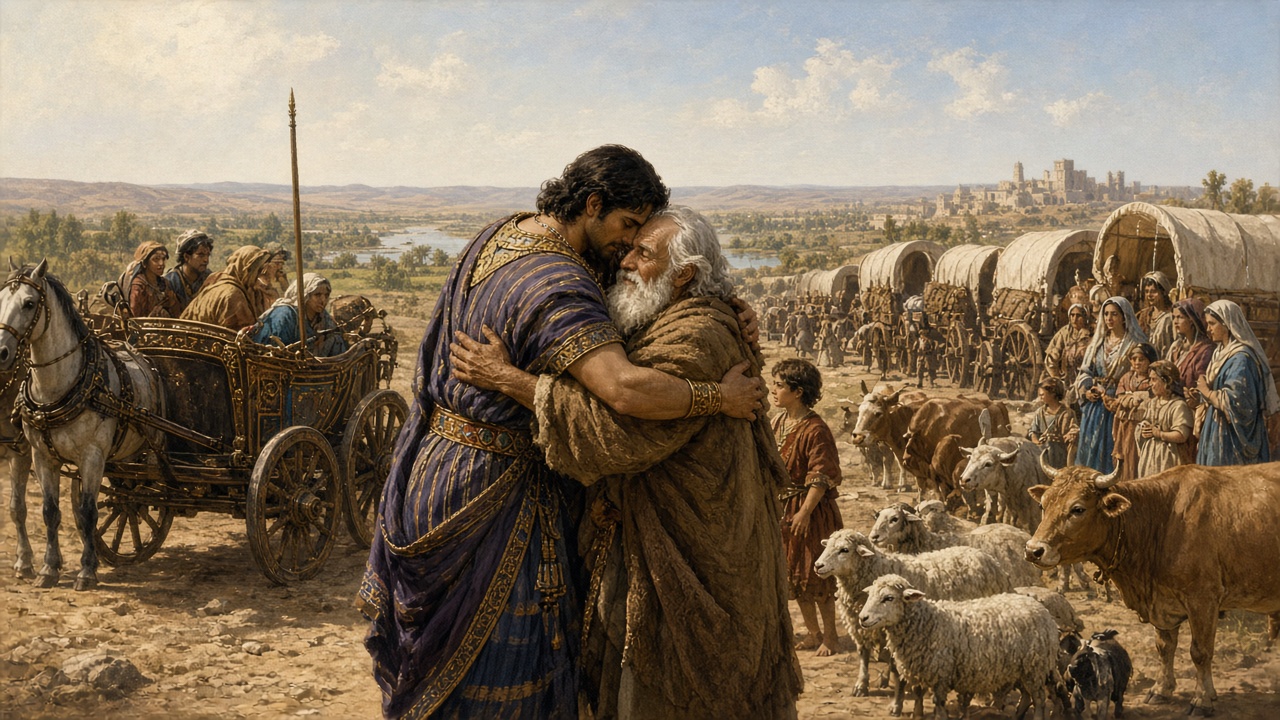
Israel Goes Down to Egypt
- As Israel set out for Egypt with all that he had, he stopped at Beersheba and offered sacrifices to the God of his father Isaac. Beersheba, meaning well of the oath or well of seven, was a well Abraham dug and named after a compact with Abimelech; when Isaac reopened it, he gave it the same name. It was a favorite dwelling of both patriarchs, and there that night God spoke to Jacob in a vision, telling him not to fear going down to Egypt, for he would make him a great nation there.Sources: the Bible text itself · Beersheba
- Jacob sent Judah ahead to Joseph for directions to Goshen, an Egyptian district east of the Nile, apparently near the royal residence, where the family remained until the Exodus. Easton's Bible Dictionary (1897) calls it the best of the land, now a desert, and also the land of Rameses. Joseph told his brothers to say they had raised livestock from youth, so they might settle there, because shepherds were detestable to the Egyptians; that dictionary suggests Pharaoh was probably Apopi, last of the Hyksos, who welcomed these Asiatic shepherds, while native Egyptians abhorred them, though some argue Joseph arrived later, under Thothmes III, after the Hyksos were expelled.Sources: the Bible text itself · Goshen · Pharaoh (of Joseph)
- The chapter counts sixty-six of Jacob's direct descendants who came to Egypt, not counting the wives of his sons, and seventy when Joseph's two sons already born in Egypt are included. Leah's sons and her daughter Dinah are named in that tally, although Easton's Bible Dictionary (1897) says Leah herself had died in Canaan before the journey and was buried in the cave of Machpelah; Rachel had died earlier giving birth to Benjamin and was buried on the way to Ephrath, that is, Bethlehem. Manasseh and Ephraim were born to Joseph in Egypt by Asenath, daughter of Potiphera, priest of On, a center of sun-worship that the Septuagint and Vulgate call Heliopolis.Sources: the Bible text itself · Leah · Rachel · On
Notes written with AI assistance from open sources (Theographic Bible Metadata, CC BY-SA 4.0; Easton’s Bible Dictionary, public domain) and reviewed before publishing.
Places in this chapter
- Egypt · 30.129, 31.308 · verses 1, 3, 4, 5, 6, 7, 8, 20, 26, 27
- Canaan · 32.767, 35.333 · verses 6, 12, 31
- Heliopolis · Today: Ain Shams · 30.129, 31.308 · verse 20
- Goshen · Today: Goshen 1 · 30.799, 31.834 · verses 28, 29, 34
Only places identified with high confidence are shown (90% or more according to the scholarly sources compiled by OpenBible). Period map: DARE (Digital Atlas of the Roman Empire), CC BY 4.0; modern map: © OpenStreetMap contributors; places: OpenBible.info (CC BY 4.0).
Credits and license for this translation
Uisneno In Kabin ma Prenat: Rais Manba'an Fe'u nok Reta' Ahun-hunut
Genesis and the New Testament in the Amarasi language of Indonesia
Kejadian dan Perjanjian Baru dalam bahasa Amarasi dari
copyright © 1999-2014 Unit Bahasa dan Budaya, Kupang NTT, Indonesia
Language: Amarasi
Translation by: Wycliffe Bible Translators
This translation is made available to you under the terms of the
Creative Commons Attribution-No Derivatives license 4.0.
You may share and redistribute this Bible translation or extracts from it in any format, provided that:
You include the above copyright and source information.
You do not make any derivative works that change any of the actual words or punctuation of the Scriptures.
Pictures included with Scriptures and other documents on this site are licensed just for use with those Scriptures and documents.
For other uses, please contact the respective copyright owners.
2022-03-11
Source: http://ebible.org/aaz/ · eBible.org