Genesis 44
Uisneno In Kabin ma Prenat: Rais Manba'an Fe'u nok Reta' Ahun-hunut · Tap a verse to see its cross-references.
Naiꞌ Yusuf in aꞌkoom noin muit ee namneuk
1Sin nbukaen nrarin ate, naiꞌ Yusuf naꞌseꞌ-seꞌo aꞌnaak mepu nbi in uim je mnak, “Hoe! Ho mnao murai penaꞌ-makaꞌ meu atoin ein ia sin aꞌkaor ein naan, nahen-henun. Rarit ho mtao mufaniꞌ sin roit ein es-es ate meu sin aꞌkaor ein naan. 2Rarit ho mait au ꞌkoom noin muit ee, ma mtao goe meu aheit suus goe in aꞌkaor aan.” Onaim in nmoeꞌ natuin naiꞌ Yusuf in aprenat.
3Maan reꞌ snaat ee nsae te, naiꞌ Yusuf nafetin sin nok sin bikaes keledai ngguin he nnaon nfanin ma neikin amnahat. 4Sin nnaon ka ꞌroo fa feꞌ naꞌkon kota naan ate, naiꞌ Yusuf natoon neu aꞌnakat naan am nak, “Ho mnao mriuꞌ mutuin atoin ein naan rabah. Karu mupein sin ite, ho mak sin am mak, ‘Nansaaꞌ am es hi mmoeꞌ maufinu meu ꞌnaef ee? Hi mbaras in neek reok goe nok moeꞌ reꞌuf on naan! 5On mee mꞌes hi mibaak meik hai aꞌnaak te in aꞌkoom noin muit ee? Hi ka mihiin fa, oo? Naan ka npaek je fa he nbukae oe nmees jah. Anpaek je he naim atoniꞌ in uan, natuin aꞌkomaꞌ naan matuaꞌ ate! Hi moeꞌm ein ia, ro reuꞌ besi!’ ”
6Rarit aꞌnakat naan nriuꞌ natuin sin tar antea napein sin. Onaim in natoon neu sin natuin ahaa naiꞌ Yusuf in uaban feꞌe na.
7Rarit sin npenan mates am nak, “Aam, ho sairt ii, on mee? Hai msuup. Hai ka neu he mibeiꞌ fa he mmoeꞌ reꞌuf on naan! 8Ho muhiim kuum. Roit ein reꞌ neon goes ii nbin hai ꞌkaor ein naan, hai mfee sin nfanin neu ko. Onaim hai ka mibeiꞌ fa he mibaak hi aꞌnaak te in aꞌkomaꞌ naan naꞌko in umi. Hai ka neu he mibaak fa, tua! 9Aam, ho mpukai ma mtae kuum. Mupein aꞌkomaꞌ naan anbi sekau in aꞌkaor ate, amhukun misan! Maut he hai bian ii, mjair ate meu ko.”
10Rarit aꞌnakat naan naꞌuab am nak, “Kahaf! On nai. Karu au ꞌiit ee nbi sekau te, in reꞌ naan anjair au ate. Hi bian ii, mnao mkoon.”
11Onaim sin nasanut aꞌkaor ein naan, rabah. Rarit sin npukai nain sin. 12Onaim aꞌnakat naan anparikas aꞌkaor ein naan barisi, nmurai naꞌko atoin kouꞌ goe iin je, ntea aheit suus goe iin je. Onaim in niit aꞌkoom noin mutiꞌ naan, anbi naiꞌ Benjamin in aꞌkaroꞌ.
13Ankius nitan on naan ate, naiꞌ Benjamin in taatf ein sin neek ein akratiꞌ-krait ein. Rarit sin nasaeb nafaniꞌ sin aꞌkaor ein neun sin bikaes keledai ngguin, he ntaman nfanin neun kota.
14Oras sin ntean naiꞌ Yusuf in uim je te, in nbi naan feꞌ. Onaim sin nriꞌtuun anbin naiꞌ Yusuf in human ma in matan. 15Rarit naiꞌ Yusuf naskarak sin am nak, “Hoe! Nansaaꞌ am es hi mmoeꞌ kau on reꞌ ia? Hi ka mihiin fa? Aꞌnaet on reꞌ au, anpaek reꞌu reꞌ he naim atoniꞌ in uan.”
16Rarit naiꞌ Yahuda nataah am nak, “Airoo! Uisneno npukai napoitan hit saant ein. Rarit hai he mak saaꞌ ntein, tua? Hai he mimneob hai tuam ein on mee, tua! Karu ho mtahan hai oriꞌ te, reko nneis ho mtahan kai okeꞌ. Mait kai mjair ho aten.”
17Mes naiꞌ Yusuf nataah am nak, “Kahaf! Niit aꞌkomaꞌ naan anbi sekau te, in es reꞌ he njair au ate! Hi bian ii, mifrei. Amfain nai meu hi amaꞌ!”
Naiꞌ Yahuda ntoit he nsenuꞌ naiꞌ Benjamin
18Rarit naiꞌ Yahuda nnao npaumak-maak naiꞌ Yusuf, ma naꞌuab am nak, “Au ꞌbaiseun, tua. Au uhiin ꞌak ho kuasam naan natai nok uisf ee in kuasan kuun. Natuin rasi naan, kais mutoꞌon kau, tua. Au ꞌtoit mainuan he au uꞌsitiꞌ aan aꞌkreꞌo, tua. 19Neon goes ii, ho mutaan kai mmak, ‘Hi amaꞌ nok hi oriꞌ tuaf es etan naa feꞌe, oo?’
20Rarit hai mitaah am mak, ‘Hai amaꞌ namnasi nrair. Hai oriꞌ aheit suus goe meseꞌ. Oras nahoins ee te, hai amaꞌ namnais jen. Aheet suus goe in taatf ee, nmate nrair, tua. Sin nua sin, sin ainf ee nmate nrair. Onaim oras ia, hai oriꞌ aheit susu naan, in nmees. Es naꞌ hai amaꞌ nneek niis ne.’
21Rarit ho mreun kai he hai meik hai oriꞌ, he ho miit ee. 22Onaim hai mitaah am mak, ‘Riꞌanaꞌ reꞌ ne, ka neu he nnao nporiꞌ fa hai amaꞌ. Karu in nnao npoirn ee te, hai amaꞌ ro he nmaet kuun nai, es reꞌ naan.’
23On nai te, ho mutaah am mak, ‘Karu hi ka meik fa hi oriꞌ naan ate, hi ka neu he miit amtein kau fa heen.’
24Rarit hai mfain. Hai mtean hai amaꞌ ne te, hai mitoon main rasin reꞌ ho muꞌuab sin meu kai. 25Aꞌroo-ꞌroo te, hai mnaaht ein oekꞌ ein. Rarit hai amaꞌ anreek kai he mfain iim amtein meu pah Masir he msoos amnahat. 26Mes hai mitaah am mak, ‘Aam honiꞌ! Hai ka neu he mnao fa meu ne ntein. Natuin uisf ee in tua pirsaiꞌ je, naꞌuab nain nak, karu hai ka mok fa hai oriꞌ te, hai ka neu he miit amtein fa in human. Onaim hai ro he meik hai oriꞌ aheit susu naan feꞌ, henaꞌ hai mnao.’
27Rarit hai amaꞌ naꞌuab am nak, ‘Hi mihiin main. Au fee bi Rahel in aanh ein, tuaf nua goah. 28Ahuunt ee nnao namneuk. Oniꞌ muiꞌ fui ngguin npius goe ma neku nrair je. Es naꞌ ntea oras ia, au ka ꞌiit aꞌteinꞌ ee fa. 29Karu hi mait meik aheit suus gui ntein miꞌko kau, ma in napein siraak ate, hi mtao mtein kau susat meu au atoni mnasiꞌ kau gui, he ꞌmaet nai.’
30Es naan ate, usiꞌ. Au ꞌbaiseun, tua. Karu au ꞌfain ꞌeu au amaꞌ, mes au ka ꞌok fa aheit susu reꞌ ia te, ro hai amaꞌ nmaet kuun een. Natuin in asmaan ee, nmafuut nok riꞌanaꞌ ia te. On nai te, in namnais reꞌ-reuꞌf een. Onaim karu hai mtao mteinꞌ ee susat, in nmaet nai. 32Saaꞌ antein, au ꞌbaꞌan urair ꞌeu au amaꞌ ꞌak, au utaah riꞌanaꞌ ia. Au ꞌbaꞌan ꞌeu au amaꞌ, karu au ka ꞌeik ufaniꞌ fa riꞌanaꞌ ia ꞌeu ne, maut he au utaah kuuk sanat naan, tar antea au ꞌmaet.
33Onaim au ꞌbaiseun, tua. Maut he au umaik aꞌbi ia he ꞌseun ee, henatiꞌ au es reꞌ aꞌjair ho ate. Maut he in nfain nok in taatf ein. 34Karu riꞌanaꞌ ia ka nok fa te, au ka neu he ꞌfain fa. Au ka neu he ꞌtahan aan fa au tuak, karu au ꞌiit au amaꞌ ansuus tar anmaet.”
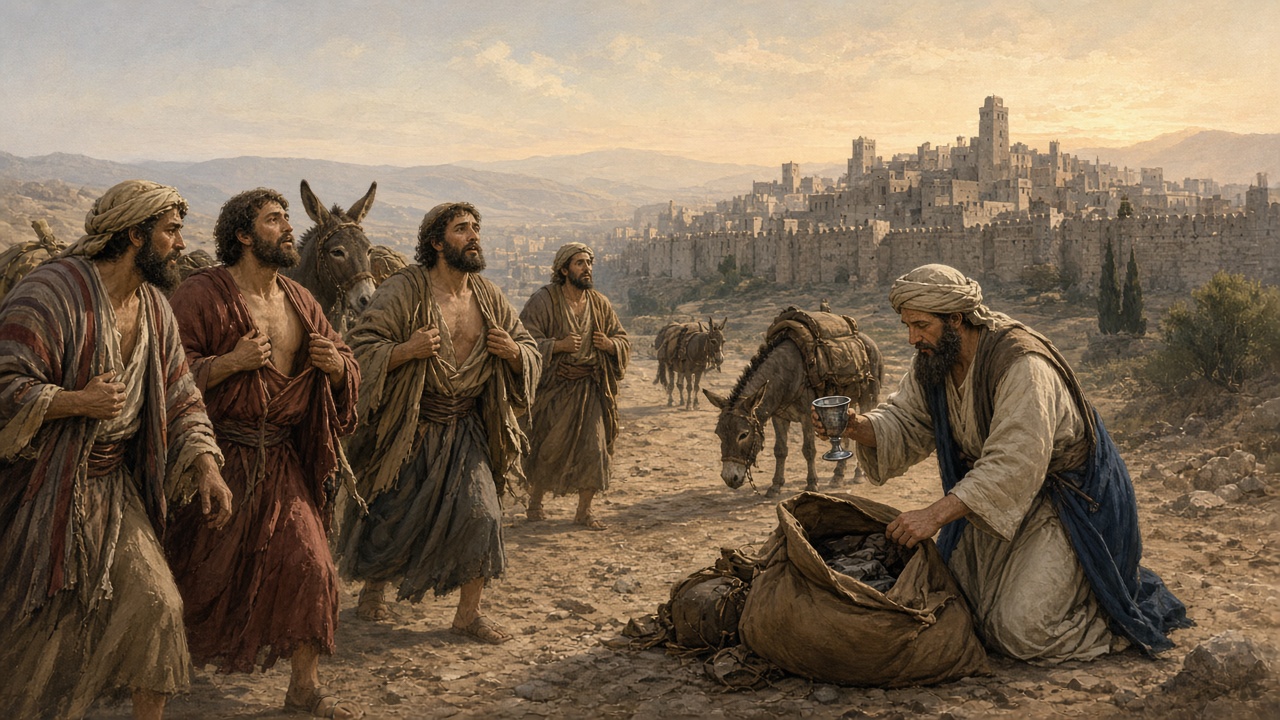
Did you know?
The Hidden Cup and Judah's Plea
- Judah, Jacob's fourth son by Leah, speaks for the brothers and offers to remain as a slave in the boy's place so that Benjamin may return with his brothers. Easton's Bible Dictionary (1897) notes that Judah had earlier intervened to spare Joseph's life, and that he took the lead in the family's affairs, including in the appeal recorded in this chapter.Sources: Judah (patriarch) · the Bible text itself
- Benjamin was the younger of Jacob's two sons by Rachel; she died giving birth to him and called him Ben-oni, "son of my pain," before his father named him Benjamin. The brothers tell Joseph that the boy is the only son of his mother still living, and that their father believes the other was torn to pieces. They say this to Joseph himself—Rachel's elder son, loved by Jacob as the child of his old age—while still speaking to him as a lord equal to Pharaoh.Sources: Benjamin (patriarch) · Joseph (son of Jacob) · the Bible text itself
- On Joseph's orders, the steward hid Joseph's silver cup—the cup he drank from and used for divination—in Benjamin's sack, along with the silver paid for the grain. When it was found, the brothers tore their clothes and returned to the city. Joseph then asked whether they did not know that a man like him could divine the truth, although the narrative shows that he had arranged for the cup to be found.Sources: the Bible text itself
Notes written with AI assistance from open sources (Theographic Bible Metadata, CC BY-SA 4.0; Easton’s Bible Dictionary, public domain) and reviewed before publishing.
Places in this chapter
- Canaan · 32.767, 35.333 · verse 8
Only places identified with high confidence are shown (90% or more according to the scholarly sources compiled by OpenBible). Period map: DARE (Digital Atlas of the Roman Empire), CC BY 4.0; modern map: © OpenStreetMap contributors; places: OpenBible.info (CC BY 4.0).
Credits and license for this translation
Uisneno In Kabin ma Prenat: Rais Manba'an Fe'u nok Reta' Ahun-hunut
Genesis and the New Testament in the Amarasi language of Indonesia
Kejadian dan Perjanjian Baru dalam bahasa Amarasi dari
copyright © 1999-2014 Unit Bahasa dan Budaya, Kupang NTT, Indonesia
Language: Amarasi
Translation by: Wycliffe Bible Translators
This translation is made available to you under the terms of the
Creative Commons Attribution-No Derivatives license 4.0.
You may share and redistribute this Bible translation or extracts from it in any format, provided that:
You include the above copyright and source information.
You do not make any derivative works that change any of the actual words or punctuation of the Scriptures.
Pictures included with Scriptures and other documents on this site are licensed just for use with those Scriptures and documents.
For other uses, please contact the respective copyright owners.
2022-03-11
Source: http://ebible.org/aaz/ · eBible.org