Genesis 20
Uisneno In Kabin ma Prenat: Rais Manba'an Fe'u nok Reta' Ahun-hunut · Tap a verse to see its cross-references.
Naiꞌ Abraham napoi usif Abimerek
1Rarit naiꞌ Abraham nananiꞌ naꞌko Mamre, nnao neu pah Negep et pasaꞌ haaꞌ-nua. In natua nbi kuan Kades ma kuan Sur sin atnaank ein. Mes ka ꞌroo fa on naan ate, in natnani ntein neu kuan Gerar. 2Ma in natonan abitan kuan naan am nak, ain Saraꞌ naan, in fetof. Es naan ate, naiꞌ Abimerek, usif Gerar, nreek tuaf ma ntaam antoit bi Saraꞌ. Rarit sin neik je neu uisf ee in sonaf.
Rarit UISNENO nasnasab bifee ahoniꞌ ma nakiubaꞌ bifee munif, naꞌko usif Abimerek in too ngguin, natuin in ntoup naan naiꞌ Abraham in fee.
3Fai jes, Uisneno nakriir On anbi mneit neu usif naan. In naꞌuab am nak, “Ho he mmaet een! Natuin ho mtoup maan atoniꞌ in fee!”
4Mes naiꞌ Abimerek nataah am nak, “Usiꞌ! Au ka ꞌreꞌ-reoꞌ ꞌiit fa bifee naan. Ma au ka ꞌsaan fa msaꞌ. Naiꞌ Abraham neikn on natoon am nak, in fetof! Bifee naan anmanakuꞌ on reꞌ naan amsaꞌ. Es naan ate, au ꞌreek tuaf ma ntaam antoit je nok neek akninuꞌ. Onaim Usiꞌ kais musaan kau, tua!”
6Onaim Uisneno nataah am nak, “Batuur. Au uhiin ꞌak ho nekam naan kninuꞌ. Ma Au es reꞌ aꞌkaheꞌ ko he kaisaꞌ mreoꞌ bifee naan. Nok ranan naan ate, ho ka musanab fa meu Kau. 7Oras ia, mnonaꞌ mufaniꞌ bifee naan meu in mone. Atoniꞌ reꞌ naan, Au mafefa kninuꞌ. Onaim amtoit je he nꞌonen henatiꞌ ho kaisaꞌ mmaet. Mes karu ho ka mnonaꞌ mufaniꞌ fa bifee naan, ho mumnau murek-rekoꞌ! Ho mok ho too ngguin of anmaet sapuꞌ-sapuꞌ.”
8Kik-kiku te, uisf ee noꞌen in ameupt ein okeꞌ, ma naretaꞌ in amneit naan. Onaim sin arsin namtaun. 9Rarit uisf ee noꞌen naiꞌ Abraham, ma nataan ee mnak, “Au ꞌtao ꞌsaan ko saaꞌ, es ho mmoeꞌ he hai msiraak om? Ho kais mupoi on reꞌ naan. 10Ho mutenab saaꞌ, es ho mmoeꞌ on reꞌ ia?”
11Onaim naiꞌ Abraham nataah am nak, “Aam usiꞌ! Au ꞌbaiseun. Au utenab ꞌak hi ar-arki ka mihiin fa Uisneno. Onaim hi of miꞌmaet kau, he msao au fee. 12Au uꞌuab batuur, ꞌak bi Saraꞌ naan au fetoꞌ. Hai nua kai amaꞌ meseꞌ, mes es-es ate miꞌain kiim. Es naꞌ hai matsao on reꞌ ia. 13Onaim oras Uisneno nreek kai he mpoi miꞌko hai kuan, ma mnao miꞌroo-ꞌroo meu kua-ꞌtetaꞌ, au utoon ain ꞌeu au fee ji mꞌak, ‘Hit tbi mee-mee jah, karu atoniꞌ natanan anmatoom nok hit nua kit, ma karu ho mneek kau te, mutaah am mak, hit meu fetof-naof.’ ”
14Rarit usif Abimerek nnonaꞌ nafani bi Saraꞌ. Onaim in naꞌuab nok bi Saraꞌ mnak, “Oras ia, au ꞌbaen roi mutiꞌ fuaꞌ niuf goes ꞌeu ho naꞌo, he njair tanar am nak, au ka ꞌsaan fa saaꞌ-saaꞌ ꞌeu ko. Maut he aar pah ii nahinin on reꞌ naan!”
Rarit uisf ee naꞌuab neu naiꞌ Abraham am nak, “Abraham! Au pah ii mainuan neu ko. Ho mroim he mutua mbi mee-mee jah, es reꞌ ho.” Rarit in nfee ne bijae, ꞌbibi, ma ꞌbib-kase. In nfee ne ate msaꞌ, et atoniꞌ ma bifee.
17Oras uisf ee nnonaꞌ nafaniꞌ bi Saraꞌ neu in mone, naiꞌ Abraham anꞌonen he Uisneno nfei bifeen ngguin naan sin ꞌaupk ein. Ma sin bisa nahoin ein antenin.
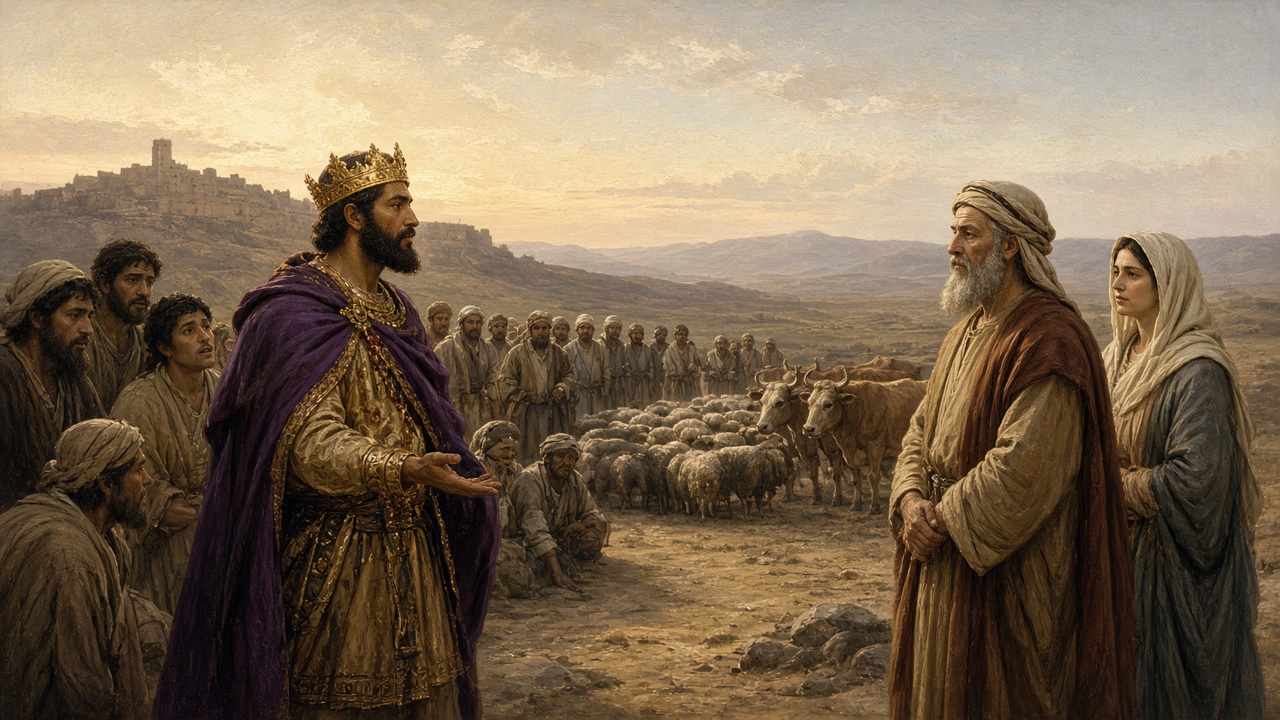
Did you know?
Sister and Wife in Gerar
- Abraham was staying in Gerar, a very ancient town and district on the southern border of Palestine, then ruled by a king named Abimelech. He had journeyed to the Negev, the arid district south of Palestine on the caravan route toward Egypt, and settled between Kadesh and Shur. Shur, a name meaning “wall,” was a desert region on Egypt’s northeastern edge, probably named for the frontier wall the Egyptians built there.Sources: the Bible text itself · Gerar · Negeb · Shur
- When Abraham said that Sarah was his sister, the kinship was not wholly invented: she was also his half-sister, the daughter of his father but not of his mother. Easton's Bible Dictionary (1897) gives the name Sarah as meaning “princess,” and says that name was given when it was announced that she would be the mother of the promised child.Sources: the Bible text itself · Sarah
- The name Abimelech appears again at Gerar in Isaac’s story. Easton's Bible Dictionary (1897) describes that later king as probably the son of the Abimelech Abraham met, and says he rebuked Isaac for a similar deception about his wife Rebekah, which the king discovered by accident. The same work says Gerar seems to have been a rich pastoral country.Sources: Abimelech (King of Gerar) · Gerar
Notes written with AI assistance from open sources (Theographic Bible Metadata, CC BY-SA 4.0; Easton’s Bible Dictionary, public domain) and reviewed before publishing.
Places in this chapter
- Negeb · 31.245, 34.841 · verse 1
Only places identified with high confidence are shown (90% or more according to the scholarly sources compiled by OpenBible). Period map: DARE (Digital Atlas of the Roman Empire), CC BY 4.0; modern map: © OpenStreetMap contributors; places: OpenBible.info (CC BY 4.0).
Credits and license for this translation
Uisneno In Kabin ma Prenat: Rais Manba'an Fe'u nok Reta' Ahun-hunut
Genesis and the New Testament in the Amarasi language of Indonesia
Kejadian dan Perjanjian Baru dalam bahasa Amarasi dari
copyright © 1999-2014 Unit Bahasa dan Budaya, Kupang NTT, Indonesia
Language: Amarasi
Translation by: Wycliffe Bible Translators
This translation is made available to you under the terms of the
Creative Commons Attribution-No Derivatives license 4.0.
You may share and redistribute this Bible translation or extracts from it in any format, provided that:
You include the above copyright and source information.
You do not make any derivative works that change any of the actual words or punctuation of the Scriptures.
Pictures included with Scriptures and other documents on this site are licensed just for use with those Scriptures and documents.
For other uses, please contact the respective copyright owners.
2022-03-11
Source: http://ebible.org/aaz/ · eBible.org