Atos 24
Tupã Je'ẽha · Toque num versículo para ver as referências cruzadas.
Páu rehe har jundéu awa ta je'ẽ je'ẽ hũ
1Awa po wajar peteĩhar upa ukwer rahã, Sesaréi ok ta pe Anani oho. Jundéu awa tama'e pa'i keruhũ ke a'e. Amõ tamũi ta namõ a'e oho. Sawa'e ma'e pandu katu te ame'ẽ ke a'eta raho tĩ. Her Ter. Kapitã ruwa koty a'eta pu'am ta. Pe, Páu rehe har a'eta pandu ta. 2Pe, Páu ke sonda ta muhyk rahã, kuja Páu rehe har Ter pandu pandu. Kapitã pe pandu:
—Ser! Katu ame'ẽ ke nde! Nde riki kapitã rahã, yman atu jajumai ym ha aja jaxo katu. Nde erekwa katuha rupi jundéu awa ta pe katu ame'ẽ ke nde erema'ema'e. Upa kome'ẽ ywy rupi katu ame'ẽ ke nde erema'ema'e. 3A'erehe katu aja jakwa katu. Jande rury katu nde rehe tĩ.
4—I'i atu rahã, nde ke ihẽ amupyta ym ta se. A'erehe nde pe ihẽ apandu. Eharõ we rĩ. Ihẽ je'ẽha rehe ehendu katu we rĩ. 5Páu riki ma'e jaxer ame'ẽ ke ma'ema'e. Amõ amõ ta renda rupi oho rahã, jundéu awa ta ke a'e muparahy. Pe, mutyapu hũ ngã ke. Jesu riki Nasare ok ta pe har. Jesu kotyhar tama'e kapitã ke Páu. 6Tupã rehe ngã jumu'eha renda keruhũ a'e mujaxer tar katu. Arahã a'e ke japyhyk. [Jande ramũi ta je'ẽha rupi ehe har jakwa tar katu. 7Anĩ. Jande rehe sonda tama'e kapitã keruhũ uhyk uwyr. Her Risi. Pyrãtãha namõ jande ngi Páu ke a'e pyhyk raho. 8Pe: “Ehe har pandu ame'ẽ ta Ser koty peho” aja jande pe a'e pandu. A'erehe ko jande ja'am.] Apo Páu pe nde erepandu rahã, nde erekwa katu ta tĩ. Upa katu te ehe har japandu ame'ẽ ke jetehar te ke, aja nde erekwa ta tĩ — aja Ser pe Ter pandu.
9Kapitã pe Páu rehe har jundéu awa ta je'ẽ je'ẽ hũ tĩ. Upa katu te Ter je'ẽha riki jetehar te ke, aja a'eta pandu pandu ipe tĩ.
Ser pe Páu pandu pandu
10Pe, Páu pe kapitã ipo pandu: “Ererahã!” aja. Pe, Páu pandu ipe:
—Yman jande anam ta rehe har nde erekwa katu, aja ihẽ akwa katu. (A'erehe jundéu awa ta rehe har nde erekwa katu, aja akwa.) A'erehe nde pe ihẽ juehe har ihẽ apandu rahã, ihẽ rury katu. 11Amukwehe we Jerusarẽ ok ta pe ihẽ aho. Awa py mokõi aker apo. Tupã rehe ihẽ py'a amoĩ moĩ katu aho. Ame'ẽ rehe har nde erekwa tar katu rahã, amõ pe epandurahã! 12Ihẽ ke jundéu awa ta usak rahã, amõ ta namõ ihẽ aje'ẽ hãtã tã ym. Amõ ta ke ihẽ amuparahy ym. Tupã rehe ngã jumu'eha renda keruhũ pe ihẽ axo rahã, aja ym. Jundéu awa tama'e jy'ariha renda pe ihẽ axo rahã, aja ym tĩ. Amõ ta ke ihẽ amuparahy ym tĩ. Ok ta rape rupi ihẽ axo rahã, aja ym tĩ. Amõ ta ke ihẽ amuparahy ym tĩ. 13Ihẽ rehe har katu ym a'eta pandu, ame'ẽ ke jetehar te ke, aja marã ka ym amõ mujekwaha. Jetehar te aja ym.
14—Apo kuja ihẽ apandu nde pe. Jande ramũi ta aja Tupã rehe ihẽ py'a amoĩ moĩ katu tĩ. Amõ kotyhar rehe ihẽ ajurujar katu. Ame'ẽ ke te'e, aja a'eta ukwaha ngã jupe. Upa katu te Moise mupinim ame'ẽ ke rehe ihẽ ahendu katu. Upa katu te Tupã je'ẽha pandu ame'ẽ ta mupinim, ame'ẽ ke rehe ihẽ ahendu katu tĩ. 15Upa katu te manõ ame'ẽ ta ke Tupã mukwera katu ta muhem. Katu ame'ẽ ta ke mukwera katu ta muhem. Katu ym ame'ẽ ta ke mukwera katu ta muhem tĩ. Ame'ẽ ke rehe peme'ẽ sawa'e ta jurujar katu. Peme'ẽ sawa'e ta aja ihẽ ajurujar katu tĩ. 16A'erehe katu ihẽ ama'ema'e tar katu axo. Aja te'eha ihẽ axo. Ame'ẽ ke Tupã ukwa katu. Ngã ukwa katu tĩ.
17—Yman atu, Jerusarẽ ok ta pe ihẽ axo ym rĩ. A'ep ihẽ aho ramõ. Ima'e ym te ame'ẽ ta pe tamatarer ihẽ araho. 18Tupã pe ma'e ke ihẽ ame'ẽ aho tĩ. Aja ihẽ py'a ihẽ amoĩ moĩ axo ehe. Arahã Tupã rehe ngã jumu'eha renda keruhũ pe ihẽ rehe jundéu awa ta usak. Jande ramũi ta je'ẽha aja ihẽ py'a upa juhyk rahã, ihẽ rehe a'eta usak. Ihẽ namõ heta ym ngã ixo. Ngã mutyapu hũ ym tĩ. 19Asia ywy ngi jundéu awa ta uwyr ame'ẽ ta a'ep ixo. Ame'ẽ ta riki se uwyr rahã, katu ta tipe. Pe, nde pe a'eta pandu ta tipe rahã, katu tiki. (Anĩ. Se ame'ẽ ta uwyr ym.) Ihẽ rehe har ma'e pandu tar katu rahã, ame'ẽ ta riki pandu katu ta tipe. 20Anĩ rahã, peme'ẽ sawa'e ta ihẽ rehe har pandu katu. Amukwehe ngã panduha renda pe ihẽ apu'am rahã, ma'e katu ym ihẽ rehe har ame'ẽ ta ukwa my? Ame'ẽ ke a'eta pandu rahã, katu tiki. 21Ame'ẽ ta pyter pe ihẽ apu'am a'am rahã, kuja ihẽ hãtã apandu: “Manõ ame'ẽ ta ke Tupã mukwera katu ta muhem. Ame'ẽ rehe ihẽ ajurujar katu. A'erehe apo ihẽ rehe har pekwa pekwa peĩ” aja ihẽ apandu. Ame'ẽ riki katu ym, aja a'eta ukwa rahã, ame'ẽ jõ ihẽ pe a'eta pandu katu ta — aja Páu pandu.
22Jesu rehe ngã jurujar katu, ame'ẽ rehe har Ser ukwa katu. Pe, a'e pandu:
—A'ewan apo. Sonda tama'e kapitã keruhũ uhyk uwyr rahã, nde rehe har ihẽ akwa ta — aja Páu pe. (Sonda tama'e kapitã keruhũ rer Risi.)
Pe, ngã pe Ser pandu:
—Peho apo — aja.
23Sonda tama'e kapitã pe a'e pandu tĩ:
—Kyndaha pe Páu ke ekynda eraho. Esak katu ehe. A'e wata katu te'e. Ma'e ke ehe katu ame'ẽ ta me'ẽ tar katu ipe rahã, a'eta me'ẽ katu ipe — aja Ser pandu.
Ser namõ Páu pandu pandu. Tusi namõ pandu pandu tĩ.
24Heta ym ukwer rahã, ngã panduha renda pe Ser uhyk tĩ. Hakehar namõ uhyk. Her Tusi. A'e riki jundéu awa ke. Pe, amõ pe Ser pandu:
—Páu ke emuhyk — aja ipe.
Páu ke amõ muhyk rahã, Páu je'ẽha rehe Ser hendu hendu. Myja Jesu Kirisutu rehe amõ jurujar katu, ame'ẽ rehe har Páu pandu pandu ipe. 25Myja katu ame'ẽ ke sawa'e ma'ema'e my, ame'ẽ rehe har Páu pandu pandu ipe tĩ. Katu ym ipy'a pe ma'e ukwa ame'ẽ ke amõ ma'ema'e rahã, katu ym. Ame'ẽ rehe har a'e pandu pandu ipe tĩ. 'Ar ke Tupã manga katu. Arahã upa ngã rehe har a'e ukwa ta. Katu my? Katu ym my? Ame'ẽ ke ukwa ta. Ame'ẽ rehe har a'e pandu pandu ipe tĩ. Ame'ẽ ke Ser hendu rahã, a'e mukahem. Páu pe a'e pandu:
—Eho apo. Amõ wera rahã, nde pe ihẽ apukái ta aho — aja Ser pandu.
26Poiriha rehe tamatarer ke Páu me'ẽ ta ipe my, aja riki Ser putar. A'erehe amõ amõ wera rahã, Páu pe a'e pukái pukái oho. Inamõ a'e pandu pandu.
27Mokõi warahy 'ar aha oho rahã, amõ homa awa tama'e kapitã pu'am. Her Por Set. Ser renda ke pe a'e pu'am. Jundéu awa ta ke Ser muhury tar katu, a'erehe kyndaha pe Páu ke a'e mupyta rĩ.
Você sabia?
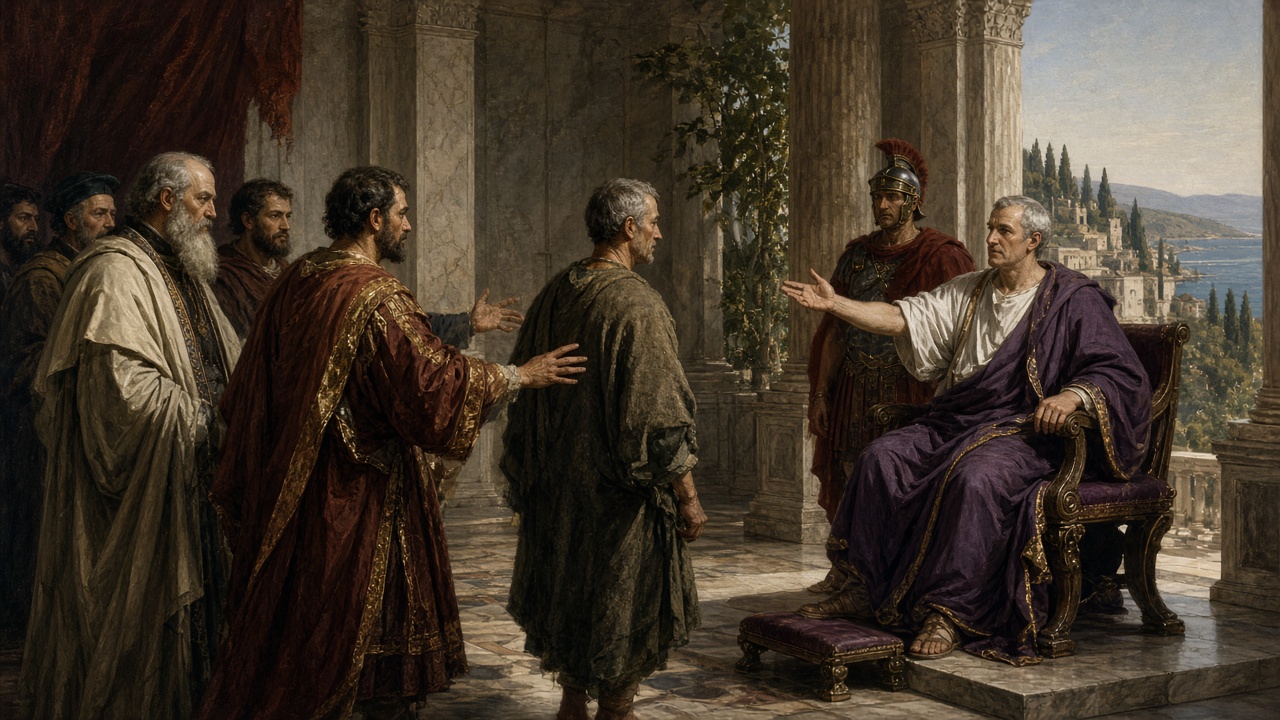
Paulo perante Félix
- O sumo sacerdote Ananias desceu com alguns anciãos e um advogado chamado Tértulo, que o Dicionário Bíblico de Easton descreve como um advogado romano empregado pelos judeus para apresentar a causa contra Paulo diante de Félix. Tértulo elogiou o governador e depois chamou Paulo de peste, que provocava dissensão entre os judeus por todo o mundo, de chefe da seita dos nazarenos e de homem que tinha tentado profanar o templo. O dicionário liga esse elogio inicial à limpeza que Félix fez do país, expulsando bandidos e impostores.Fontes: o próprio texto bíblico · Tertullus · Felix
- Félix, que estava bem informado a respeito do Caminho, adiou a audiência e manteve Paulo sob guarda, permitindo-lhe alguma liberdade e deixando que amigos atendessem às suas necessidades. O relato diz que ele esperava que Paulo lhe oferecesse um suborno e por isso o mandava chamar com frequência; o Dicionário Bíblico de Easton também afirma que ele parece ter esperado um suborno e, por isso, teve várias conversas com ele. Depois de dois anos, Pórcio Festo o sucedeu — o Dicionário Bíblico de Easton (1897) data essa nomeação em 60 d.C. — e, querendo fazer um favor aos judeus, Félix deixou Paulo na prisão.Fontes: o próprio texto bíblico · Felix · Portius Festus
- Alguns dias depois, Félix voltou com sua mulher Drusila, que era judia, e ouviu Paulo falar da fé em Cristo Jesus e da justiça, do domínio próprio e do juízo vindouro; Félix ficou amedrontado e o mandou embora. O Dicionário Bíblico de Easton (1897) identifica Drusila como a terceira e mais nova filha de Herodes Agripa I e diz que Félix a induziu a deixar o marido, Azizus, rei de Emesa. O mesmo verbete diz que ela e o filho morreram na erupção do monte Vesúvio em 79 d.C.Fontes: o próprio texto bíblico · Drusilla
Notas escritas com auxílio de IA a partir de fontes abertas (Theographic Bible Metadata, CC BY-SA 4.0; Easton’s Bible Dictionary, domínio público) e revisadas antes de publicar.
Lugares deste capítulo
- Caesarea · Hoje: Caesarea Maritima · 32.500, 34.892 · versículo 1
- Jerusalem · 31.777, 35.234 · versículos 11, 17
- Asia · 38.400, 28.300 · versículo 18
Só aparecem lugares com identificação de alta confiança (90% ou mais segundo as fontes acadêmicas reunidas pelo OpenBible). Mapa da época: DARE (Digital Atlas of the Roman Empire), CC BY 4.0; mapa atual: © colaboradores do OpenStreetMap; lugares: OpenBible.info (CC BY 4.0).
Créditos e licença desta tradução
Tupã Je'ẽha
New Testament in Kaapor (BR:urb:Kaapor)
copyright © 2012 Wycliffe Bible Translators, Inc.
Language: Kaapor
Translation by: Wycliffe Bible Translators, Inc.
Copyright Information
© 2012, Wycliffe Bible Translators, Inc. All rights reserved.
This translation text is made available to you under the
terms of the Creative Commons License: Attribution-Noncommercial-No Derivative Works.
( http://creativecommons.org/licenses/by-nc-nd/3.0/ )
In addition, you have permission to port the text to different file formats, as long as you
do not change any of the text or punctuation of the Bible.
You may share, copy, distribute, transmit, and extract portions
or quotations from this work, provided that you include the above copyright
information:
You must give Attribution to the work.
You do not sell this work for a profit.
You do not make any derivative works that change any of the actual words or punctuation of the Scriptures.
Permissions beyond the scope of this license may be
available if you contact
us with your request.
The New Testament
in Kaapor
© 2012, Wycliffe Bible Translators, Inc. All rights reserved.
This translation is made available to you under the terms of the
Creative Commons Attribution-Noncommercial-No Derivatives license 4.0.
You may share and redistribute this Bible translation or extracts from it in any format, provided that:
You include the above copyright and source information.
You do not sell this work for a profit.
You do not change any of the words or punctuation of the Scriptures.
Pictures included with Scriptures and other documents on this site are licensed just for use with those Scriptures and documents.
For other uses, please contact the respective copyright owners.
2014-04-27
Fonte: http://ebible.org/urbNT/ · eBible.org