Salmos 15
De Heilige Schrift, Petrus Canisiusvertaling, 1939 · Toque num versículo para ver as referências cruzadas.
1Een psalm van David. Jahweh, wie mag uw gast zijn in uw tent, Wie wonen op uw heilige berg? 2Die onberispelijk is van wandel, En van rechtschapen gedrag; Die in zijn hart de waarheid spreekt, 3En met zijn tong niet lastert. Die zijn naaste geen kwaad doet, Geen smaad op zijn evenmens werpt; 4In wiens oog een vervloekte verachtelijk is, Maar die eert, wie Jahweh vreest. Die zijn naaste een eed heeft gezworen, En hem niet breekt; 5Die zijn geld niet uitleent met woeker, Geen steekpenning neemt, om de onschuld te schaden. Wie zó doet, Wankelt in eeuwigheid niet!
Você sabia?
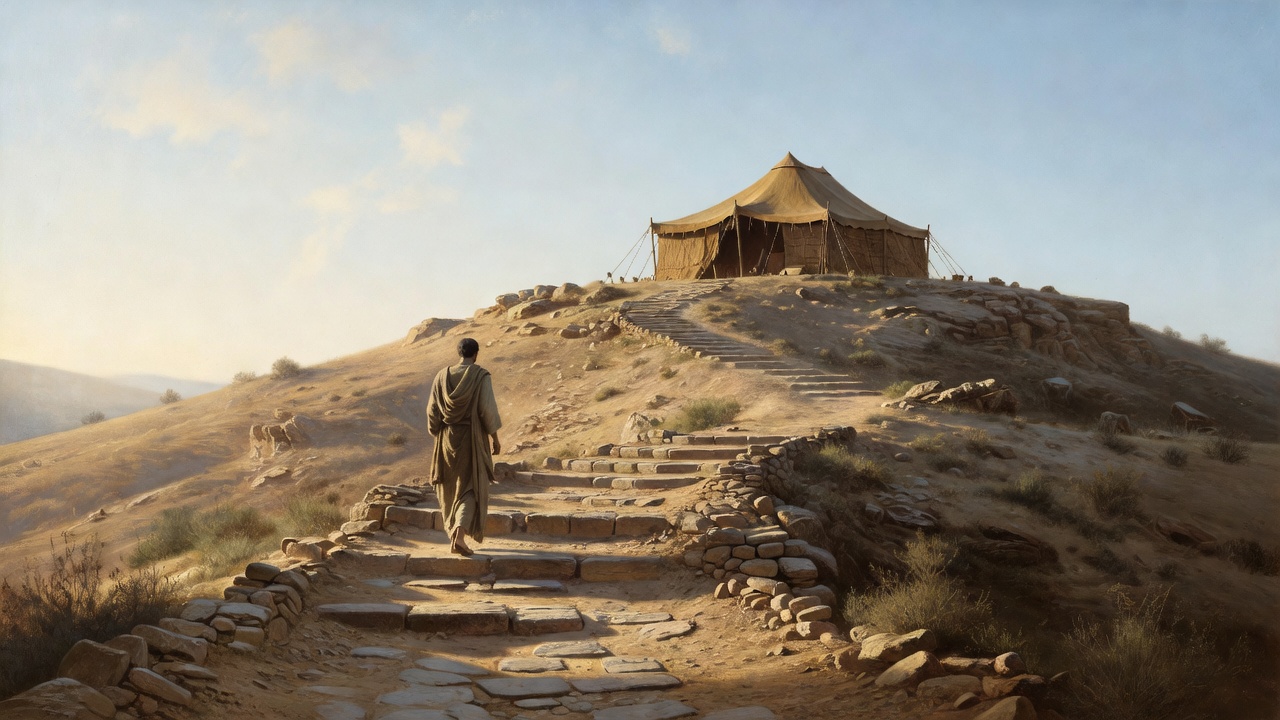
Habitando na Presença de Deus
- O Salmo 15 é estruturado em torno de uma pergunta inicial sobre quem tem permissão para habitar na tenda sagrada do Senhor e permanecer no Seu santo monte.Fontes: o próprio texto bíblico
- Em vez de se concentrar em ofertas rituais, o salmo descreve requisitos baseados na integridade ética, na fala verdadeira, no cumprimento de juramentos difíceis e na justiça financeira, como recusar subornos e emprestar sem juros.Fontes: o próprio texto bíblico
Notas escritas com auxílio de IA a partir de fontes abertas (Theographic Bible Metadata, CC BY-SA 4.0; Easton’s Bible Dictionary, domínio público) e revisadas antes de publicar.
Créditos e licença desta tradução
De Heilige Schrift, Petrus Canisiusvertaling, 1939
The Holy Bible in Dutch, Petrus Canisius translation, 1939
Public Domain
Language: Nederlandse taal (Dutch)
Eerste uitgave: Het Spectrum, Utrecht, Brussel, 1939
De Petrus Canisiusvertaling is een Nederlandse rooms-katholieke bijbelvertaling, waarvan de eerste complete uitgave verscheen in 1939. De volledige naam luidt: "De Heilige Schrift, vertaling uit de grondtekst met aantekeningen, in opdracht van de Apologetische Vereniging 'Petrus Canisius' ondernomen met goedkeuring van de hoogwaardige bisschoppen van Nederland". De Petrus Canisiusvertaling is de eerste Nederlandse katholieke vertaling die gebaseerd is op de grondteksten in hun oorspronkelijke taal. Andere vertalingen gingen uit van de Vulgaat. Het taalgebruik van de uitgave is naar hedendaagse normen licht archaïsch te noemen, maar nog steeds vlot verstaanbaar.
Verantwoording in verband met de auteursrechten
In verband met de auteursrechten is contact opgenomen met de oorspronkelijke uitgever (1), de Katholieke Vereniging voor Oecume (2) en de Katholieke Bijbelstichting (3) en werden geen bezwaren gevonden tegen deze publicatie. Rekening houdend met de wettelijke termijnen, kan deze uitgave beschouwd worden als vrij van auteursrechten.
First publication: Het Spectrum, Utrecht, Brussel, 1939
The translation "Petrus Canisius" is a dutch roman catholic bible translation, that was first published in 1939. Its full title is "The Holy Scripture, translation of the original texts with annotations, commissioned by the Apologetical Society 'Petrus Canisius' and executed with the approval of the most reverend bishops of the Netherlands". The translation "Petrus Canisius" is the first dutch catholic translation that was based on the scripture texts in their original language. Other translations were based on the Vulgate. The language of this edition is to current standards moderately archaic, but still easily understood.
Accountability in relation to copyright
Concerning the copyright contacts have been made with the original publisher (1), the Katholieke Vereniging voor Oecumene (Catholic Society for Ecumenism) (2) and the Katholieke Bijbelstichting (Catholic Bible Foundation) (3) and no objections have been found against this publication. Taking into account the legal terms, this edition can be considered to be in the public domain.
UITGEVERIJ UNIEBOEK|HET SPECTRUM BV, HOUTEN, THE NETHERLANDS
KATHOLIEKE VERENIGING VOOR OECUMENE, 'S HERTOGENBOSCH, THE NETHERLANDS
KBS, HOEVEN, THE NETHERLANDS
2024-08-06
Fonte: http://ebible.org/nld1939/ · eBible.org