Ezequiel 15
De Heilige Schrift, Petrus Canisiusvertaling, 1939 · Toque num versículo para ver as referências cruzadas.
1Het woord van Jahweh werd tot mij gericht: 2Mensenkind, wat heeft het hout van de wijnstok voor Op ander rankendragend gewas Onder de bomen van het woud? 3Kan men zijn hout soms gebruiken, Om het tot iets te verwerken? Kan men er een pin van maken, Om er iets aan op te hangen? 4En als het als brandstof in het vuur is geworpen, De vlam de beide einden heeft verteerd, Het middenstuk is verkoold: Zal het dan nog ergens voor deugen? 5Neen, toen het nog gaaf was, Was het al voor niets te gebruiken; Maar nu het vuur het verteerd en verkoold heeft, Zou het nu nog ergens voor dienen? 6Daarom, zegt Jahweh, de Heer, zoals met het hout van de wijnstok onder de bomen van het woud, dat Ik als brandstof in het vuur heb geworpen, zo handel Ik ook met de bewoners van Jerusalem! 7Ik zal ze in het oog blijven houden; en al zijn ze ook aan het vuur ontsnapt, toch zal het vuur hen verteren. Zo zult ge erkennen, dat Ik Jahweh ben. Als Ik ze in het oog blijf houden, 8maak Ik het land tot een steppe; want ze hebben hun trouw gebroken, zegt Jahweh, de Heer.
Você sabia?
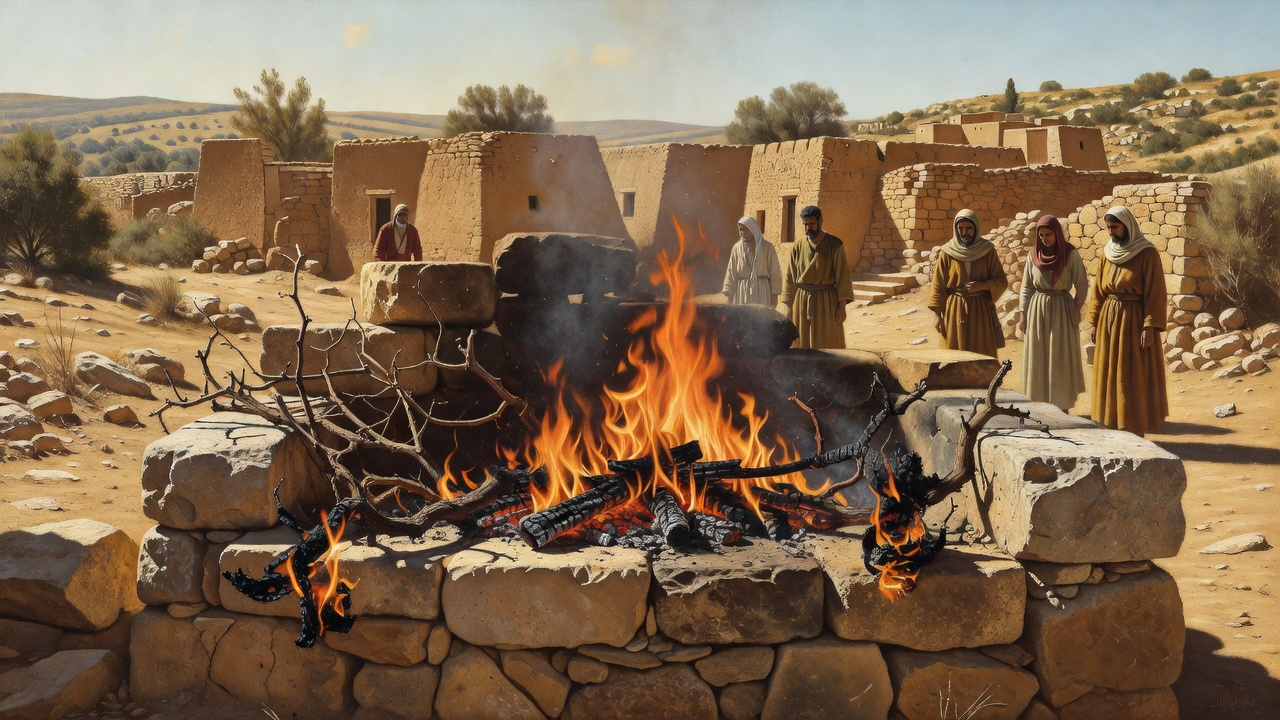
A Parábola da Madeira Inútil da Videira
- Ao contrário da madeira de árvores robustas da floresta, os ramos da videira são macios, tortos e frágeis. O texto destaca que a madeira da videira não serve para fabricar nem mesmo objetos simples, como uma estaca para pendurar utensílios, servindo apenas como combustível para o fogo.Fontes: o próprio texto bíblico
- Ezequiel utiliza a imagem de um ramo de videira queimado em ambas as extremidades para simbolizar os habitantes de Jerusalém, declarando que a cidade enfrentaria destruição e fogo por causa de sua infidelidade.Fontes: o próprio texto bíblico · Jerusalem
- O ministério profético de Ezequiel começou por volta de 592 a.C. e durou cerca de 23 anos, período em que ele transmitiu repetidas advertências sobre a queda iminente de Jerusalém aos exilados.Fontes: Prophecies of Ezekiel · o próprio texto bíblico · Jerusalem
Notas escritas com auxílio de IA a partir de fontes abertas (Theographic Bible Metadata, CC BY-SA 4.0; Easton’s Bible Dictionary, domínio público) e revisadas antes de publicar.
Lugares deste capítulo
- Jerusalem · 31.777, 35.234 · versículo 6
Só aparecem lugares com identificação de alta confiança (90% ou mais segundo as fontes acadêmicas reunidas pelo OpenBible). Mapa da época: DARE (Digital Atlas of the Roman Empire), CC BY 4.0; mapa atual: © colaboradores do OpenStreetMap; lugares: OpenBible.info (CC BY 4.0).
Créditos e licença desta tradução
De Heilige Schrift, Petrus Canisiusvertaling, 1939
The Holy Bible in Dutch, Petrus Canisius translation, 1939
Public Domain
Language: Nederlandse taal (Dutch)
Eerste uitgave: Het Spectrum, Utrecht, Brussel, 1939
De Petrus Canisiusvertaling is een Nederlandse rooms-katholieke bijbelvertaling, waarvan de eerste complete uitgave verscheen in 1939. De volledige naam luidt: "De Heilige Schrift, vertaling uit de grondtekst met aantekeningen, in opdracht van de Apologetische Vereniging 'Petrus Canisius' ondernomen met goedkeuring van de hoogwaardige bisschoppen van Nederland". De Petrus Canisiusvertaling is de eerste Nederlandse katholieke vertaling die gebaseerd is op de grondteksten in hun oorspronkelijke taal. Andere vertalingen gingen uit van de Vulgaat. Het taalgebruik van de uitgave is naar hedendaagse normen licht archaïsch te noemen, maar nog steeds vlot verstaanbaar.
Verantwoording in verband met de auteursrechten
In verband met de auteursrechten is contact opgenomen met de oorspronkelijke uitgever (1), de Katholieke Vereniging voor Oecume (2) en de Katholieke Bijbelstichting (3) en werden geen bezwaren gevonden tegen deze publicatie. Rekening houdend met de wettelijke termijnen, kan deze uitgave beschouwd worden als vrij van auteursrechten.
First publication: Het Spectrum, Utrecht, Brussel, 1939
The translation "Petrus Canisius" is a dutch roman catholic bible translation, that was first published in 1939. Its full title is "The Holy Scripture, translation of the original texts with annotations, commissioned by the Apologetical Society 'Petrus Canisius' and executed with the approval of the most reverend bishops of the Netherlands". The translation "Petrus Canisius" is the first dutch catholic translation that was based on the scripture texts in their original language. Other translations were based on the Vulgate. The language of this edition is to current standards moderately archaic, but still easily understood.
Accountability in relation to copyright
Concerning the copyright contacts have been made with the original publisher (1), the Katholieke Vereniging voor Oecumene (Catholic Society for Ecumenism) (2) and the Katholieke Bijbelstichting (Catholic Bible Foundation) (3) and no objections have been found against this publication. Taking into account the legal terms, this edition can be considered to be in the public domain.
UITGEVERIJ UNIEBOEK|HET SPECTRUM BV, HOUTEN, THE NETHERLANDS
KATHOLIEKE VERENIGING VOOR OECUMENE, 'S HERTOGENBOSCH, THE NETHERLANDS
KBS, HOEVEN, THE NETHERLANDS
2024-08-06
Fonte: http://ebible.org/nld1939/ · eBible.org