Ezekiel 15
De Heilige Schrift, Petrus Canisiusvertaling, 1939 · Tap a verse to see its cross-references.
1Het woord van Jahweh werd tot mij gericht: 2Mensenkind, wat heeft het hout van de wijnstok voor Op ander rankendragend gewas Onder de bomen van het woud? 3Kan men zijn hout soms gebruiken, Om het tot iets te verwerken? Kan men er een pin van maken, Om er iets aan op te hangen? 4En als het als brandstof in het vuur is geworpen, De vlam de beide einden heeft verteerd, Het middenstuk is verkoold: Zal het dan nog ergens voor deugen? 5Neen, toen het nog gaaf was, Was het al voor niets te gebruiken; Maar nu het vuur het verteerd en verkoold heeft, Zou het nu nog ergens voor dienen? 6Daarom, zegt Jahweh, de Heer, zoals met het hout van de wijnstok onder de bomen van het woud, dat Ik als brandstof in het vuur heb geworpen, zo handel Ik ook met de bewoners van Jerusalem! 7Ik zal ze in het oog blijven houden; en al zijn ze ook aan het vuur ontsnapt, toch zal het vuur hen verteren. Zo zult ge erkennen, dat Ik Jahweh ben. Als Ik ze in het oog blijf houden, 8maak Ik het land tot een steppe; want ze hebben hun trouw gebroken, zegt Jahweh, de Heer.
Did you know?
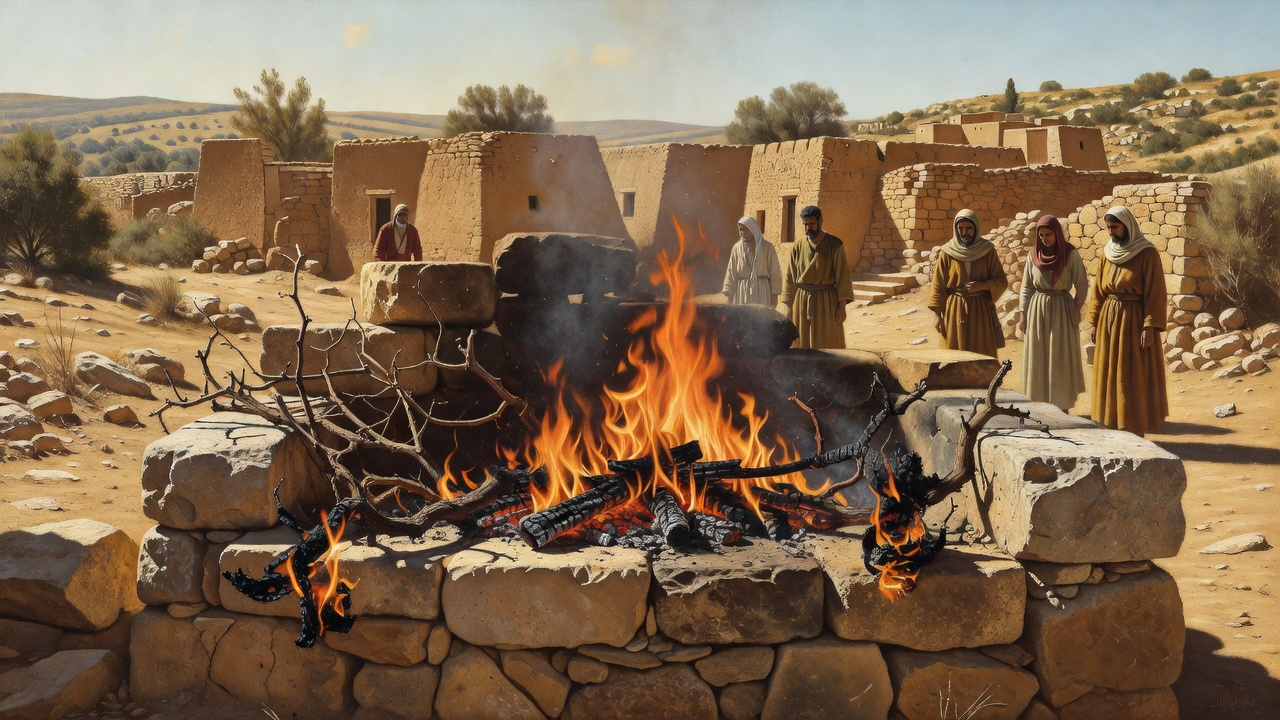
The Parable of the Useless Vine Wood
- Unlike the timber from sturdy forest trees, vine branches are soft, crooked, and brittle. The text highlights that vine wood is unfit for crafting even simple household objects like a wall peg to hang utensils, leaving it useful only as kindling.Sources: the Bible text itself
- Ezekiel uses the image of a charred, double-burned vine branch to symbolize the inhabitants of Jerusalem, declaring that the city would face fiery judgment and desolation because of its unfaithfulness.Sources: the Bible text itself · Jerusalem
- The prophetic ministry of Ezekiel began around 592 BC and spanned approximately 23 years, during which he repeatedly conveyed warnings of Jerusalem's impending downfall to the Jewish exiles.Sources: Prophecies of Ezekiel · the Bible text itself · Jerusalem
Notes written with AI assistance from open sources (Theographic Bible Metadata, CC BY-SA 4.0; Easton’s Bible Dictionary, public domain) and reviewed before publishing.
Places in this chapter
- Jerusalem · 31.777, 35.234 · verse 6
Only places identified with high confidence are shown (90% or more according to the scholarly sources compiled by OpenBible). Period map: DARE (Digital Atlas of the Roman Empire), CC BY 4.0; modern map: © OpenStreetMap contributors; places: OpenBible.info (CC BY 4.0).
Credits and license for this translation
De Heilige Schrift, Petrus Canisiusvertaling, 1939
The Holy Bible in Dutch, Petrus Canisius translation, 1939
Public Domain
Language: Nederlandse taal (Dutch)
Eerste uitgave: Het Spectrum, Utrecht, Brussel, 1939
De Petrus Canisiusvertaling is een Nederlandse rooms-katholieke bijbelvertaling, waarvan de eerste complete uitgave verscheen in 1939. De volledige naam luidt: "De Heilige Schrift, vertaling uit de grondtekst met aantekeningen, in opdracht van de Apologetische Vereniging 'Petrus Canisius' ondernomen met goedkeuring van de hoogwaardige bisschoppen van Nederland". De Petrus Canisiusvertaling is de eerste Nederlandse katholieke vertaling die gebaseerd is op de grondteksten in hun oorspronkelijke taal. Andere vertalingen gingen uit van de Vulgaat. Het taalgebruik van de uitgave is naar hedendaagse normen licht archaïsch te noemen, maar nog steeds vlot verstaanbaar.
Verantwoording in verband met de auteursrechten
In verband met de auteursrechten is contact opgenomen met de oorspronkelijke uitgever (1), de Katholieke Vereniging voor Oecume (2) en de Katholieke Bijbelstichting (3) en werden geen bezwaren gevonden tegen deze publicatie. Rekening houdend met de wettelijke termijnen, kan deze uitgave beschouwd worden als vrij van auteursrechten.
First publication: Het Spectrum, Utrecht, Brussel, 1939
The translation "Petrus Canisius" is a dutch roman catholic bible translation, that was first published in 1939. Its full title is "The Holy Scripture, translation of the original texts with annotations, commissioned by the Apologetical Society 'Petrus Canisius' and executed with the approval of the most reverend bishops of the Netherlands". The translation "Petrus Canisius" is the first dutch catholic translation that was based on the scripture texts in their original language. Other translations were based on the Vulgate. The language of this edition is to current standards moderately archaic, but still easily understood.
Accountability in relation to copyright
Concerning the copyright contacts have been made with the original publisher (1), the Katholieke Vereniging voor Oecumene (Catholic Society for Ecumenism) (2) and the Katholieke Bijbelstichting (Catholic Bible Foundation) (3) and no objections have been found against this publication. Taking into account the legal terms, this edition can be considered to be in the public domain.
UITGEVERIJ UNIEBOEK|HET SPECTRUM BV, HOUTEN, THE NETHERLANDS
KATHOLIEKE VERENIGING VOOR OECUMENE, 'S HERTOGENBOSCH, THE NETHERLANDS
KBS, HOEVEN, THE NETHERLANDS
2024-08-06
Source: http://ebible.org/nld1939/ · eBible.org