Gênesis 9
Hset Hadròeh · Toque num versículo para ver as referências cruzadas.
Boc Plình am xôq ramot Nô-ê.
1Boc Plình am xôq ramot ka Nô-ê xam ƀài kon calô haq, doe ka wì rameh: “Drah hauang tam ma bàc haq, broq dôq haq bình bauq ta crŏng taneh. 2Ƀài ngè ma rìh ta crŏng taneh ƀài adrech chìm ta trŏc, xam ƀài ngè moq ta taneh xam ƀaì ka diac raxìq, dìq yùq crè ka ìh, jah jao dìq ta tì kŏng ìh. 3Dìq dŏng ka ƀài ngè rìh ma loq lam aih èh đòeq broq ka pì dahwèq acaq. Au am ka pì ƀài yiniq aih tìah ka au khoe am cachiq nhat. 4Mahaq pì ùh khòh acaq jam ma oe i mahua rìh, aih la i mahim.
5Joq qnàng au bòch hlài mahim da kan rìh pì, yac ka nòe ngè rôm, yac ka nòe tì kŏng kon mangai, yac ka ajang nòe tì kŏng cla oh daq pì 6Waq toq cabô broq ta-ùc mahim mangai, aih èh i mangai qnoeq broq ta-ùc chau mahim haq aih; majah qmang aih Boc Plình broq kon mangai tiaq qmù dua cla haq. 7Qmang aih, pì drah ha-uang tam ma bàc rai broq dôq haq bình bauq ta crŏng taneh”.
Tajao Baoc Plình broq ka kon mangai.
8Boc Plình doe ka Nô-ê xam ƀài kon haq rameh: 9“Manòeq kô au broq tajao ka pì hloe xam ƀài xinoe pì, 10hloe xam ƀài ngè ma rìh oe ti ìh, enh ƀài chìm, ƀài ngè ma aban ta hnim xam ƀài ngè ma rìh tagùng go, aih la ƀài ngè ma loh enh boang, trùh hloe ƀài ngè oe ta taneh 11Qmang aih, tajao da au ma broq ka pì, hloe xam ka rìm adrech xech akia: diac kàn pi hìaq palùng, hadai pi i ka diac kàn hu palùng taneh hòm”.
12Boc plình doe hòm: “Kô teo đòeq patô tajao au ma broq ti pì, hloe xam ƀài ngè ma rìh ti pì, hloe hloe ta rìm qnhòng 13Au paqnàng dèh hađong ta yùc, đòeq broq teo hu patô tajao da au ka taneh. 14Waq toq jò leq au tagop aràng yùc ta taneh èh hađong plôh tŏc enh yùc, 15aih èh au hi hmàng hlài dèh tajao au ma khoe broq tì pì xam rìm adrech xech akia i kan rìh. Pi jò leq diac ma wìa diac kàn đòeq hu palùng dŏng rìm adrech xech akia hòm. 16Qmang aih hađong hi oe ta yùc, au ngan hnoq haq đòeq hu hmàng tajao mòeq đòe adreo Boc Plình xam ƀài adrech xech akia ma i kan rìh ta crŏng taneh” 17Boc Plình doe hòm ka Nô-ê: “Aih raq teo patô kan tajao au ma khoe broq ta adreo au xam ƀài xech akia ta crŏng taneh”.
18Ƀài kon da Nô-ê loh enh boang aih la Sem, Cham, Japhet (Cham aih baq da Cana-an) 19Aih la piq ngai kon da Nô-ê, èh hadai enh wì aih ma hi jah i kon mangai oe jàp crŏng taneh.
20Jò aih, Nô-ê patep abèq rai pìt nho. 21Haq ôq alac bù, khoe aih rahòng dèh taqne traiq. 22Cham aih baq da Cana-an hnoq kan rahòng dèh baq, aih hi loh enh gùng taqmon hlài dèh ka wa oh daq. 23Yàng èh wa Sem wa Japhet yŏc eo yôh taqmac deh ta plêh, lam la alùi thia taqmàn chac deh baq, mat wa haq tangèa taqnoeq dài majah ùh lòm hnoq kan rahòng dèh baq. 24Jò Nô-ê hrau enh bù, hìa bìac kon ma taqne khoe broq ka rađeh, 25haq doe: Cana-an troq ka hamaiq! Haq jah broq dìc hapŏng dèh wa daq wa oh haq. 26Haq doe tam: Joq khòh manè apôi Jêhôwa, aih Boc Plình da Sem qnàng, Cana-an ep broq hapŏng ka wì. 27Waiq Boc Plình parùng taneh ka Japhet am haq jah oe tanòe traiq da Sem, èh Cana-an hòm ep broq dìc wì.
28Atìq ka diac kàn, Nô-ê oe rìh tam piq hrinh padam jàt hanam. 29Qmang aih Nô-ê halình jah hachìn hrinh padam jàt hanam, èh hi cachìt.
Você sabia?
A aliança de Noé e as palavras sobre seus filhos
- Deus faz uma aliança com Noé, com os seus descendentes e com todo ser vivo que saiu da arca, prometendo que um dilúvio nunca mais destruirá toda a vida. O sinal é o arco-íris posto nas nuvens, para todas as gerações. Uma cronologia data essa aliança em 2346 a.C.Fontes: o próprio texto bíblico · God makes a covenant with Noah
- Gênesis 9 diz que toda a terra foi povoada a partir de Sem, Cam e Jafé. Sem é explicado como 'nome' ou 'renome', provavelmente o mais velho e antepassado dos israelitas, embora Jafé também seja descrito como talvez o primeiro a nascer. Jafé significa 'que se espalha amplamente', um jogo com o hebraico 'Deus engrandecerá a Jafé', e é ligado a muitas tribos do leste da Europa e do norte da Ásia; Cam, que significa 'morno' ou 'quente', e daí o sul, é chamado o filho mais novo de Noé.Fontes: o próprio texto bíblico · Shem · Japheth · Ham
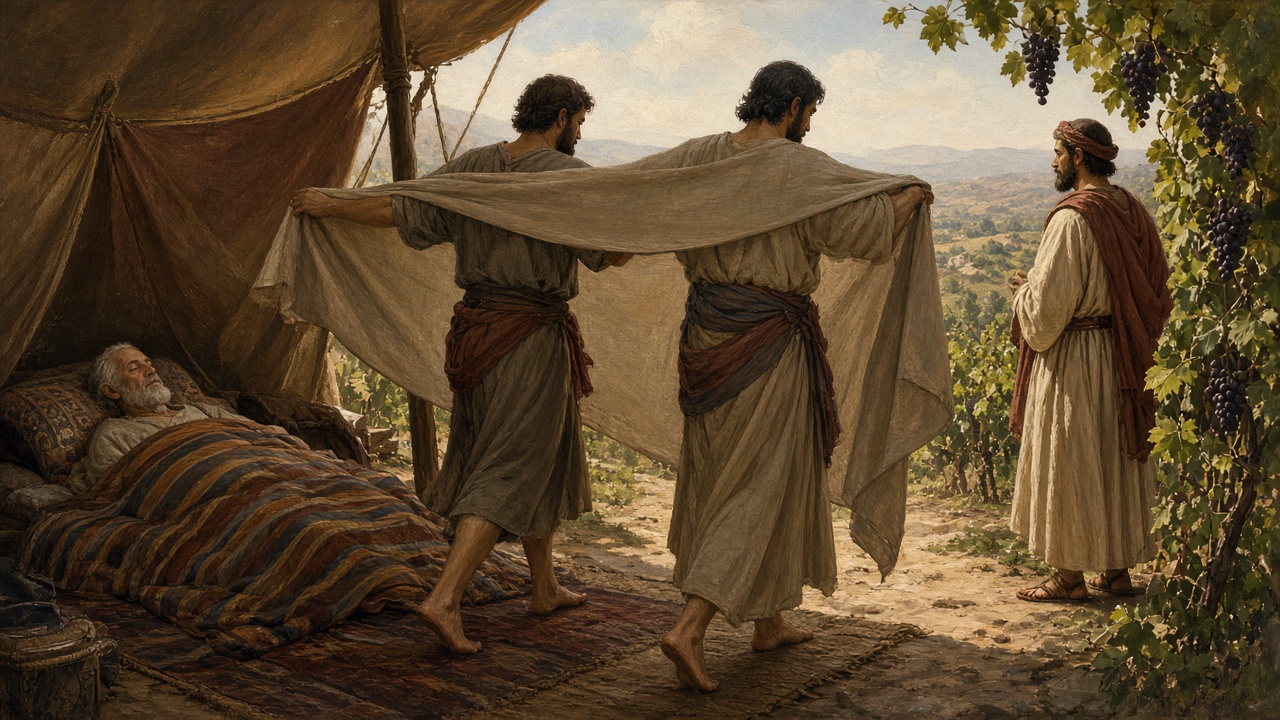
- Noé, homem da terra, planta uma vinha, bebe o vinho e fica descoberto na sua tenda. Sem e Jafé o cobrem caminhando de costas, com os rostos virados, ato que um dicionário chama de piedade filial e ocasião da profecia de que os descendentes de Jafé se espalhariam. A maldição é pronunciada contra Canaã, o quarto filho de Cam, por causa do que o pai havia feito; uma cronologia data o episódio em 2345 a.C.Fontes: o próprio texto bíblico · Japheth · Canaan · Noah gets drunk and Canaan is cursed
Notas escritas com auxílio de IA a partir de fontes abertas (Theographic Bible Metadata, CC BY-SA 4.0; Easton’s Bible Dictionary, domínio público) e revisadas antes de publicar.
Créditos e licença desta tradução
Hset Hadròeh
The New Testament in the Hre language of Vietnam, translated by Baq Thi
Copyright © 2024 Baq Thi
Language: (Hre)
This translation is made available to you under the terms of the
Creative Commons Attribution Share-Alike license 4.0.
You have permission to share and redistribute this Bible translation in any format and to make reasonable revisions and adaptations of this translation, provided that:
You include the above copyright and source information.
If you make any changes to the text, you must indicate that you did so in a way that makes it clear that the original licensor is not necessarily endorsing your changes.
If you redistribute this text, you must distribute your contributions under the same license as the original.
Pictures included with Scriptures and other documents on this site are licensed just for use with those Scriptures and documents.
For other uses, please contact the respective copyright owners.
Note that in addition to the rules above, revising and adapting God's Word involves a great responsibility to be true to God's Word. See Revelation 22:18-19.
2026-07-18
Fonte: http://ebible.org/hrebt/ · eBible.org