Genesis 9
Hset Hadròeh · Tap a verse to see its cross-references.
Boc Plình am xôq ramot Nô-ê.
1Boc Plình am xôq ramot ka Nô-ê xam ƀài kon calô haq, doe ka wì rameh: “Drah hauang tam ma bàc haq, broq dôq haq bình bauq ta crŏng taneh. 2Ƀài ngè ma rìh ta crŏng taneh ƀài adrech chìm ta trŏc, xam ƀài ngè moq ta taneh xam ƀaì ka diac raxìq, dìq yùq crè ka ìh, jah jao dìq ta tì kŏng ìh. 3Dìq dŏng ka ƀài ngè rìh ma loq lam aih èh đòeq broq ka pì dahwèq acaq. Au am ka pì ƀài yiniq aih tìah ka au khoe am cachiq nhat. 4Mahaq pì ùh khòh acaq jam ma oe i mahua rìh, aih la i mahim.
5Joq qnàng au bòch hlài mahim da kan rìh pì, yac ka nòe ngè rôm, yac ka nòe tì kŏng kon mangai, yac ka ajang nòe tì kŏng cla oh daq pì 6Waq toq cabô broq ta-ùc mahim mangai, aih èh i mangai qnoeq broq ta-ùc chau mahim haq aih; majah qmang aih Boc Plình broq kon mangai tiaq qmù dua cla haq. 7Qmang aih, pì drah ha-uang tam ma bàc rai broq dôq haq bình bauq ta crŏng taneh”.
Tajao Baoc Plình broq ka kon mangai.
8Boc Plình doe ka Nô-ê xam ƀài kon haq rameh: 9“Manòeq kô au broq tajao ka pì hloe xam ƀài xinoe pì, 10hloe xam ƀài ngè ma rìh oe ti ìh, enh ƀài chìm, ƀài ngè ma aban ta hnim xam ƀài ngè ma rìh tagùng go, aih la ƀài ngè ma loh enh boang, trùh hloe ƀài ngè oe ta taneh 11Qmang aih, tajao da au ma broq ka pì, hloe xam ka rìm adrech xech akia: diac kàn pi hìaq palùng, hadai pi i ka diac kàn hu palùng taneh hòm”.
12Boc plình doe hòm: “Kô teo đòeq patô tajao au ma broq ti pì, hloe xam ƀài ngè ma rìh ti pì, hloe hloe ta rìm qnhòng 13Au paqnàng dèh hađong ta yùc, đòeq broq teo hu patô tajao da au ka taneh. 14Waq toq jò leq au tagop aràng yùc ta taneh èh hađong plôh tŏc enh yùc, 15aih èh au hi hmàng hlài dèh tajao au ma khoe broq tì pì xam rìm adrech xech akia i kan rìh. Pi jò leq diac ma wìa diac kàn đòeq hu palùng dŏng rìm adrech xech akia hòm. 16Qmang aih hađong hi oe ta yùc, au ngan hnoq haq đòeq hu hmàng tajao mòeq đòe adreo Boc Plình xam ƀài adrech xech akia ma i kan rìh ta crŏng taneh” 17Boc Plình doe hòm ka Nô-ê: “Aih raq teo patô kan tajao au ma khoe broq ta adreo au xam ƀài xech akia ta crŏng taneh”.
18Ƀài kon da Nô-ê loh enh boang aih la Sem, Cham, Japhet (Cham aih baq da Cana-an) 19Aih la piq ngai kon da Nô-ê, èh hadai enh wì aih ma hi jah i kon mangai oe jàp crŏng taneh.
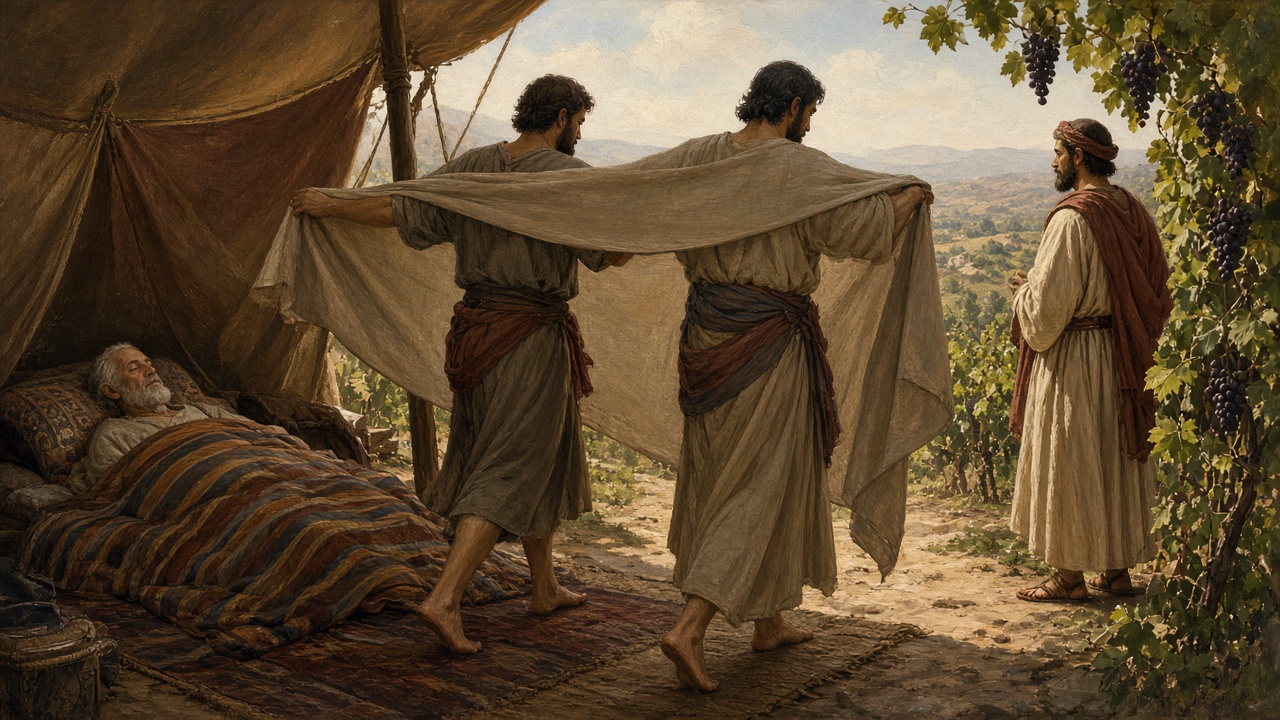
20Jò aih, Nô-ê patep abèq rai pìt nho. 21Haq ôq alac bù, khoe aih rahòng dèh taqne traiq. 22Cham aih baq da Cana-an hnoq kan rahòng dèh baq, aih hi loh enh gùng taqmon hlài dèh ka wa oh daq. 23Yàng èh wa Sem wa Japhet yŏc eo yôh taqmac deh ta plêh, lam la alùi thia taqmàn chac deh baq, mat wa haq tangèa taqnoeq dài majah ùh lòm hnoq kan rahòng dèh baq. 24Jò Nô-ê hrau enh bù, hìa bìac kon ma taqne khoe broq ka rađeh, 25haq doe: Cana-an troq ka hamaiq! Haq jah broq dìc hapŏng dèh wa daq wa oh haq. 26Haq doe tam: Joq khòh manè apôi Jêhôwa, aih Boc Plình da Sem qnàng, Cana-an ep broq hapŏng ka wì. 27Waiq Boc Plình parùng taneh ka Japhet am haq jah oe tanòe traiq da Sem, èh Cana-an hòm ep broq dìc wì.
28Atìq ka diac kàn, Nô-ê oe rìh tam piq hrinh padam jàt hanam. 29Qmang aih Nô-ê halình jah hachìn hrinh padam jàt hanam, èh hi cachìt.
Did you know?
Noah's Covenant and the Words about His Sons
- God makes a covenant with Noah, with his descendants, and with every living creature that came out of the ark, promising never again to destroy all life by a flood. The sign is a rainbow set in the clouds, for all generations. One chronology dates this covenant to 2346 BC.Sources: the Bible text itself · God makes a covenant with Noah
- Genesis 9 says the whole earth was populated from Shem, Ham, and Japheth. Shem is explained as 'a name' or 'renown,' probably the eldest and the ancestor of the Israelites, though Japheth is also described as perhaps first by birth. Japheth means 'wide spreading,' a play on the Hebrew 'God shall enlarge Japheth,' and is linked to many tribes in the east of Europe and the north of Asia; Ham, meaning 'warm' or 'hot,' and hence the south, is called Noah's youngest son.Sources: the Bible text itself · Shem · Japheth · Ham
- Noah, a man of the soil, plants a vineyard, drinks the wine, and lies uncovered in his tent. Shem and Japheth cover him while walking backward, faces turned away, an act a dictionary calls filial piety and the occasion of the prophecy that Japheth's descendants would spread. The curse is spoken against Canaan, Ham's fourth son, because of what his father had done; one chronology dates the episode to 2345 BC.Sources: the Bible text itself · Japheth · Canaan · Noah gets drunk and Canaan is cursed
Notes written with AI assistance from open sources (Theographic Bible Metadata, CC BY-SA 4.0; Easton’s Bible Dictionary, public domain) and reviewed before publishing.
Credits and license for this translation
Hset Hadròeh
The New Testament in the Hre language of Vietnam, translated by Baq Thi
Copyright © 2024 Baq Thi
Language: (Hre)
This translation is made available to you under the terms of the
Creative Commons Attribution Share-Alike license 4.0.
You have permission to share and redistribute this Bible translation in any format and to make reasonable revisions and adaptations of this translation, provided that:
You include the above copyright and source information.
If you make any changes to the text, you must indicate that you did so in a way that makes it clear that the original licensor is not necessarily endorsing your changes.
If you redistribute this text, you must distribute your contributions under the same license as the original.
Pictures included with Scriptures and other documents on this site are licensed just for use with those Scriptures and documents.
For other uses, please contact the respective copyright owners.
Note that in addition to the rules above, revising and adapting God's Word involves a great responsibility to be true to God's Word. See Revelation 22:18-19.
2026-07-18
Source: http://ebible.org/hrebt/ · eBible.org