Salmos 120
Tuivang Holy Bible · Toque num versículo para ver as referências cruzadas.
1Ka khuikha awh Bawipa ce khy nyng saw, anih ing nim hlat law hy. 2Aw Bawipa, qaai ak kqawn huikhqi ingkaw qaai kqawn na ak nget laikhqi anglakawhkawng ni hul lah. 3Aw qaai kqawn na ak nget hui lai nang, nang ak khan awh anih ing ikaw a sai kaw, cekcoengawh ikaw ak awm bai? 4Kaw ak awmkhqi a la sumkhqi ing nang ce ni toel kawmsaw, imnawt thing mai alh ing ni toel kaw. 5Kedar awhkaw hi im anglakawh awm nawh, Meshqek awh ak awm ve kai aham khaw map mah hy! 6Roepnaak ak sawhnaak thlang anglakawh ka awm ve sang soeih hawh hy. 7Kai taw qoepnaak ak ngaih thlang na awm nyng; cehlai awi kak kqawn awh, qaal thawh aham ngaih lat uhy.
Você sabia?
Um clamor por paz no exílio
- O Salmo 120 inicia a série de quinze "cânticos de peregrinação" (ou de subidas), começando com um clamor pessoal por libertação de lábios mentirosos e de um ambiente hostil.Fontes: o próprio texto bíblico
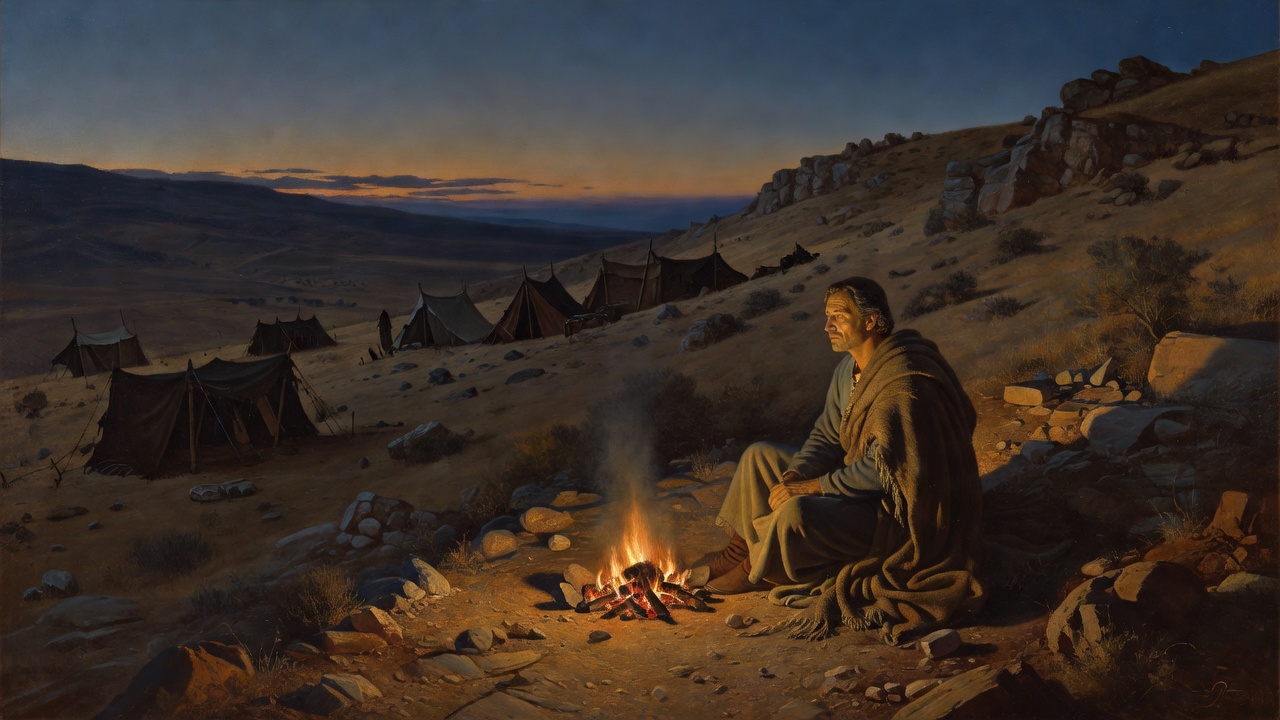
- O salmista lamenta habitar em Meseque e entre as tendas de Quedar. Meseque associava-se a povos do norte perto dos mares Negro e Cáspio, enquanto Quedar referia-se a tribos nômades que viviam em tendas pretas no noroeste da Arábia; juntos, simbolizam terras distantes e estrangeiras, longe da comunidade de adoração.Fontes: Meshech · Kedar · o próprio texto bíblico
Notas escritas com auxílio de IA a partir de fontes abertas (Theographic Bible Metadata, CC BY-SA 4.0; Easton’s Bible Dictionary, domínio público) e revisadas antes de publicar.
Lugares deste capítulo
- Jerusalem · 31.777, 35.234 · versículo 1
- Kedar · 29.811, 39.868 · versículo 5
- Meshech · Hoje: about 200 km around Gordion · 39.655, 31.994 · versículo 5
Só aparecem lugares com identificação de alta confiança (90% ou mais segundo as fontes acadêmicas reunidas pelo OpenBible). Mapa da época: DARE (Digital Atlas of the Roman Empire), CC BY 4.0; mapa atual: © colaboradores do OpenStreetMap; lugares: OpenBible.info (CC BY 4.0).
Créditos e licença desta tradução
Tuivang Holy Bible
The Holy Bible in the Tuivang dialect of the Matu Chin language of Myanmar (Burma)
Copyright © 2020 Batupei Christian Fellowtship
Language: Tuivang (Chin, Matu)
Dialect: Tuivang
Copyright applies only in Myanmar. Outside Myanmar, this work is in the Public Domain.
This translation is made available to you under the terms of the
Creative Commons Attribution Share-Alike license 4.0.
You have permission to share and redistribute this Bible translation in any format and to make reasonable revisions and adaptations of this translation, provided that:
You include the above copyright and source information.
If you make any changes to the text, you must indicate that you did so in a way that makes it clear that the original licensor is not necessarily endorsing your changes.
If you redistribute this text, you must distribute your contributions under the same license as the original.
Pictures included with Scriptures and other documents on this site are licensed just for use with those Scriptures and documents.
For other uses, please contact the respective copyright owners.
Note that in addition to the rules above, revising and adapting God's Word involves a great responsibility to be true to God's Word. See Revelation 22:18-19.
2026-07-26
Fonte: http://ebible.org/hltthb/ · eBible.org