Psalms 120
Tuivang Holy Bible · Tap a verse to see its cross-references.
1Ka khuikha awh Bawipa ce khy nyng saw, anih ing nim hlat law hy. 2Aw Bawipa, qaai ak kqawn huikhqi ingkaw qaai kqawn na ak nget laikhqi anglakawhkawng ni hul lah. 3Aw qaai kqawn na ak nget hui lai nang, nang ak khan awh anih ing ikaw a sai kaw, cekcoengawh ikaw ak awm bai? 4Kaw ak awmkhqi a la sumkhqi ing nang ce ni toel kawmsaw, imnawt thing mai alh ing ni toel kaw. 5Kedar awhkaw hi im anglakawh awm nawh, Meshqek awh ak awm ve kai aham khaw map mah hy! 6Roepnaak ak sawhnaak thlang anglakawh ka awm ve sang soeih hawh hy. 7Kai taw qoepnaak ak ngaih thlang na awm nyng; cehlai awi kak kqawn awh, qaal thawh aham ngaih lat uhy.
Did you know?
A Plea for Peace in Exile
- Psalm 120 opens the series of fifteen "songs of ascents", beginning with a personal cry for deliverance from deceitful speech and hostile surroundings.Sources: the Bible text itself
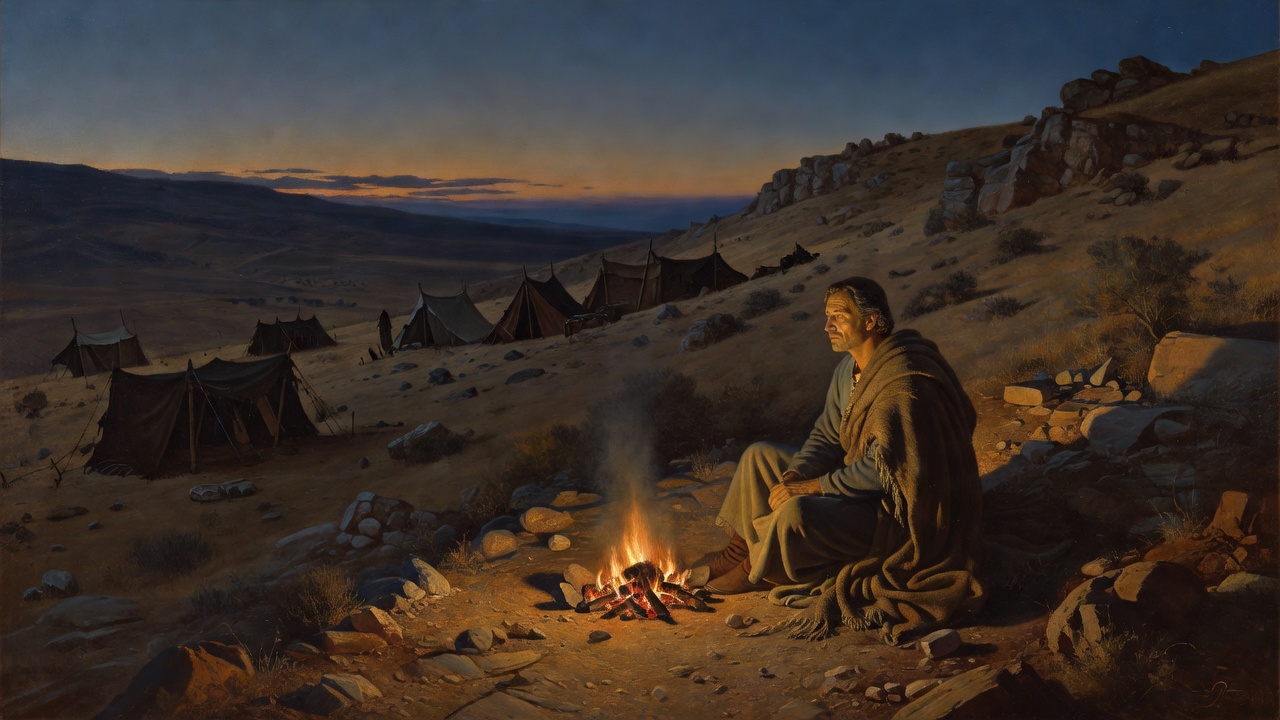
- The psalmist laments living in Meshech and among the tents of Kedar. Meshech was associated with northern peoples near the Black and Caspian Seas, while Kedar referred to nomadic tribes living in black tents in northwestern Arabia; together they symbolize distant, alien lands far from the community of worship.Sources: Meshech · Kedar · the Bible text itself
Notes written with AI assistance from open sources (Theographic Bible Metadata, CC BY-SA 4.0; Easton’s Bible Dictionary, public domain) and reviewed before publishing.
Places in this chapter
- Jerusalem · 31.777, 35.234 · verse 1
- Kedar · 29.811, 39.868 · verse 5
- Meshech · Today: about 200 km around Gordion · 39.655, 31.994 · verse 5
Only places identified with high confidence are shown (90% or more according to the scholarly sources compiled by OpenBible). Period map: DARE (Digital Atlas of the Roman Empire), CC BY 4.0; modern map: © OpenStreetMap contributors; places: OpenBible.info (CC BY 4.0).
Credits and license for this translation
Tuivang Holy Bible
The Holy Bible in the Tuivang dialect of the Matu Chin language of Myanmar (Burma)
Copyright © 2020 Batupei Christian Fellowtship
Language: Tuivang (Chin, Matu)
Dialect: Tuivang
Copyright applies only in Myanmar. Outside Myanmar, this work is in the Public Domain.
This translation is made available to you under the terms of the
Creative Commons Attribution Share-Alike license 4.0.
You have permission to share and redistribute this Bible translation in any format and to make reasonable revisions and adaptations of this translation, provided that:
You include the above copyright and source information.
If you make any changes to the text, you must indicate that you did so in a way that makes it clear that the original licensor is not necessarily endorsing your changes.
If you redistribute this text, you must distribute your contributions under the same license as the original.
Pictures included with Scriptures and other documents on this site are licensed just for use with those Scriptures and documents.
For other uses, please contact the respective copyright owners.
Note that in addition to the rules above, revising and adapting God's Word involves a great responsibility to be true to God's Word. See Revelation 22:18-19.
2026-07-26
Source: http://ebible.org/hltthb/ · eBible.org