Jó 7
Bib Sen An · Toque num versículo para ver as referências cruzadas.
1“Èske lòm pa oblije fè kòve sou latè?
Èske jou li yo pa tankou jou a yon ouvriye jounalye?
2Tankou esklav ki rale souf pou rive nan lonbraj,
tankou jounalye k ap tann kòb li,
3se konsa mwen jwenn mwa yo plen mizè,
e nwit plen ak gwo twoub k ap dezinyen pou mwen.
4Lè m kouche mwen di: ‘Se kilè m ap leve?’
Men nwit lan kontinye; m ap vire tounen jis rive nan maten.
5Chè m abiye ak vè ak kal ki fèt ak pousyè.
Po m vin di e li koule pij.
6Jou m yo mache pi vit ke mach aparèy tise a.
Yo fini sanzespwa.
7Sonje byen ke lavi m pa plis ke yon souf;
zye m p ap wè sa ki bon ankò.
8Zye a sila ki wè m yo, p ap wè m ankò.
Zye Ou va sou mwen, men mwen p ap la ankò.
9Jan yon nwaj vin disparèt, li ale nèt.
Konsa sila ki desann nan sejou lanmò a p ap monte ankò.
10Li p ap retounen ankò lakay li,
ni plas li p ap rekonèt li ankò.
11“Akoz sa a, mwen p ap met fren nan bouch mwen.
Mwen va pale nan doulè lespri m;
mwen va plenyen nan lespri anmè mwen.
12Èske se lanmè mwen ye, oswa bèt jeyan lanmè a,
pou Ou te mete gad sou mwen?
13Si mwen di: ‘Kabann mwen va ban m repo,
sofa m va soulaje plent mwen,’
14answit, Ou fè m krent ak rèv,
e teworize m ak vizyon;
15jiskaske nanm mwen ta chwazi mouri toufe;
pito lanmò olye doulè mwen yo.
16Mwen fin epwize nèt;
mwen p ap viv tout tan.
Kite mwen sèl, paske jou mwen yo pa plis ke yon souf.
17Kisa lòm ye pou Ou reflechi sou li
e pou Ou bay ka li enpòtans,
18pou Ou fè l pase egzamen chak maten e
fè l pase eprèv chak moman?
19Èske Ou p ap janm sispann gade m,
ni kite mwen anpè jiskaske m fin vale krache m?
20Èske mwen te peche? Kisa mwen te fè Ou,
Ou menm, ki gadyen lòm?
Poukisa Ou te fè m objè tiraj Ou
jiskaske mwen vin yon fado pou pwòp tèt mwen?
21Poukisa konsa Ou pa padone transgresyon mwen yo,
e retire inikite mwen yo?
Paske koulye a, mwen va kouche nan pousyè a;
Ou va chache pou mwen, men m p ap la ankò.”
Você sabia?
O Lamento de Jó sobre a Fragilidade e o Sofrimento Humano
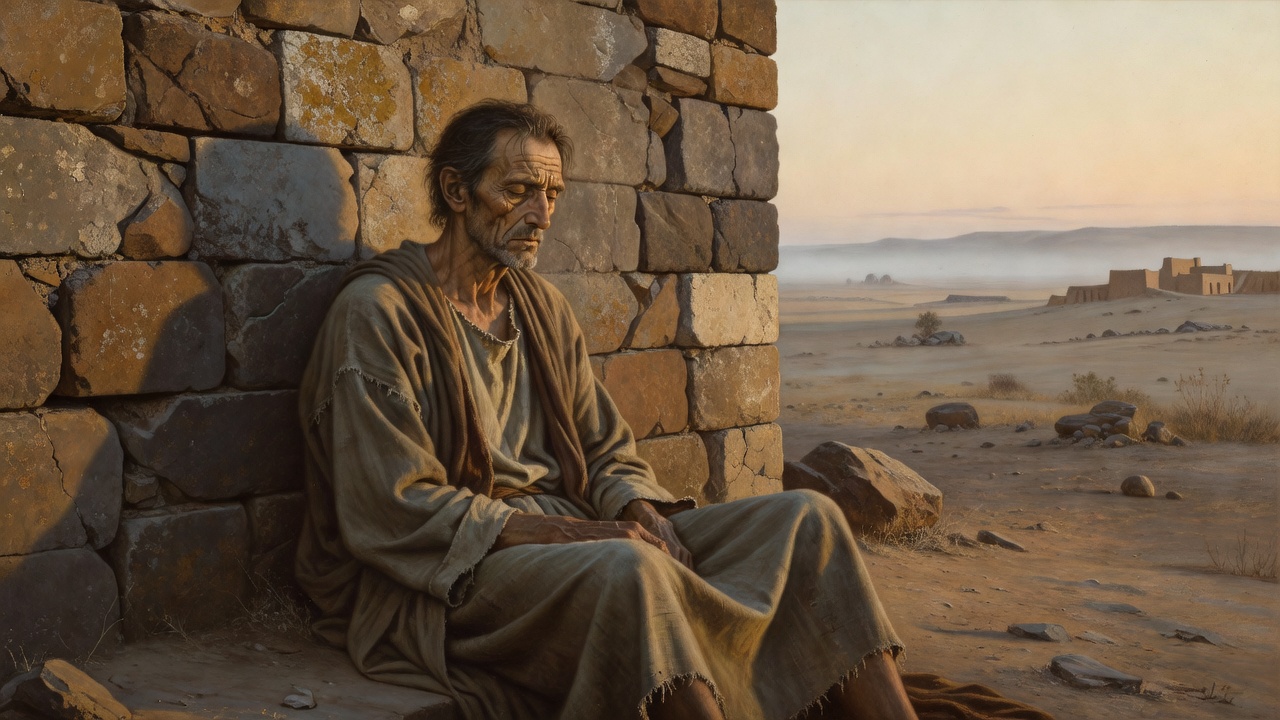
- Jó compara a existência humana à vida extenuante de um trabalhador contratado que anseia pela sombra do entardecer e pelo seu salário, ilustrando a rapidez dos dias com a imagem da lançadeira do tecelão.Fontes: o próprio texto bíblico
- Em seu lamento, Jó descreve o Seol como um destino sombrio do qual ninguém retorna à vida terrena, comparando o desaparecimento humano a uma nuvem que se dissipa no ar.Fontes: o próprio texto bíblico
- Jó questiona por que Deus o submete a uma vigilância incessante, perguntando se ele seria tão perigoso quanto o mar turbulento ou um monstro das profundezas para precisar ser mantido sob guarda contínua.Fontes: o próprio texto bíblico
Notas escritas com auxílio de IA a partir de fontes abertas (Theographic Bible Metadata, CC BY-SA 4.0; Easton’s Bible Dictionary, domínio público) e revisadas antes de publicar.
Créditos e licença desta tradução
Bib Sen An
The Holy Bible in Haitian Creole, 2023 update
copyright © 2017-2023 Ron Smith
Language: Kreyòl Ayisyen (Haitian)
Translation by: Ron Smith
Contributor: Felix Nixon
This translation is made available to you under the terms of the
Creative Commons Attribution Share-Alike license 4.0.
You have permission to share and redistribute this Bible translation in any format and to make reasonable revisions and adaptations of this translation, provided that:
You include the above copyright and source information.
If you make any changes to the text, you must indicate that you did so in a way that makes it clear that the original licensor is not necessarily endorsing your changes.
If you redistribute this text, you must distribute your contributions under the same license as the original.
Pictures included with Scriptures and other documents on this site are licensed just for use with those Scriptures and documents.
For other uses, please contact the respective copyright owners.
Note that in addition to the rules above, revising and adapting God's Word involves a great responsibility to be true to God's Word. See Revelation 22:18-19.
2026-06-11
Fonte: http://ebible.org/hatbsa/ · eBible.org