João 4
Alkawal Kesal · Toque num versículo para ver as referências cruzadas.
Yeesu e samariyaajo debbo
1Farisaaɓe nanii Yeesu e waɗa batisi, e heɓa aahiiɓe ɗuuɓɓe faa ɓuri Yuhaana. 2To gooŋa nun, Yeesu e hoore mum waɗay batisi, amma aahiiɓe makko nun waɗannoo ɗum. 3No Yeesu nani ka Farisaaɓe bati, ummii leydi Yahudiya, witti leydi Galili. 4E haani bo o falta leydi Samariya.
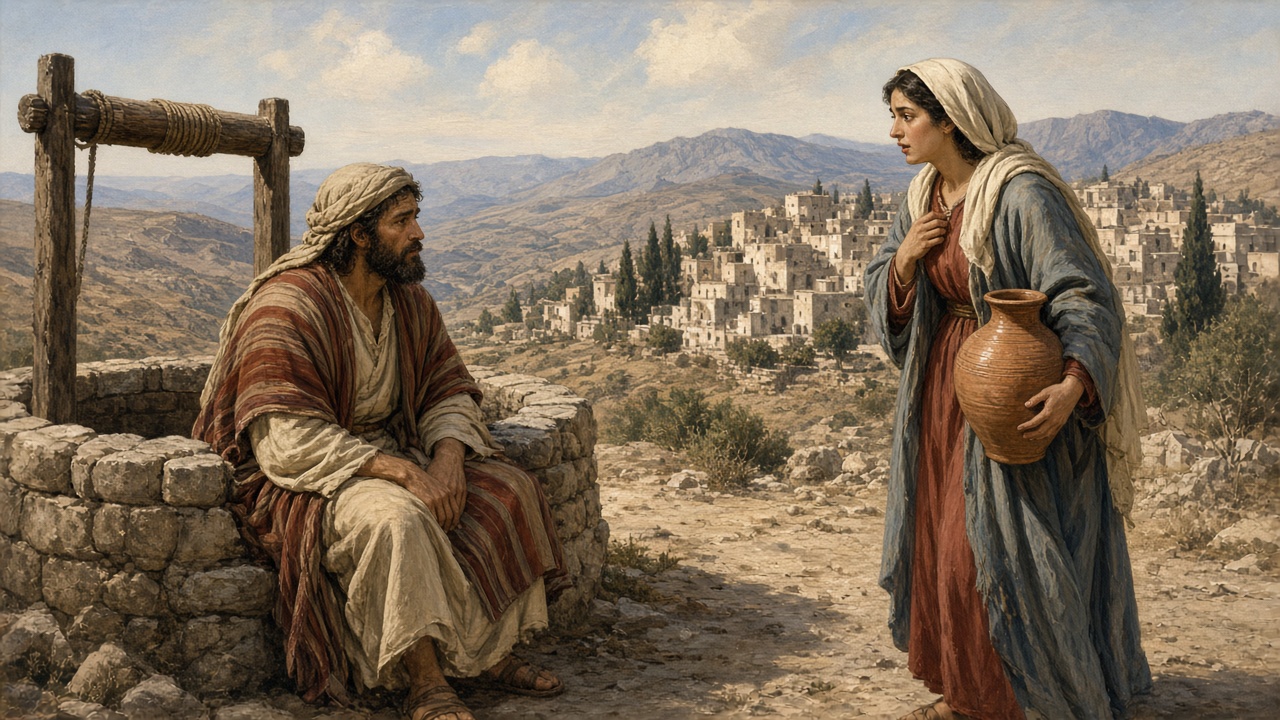
5O wari e siire Samariya bi'eteene Sikar, takkol gesa ŋa Yaakuubu hokki ɓiyum Yusufu. 6Ɗon ɓunnu Yaakuubu woni. No Yeesu somi yaadu, jooɗii gaɓɓuɗe ɓunnu ŋol. Caka nyaalooma nun.
7Samariyaajo debbo wari ƴoogugo. Yeesu wi'i mo: «Hokkoram diyam, mi yara!» 8(Tawi aahiiɓe makko yahii siire soodoygo ko nyaametee.) 9Debbo on wi'i Yeesu: «Ee, noy an Yahuduujo, eelirtaa am diyam jaraa, min samariyaajo debbo?» Nani bo potal walaa hakkune Yahuduuɓe e Samariyaaɓe. 10Yeesu toontii mo, wi'i: «To aa annunoo no dokkal Alla foti, e moy wi'i maa: “Hokkoram diyam, mi yara!” an nun eelatano mo, o hokkee diyam yonki.»
11Debbo on wi'i mo: «Moodibbo, a walaa cawgal. Ɓunnu nun bo e luggi. Toy keɓataa diyam yonki ɗam? 12A ɓuru nun maama amen Yaakuubu, kokkuɗo men ɓunnu ŋol manŋu na? Kanko e ɓiɓɓe makko, e bisaaji makko fu, ɓe jarii e maggol.» 13Yeesu toontii mo, wi'i: «Neɗɗo fu jarɗo diyam ɗam, ɗonɗete kade, 14amma jarɗo diyam ɗam kokkanmi ɗum, ɗonɗataake faa abada. Gam diyam kokkanmi ɗum, laatanto ɗum ɓuldude diyam kokkoojam yonki tabitiiki.» 15Debbo on wi'i: «Moodibbo, hokkoram diyam ɗam, to mi ɗonɗee kade, to mi wittaa bo ƴoogugo.»
16Yeesu wi'i mo: «Yahu noddoy gorko maa, garidon!» 17Debbo on toontii mo: «Mi walaa gorko.» Yeesu wi'i mo: «Aa woodi gooŋa no bi'uɗaa a walaa gorko. 18A ettayno maa worɓe joyo. Gorko gonduɗaa jooni on bo, gorko maa bane. A batii gooŋa.»
19Debbo on wi'i mo: «Moodibbo, laaɓanii am, a laati nun Annabiijo. 20Maamiraaɓe amen saafiino Alla dow waanne nee, amma onon, oon bi'a: ‟Urusaliima nun Alla haani saafeego”.»
21Yeesu wi'i mo: «Banniraawo debbo, hoola ko batan maa mi. Wakkati e wara, dow waanne nee ɗo bane, Urusaliima bo bane caafoton Baaba. 22Onon Samariyaaɓe, oon caafa ko on annaa, menen Yahuduuɓe, ko men anni men caafata, gam kisidam to Yahuduuɓe nun ƴiwata. 23Amma wakkati e wara, ki yottike du, de saafooɓe gooŋakuuɓe saafirta Baaba e ruuhu e gooŋa. Iri saafooɓe ɓee ɗon nun Baaba daartata. 24Alla laati nun Ruuhu. Gam majjum, e haani saafooɓe, saafira mo e ruuhu e gooŋa.»
25Debbo on wi'i: «Mii anni Almasiihu, bi'eteeɗo Cuɓaaɗo, waran. To o warii, o humpitanan men kujje fu.» 26Yeesu wi'i mo: «Min, baddoowo e maa, woni kanko.»
27Dow kaa ɗon, aahiiɓe makko yottii to maɓɓe. No Yeesu baddata e debbo on, ɗum haaynii ɓe, amma baa gooto maɓɓe wi'ay: «Ko daartataa?» Naa: «Gam ume baddataa e makko?»
28Den debbo on resi ƴoogirgal mum, witti siire, bati himɓe, wi'i: 29«Garee, daaree gorko batuɗo am ko gaɗunoomi fu. Kanko bane woni Almasiihu on?» 30Ɓe burti siire nen, ɓe jahi to makko.
31Wakkati den aahiiɓe e sawrina mo, e wi'a: «Moodibbo, nyaamu!» 32O toontii ɓe: «Mii woodi ko nyaamaanmi, ko on annaa.» 33Aahiiɓe ɓen e ƴamontira: «Moy waddani mo ko nyaametee?»
34Yeesu wi'i ɓe: «Nyaamdu am laati nun waɗugo sago lilɗo am, e heennyitingo golle ɗe o hokkimmi. 35Onon, oon bi'a: ‟Faa hanne lebbi naay horii go dugge yottoo?” Amma min, mii wi'a on: ɓantee gite mon, daaree, gese ɓennii, ɗe potii ruggeego. 36Dugguɗo heɓan joddi, hawritan ɓiɓɓe gam yonki tabitiiki, gam aawuɗo e dugguɗo seyodoo. 37Ɗum ɗon e tabbitina ballool ŋol ɗo: ‟Gooto e aawa, gooto e rugga.” 38Mi lilii on duggoon to on gollay. Woɓɓe gollii, onon, on nafitoroo golle maɓɓe.»
39Der siire nen, Samariyaaɓe ɗuuɓɓe goonɗinii Yeesu gam haala debbo ceediiɗo, wi'i: «O batii am ko gaɗunoomi fu.» 40Gam majjum no Samariyaaɓe yottii to Yeesu, ɓe eeli mo o jooɗoo to maɓɓe. O waɗi ɗon balɗe ɗiɗi. 41Himɓe ɗuuɓɓe, faa ɓuri no arande, goonɗini mo, no nani haala makko. 42Ɓe bi'i debbo on: «Jooni, hinaa gam ka batuɗaa men tan acci men goonɗini. Amma menen e ko'e amen, men nanii haala makko, emen anni kanko woni Kisinoowo duuniyaaru lalley.»
Yeesu nyawtii ɓii semmenteejo gom
43No Yeesu waɗi ton balɗe ɗiɗi, o witti Galili. 44Kanko e hoore makko o seedike, o wi'i: «Annabiijo teddintaake der leydi mum.» 45No o yottii Galili, Galilinkeeɓe jaɓɓorii mo juuɗe ɗiɗi, gam kamɓe bo ɓe jahiino juulɗe Urusaliima, ɓe ji'iino ko o waɗi ton fu.
46Den Yeesu warti Kana, der leydi Galili to o waylitinnoo diyam laatii jaram. Tawi ɓii gorko semmenteejo gom, yanɗaa, e fukkii Kafarnahum. 47Semmenteejo on nani Yeesu ƴiwii Yahudiya, warii Galili. O yahi to makko, o eeli mo o yaha o nyawtaa ɓiyiiko ɓadiiɗo maayugo. 48Yeesu wi'i mo: «Abada on goonɗintaa, to on ji'ay kaayeefiiji e haaynaareeji.» 49Semmenteejo on wi'i mo: «Moodibbo, en jahu diga ɓiyam maayay.» 50Yeesu wi'i mo: «Hootu, ɓiya e wuuri.»
Gorko on goonɗini ko Yeesu bati ɗum, witti. 51E laawol, gollooɓe makko fotti e makko, wi'i mo ɓiyiiko yoofike. 52O ƴami ɓe: «Wakkati dey o yoofii?» Ɓe toontii mo, ɓe bi'i: «Keenya juura jonte ɗen yoofi mo.» 53Baabiiko anniti wakkati oo ɗon nun lalley Yeesu wi'i mo: «Ɓiya yoofike!» Kanko e getti makko fu, ɓe goonɗini Yeesu.
54Ɗum ɗon woni kaayeefi ɗiɗaɓi ki Yeesu waɗi Galili, no ƴiwunoo Yahudiya.
Você sabia?
Água viva na Samaria
- Jesus deixou a Judeia para voltar à Galileia, e o Evangelho diz que ele precisava passar pela Samaria. Sob os romanos, no tempo de Jesus, a Judeia era a mais ao sul das três divisões da Palestina, distinta da Samaria e da Galileia, e a narrativa observa que os judeus não se relacionavam com os samaritanos.Fontes: o próprio texto bíblico · Judea
- Ele chegou a Sicar, perto do terreno que Jacó tinha dado a seu filho José e, cansado da viagem, sentou-se junto ao poço de Jacó. O dicionário bíblico de Easton (1897) registra que, desde o tempo das Cruzadas, Sicar costumava ser identificada com Siquém, mas que explorações a identificaram com 'Askar, um pequeno povoado samaritano na base sul de Ebal, cerca de uma milha ao norte do poço.Fontes: o próprio texto bíblico · Sychar
- A mulher contrastou a adoração neste monte com a afirmação dos judeus de que era preciso adorar em Jerusalém, e falou de um Messias que havia de vir, chamado Cristo. Quando os discípulos voltaram de comprar comida na cidade, ficaram surpresos de que Jesus estivesse falando com uma mulher.Fontes: o próprio texto bíblico
Notas escritas com auxílio de IA a partir de fontes abertas (Theographic Bible Metadata, CC BY-SA 4.0; Easton’s Bible Dictionary, domínio público) e revisadas antes de publicar.
Lugares deste capítulo
- Galilee · 32.760, 35.527 · versículos 3, 43, 45, 46, 47, 54
- Judea · Hoje: Judea 1 · 31.777, 35.234 · versículos 3, 47, 54
- Samaria · Hoje: Samaria 2 · 32.276, 35.195 · versículos 4, 5, 7, 9
- Jerusalem · 31.777, 35.234 · versículos 20, 21, 45
- Mount Gerizim · 32.199, 35.273 · versículo 20
Só aparecem lugares com identificação de alta confiança (90% ou mais segundo as fontes acadêmicas reunidas pelo OpenBible). Mapa da época: DARE (Digital Atlas of the Roman Empire), CC BY 4.0; mapa atual: © colaboradores do OpenStreetMap; lugares: OpenBible.info (CC BY 4.0).
Créditos e licença desta tradução
Alkawal Kesal
Portions of the New Testament in the Fulfulde Borgu language of Benin
copyright © 2011 SIM International
Language: Fulfulde Borgu (Fulfulde, Borgu)
Translation by: SIM
This translation text is made available to you under the
terms of the Creative Commons License: Attribution-Noncommercial-No Derivative Works.
( http://creativecommons.org/licenses/by-nc-nd/3.0/ )
In addition, you have permission to port the text to different file formats, as long as you
do not change any of the text or punctuation of the Bible.
You may share, copy, distribute, transmit, and extract portions
or quotations from this work, provided that you include the above copyright
information:
You must give Attribution to the work.
You do not sell this work for a profit.
You do not make any derivative works that change any of the actual words or punctuation of the Scriptures.
Permissions beyond the scope of this license may be
available if you contact
us with your request.
This translation is made available to you under the terms of the
Creative Commons Attribution-Noncommercial-No Derivatives license 4.0.
You may share and redistribute this Bible translation or extracts from it in any format, provided that:
You include the above copyright and source information.
You do not sell this work for a profit.
You do not change any of the words or punctuation of the Scriptures.
Pictures included with Scriptures and other documents on this site are licensed just for use with those Scriptures and documents.
For other uses, please contact the respective copyright owners.
2014-10-16
Fonte: http://ebible.org/fue/ · eBible.org