João 11
Alkawal Kesal · Toque num versículo para ver as referências cruzadas.
Maayde Lasar
1Gorko gom, bi'eteeɗo Lasar e tawano Baytaniya, o nyawi. Oo woodi sakikiraaɓe ɗiɗo, Mariyama e Marta. 2Mariyama on nun woni moomunooɗo wardi e Joomiraawo, go o moytiri gaasa makko koyɗe Yeesu. Sakiike makko, Lasar nyawunoo. 3Sakikiraaɓe makko lili e Yeesu wi'a mo: «Moodibbo, beldiijo maa yanɗaa.»
4No Yeesu nanunoo ka, wi'i: «Nyaw ɗum ɗon nyaw maayde bane. Ɗum waru nun gam tedduŋal Alla, gam Ɓiɗɗo Alla teddiniree e majjum.»
5Yeesu e yiɗi Marta, e miiraawo mum, e Lasar. 6Baa no o nani Lasar yanɗaa, haɗay mo jooɗaago balɗe ɗiɗi to o wonunoo. 7Ɓaawo majjum o wi'i aahiiɓe makko: «En bittee leydi Yahudiya!» 8Aahiiɓe wi'i: «Moodibbo, baa ɓooyay Yahuduuɓe e daartano warirgo maa kaaƴe, go ton nun bittataa?» 9Yeesu toontii: «Hinaa wakkatiiji sappo e ɗiɗi woni der nyaalooma? Jahoowo nyaalooma fergataako gam oo yi'a jayŋol duuniyaaru nu. 10Amma jahoowo jemma fergoto gam jayŋol walaa e makko.»
11Ɓaawo o bati haalaaji ɗii, o wi'i: «Giɗo meeɗen Lasar ɗaanike, mi yahan, mi finnina mo.» 12Aahiiɓe wi'i: «Moodibbo, to o ɗaani nun, o yoofoto.» 13Maayde Lasar nun o batannoo. Kamɓe ɓe miili haala ɗoyŋol nun o batani. 14Yeesu laaɓinani ɓe: «Lasar maayii! 15Ɓerne am welii gam mooɗon ko mi tawaaka ton. Ɗum laatanto on daliila goonɗinon. To non en jahu, to makko.» 16Den Toma bi'eteeɗo Ciwto wi'i aahiiɓe horiiɓe: «En jahu enen bo gam maayden e makko.»
Yeesu nun woni ummital e gurnam
17No Yeesu yottinoo, tawi waɗii balɗe naay Lasar e tawaa der saabeere. 18Hakkune Baytaniya e Urusaliima ɓuraa kilooji tati, 19Yahuduuɓe ɗuuɓɓe wari to Marta e Mariyama gam eytugo ɓe e maayde sakiike maɓɓe.
20No Marta nani Yeesu warii, yahi taɓɓitoyii mo, tawi Mariyama e jooɗii der suudu. 21Marta wi'i Yeesu: «Moodibbo, to aa wonunoo ɗo, sakiike am maayataano. 22Amma baa jooni mii anni huune fu ko ƴamuɗaa Alla, o waɗante.» 23Yeesu wi'i mo: «Sakiike maa fintan.» 24Marta wi'i: «Mii anni o fintan nyalaane ummital.»
25Yeesu wi'i mo: «Min woni pintinoowo, min woni kokkoowo yonki. Neɗɗo fu goonɗinɗo am, baa to maayii, o wuuran. 26Buurɗo fu, goonɗinɗo am, maayataa abada. Aa goonɗini ɗum na?» 27O toontii: «Ee, moodibbo! Mii goonɗini an woni Cuɓaaɗo, Ɓiɗɗo Alla, garoowo e duuniyaaru.»
Yeesu wullii
28E dow ɗum Marta yahi noddoygo miiraawo mum Mariyama, o sownii ɗum: «Moodibbo warii, oo noddee.»
29No Mariyama nanuno kaa ɗon, ummii ɗon maa ɗon, yahi to makko. 30Yeesu naatayno siire nen taw. Oo tawaa to Marta fottunoo e makko. 31Yahuduuɓe e wondunoo e Mariyama der suudu. Ɓee eyta mo. Ɓe ji'i o faɗɗitii, o wurtii. Ɓe tokki mo, ɓe miili o yahan nun e saabeere o wulla.
32No Mariyama yotti to Yeesu, no o yi'i mo, o diccii yeeso makko, o wi'i: «Moodibbo, to aa wonunoo ɗo, sakiike am maayataano.»
33No Yeesu yi'i Mariyama e Yahuduuɓe wondunooɓe e mum e wulla, hakkillo makko ummii, o wemmaa. 34O ƴami: «Toy gattuɗon mo?» ɓe toontii: «Moodibbo, war, daaru!» 35Yeesu wulli. 36Yahuduuɓe wi'i: «Daaree no o yiɗiri mo.» 37Woɓɓe e maɓɓe wi'i: «Bumtinɗo bunɗo waawataano ko haɗi gorko on maayugo na?»
Lasar fintinaama
38Hakkillo Yeesu ummii kade, o yahi to saabeere woni. Saabeere nen laati nun gayka maaɓɓiraaka hayre. 39Yeesu wi'i: «Ikkinee hayre nen!» Marta, sakiike maayɗo, wi'i mo: «Moodibbo, o luuɓii ko, gam hanne waɗi balɗe naay oo woni der saabeere.» 40Yeesu wi'i mo: «Mi wi'ay maa baa, to a goonɗinii, a yi'an baawɗe Alla?»
41Ɓe ikkini hayre nen. Yeesu tiggitii, wi'i: «Baaba, mii yettee gam aa nananammi. 42Min kan, mii anni baadey fu aa nananammi. Amma mi baddu maa nun gam himɓe dariiɓe ɓee ɗo, gam ɓe goonɗina an nun lilimmi.» 43Ɓaawo haalaaji ɗii, o bati e semme: «Lasar wurta!» 44Maayunooɗo on wurtii, juuɗe mum e koyɗe mum e fiilaa leppi, yeeso mum e soomii. Yeesu wi'i ɓe: «Piilitee mo, accon mo o yaha.»
45Ɗuuggal e Yahuduuɓe warunooɓe to Mariyama, yi'uɓe ko Yeesu waɗi, goonɗini mo. 46Amma woɓɓe maɓɓe yahi to Farisaaɓe, bati ɓe ko Yeesu waɗi. 47Farisaaɓe ɓen e hooreeɓe Limaamiiɓe waɗi dawriine, wi'i: «Gorko oo e waɗa kaayeefiiji ɗuuɗɗi. Noy gaɗeten? 48To en accirii mo nunnun, ɓe fu, ɓe goonɗinan mo. Romankeeɓe waran, halka en enen e nokkuure meeɗen ceniine e leydi meeɗen.»
49Gooto maɓɓe, bi'eteeɗo Kayafas, laatinooɗo hooreejo Limaamiiɓe duuɓol mum, wi'i ɓe: «Onon, on annaa goɗɗum. 50On annaa gomma neɗɗo gooto maayana leydi men e ɓuri leydi nin fu halka.» 51Nani e hoore makko bane o bati haalaaji ɗii, amma gam o laatinoo hooreejo Limaamiiɓe duuɓol mum, o waɗay maa annabaaku e haani Yeesu maayana leydi nin. 52Leydi nin tan bane haani o maayana, amma gam o hawrita ɓiɓɓe Alla sankitiiɓe fu laatoo jama'aare woore.
53Diga nyaanne den, hooreeɓe Yahuduuɓe dawri warugo mo. 54Jon kan Yeesu acci yahugo e warta hakkune Yahuduuɓe. O yawti diga ɗon, o yahi siire wi'eteene Efrayim gonune ley haro. O jooɗodii ton e aahiiɓe makko.
55Juulɗe Yahuduuɓe bi'eteeɗe Paska ɓadike. Ɗuuggal e himɓe leydi nii yahi Urusaliima gam laaɓina ko'e mum diga juulɗe ɗen yottaaki. 56Ɓee gonii e fageere suudu Alla, ɓee daarta Yeesu, ɓee ƴamontira: «O warataa e juulɗe ɗen? Naa no miiluɗon?»
57Tawi hooreeɓe Limaamiiɓe e Farisaaɓe batiino annuɗo to o woni fu, bata, heɓa o nanŋee.
Você sabia?
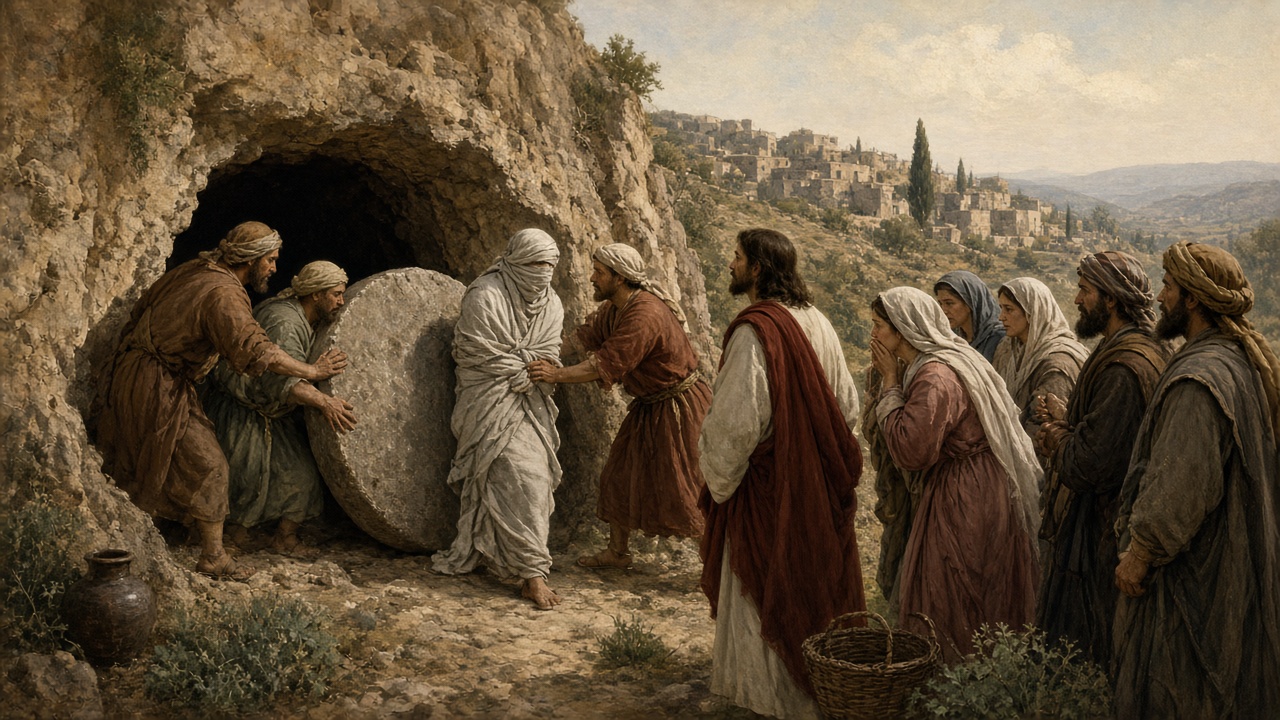
Lázaro ressuscitado em Betânia
- João situa Betânia, a aldeia de Lázaro e de suas irmãs Maria e Marta, a pouco menos de duas milhas de Jerusalém. O dicionário bíblico de Easton (1897) a localiza na encosta sudeste do monte das Oliveiras, no caminho de Jericó, e diz que o nome vinha das palmeiras que ali cresciam e que a aldeia era conhecida como el-Azariyeh, “lugar de Lázaro”.Fontes: Bethany · o próprio texto bíblico
- Tomé, um dos doze, também era chamado Dídimo, o equivalente grego do seu nome, que significa “gêmeo”. Quando Jesus resolveu voltar à Judeia, onde pouco antes tinham tentado apedrejá-lo, Tomé disse aos outros discípulos: “Vamos nós também, para morrermos com ele”.Fontes: Thomas · o próprio texto bíblico
- Depois que alguns contaram o que Jesus tinha feito, os principais sacerdotes e os fariseus reuniram o Sinédrio, com medo de que, se todos cressem em Jesus, os romanos lhes tirassem o lugar e a nação. Caifás, sumo sacerdote naquele ano e, segundo o dicionário bíblico de Easton (1897), um saduceu que ocupou o cargo de 27 a 36 d.C., disse que era melhor que um homem morresse pelo povo do que perecesse a nação inteira. João diz que, como sumo sacerdote naquele ano, ele profetizava que Jesus morreria pela nação, e daquele dia em diante tramaram matá-lo.Fontes: Caiaphas · o próprio texto bíblico
Notas escritas com auxílio de IA a partir de fontes abertas (Theographic Bible Metadata, CC BY-SA 4.0; Easton’s Bible Dictionary, domínio público) e revisadas antes de publicar.
Lugares deste capítulo
- Judea · Hoje: Judea 1 · 31.777, 35.234 · versículos 7, 8, 54
- Jerusalem · 31.777, 35.234 · versículos 18, 54, 55
- Ephraim · Hoje: Taybeh · 31.954, 35.300 · versículo 54
Só aparecem lugares com identificação de alta confiança (90% ou mais segundo as fontes acadêmicas reunidas pelo OpenBible). Mapa da época: DARE (Digital Atlas of the Roman Empire), CC BY 4.0; mapa atual: © colaboradores do OpenStreetMap; lugares: OpenBible.info (CC BY 4.0).
Créditos e licença desta tradução
Alkawal Kesal
Portions of the New Testament in the Fulfulde Borgu language of Benin
copyright © 2011 SIM International
Language: Fulfulde Borgu (Fulfulde, Borgu)
Translation by: SIM
This translation text is made available to you under the
terms of the Creative Commons License: Attribution-Noncommercial-No Derivative Works.
( http://creativecommons.org/licenses/by-nc-nd/3.0/ )
In addition, you have permission to port the text to different file formats, as long as you
do not change any of the text or punctuation of the Bible.
You may share, copy, distribute, transmit, and extract portions
or quotations from this work, provided that you include the above copyright
information:
You must give Attribution to the work.
You do not sell this work for a profit.
You do not make any derivative works that change any of the actual words or punctuation of the Scriptures.
Permissions beyond the scope of this license may be
available if you contact
us with your request.
This translation is made available to you under the terms of the
Creative Commons Attribution-Noncommercial-No Derivatives license 4.0.
You may share and redistribute this Bible translation or extracts from it in any format, provided that:
You include the above copyright and source information.
You do not sell this work for a profit.
You do not change any of the words or punctuation of the Scriptures.
Pictures included with Scriptures and other documents on this site are licensed just for use with those Scriptures and documents.
For other uses, please contact the respective copyright owners.
2014-10-16
Fonte: http://ebible.org/fue/ · eBible.org