Jeremias 47
Young's Literal Translation · Toque num versículo para ver as referências cruzadas.
Judgment on the Philistines
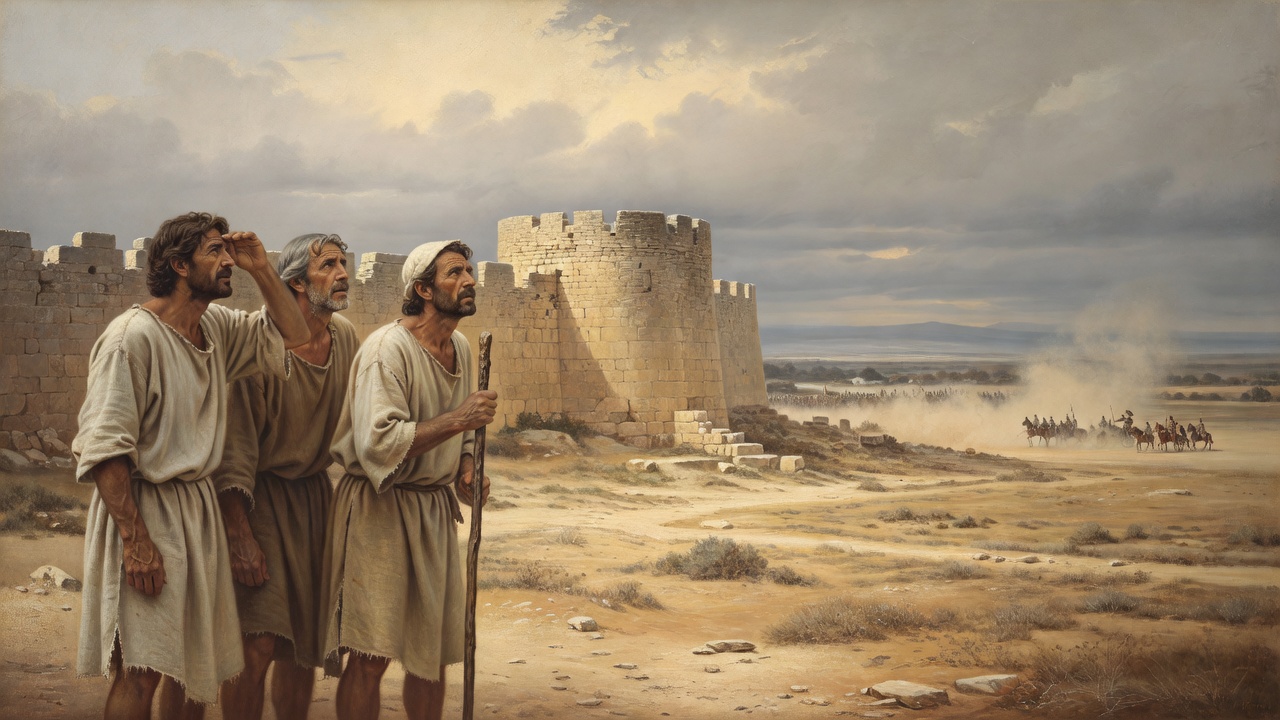
1That which hath been the word of Jehovah unto Jeremiah concerning the Philistines, before Pharaoh smiteth Gaza: 2'Thus said Jehovah: Lo, waters are coming up from the north, And have been for an overflowing stream, And they overflow the land and its fulness, The city, and the inhabitants in it, And men have cried out, And howled hath every inhabitant of the land. 3From the sound of the stamping of the hoofs of his mighty ones, From the rushing of his chariot, the noise of his wheels, Fathers have not turned unto sons, From feebleness of hands, 4Because of the day that hath come to spoil all the Philistines, To cut off to Tyre and to Zidon every helping remnant. For Jehovah is spoiling the Philistines, The remnant of the isle of Caphtor. 5Come hath baldness unto Gaza, Cut off hath been Ashkelon, O remnant of their valley, Till when dost thou cut thyself? 6Ho, sword of Jehovah, till when art thou not quiet? Be removed unto thy sheath, rest and cease. 7How shall it be quiet, And Jehovah hath given a charge to it, Against Ashkelon, and against the sea shore? There hath He appointed it!'
Você sabia?
Julgamento sobre os Filisteus
- Jeremias se refere aos filisteus como o remanescente das costas de Caftor. As tradições bíblicas identificam Caftor como a terra de origem dos filisteus, um lugar amplamente associado por estudiosos a Creta ou a partes da costa do Mediterrâneo oriental.Fontes: o próprio texto bíblico · Caphtor
- O capítulo direciona seus avisos contra Gaza e Ascalom, duas das cinco cidades filisteias proeminentes ao longo da costa mediterrânea. Ambas eram centros antigos conhecidos por sua posição estratégica e rotas comerciais que ligavam o Egito e as regiões vizinhas.Fontes: o próprio texto bíblico · Gaza · Ashkelon
- A profecia observa que a destruição iminente cortaria todos os aliados restantes de Tiro e Sidom. Esses dois grandes portos fenícios ao norte eram centros marítimos cruciais cujos interesses estavam intimamente ligados à região costeira.Fontes: o próprio texto bíblico · Tyre · Sidon
Notas escritas com auxílio de IA a partir de fontes abertas (Theographic Bible Metadata, CC BY-SA 4.0; Easton’s Bible Dictionary, domínio público) e revisadas antes de publicar.
Lugares deste capítulo
- Gaza · Hoje: Tell Harube · 31.504, 34.464 · versículos 1, 5
- Sidon · Hoje: Sandikli archaeological site in Sidon · 33.561, 35.372 · versículo 4
- Tyre · 33.271, 35.196 · versículo 4
- Ashkelon · Hoje: Tel Ashkelon · 31.664, 34.546 · versículos 5, 7
- Great Sea · Hoje: Mediterranean Sea · 31.805, 34.170 · versículo 5
- Philistia · 31.664, 34.546 · versículo 5
Só aparecem lugares com identificação de alta confiança (90% ou mais segundo as fontes acadêmicas reunidas pelo OpenBible). Mapa da época: DARE (Digital Atlas of the Roman Empire), CC BY 4.0; mapa atual: © colaboradores do OpenStreetMap; lugares: OpenBible.info (CC BY 4.0).
Créditos e licença desta tradução
Young's Literal Translation
Young's Literal Translation of the Holy Bible
Public Domain
Language: ENGLISH (English)
Dialect: archaic British
Translation by: Robert Young
This public domain Bible translation is brought to you courtesy of eBible.org.
If you would like to make a donation to help keep free Bible access like this going, please visit https://eBible.org/give.php .
2019-10-20
Títulos de seção adaptados da Berean Standard Bible (domínio público); não fazem parte do texto bíblico desta tradução.
Fonte: http://ebible.org/engylt/ · eBible.org