Jeremías 47
Young's Literal Translation · Toca un versículo para ver sus referencias cruzadas.
Judgment on the Philistines
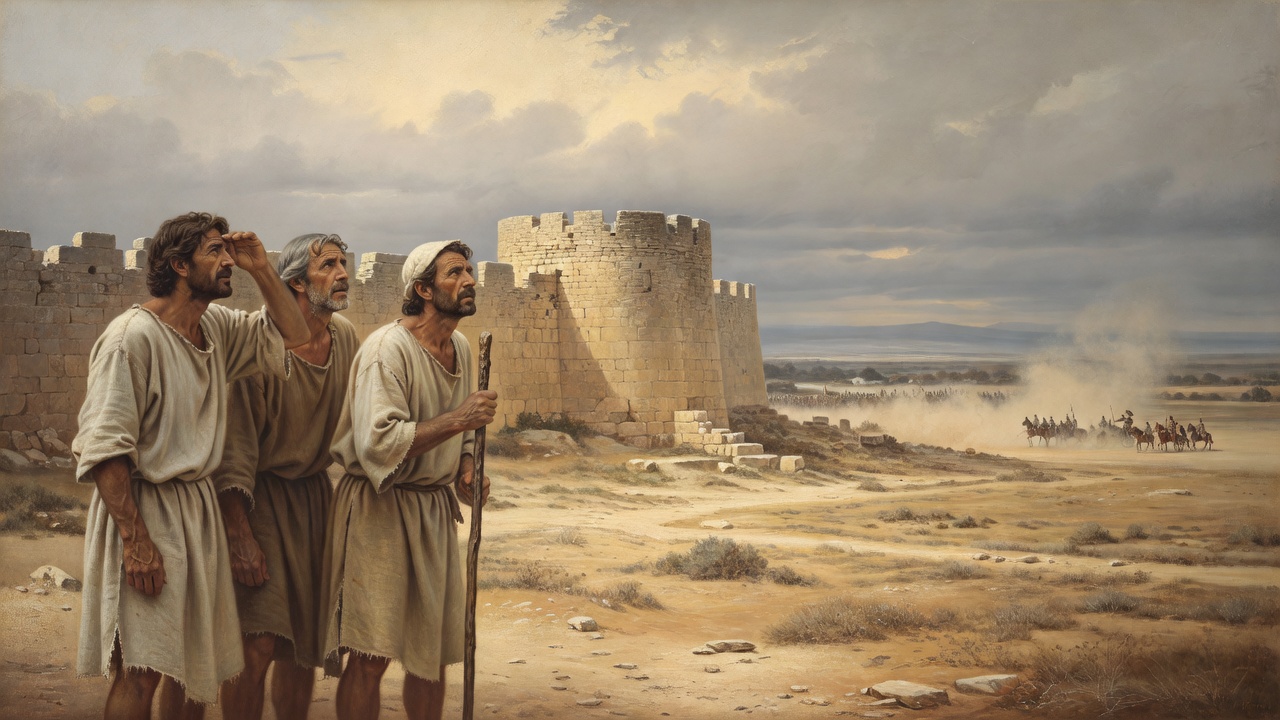
1That which hath been the word of Jehovah unto Jeremiah concerning the Philistines, before Pharaoh smiteth Gaza: 2'Thus said Jehovah: Lo, waters are coming up from the north, And have been for an overflowing stream, And they overflow the land and its fulness, The city, and the inhabitants in it, And men have cried out, And howled hath every inhabitant of the land. 3From the sound of the stamping of the hoofs of his mighty ones, From the rushing of his chariot, the noise of his wheels, Fathers have not turned unto sons, From feebleness of hands, 4Because of the day that hath come to spoil all the Philistines, To cut off to Tyre and to Zidon every helping remnant. For Jehovah is spoiling the Philistines, The remnant of the isle of Caphtor. 5Come hath baldness unto Gaza, Cut off hath been Ashkelon, O remnant of their valley, Till when dost thou cut thyself? 6Ho, sword of Jehovah, till when art thou not quiet? Be removed unto thy sheath, rest and cease. 7How shall it be quiet, And Jehovah hath given a charge to it, Against Ashkelon, and against the sea shore? There hath He appointed it!'
¿Sabías que…?
Juicio sobre los Filisteos
- Jeremías se refiere a los filisteos como el remanente de las costas de Caftor. Las tradiciones bíblicas identifican a Caftor como la tierra de origen de los filisteos, un lugar que muchos eruditos asocian con Creta o con zonas de la costa del Mediterráneo oriental.Fuentes: el propio texto bíblico · Caphtor
- El capítulo dirige sus advertencias contra Gaza y Ascalón, dos de las cinco ciudades filisteas destacadas a lo largo de la costa mediterránea. Ambas eran antiguos centros conocidos por su posición estratégica y rutas comerciales que conectaban Egipto con las regiones vecinas.Fuentes: el propio texto bíblico · Gaza · Ashkelon
- La profecía señala que la destrucción inminente cortaría a todos los aliados restantes de Tiro y Sidón. Estos dos importantes puertos fenicios al norte eran centros marítimos cruciales cuyos intereses estaban estrechamente ligados a la región costera.Fuentes: el propio texto bíblico · Tyre · Sidon
Notas escritas con ayuda de IA a partir de fuentes abiertas (Theographic Bible Metadata, CC BY-SA 4.0; Easton’s Bible Dictionary, dominio público) y revisadas antes de publicarse.
Lugares de este capítulo
- Gaza · Hoy: Tell Harube · 31.504, 34.464 · versículos 1, 5
- Sidon · Hoy: Sandikli archaeological site in Sidon · 33.561, 35.372 · versículo 4
- Tyre · 33.271, 35.196 · versículo 4
- Ashkelon · Hoy: Tel Ashkelon · 31.664, 34.546 · versículos 5, 7
- Great Sea · Hoy: Mediterranean Sea · 31.805, 34.170 · versículo 5
- Philistia · 31.664, 34.546 · versículo 5
Solo aparecen lugares identificados con alta confianza (90 % o más según las fuentes académicas reunidas por OpenBible). Mapa de la época: DARE (Digital Atlas of the Roman Empire), CC BY 4.0; mapa actual: © colaboradores de OpenStreetMap; lugares: OpenBible.info (CC BY 4.0).
Créditos y licencia de esta traducción
Young's Literal Translation
Young's Literal Translation of the Holy Bible
Public Domain
Language: ENGLISH (English)
Dialect: archaic British
Translation by: Robert Young
This public domain Bible translation is brought to you courtesy of eBible.org.
If you would like to make a donation to help keep free Bible access like this going, please visit https://eBible.org/give.php .
2019-10-20
Títulos de sección adaptados de la Berean Standard Bible (dominio público); no forman parte del texto bíblico de esta traducción.
Fuente: http://ebible.org/engylt/ · eBible.org