Números 1
Targum Onkelos Etheridge · Toque num versículo para ver as referências cruzadas.
Sobre este livro
Sobre Números
- Números é o quarto livro do Pentateuco. Em hebraico chama-se be-midbar, “no deserto”; a Septuaginta grega o chamou Números, nome que continua usual, porque registra um recenseamento no deserto do Sinai e outro, posterior, na planície de Moabe.Fontes: Easton: Numbers, Book of
- O Easton's Bible Dictionary (1897) apresenta Números, como os demais livros do Pentateuco, como escrito por Moisés. A história que contém vai do segundo mês do segundo ano após o Êxodo ao início do décimo primeiro mês do quadragésimo ano, cerca de trinta e oito anos e dez meses.Fontes: Easton: Numbers, Book of
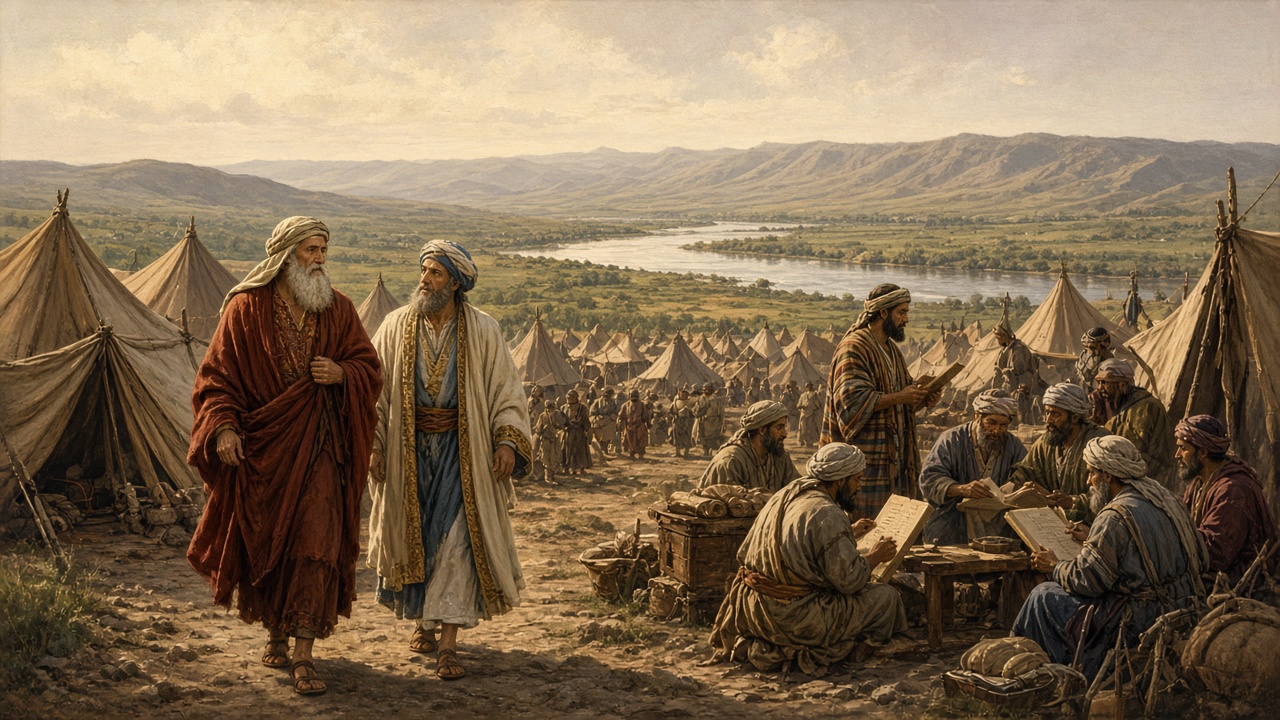
- A narrativa começa no Sinai, a região montanhosa que Israel alcançou no terceiro mês após o Êxodo e onde acampou cerca de um ano, e segue a rota e os acampamentos pelo deserto. Termina nas planícies de Moabe, a leste do Jordão e do mar Morto, defronte de Jericó, o último acampamento antes de entrar em Canaã, o país a oeste do Jordão. Easton descreve esses anos como um tempo de peregrinação em que aquela geração morreu no deserto e observa que o povo era então menos numeroso do que quando saiu do Egito.Fontes: Easton: Numbers, Book of · Sinai · Moab · Canaan
- Easton divide o livro em três partes: o recenseamento no Sinai e os preparativos para retomar a marcha, incluindo o voto de nazireu (1–10:10); a viagem do Sinai a Moabe, o envio dos espias e o relatório que trouxeram, e as murmurações do povo, oito vezes, diante das dificuldades do caminho (10:11–21:20); e os acontecimentos na planície de Moabe antes da travessia do Jordão (21:21–36).Fontes: Easton: Numbers, Book of
- Enquanto Israel estava acampado nas planícies de Moabe, Balaque, filho de Zipor e rei de Moabe, temendo-os, mandou buscar em Petor, na Mesopotâmia, Balaão, filho de Beor, para amaldiçoá-los; a narrativa diz que Balaão não conseguiu fazê-lo. Números 21:14 cita também “o livro das guerras do Senhor”, obra que Easton diz ser incerta, talvez um escrito de Israel hoje perdido ou um registro amorreu das vitórias de seu rei Seom.Fontes: Easton: Numbers, Book of · Balaam · Balak
Notas escritas com auxílio de IA a partir de fontes abertas (Theographic Bible Metadata, CC BY-SA 4.0; Easton’s Bible Dictionary, domínio público) e revisadas antes de publicar.
The First Census of Israel
1And the Lord spake with Mosheh in the wilderness of Sinai, in the tabernacle of ordinance, on the first of the second month, in the second year of their coming out from the land of Mizraim, saying: 2Take the sum of all the congregation of the children of Israel after their kindreds, and after the house of their fathers, with the number of their names, every male by their capitations: 3From a son of twenty years and upwards, everyone who can go forth to war in Israel, thou and Aharon number them by their hosts. 4And with you let there be a man of each tribe, a man who is chief of the house of his fathers.
The Leaders of the Tribes
5And these are the names of the men who shall stand with you. Of Reuben, Elizur bar Shedeur; 6of Shemeon, Shelumiel bar Zuri-Shaddai; 7Of Jehudah, Nachshon bar Aminadab; 8Of Issakar, Nethanel bar Zuar; 9Of Zebulon, Eliab bar Chelon; 10Of the Beni-Joseph, of Ephraim, Elishama bar Amihud; of Menasheh, Gamliel bar Pheda-Zur; 11Of Benyamin, Abidan bar Gideoni; 12Of Dan, Achiezer bar Amishaddai; 13Of Asher, Phagiel bar Akran; 14Of Gad, Eljasaph bar Dehuel; 15Of Naphtali, Achira bar Enan. 16These were the called ones of the congregation, princes of the tribes of their fathers, chiefs of the thousands of Israel were they.
The Number of Every Tribe
17And Mosheh and Aharon took these men who were expressed by their names; 18And they assembled all the congregation on the first of the second month, and they declared their pedigrees according to the house of their fathers, with the number of their names from twenty years old and upwards, by their polling. 19As the Lord commanded Mosheh, he numbered them in the wilderness of Sinai.
20And the sons of Reuben the firstborn of Israel, by their generations and their families, according to the house of their fathers, with the number of their names, by their polls; every male from twenty years old and upward, all going forth in the host: 21Of the tribe of Reuben were numbered forty and six thousand and five hundred.
22Of the sons of Shemeon, by their generations and their families and the house of their fathers, were numbered, by the number of their names, according to their polls, every male from twenty years old and upwards, everyone going forth in the host; 23Of the tribe of Shemeon, were numbered fifty and nine thousand and three hundred.
24Of the sons of Gad, the generations of the families of the house of their fathers, according to the number of their names from twenty years old and upwards, everyone going forth in the host; 25Of the tribe of Gad, were numbered forty and five thousand and six hundred and fifty.
26Of the sons of Jehudah, the generations of the families of the house of their fathers, by the number of their names, from twenty years old and upwards, everyone going forth in the host; 27Of the tribe of Jehudah, were numbered seventy and four thousand and six hundred.
28Of the sons of Issakar, the generations of the families of the house of their fathers, by the number of their names, from twenty years old and upwards, everyone going forth in the host; 29Of the tribe of Issakar, were numbered fifty and four thousand and four hundred.
30Of the tribe of Zebulon, the generations of the families of the house of their fathers, by the number of their names, from a son of twenty years and upward, everyone going forth in the host; 31Of the tribe of Zebulon, were numbered fifty and seven thousand and four hundred.
32Of the sons of Joseph, the generations of the Beni-Ephraim by the kindreds of the house of their fathers, in the number of their names, from a son of twenty years and upwards, everyone going forth in the host; 33Of the tribe of Ephraim, forty thousand and five hundred.
34The generations of the Beni Menasheh by the kindreds of the house of their fathers, in the number of their names, from a son of twenty years and upwards, everyone going forth in the host; 35Of the tribe of Menasheh, were numbered thirty and two thousand and two hundred.
36The generations of the sons of Benyamin, by the kindreds of the house of their fathers, in the number of their names, from a son of twenty years and upward, everyone going forth in the host; 37Of the tribe of Benyamin, were numbered thirty and five thousand and four hundred.
38The generations of the Beni Dan, by the kindreds of the house of their fathers, in the number of their names, from a son of twenty years and upward, everyone going forth in the host; 39Of the tribe of Dan, were numbered sixty and two thousand and seven hundred.
40Of the generations or the Beni Asher, by the kindreds of the house of their fathers, in the number of their names, from a son of twenty years and upward, everyone going forth in the host; 41Of the tribe of Asher, were numbered forty and one thousand and five hundred.
42The generations of the sons of Naphtali, by the kindreds of the house of their fathers, in the number of their names, from a son of twenty years and upwards, everyone going forth in the host; 43Of the tribe Naphtali, were numbered fifty and three thousand and four hundred.
44These were the numbered ones whom Mosheh and Aharon, and the twelve men, the princes of Israel, did number, severally, according to the house of their fathers. 45And all those who were numbered of the Beni Israel according to the house of their fathers, from a son of twenty years and upward, everyone going forth in the host of Israel; 46All the numbered ones were six hundred and three thousand and five hundred and fifty.
The Exemption of the Levites
47But the Levites, by the tribe of their fathers, were not numbered among them. 48And the Lord had spoken with Mosheh, saying: 49Only the tribe of Levi thou shalt not number, nor take the account of them among the sons of Israel. 50But thou shalt appoint the Levites over the tabernacle of the testimony, and over all its vessels, and over all that belongeth to it: and they shall carry the tabernacle and all its vessels, and serve it; and they shall encamp round about the tabernacle. 51And when the tabernacle is to go forward, the Levites shall take it apart; and when the tabernacle is to be stationary, the Levites shall set it up; but the stranger who cometh nigh shall be put to death. 52And the sons of Israel shall encamp every man upon his own dwelling-place, and every man by his standard, according to their hosts. 53But the Levites shall dwell round about the tabernacle of the testimony, that there may not be wrath upon the congregation of the sons of Israel; and the Levites shall watch the watching of the tabernacle of testimony. 54And the sons of Israel did according to all that the Lord commanded Mosheh, so did they.
Você sabia?
O Censo no Deserto do Sinai
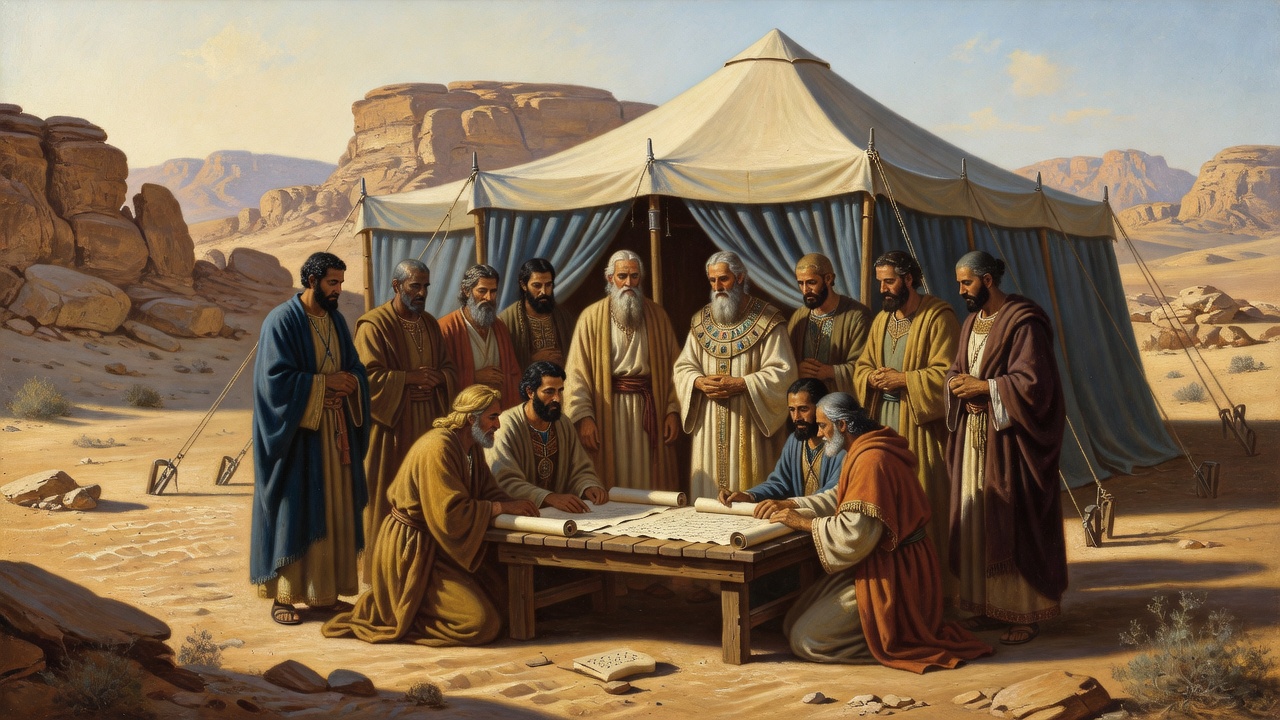
- O censo foi ordenado no Deserto do Sinai no primeiro dia do segundo mês do segundo ano após a saída dos israelitas do Egito. A contagem incluiu todos os homens com vinte anos ou mais aptos para o serviço militar, totalizando 603.550 combatentes.Fontes: o próprio texto bíblico · Sinai
- Moisés e Arão realizaram o registro com a ajuda de doze líderes tribais designados. José foi representado por duas divisões tribais distintas que levavam os nomes de seus filhos, Efraim e Manassés.Fontes: o próprio texto bíblico · Ephraim · Manasseh (son of Joseph)
- A tribo de Levi foi totalmente isenta do recenseamento militar. Em vez disso, os levitas foram encarregados exclusivamente de cuidar, transportar, montar e guardar o tabernáculo do Testemunho e todos os seus utensílios.Fontes: o próprio texto bíblico
Notas escritas com auxílio de IA a partir de fontes abertas (Theographic Bible Metadata, CC BY-SA 4.0; Easton’s Bible Dictionary, domínio público) e revisadas antes de publicar.
Lugares deste capítulo
- Egypt · 30.129, 31.308 · versículo 1
- Wilderness of Sinai · Hoje: about 50 km around Jebel Musa · 28.540, 33.973 · versículos 1, 19
Só aparecem lugares com identificação de alta confiança (90% ou mais segundo as fontes acadêmicas reunidas pelo OpenBible). Mapa da época: DARE (Digital Atlas of the Roman Empire), CC BY 4.0; mapa atual: © colaboradores do OpenStreetMap; lugares: OpenBible.info (CC BY 4.0).
Créditos e licença desta tradução
Targum Onkelos Etheridge
The Targums of Onkelos and Jonathan Ben Uzziel On the Pentateuch With The Fragments of the Jerusalem Targum From the Chaldee by J. W. Etheridge, M.A. First Published 1862-65.
Public Domain
Language: English
2020-12-20
Títulos de seção adaptados da Berean Standard Bible (domínio público); não fazem parte do texto bíblico desta tradução.
Fonte: http://ebible.org/engoke/ · eBible.org