Oseias 4
The Orthodox Jewish Bible · Toque num versículo para ver as referências cruzadas.
God’s Case against His People
1Hear the Devar Hashem, ye Bnei Yisroel:
for Hashem hath a controversy with the yoshvei ha'aretz,
because there is no emes, nor chesed,
nor da'as Elohim in ha'aretz.
2By aloh (false swearing, perjury), and kachash (lying), and ratzo'ach (murder),
and ganov (stealing), and na'of (committing adultery) they break away,
and damim b'damim they follow (bloodshed follows bloodshed).
3Therefore shall ha'aretz mourn,
and every one that dwelleth therein shall waste away languishing,
with the wild beasts of the sadeh, and with the fowls of Shomayim;
yea, the dagim of the yam also shall disappear.
4Yet let no ish bring a point of contention,
nor reprove another;
for thy people are as they
that strive with the kohen.
5Therefore shalt thou stumble and fall in the yom,
and the navi also shall stumble and fall with thee in the lailah,
and I will destroy thy em.
6Ami are destroyed for lack of da'as (knowledge);
because thou hast rejected da'as,
I will also reject thee, that thou shalt be no kohen to Me;
seeing thou hast forgotten the torat Eloheicha,
I will also forget thy banim.
7The more they increased, the more they sinned against Me;
therefore will I change their kavod into kalon (ignominy, shame).
8They feed on the chattat (sin) of Ami,
and they relish their avon (iniquity).
9And there shall be, like Am (People), like kohen;
and I will visit them with punishment for their ways,
and repay them for their doings.
10For they shall eat, and not have enough;
they shall commit whoredom, and shall not increase;
because they have abandoned being shomer to heed Hashem.
11Zenut (prostitution, whoredom) and yayin and tirosh
take away the lev (understanding).
12Ami (My people) consult a piece of wood,
and their staff declareth unto them;
for the ruach zenunim hath caused them to err,
and they have played the zonah, forsaking Eloheihem.
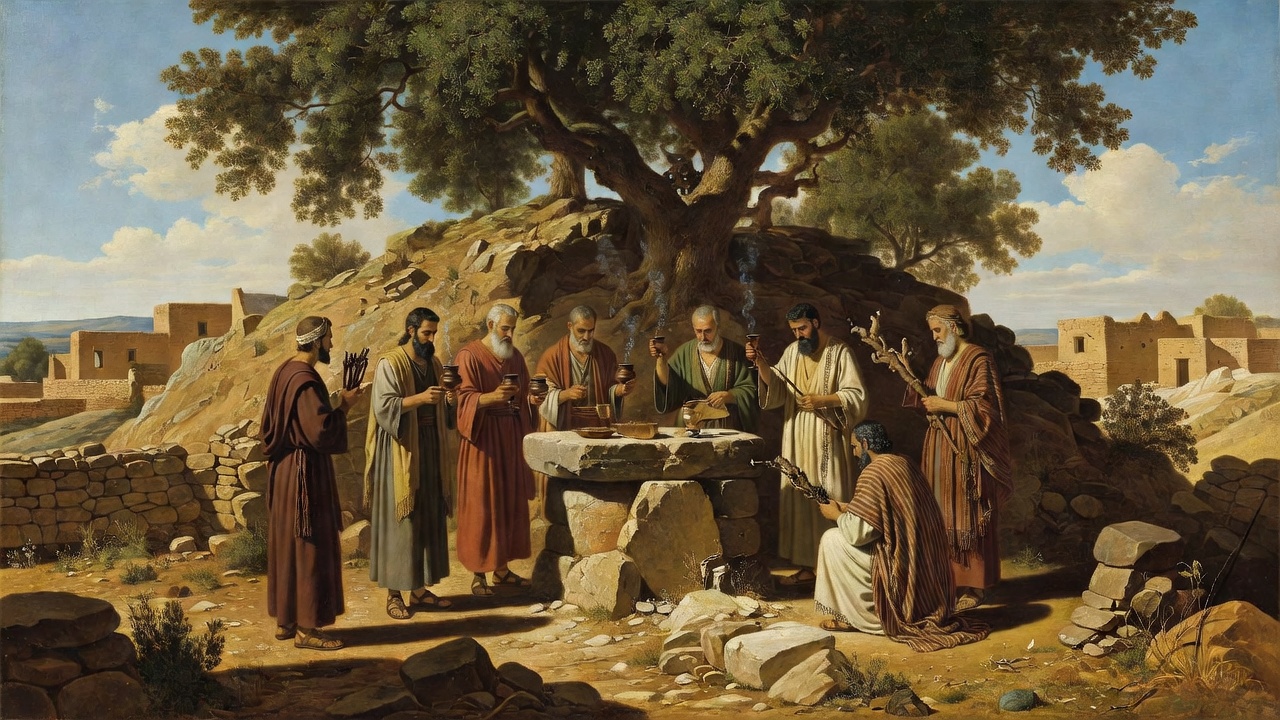
13They sacrifice upon the tops of the mountains,
and burn incense upon the hills,
under oak and poplar and terebinth,
because the shade thereof is tov;
therefore your daughters shall commit whoredom,
and your daughters-in-law shall commit ni'uf (adultery).
14I will not visit punishment upon your daughters when they commit whoredom,
nor your daughters-in-law when they commit ni'uf (adultery);
because the men consort with zonot,
and they sacrifice with kedeshot (temple prostitutes);
thus the Am without binah (understanding) shall come to ruin.
15Though thou, Yisroel, play the zonah,
yet let not Yehudah become guilty;
and come not ye unto Gilgal,
neither go ye up to Beit-Aven (House of Iniquity),
nor swear, Chai Hashem (As the L-rd lives).
16For Yisroel slideth back
like a backsliding parah (stubborn, rebellious cow);
can Hashem now feed them
like a lamb in a wide field?
17Ephrayim is joined to atzabim (idols);
leave him alone.
18When their drink is sour,
they have committed whoredom;
her mogenim (shields, rulers) deeply love kalon (ignominy, shame).
19The wind hath bound her up in her wings,
and their zevakhot (sacrifices) shall bring them bushah (shame).
Você sabia?
A acusação de Deus contra Israel
- Oseias refere-se ao santuário do norte em Betel como Bete-Áven, que significa casa de nada ou casa de ídolos. Esse trocadilho pejorativo contrastava com o significado original de Betel, casa de Deus, destacando a transformação do local em um centro de adoração a bezerros.Fontes: Beth-aven · o próprio texto bíblico
- O capítulo destaca como as práticas religiosas ocorriam no cume dos montes e sob a sombra agradável de carvalhos, álamos e terebintos. As pessoas combinavam esses rituais de sacrifício ao ar livre com adivinhação por meio de ídolos de madeira e varas.Fontes: o próprio texto bíblico
Notas escritas com auxílio de IA a partir de fontes abertas (Theographic Bible Metadata, CC BY-SA 4.0; Easton’s Bible Dictionary, domínio público) e revisadas antes de publicar.
Lugares deste capítulo
- Beth-aven · Hoje: Beitin · 31.923, 35.241 · versículo 15
Só aparecem lugares com identificação de alta confiança (90% ou mais segundo as fontes acadêmicas reunidas pelo OpenBible). Mapa da época: DARE (Digital Atlas of the Roman Empire), CC BY 4.0; mapa atual: © colaboradores do OpenStreetMap; lugares: OpenBible.info (CC BY 4.0).
Créditos e licença desta tradução
The Orthodox Jewish Bible
The Orthodox Jewish Bible - Tanakh and Orthodox Jewish Brit Chadasha - The Holy Bible
copyright © 2002-2011, 2021, 2024 Artists for Israel International
Language: English
Contributor: Artists for Israel International
THE ORTHODOX JEWISH TANAKH
Artists For Israel Intl Inc.
This version also appears with the Orthodox Yiddish Triglot which presents the Hebrew Yiddish script in Latin script and an English word for word translation, available at afii.org/Torah
To donate PayPal.Me
This translation is made available to you under the terms of the
Creative Commons Attribution license 4.0.
You may share and redistribute this Bible translation or extracts from it in any format, provided that:
You include the above copyright and source information.
If you make any changes to the text, you must indicate that you did so in a way that makes it clear that the original licensor is not necessarily endorsing your changes.
Pictures included with Scriptures and other documents on this site are licensed just for use with those Scriptures and documents.
For other uses, please contact the respective copyright owners.
Note that in addition to the rules above, revising and adapting God's Word involves a great responsibility to be true to God's Word. See Revelation 22:18-19.
2026-01-06
Títulos de seção adaptados da Berean Standard Bible (domínio público); não fazem parte do texto bíblico desta tradução.
Fonte: http://ebible.org/engojb/ · eBible.org