Lamentações 1
Berean Standard Bible · Toque num versículo para ver as referências cruzadas.
Sobre este livro
Sobre Lamentações
- No cânon hebraico o livro se chama 'Ekhah, “Como”, a fórmula com que começa um cântico de lamento e a primeira palavra do livro. A Septuaginta adotou o nome traduzido por “Lamentações” (em grego threnoi, equivalente ao hebraico qinoth) para indicar o seu caráter, e na Bíblia hebraica ele está entre os Khethubim.Fontes: Easton: Lamentations, Book of
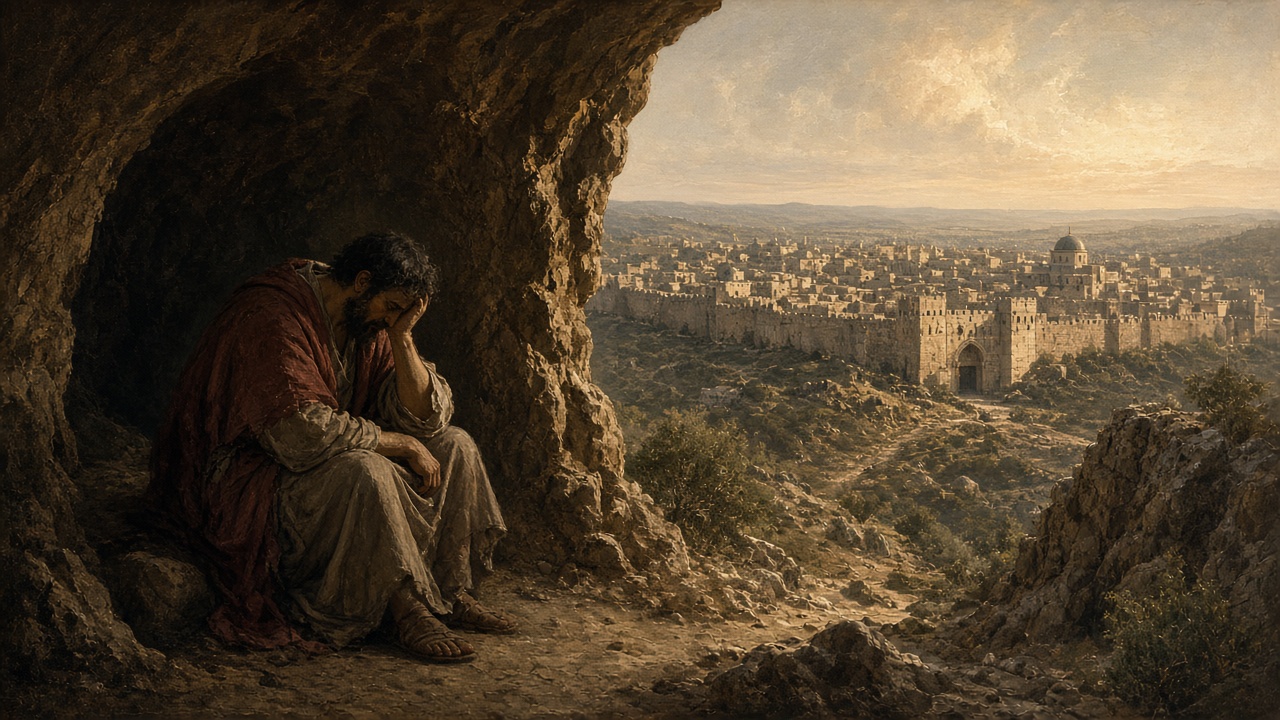
- A Septuaginta e o Targum atribuem Lamentações a Jeremias, e o Easton's Bible Dictionary (1897) segue essa tradição. Segundo a tradição, depois que Nabucodonosor destruiu Jerusalém, ele se retirou para uma caverna fora do portão de Damasco e ali escreveu o livro, lamentando as devastações que os caldeus trouxeram sobre a cidade e a terra santa; o dicionário observa que essa caverna ainda era apontada, e a crença local situava a “gruta de Jeremias” na face de uma colina rochosa no lado ocidental da cidade.Fontes: Easton: Lamentations, Book of
- O livro consiste em cinco poemas separados. Os quatro primeiros são acrósticos, como os Salmos 25, 34, 37 e 119: cada versículo começa com uma letra do alfabeto hebraico, na ordem. Os capítulos 1, 2 e 4 têm, cada um, vinte e dois versículos, o número de letras do alfabeto hebraico; o capítulo 3 tem sessenta e seis versículos, e cada letra inicia três versículos seguidos; o capítulo 5 não é acróstico.Fontes: Easton: Lamentations, Book of
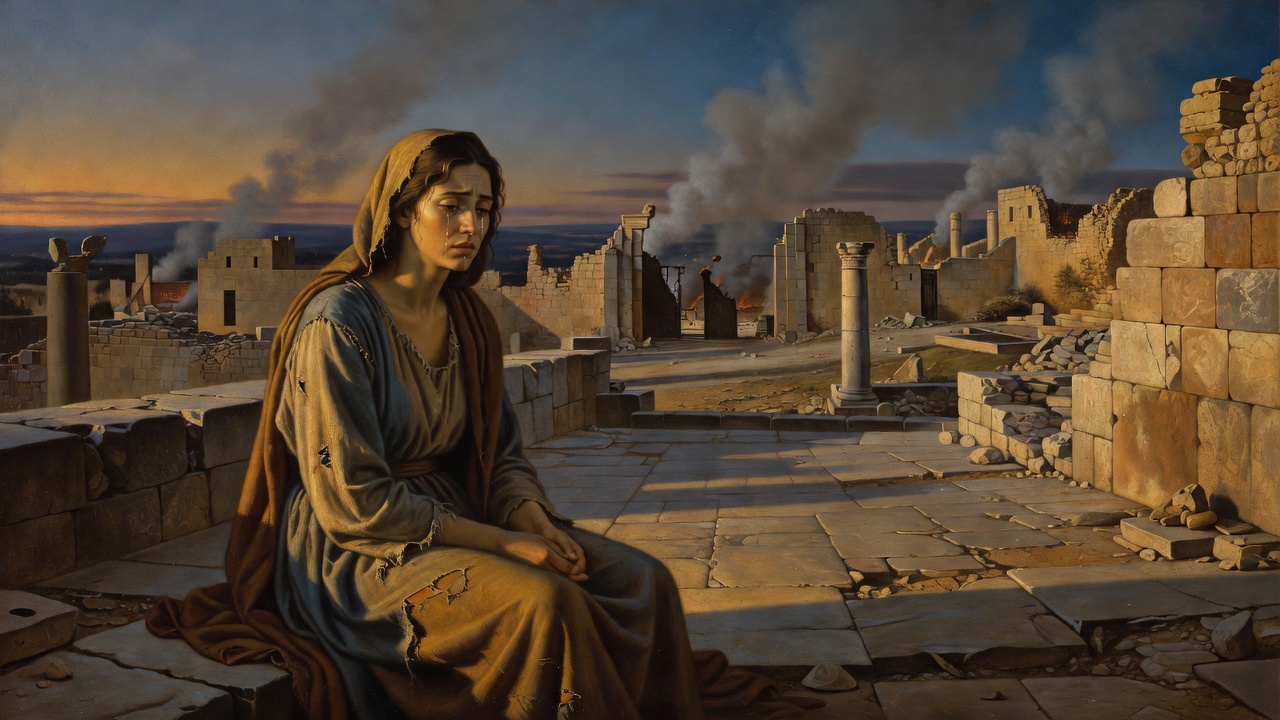
- No capítulo 1, o profeta se detém nas muitas misérias sob as quais a cidade está sentada como uma viúva solitária, chorando amargamente. O capítulo 2 descreve essas misérias em ligação com os pecados nacionais que as causaram; o capítulo 3 fala de esperança para o povo de Deus, de que o castigo seria apenas para o seu bem e de que um dia melhor raiaria; o capítulo 4 lamenta a ruína e a desolação da cidade e do templo e as atribui somente aos pecados do povo; e o capítulo 5 é uma oração para que o opróbrio de Sião — a colina sudeste de Jerusalém, chamada cidade de Davi — seja removido no arrependimento e na recuperação do povo.Fontes: Easton: Lamentations, Book of · Zion
- No lugar do pranto dos judeus em Jerusalém, um trecho do antigo muro do templo de Salomão, Schaff relatou que os judeus se reuniam toda sexta-feira à tarde para chorar a queda da cidade santa, beijando o muro de pedra e regando-o com lágrimas, e que repetiam as Lamentações de Jeremias e salmos apropriados a partir de Bíblias hebraicas e livros de oração já gastos.Fontes: Easton: Lamentations, Book of
Notas escritas com auxílio de IA a partir de fontes abertas (Theographic Bible Metadata, CC BY-SA 4.0; Easton’s Bible Dictionary, domínio público) e revisadas antes de publicar.
How Lonely Lies the City!
1How lonely lies the city,
once so full of people!
She who was great among the nations
has become a widow.
The princess of the provinces
has become a slave.
2She weeps aloud in the night,
with tears upon her cheeks.
Among all her lovers
there is no one to comfort her.
All her friends have betrayed her;
they have become her enemies.
3Judah has gone into exile
under affliction and harsh slavery;
she dwells among the nations
but finds no place to rest.
All her pursuers have overtaken her
in the midst of her distress.
4The roads to Zion mourn,
because no one comes to her appointed feasts.
All her gates are deserted;
her priests groan,
her maidens grieve,
and she herself is bitter with anguish.
5Her foes have become her masters;
her enemies are at ease.
For the LORD has brought her grief
because of her many transgressions.
Her children have gone away
as captives before the enemy.
6All the splendor has departed
from the Daughter of Zion.
Her princes are like deer
that find no pasture;
they lack the strength to flee
in the face of the hunter.
7In the days of her affliction and wandering
Jerusalem remembers all the treasures
that were hers in days of old.
When her people fell into enemy hands
she received no help.
Her enemies looked upon her,
laughing at her downfall.
8Jerusalem has sinned greatly;
therefore she has become an object of scorn.
All who honored her now despise her,
for they have seen her nakedness;
she herself groans and turns away.
9Her uncleanness stains her skirts;
she did not consider her end.
Her downfall was astounding;
there was no one to comfort her.
Look, O LORD, on my affliction,
for the enemy has triumphed!
10The adversary has seized
all her treasures.
For she has seen the nations
enter her sanctuary—
those You had forbidden
to enter Your assembly.
11All her people groan
as they search for bread.
They have traded their treasures for food
to keep themselves alive.
Look, O LORD, and consider,
for I have become despised.
12Is this nothing to you, all you who pass by?
Look around and see!
Is there any sorrow like mine,
which was inflicted on me,
which the LORD made me suffer
on the day of His fierce anger?
13He sent fire from on high,
and it overpowered my bones.
He spread a net for my feet
and turned me back.
He made me desolate,
faint all the day long.
14My transgressions are bound into a yoke,
knit together by His hand;
they are draped over my neck,
and the Lord has broken my strength.
He has delivered me into the hands
of those I cannot withstand.
15The Lord has rejected
all the mighty men in my midst;
He has summoned an army against me
to crush my young warriors.
Like grapes in a winepress,
the Lord has trampled the Virgin Daughter of Judah.
16For these things I weep;
my eyes flow with tears.
For there is no one nearby to comfort me,
no one to revive my soul.
My children are destitute
because the enemy has prevailed.
17Zion stretches out her hands,
but there is no one to comfort her.
The LORD has decreed against Jacob
that his neighbors become his foes.
Jerusalem has become
an unclean thing among them.
18The LORD is righteous,
for I have rebelled against His command.
Listen, all you people;
look upon my suffering.
My young men and maidens
have gone into captivity.
19I called out to my lovers,
but they have betrayed me.
My priests and elders
perished in the city
while they searched for food
to keep themselves alive.
20See, O LORD, how distressed I am!
I am churning within;
my heart is pounding within me,
for I have been most rebellious.
Outside, the sword bereaves;
inside, there is death.
21People have heard my groaning,
but there is no one to comfort me.
All my enemies have heard of my trouble;
they are glad that You have caused it.
May You bring the day You have announced,
so that they may become like me.
22Let all their wickedness come before You,
and deal with them
as You have dealt with me
because of all my transgressions.
For my groans are many,
and my heart is faint.
Você sabia?
A desolação de Jerusalém
- Lamentações retrata Jerusalém — também chamada de Sião, em referência à colina histórica fortificada pelo rei Davi — como uma viúva enlutada, despojada de sua majestade, abandonada por antigos aliados e forçada à dura servidão após a destruição da cidade.Fontes: o próprio texto bíblico · Jerusalem · Zion
- O poema destaca a interrupção da vida religiosa, observando que os caminhos para Sião estão desertos porque os peregrinos já não viajam para as festas fixas, enquanto invasores estrangeiros entraram no santuário sagrado e o saquearam.Fontes: o próprio texto bíblico · Zion
- Durante e após o cerco, a população sobrevivente enfrentou severa escassez de alimentos, levando sacerdotes, líderes e cidadãos comuns a trocar seus tesouros restantes apenas para obter pão e sobreviver.Fontes: o próprio texto bíblico
Notas escritas com auxílio de IA a partir de fontes abertas (Theographic Bible Metadata, CC BY-SA 4.0; Easton’s Bible Dictionary, domínio público) e revisadas antes de publicar.
Lugares deste capítulo
- Jerusalem · 31.777, 35.234 · versículos 1, 5, 7, 8, 17, 18
- Zion · Hoje: Jerusalem · 31.777, 35.234 · versículos 4, 6, 17
Só aparecem lugares com identificação de alta confiança (90% ou mais segundo as fontes acadêmicas reunidas pelo OpenBible). Mapa da época: DARE (Digital Atlas of the Roman Empire), CC BY 4.0; mapa atual: © colaboradores do OpenStreetMap; lugares: OpenBible.info (CC BY 4.0).
Créditos e licença desta tradução
Berean Standard Bible
The Holy Bible in English: Berean Standard Bible
Public Domain
Language: English
Contributor: BSB Publishing, LLC
2026-10-02
Fonte: http://ebible.org/engbsb/ · eBible.org