Ester 1
Berean Standard Bible · Toque num versículo para ver as referências cruzadas.
Sobre este livro
Sobre Ester
- O Easton's Bible Dictionary (1897) situa a libertação registrada em Ester cerca de cinquenta e dois anos depois do Retorno, no ano das batalhas de Plateia e Mícale (479 a.C.). Identifica Assuero, com toda a probabilidade, com Xerxes, filho de Dario Histaspes, que sucedeu a seu pai em 485 a.C. e reinou vinte e um anos (486–465 a.C.). Na Septuaginta, o nome Artaxerxes aparece no lugar de Assuero.Fontes: Easton: Esther · Ahasuerus
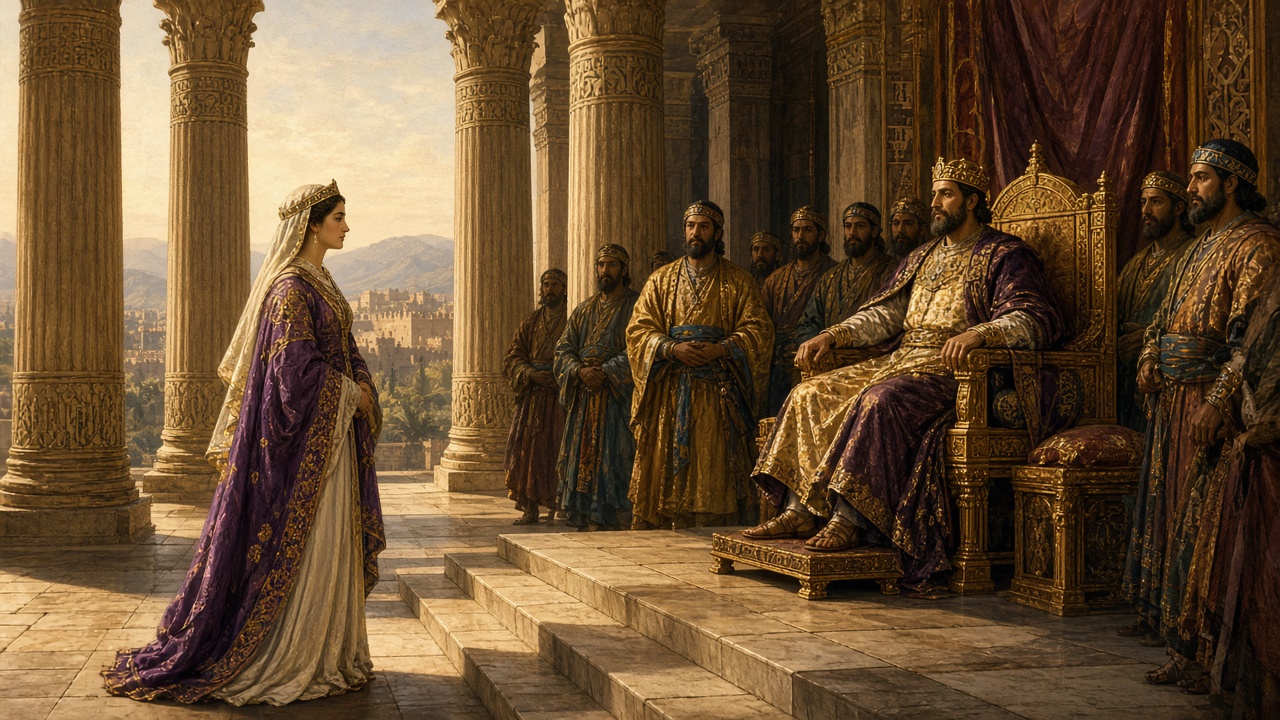
- A história se passa no império persa de Assuero, que governava a Pérsia, a Média e a Babilônia, da Índia até a Etiópia. A maior parte dos acontecimentos ocorre em Susã, no palácio, antiga capital de Elão e hoje as ruínas de Shush, a leste do Tigre. A família de Ester não havia usado a permissão que Ciro deu aos exilados para voltar a Jerusalém; ela morava ali com o primo Mardoqueu, que exercia um cargo na casa do rei.Fontes: Ahasuerus · Susa · Easton: Esther
- Depois que Assuero repudiou Vasti porque ela se recusou a aparecer no salão de banquetes do palácio, escolheu Ester como rainha. Hamã, o agagita, seu vizir, recebeu então poder para matar os judeus em todo o império; a intervenção de Ester evitou essa catástrofe, e Hamã foi enforcado na forca que havia preparado para Mardoqueu. Os judeus instituíram a festa anual de Purim em memória da libertação.Fontes: Easton: Esther · Vashti · Haman
- Ester era uma judia benjamita, filha de Abiail, cujo nome hebraico, Hadassa, significa murta; o nome Ester é uma modificação siro-árabe da palavra persa satarah, que significa estrela. Hamã, filho de Hamedata, é chamado agagita, o que as fontes entendem como indício de descendência da família real dos amalequitas, descritos como os inimigos mais implacáveis dos judeus.Fontes: Easton: Esther · Haman · Hammedatha
Notas escritas com auxílio de IA a partir de fontes abertas (Theographic Bible Metadata, CC BY-SA 4.0; Easton’s Bible Dictionary, domínio público) e revisadas antes de publicar.
Xerxes’ Royal Feast
1This is what happened in the days of Xerxes, who reigned over 127 provinces from India to Cush. 2In those days King Xerxes sat on his royal throne in the citadel of Susa.
3In the third year of his reign, Xerxes held a feast for all his officials and servants. The military leaders of Persia and Media were there, along with the nobles and princes of the provinces. 4And for a full 180 days he displayed the glorious riches of his kingdom and the magnificent splendor of his greatness.
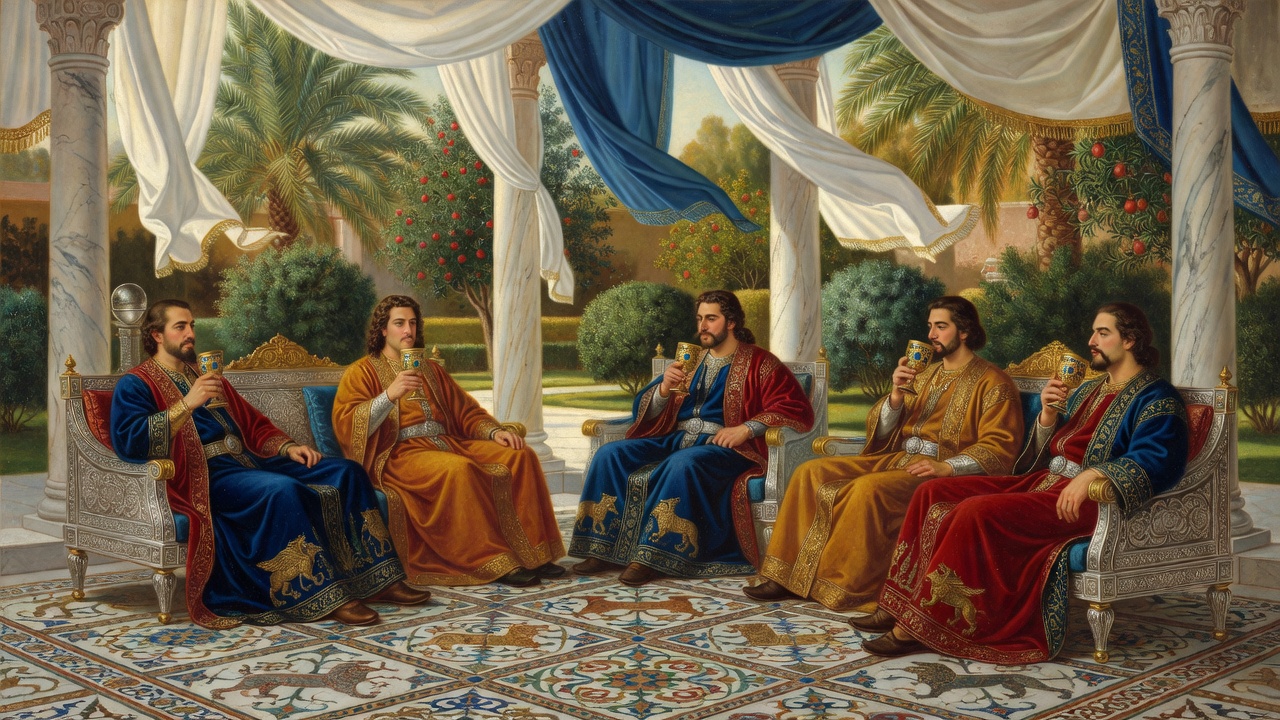
5At the end of this time, in the garden court of the royal palace, the king held a seven-day feast for all the people in the citadel of Susa, from the least to the greatest. 6Hangings of white and blue linen were fastened with cords of fine white and purple material to silver rings on the marble pillars. Gold and silver couches were arranged on a mosaic pavement of porphyry, marble, mother-of-pearl, and other costly stones.
7Beverages were served in an array of goblets of gold, each with a different design, and the royal wine flowed freely, according to the king’s bounty. 8By order of the king, no limit was placed on the drinking, and every official of his household was to serve each man whatever he desired.
Queen Vashti’s Refusal
9Queen Vashti also gave a banquet for the women in the royal palace of King Xerxes.
10On the seventh day, when the king’s heart was merry with wine, he ordered the seven eunuchs who served him—Mehuman, Biztha, Harbona, Bigtha, Abagtha, Zethar, and Carkas— 11to bring Queen Vashti before him, wearing her royal crown, to display her beauty to the people and officials. For she was beautiful to behold.
12Queen Vashti, however, refused to come at the king’s command brought by his eunuchs. And the king became furious, and his anger burned within him.
Queen Vashti Deposed
13Then the king consulted the wise men who knew the times, for it was customary for him to confer with the experts in law and justice. 14His closest advisors were Carshena, Shethar, Admatha, Tarshish, Meres, Marsena, and Memucan, the seven princes of Persia and Media who had personal access to the king and ranked highest in the kingdom.
15“According to law,” he asked, “what should be done with Queen Vashti, since she refused to obey the command of King Xerxes delivered by the eunuchs?”
16And in the presence of the king and his princes, Memucan replied, “Queen Vashti has wronged not only the king, but all the princes and the peoples in all the provinces of King Xerxes. 17For the conduct of the queen will become known to all women, causing them to despise their husbands and say, ‘King Xerxes ordered Queen Vashti to be brought before him, but she did not come.’
18This very day the noble women of Persia and Media who have heard about the queen’s conduct will say the same thing to all the king’s officials, resulting in much contempt and wrath.
19So if it pleases the king, let him issue a royal decree, and let it be recorded in the laws of Persia and Media so that it cannot be repealed, that Vashti shall never again enter the presence of King Xerxes, and that her royal position shall be given to a woman better than she. 20The edict the king issues will be heard throughout his vast kingdom—and so all women, from the least to the greatest, will honor their husbands.”
21The king and his princes were pleased with this counsel; so the king did as Memucan had advised. 22He sent letters to all the provinces of the kingdom, to each province in its own script and to each people in their own language, proclaiming that every man should be master of his own household.
Você sabia?
O banquete do rei e a recusa de Vasti
- O rei Assuero é amplamente identificado como Xerxes I (que reinou entre 486 e 465 a.C.), governando um império de 127 províncias que se estendia da região do Indo até Cuxe (Etiópia). A maior parte dos acontecimentos do Livro de Ester ocorre na cidadela real de Susã.Fontes: Ahasuerus · Susa · India · o próprio texto bíblico
- Em seu terceiro ano de reinado, o rei exibiu o esplendor de seu reino por 180 dias, seguido por um banquete de sete dias no pátio do jardim do palácio em Susã. O suntuoso pátio contava com cortinas de linho fino e divãs de ouro e prata sobre um pavimento de mosaicos de pedras preciosas.Fontes: o próprio texto bíblico · Susa
- Quando a rainha Vasti se recusou a comparecer perante o rei e seus convidados, o conselheiro Memucã sugeriu emitir um decreto irrevogável segundo as leis da Pérsia e da Média para destituí-la. Cartas oficiais com a decisão foram enviadas a todas as províncias do império, cada uma em sua própria escrita e língua.Fontes: Memucan · Vashti · o próprio texto bíblico
Notas escritas com auxílio de IA a partir de fontes abertas (Theographic Bible Metadata, CC BY-SA 4.0; Easton’s Bible Dictionary, domínio público) e revisadas antes de publicar.
Lugares deste capítulo
- Ethiopia · 16.935, 33.751 · versículo 1
- India · 23.994, 67.431 · versículo 1
- Susa · Hoje: Shush · 32.189, 48.258 · versículos 2, 5
- Media · 34.806, 48.516 · versículos 3, 14, 18, 19
- Persia · 34.806, 48.516 · versículos 3, 14, 18, 19
Só aparecem lugares com identificação de alta confiança (90% ou mais segundo as fontes acadêmicas reunidas pelo OpenBible). Mapa da época: DARE (Digital Atlas of the Roman Empire), CC BY 4.0; mapa atual: © colaboradores do OpenStreetMap; lugares: OpenBible.info (CC BY 4.0).
Créditos e licença desta tradução
Berean Standard Bible
The Holy Bible in English: Berean Standard Bible
Public Domain
Language: English
Contributor: BSB Publishing, LLC
2026-10-02
Fonte: http://ebible.org/engbsb/ · eBible.org