Ester 1
Berean Standard Bible · Toca un versículo para ver sus referencias cruzadas.
Acerca de este libro
Acerca de Ester
- El Easton's Bible Dictionary (1897) sitúa la liberación registrada en Ester unos cincuenta y dos años después del Retorno, en el año de las batallas de Platea y Mícala (479 a.C.). Identifica a Asuero, con toda probabilidad, con Jerjes, hijo de Darío Histaspes, quien sucedió a su padre en 485 a.C. y reinó veintiún años (486–465 a.C.). En la Septuaginta el nombre Artajerjes aparece en lugar de Asuero.Fuentes: Easton: Esther · Ahasuerus
- La historia se sitúa en el imperio persa de Asuero, que gobernaba Persia, Media y Babilonia, desde la India hasta Etiopía. La mayor parte de los sucesos ocurre en Susa, en el palacio, antigua capital de Elam y hoy las ruinas de Shush, al este del Tigris. La familia de Ester no había usado el permiso que Ciro dio a los exiliados para regresar a Jerusalén; ella vivía allí con su primo Mardoqueo, que ocupaba un cargo en la casa del rey.Fuentes: Ahasuerus · Susa · Easton: Esther
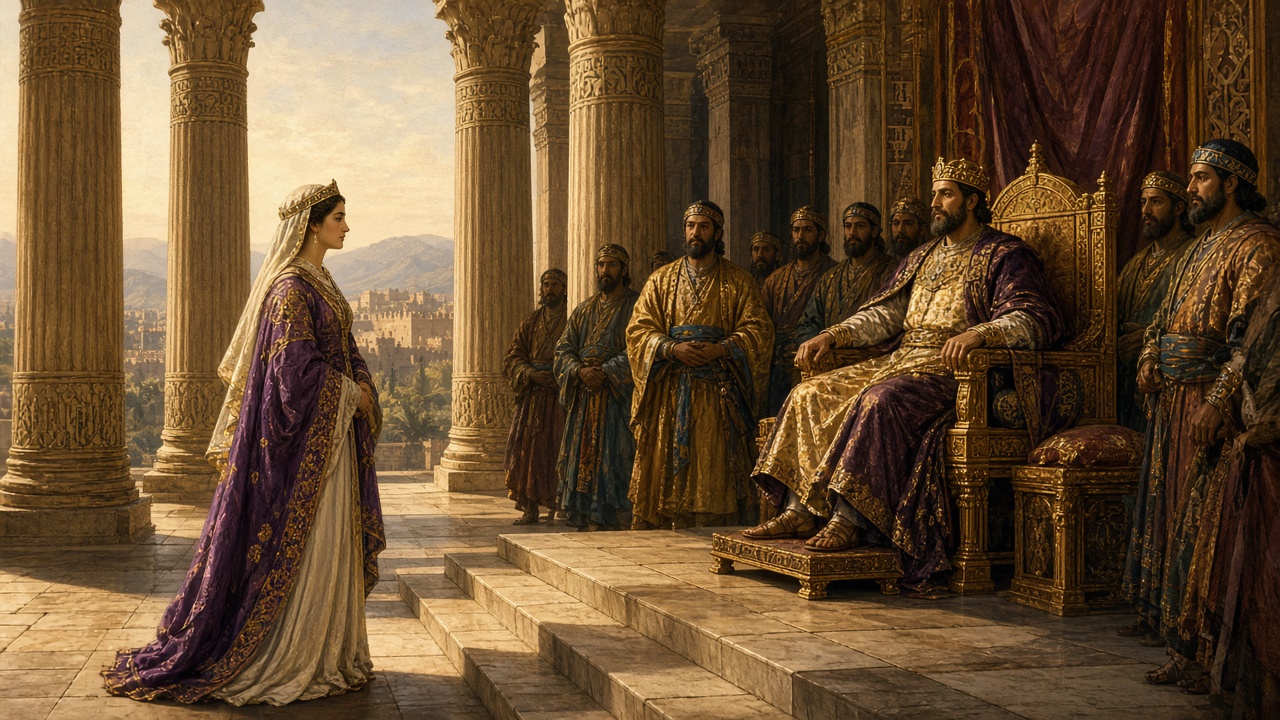
- Después de que Asuero repudió a Vasti porque se negó a presentarse en el salón de banquetes del palacio, eligió a Ester como reina. Amán el agagita, su visir, recibió entonces poder para matar a los judíos en todo el imperio; la intervención de Ester evitó esa catástrofe, y Amán fue colgado en la horca que había preparado para Mardoqueo. Los judíos establecieron la fiesta anual de Purim en memoria de la liberación.Fuentes: Easton: Esther · Vashti · Haman
- Ester era una judía benjamita, hija de Abihail, cuyo nombre hebreo, Hadassa, significa mirto; el nombre Ester es una modificación siroárabe de la palabra persa satarah, que significa estrella. Amán, hijo de Hamedata, es llamado agagita, lo que las fuentes entienden como indicio de descendencia de la familia real de los amalecitas, descritos como los enemigos más encarnizados de los judíos.Fuentes: Easton: Esther · Haman · Hammedatha
Notas escritas con ayuda de IA a partir de fuentes abiertas (Theographic Bible Metadata, CC BY-SA 4.0; Easton’s Bible Dictionary, dominio público) y revisadas antes de publicarse.
Xerxes’ Royal Feast
1This is what happened in the days of Xerxes, who reigned over 127 provinces from India to Cush. 2In those days King Xerxes sat on his royal throne in the citadel of Susa.
3In the third year of his reign, Xerxes held a feast for all his officials and servants. The military leaders of Persia and Media were there, along with the nobles and princes of the provinces. 4And for a full 180 days he displayed the glorious riches of his kingdom and the magnificent splendor of his greatness.
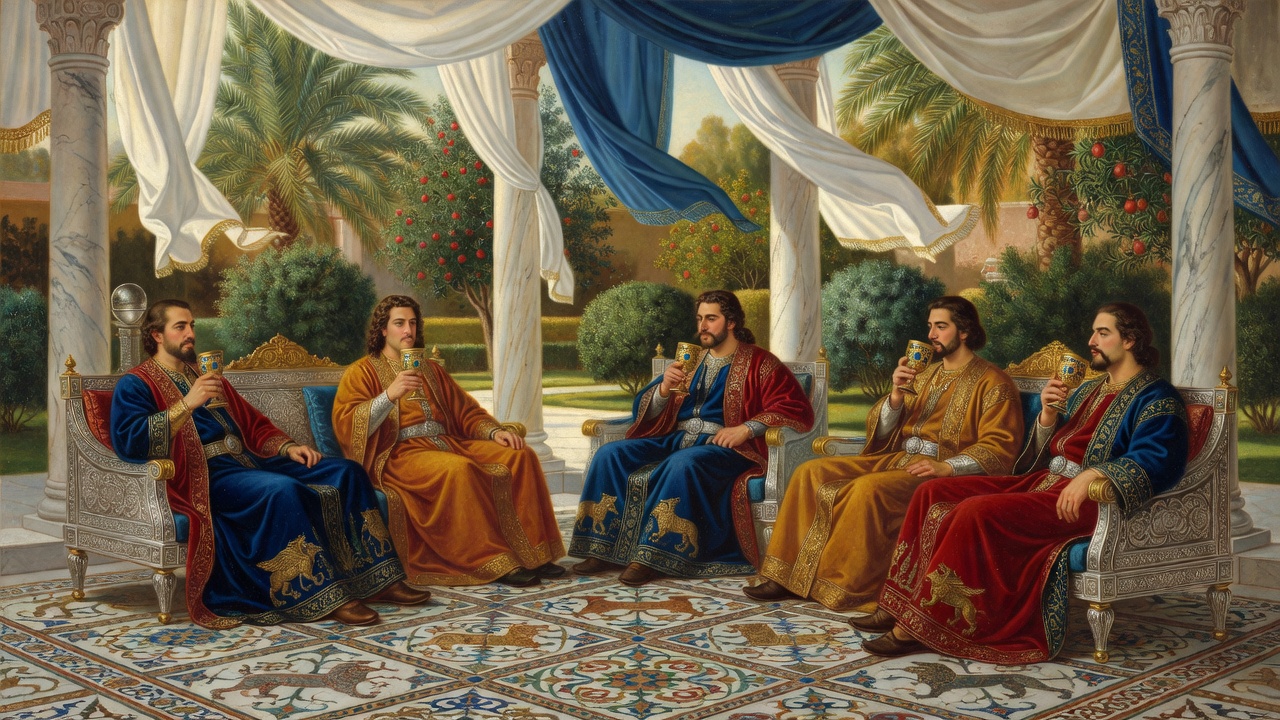
5At the end of this time, in the garden court of the royal palace, the king held a seven-day feast for all the people in the citadel of Susa, from the least to the greatest. 6Hangings of white and blue linen were fastened with cords of fine white and purple material to silver rings on the marble pillars. Gold and silver couches were arranged on a mosaic pavement of porphyry, marble, mother-of-pearl, and other costly stones.
7Beverages were served in an array of goblets of gold, each with a different design, and the royal wine flowed freely, according to the king’s bounty. 8By order of the king, no limit was placed on the drinking, and every official of his household was to serve each man whatever he desired.
Queen Vashti’s Refusal
9Queen Vashti also gave a banquet for the women in the royal palace of King Xerxes.
10On the seventh day, when the king’s heart was merry with wine, he ordered the seven eunuchs who served him—Mehuman, Biztha, Harbona, Bigtha, Abagtha, Zethar, and Carkas— 11to bring Queen Vashti before him, wearing her royal crown, to display her beauty to the people and officials. For she was beautiful to behold.
12Queen Vashti, however, refused to come at the king’s command brought by his eunuchs. And the king became furious, and his anger burned within him.
Queen Vashti Deposed
13Then the king consulted the wise men who knew the times, for it was customary for him to confer with the experts in law and justice. 14His closest advisors were Carshena, Shethar, Admatha, Tarshish, Meres, Marsena, and Memucan, the seven princes of Persia and Media who had personal access to the king and ranked highest in the kingdom.
15“According to law,” he asked, “what should be done with Queen Vashti, since she refused to obey the command of King Xerxes delivered by the eunuchs?”
16And in the presence of the king and his princes, Memucan replied, “Queen Vashti has wronged not only the king, but all the princes and the peoples in all the provinces of King Xerxes. 17For the conduct of the queen will become known to all women, causing them to despise their husbands and say, ‘King Xerxes ordered Queen Vashti to be brought before him, but she did not come.’
18This very day the noble women of Persia and Media who have heard about the queen’s conduct will say the same thing to all the king’s officials, resulting in much contempt and wrath.
19So if it pleases the king, let him issue a royal decree, and let it be recorded in the laws of Persia and Media so that it cannot be repealed, that Vashti shall never again enter the presence of King Xerxes, and that her royal position shall be given to a woman better than she. 20The edict the king issues will be heard throughout his vast kingdom—and so all women, from the least to the greatest, will honor their husbands.”
21The king and his princes were pleased with this counsel; so the king did as Memucan had advised. 22He sent letters to all the provinces of the kingdom, to each province in its own script and to each people in their own language, proclaiming that every man should be master of his own household.
¿Sabías que…?
El banquete del rey y el desafío de Vasti
- El rey Asuero es ampliamente identificado como Jerjes I (quien reinó entre 486 y 465 a. C.), gobernando un imperio de 127 provincias que se extendía desde la región del Indo hasta Cus (Etiopía). La mayor parte de los acontecimientos del libro de Ester tienen lugar en la ciudadela real de Susa.Fuentes: Ahasuerus · Susa · India · el propio texto bíblico
- En su tercer año de reinado, el rey exhibió el esplendor de su reino durante 180 días, seguido de un banquete de siete días en el patio del jardín del palacio en Susa. El suntuoso patio estaba decorado con cortinajes de lino fino y divanes de oro y plata sobre un pavimento de mosaico de piedras costosas.Fuentes: el propio texto bíblico · Susa
- Cuando la reina Vasti se negó a comparecer ante el rey y sus invitados, el consejero Memucán sugirió emitir un decreto irrevocable según las leyes de Persia y de Media para deponerla. Se enviaron cartas oficiales con la decisión a todas las provincias del imperio, redactadas en su propia escritura e idioma.Fuentes: Memucan · Vashti · el propio texto bíblico
Notas escritas con ayuda de IA a partir de fuentes abiertas (Theographic Bible Metadata, CC BY-SA 4.0; Easton’s Bible Dictionary, dominio público) y revisadas antes de publicarse.
Lugares de este capítulo
- Ethiopia · 16.935, 33.751 · versículo 1
- India · 23.994, 67.431 · versículo 1
- Susa · Hoy: Shush · 32.189, 48.258 · versículos 2, 5
- Media · 34.806, 48.516 · versículos 3, 14, 18, 19
- Persia · 34.806, 48.516 · versículos 3, 14, 18, 19
Solo aparecen lugares identificados con alta confianza (90 % o más según las fuentes académicas reunidas por OpenBible). Mapa de la época: DARE (Digital Atlas of the Roman Empire), CC BY 4.0; mapa actual: © colaboradores de OpenStreetMap; lugares: OpenBible.info (CC BY 4.0).
Créditos y licencia de esta traducción
Berean Standard Bible
The Holy Bible in English: Berean Standard Bible
Public Domain
Language: English
Contributor: BSB Publishing, LLC
2026-10-02
Fuente: http://ebible.org/engbsb/ · eBible.org