Eclesiastes 1
Berean Standard Bible · Toque num versículo para ver as referências cruzadas.
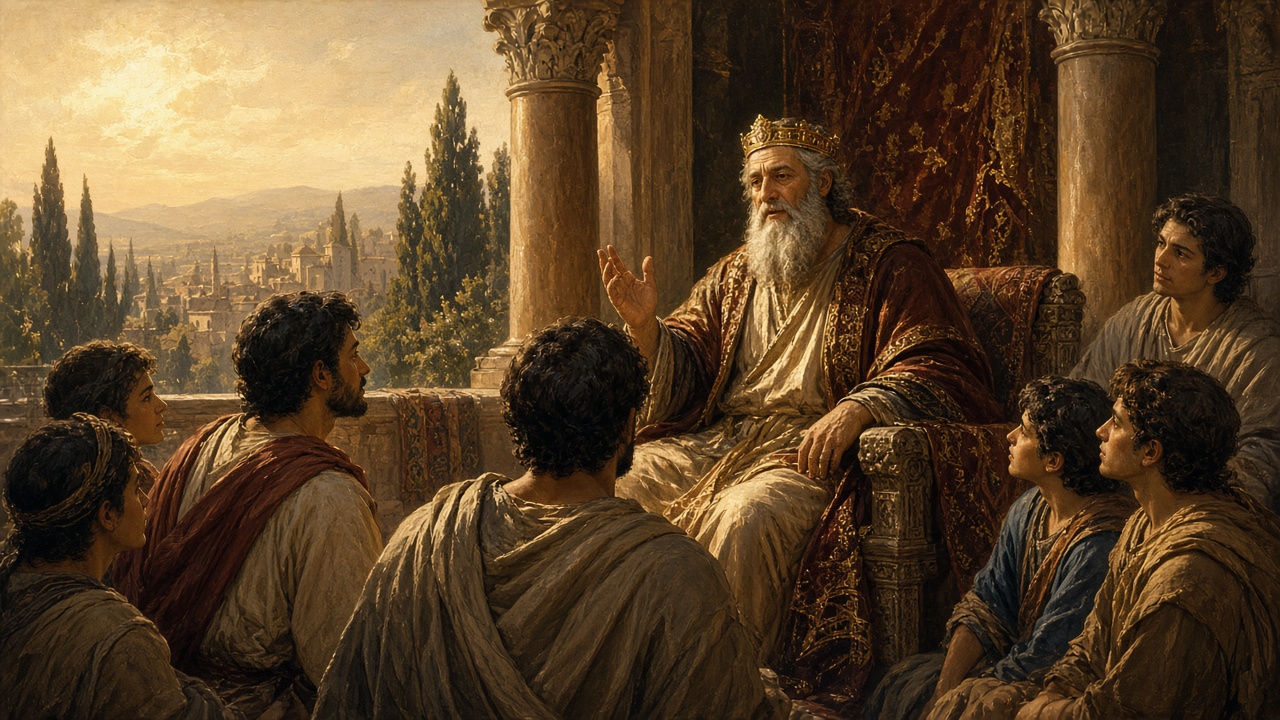
Sobre este livro
Sobre Eclesiastes
- Eclesiastes é a versão grega do hebraico Koheleth, que significa “Pregador”.Fontes: Easton: Ecclesiastes
- A antiga e tradicional visão atribui o livro a Salomão, e o escritor se apresenta implicitamente como Salomão (1:12). Outros datam a obra do Cativeiro.Fontes: Easton: Ecclesiastes
- O livro tem sido chamado de “A confissão do rei Salomão”. Sua nota principal, no capítulo 1, versículo 2, é: “Vaidade de vaidades! diz o Pregador, vaidade de vaidades! tudo é vaidade!” O Easton's Bible Dictionary (1897) explica isso como a ideia de que todos os esforços humanos para encontrar felicidade à parte de Deus ficam sem resultado.Fontes: Easton: Ecclesiastes
- O Easton's Bible Dictionary (1897) descreve o escritor como um homem que cedeu ao egoísmo e à sensualidade, pagou a pena desse pecado com saciedade e cansaço da vida e, ainda assim, sob a disciplina de uma educação divina, aprendeu a lição que Deus queria lhe ensinar. O escritor conclui que o segredo de uma vida verdadeira é que o homem consagre a Deus o vigor da sua juventude.Fontes: Easton: Ecclesiastes
Notas escritas com auxílio de IA a partir de fontes abertas (Theographic Bible Metadata, CC BY-SA 4.0; Easton’s Bible Dictionary, domínio público) e revisadas antes de publicar.
Everything Is Futile
1These are the words of the Teacher, the son of David, king in Jerusalem:
2“Futility of futilities,”
says the Teacher,
“futility of futilities!
Everything is futile!”
3What does a man gain from all his labor,
at which he toils under the sun?
4Generations come and generations go,
but the earth remains forever.
5The sun rises and the sun sets;
it hurries back to where it rises.
6The wind blows southward,
then turns northward;
round and round it swirls,
ever returning on its course.
7All the rivers flow into the sea,
yet the sea is never full;
to the place from which the streams come,
there again they flow.
8All things are wearisome,
more than one can describe;
the eye is not satisfied with seeing,
nor the ear content with hearing.
9What has been will be again,
and what has been done will be done again;
there is nothing new under the sun.
10Is there a case where one can say,
“Look, this is new”?
It has already existed
in the ages before us.
11There is no remembrance
of those who came before,
and those yet to come will not be remembered
by those who follow after.
With Wisdom Comes Sorrow
12I, the Teacher, was king over Israel in Jerusalem. 13And I set my mind to seek and explore by wisdom all that is done under heaven. What a heavy burden God has laid upon the sons of men to occupy them!
14I have seen all the things that are done under the sun, and have found them all to be futile, a pursuit of the wind.
15What is crooked cannot be straightened,
and what is lacking cannot be counted.
16I said to myself, “Behold, I have grown and increased in wisdom beyond all those before me who were over Jerusalem, and my mind has observed a wealth of wisdom and knowledge.”
17So I set my mind to know wisdom and madness and folly; I learned that this, too, is a pursuit of the wind.
18For with much wisdom comes much sorrow,
and as knowledge grows, grief increases.
Você sabia?
A busca por sentido e os ciclos da vida
- O narrador se apresenta como o Mestre (ou Pregador), identificado como filho de Davi e rei em Jerusalém. Na narrativa bíblica, a linhagem do rei Davi governou a partir de Jerusalém, uma cidade montanhosa fortificada associada à realeza e à sabedoria.Fontes: o próprio texto bíblico · David · Jerusalem
- Para ilustrar a natureza repetitiva e cansativa do trabalho humano, o autor aponta para os ciclos contínuos da natureza, como o nascer e o pôr do sol, as correntes de vento e os rios que correm para o mar sem nunca enchê-lo.Fontes: o próprio texto bíblico
- Embora o orador se dedique a examinar todas as obras humanas por meio de profunda sabedoria e conhecimento, ele conclui que adquirir maior entendimento também traz mais tristeza e aflição.Fontes: o próprio texto bíblico
Notas escritas com auxílio de IA a partir de fontes abertas (Theographic Bible Metadata, CC BY-SA 4.0; Easton’s Bible Dictionary, domínio público) e revisadas antes de publicar.
Lugares deste capítulo
Só aparecem lugares com identificação de alta confiança (90% ou mais segundo as fontes acadêmicas reunidas pelo OpenBible). Mapa da época: DARE (Digital Atlas of the Roman Empire), CC BY 4.0; mapa atual: © colaboradores do OpenStreetMap; lugares: OpenBible.info (CC BY 4.0).
Créditos e licença desta tradução
Berean Standard Bible
The Holy Bible in English: Berean Standard Bible
Public Domain
Language: English
Contributor: BSB Publishing, LLC
2026-10-02
Fonte: http://ebible.org/engbsb/ · eBible.org