Eclesiastés 1
Berean Standard Bible · Toca un versículo para ver sus referencias cruzadas.
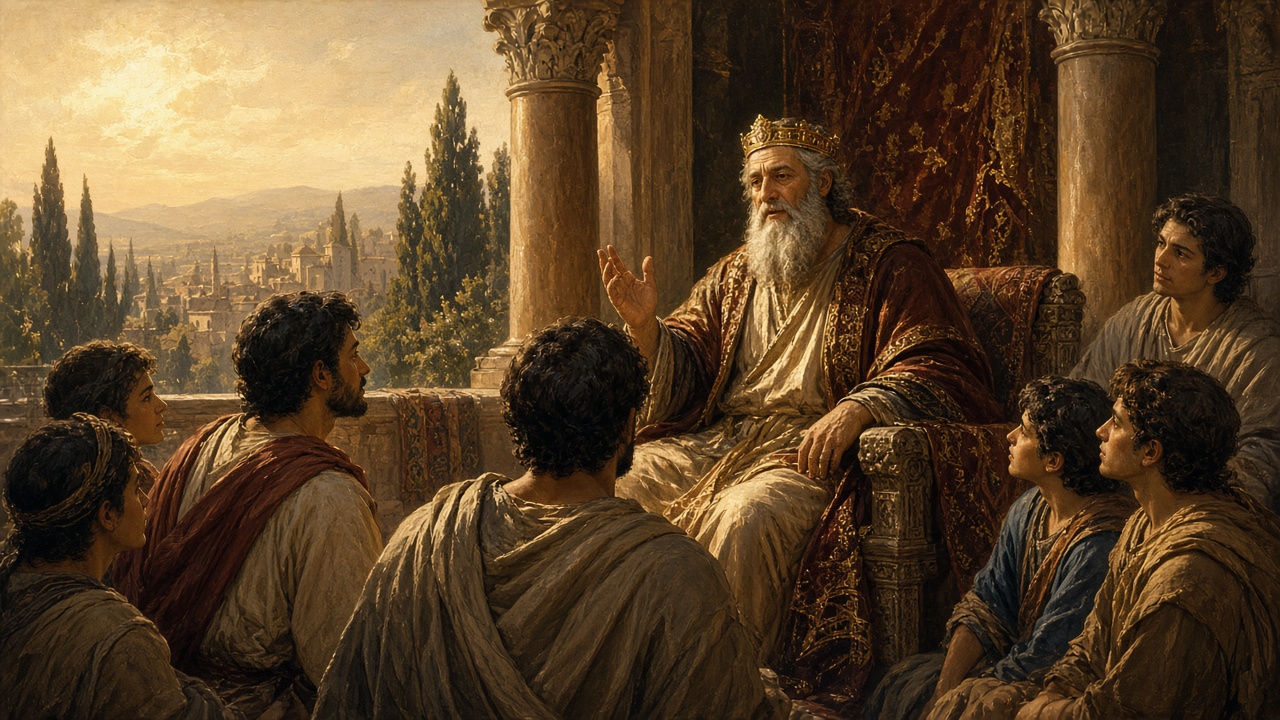
Acerca de este libro
Acerca de Eclesiastés
- Eclesiastés es la versión griega del hebreo Koheleth, que significa “Predicador”.Fuentes: Easton: Ecclesiastes
- La antigua y tradicional opinión atribuye el libro a Salomón, y el escritor se presenta implícitamente como Salomón (1:12). Otros lo fechan en el Cautiverio.Fuentes: Easton: Ecclesiastes
- Se le ha llamado “La confesión del rey Salomón”. Su nota central, en el capítulo 1, versículo 2, es: “¡Vanidad de vanidades!, dice el Predicador, ¡vanidad de vanidades!, todo es vanidad”. El Easton's Bible Dictionary (1897) explica esto en el sentido de que todos los esfuerzos humanos por hallar la felicidad aparte de Dios quedan sin resultado.Fuentes: Easton: Ecclesiastes
- El Easton's Bible Dictionary (1897) describe al escritor como un hombre que cedió al egoísmo y a la sensualidad, pagó la pena de ese pecado con saciedad y cansancio de la vida y, aun así, bajo la disciplina de una educación divina, aprendió la lección que Dios quería enseñarle. El escritor concluye que el secreto de una vida verdadera es que el hombre consagre a Dios el vigor de su juventud.Fuentes: Easton: Ecclesiastes
Notas escritas con ayuda de IA a partir de fuentes abiertas (Theographic Bible Metadata, CC BY-SA 4.0; Easton’s Bible Dictionary, dominio público) y revisadas antes de publicarse.
Everything Is Futile
1These are the words of the Teacher, the son of David, king in Jerusalem:
2“Futility of futilities,”
says the Teacher,
“futility of futilities!
Everything is futile!”
3What does a man gain from all his labor,
at which he toils under the sun?
4Generations come and generations go,
but the earth remains forever.
5The sun rises and the sun sets;
it hurries back to where it rises.
6The wind blows southward,
then turns northward;
round and round it swirls,
ever returning on its course.
7All the rivers flow into the sea,
yet the sea is never full;
to the place from which the streams come,
there again they flow.
8All things are wearisome,
more than one can describe;
the eye is not satisfied with seeing,
nor the ear content with hearing.
9What has been will be again,
and what has been done will be done again;
there is nothing new under the sun.
10Is there a case where one can say,
“Look, this is new”?
It has already existed
in the ages before us.
11There is no remembrance
of those who came before,
and those yet to come will not be remembered
by those who follow after.
With Wisdom Comes Sorrow
12I, the Teacher, was king over Israel in Jerusalem. 13And I set my mind to seek and explore by wisdom all that is done under heaven. What a heavy burden God has laid upon the sons of men to occupy them!
14I have seen all the things that are done under the sun, and have found them all to be futile, a pursuit of the wind.
15What is crooked cannot be straightened,
and what is lacking cannot be counted.
16I said to myself, “Behold, I have grown and increased in wisdom beyond all those before me who were over Jerusalem, and my mind has observed a wealth of wisdom and knowledge.”
17So I set my mind to know wisdom and madness and folly; I learned that this, too, is a pursuit of the wind.
18For with much wisdom comes much sorrow,
and as knowledge grows, grief increases.
¿Sabías que…?
La búsqueda de sentido y los ciclos de la vida
- El orador se presenta a sí mismo como el Maestro (o Predicador), identificado como hijo de David y rey en Jerusalén. En el relato bíblico, el linaje del rey David gobernó desde Jerusalén, una ciudad fortificada en la montaña asociada con la realeza y la sabiduría.Fuentes: el propio texto bíblico · David · Jerusalem
- Para ilustrar la naturaleza repetitiva y agotadora del afán humano, el autor describe los constantes ciclos naturales, como la salida y puesta del sol, el giro de los vientos y los ríos que fluyen hacia el mar sin llenarlo jamás.Fuentes: el propio texto bíblico
- Aunque el orador se propone examinar todas las obras humanas con profunda sabiduría y conocimiento, concluye que adquirir mayor entendimiento también trae consigo más aflicción y dolor.Fuentes: el propio texto bíblico
Notas escritas con ayuda de IA a partir de fuentes abiertas (Theographic Bible Metadata, CC BY-SA 4.0; Easton’s Bible Dictionary, dominio público) y revisadas antes de publicarse.
Lugares de este capítulo
Solo aparecen lugares identificados con alta confianza (90 % o más según las fuentes académicas reunidas por OpenBible). Mapa de la época: DARE (Digital Atlas of the Roman Empire), CC BY 4.0; mapa actual: © colaboradores de OpenStreetMap; lugares: OpenBible.info (CC BY 4.0).
Créditos y licencia de esta traducción
Berean Standard Bible
The Holy Bible in English: Berean Standard Bible
Public Domain
Language: English
Contributor: BSB Publishing, LLC
2026-10-02
Fuente: http://ebible.org/engbsb/ · eBible.org