Levítico 24
Wycliffe Bible · Toque num versículo para ver as referências cruzadas.
The Oil for the Lamps
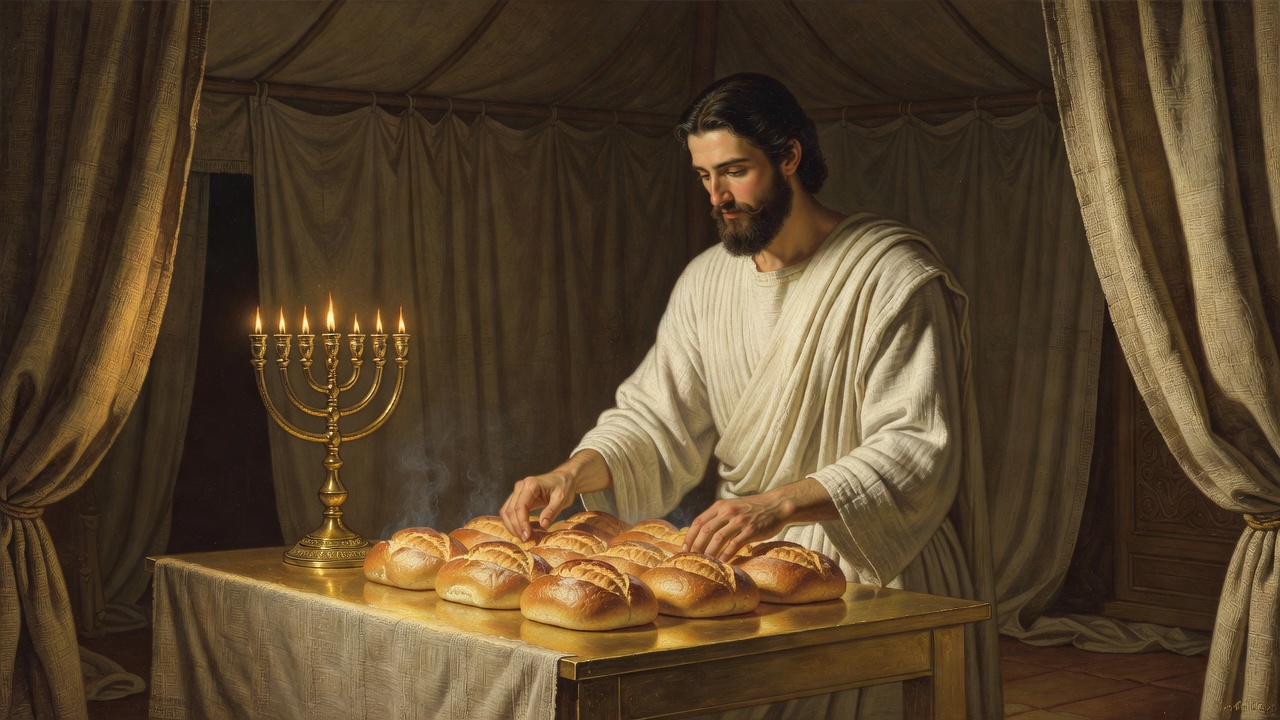
1And the Lord spak to Moises, and seide, Comaunde thou to the sones of Israel, 2that thei brynge to thee oile of olyues, pureste oile, and briyt, to the lanternes to be ordeyned contynueli with out the veil of witnessyng, 3in the tabernacle of boond of pees; and Aaron schal araye tho lanternes fro euentid `til to euentid bifor the Lord, bi religioun and custom euerlastynge in youre generaciouns; 4tho schulen be set euere on a clenneste candilstike in the siyt of the Lord.
The Showbread
5Also thou schalt take wheete flour, and thou schalt bake therof twelue looues, which schulen haue ech bi hem silf twei tenthe partis, 6of whiche thou schalt sette sexe on euer eithir side, on a clenneste boord bifor the Lord; 7and thou schalt sette clereste encense on tho looues, that the looues be in to mynde of offryng of the Lord; 8bi ech sabat tho schulen be chaungid bifor the Lord, and schulen be takun of the sones of Israel bi euerlastynge boond of pees; 9and tho schulen be Aarons and hise sones, that thei ete tho in the hooli place, for it is hooli of the noumbre of hooli thingis, of the sacrifices of the Lord, bi euerlastynge lawe.
Punishment for Blasphemy
10Lo! forsothe the sone of a womman of Israel, whom sche childide of a man Egipcian, yede out among the sones of Israel, and chidde in the castels with a man of Israel, 11and whanne he hadde blasfemyd the name of the Lord, and hadde cursid the Lord, he was brouyt to Moises; forsothe his modir was clepid Salumyth, the douytir of Dabry, of the lynage of Dan; 12and thei senten hym to prisoun, til thei wisten what the Lord comaundide. 13And the Lord spak to Moises and seide, 14Lede out the blasfemere without the castels, and alle men that herden, sette her hondis on his heed, and al the puple stone hym. 15And thou schalt speke to the sones of Israel, A man that cursith his God, 16schal bere his synne, and he that blasfemeth the name of the Lord, die bi deeth; al the multitude of the puple schal oppresse hym with stoonus, whether he that blasfemede the name of the Lord is a citeseyn, whether a pilgrym, die he bi deeth.
An Eye for an Eye
17He that smytith and sleeth a man, die bi deeth; 18he that smytith a beeste, yelde oon in his stide, that is, lijf for lijf. 19If a man yyueth a wem to ony of hise citeseyns, as he dide, so be it don to him; 20he schal restore brekyng for brekyng, iye for iye, tooth for tooth; what maner wem he yaf, he schal be compellid to suffre sich a wem. 21He that smytith werk beeste, yeelde another; he that smytith a man, schal be punyschid. 22Euene doom be among you, whether a pilgrym ethir a citeseyn synneth, for Y am youre Lord God. 23And Moyses spak to the sones of Israel, and thei brouyten forth out of the castels hym that blasfemede, and oppressiden with stoonus. And the sones of Israel diden, as the Lord comaundide to Moyses.
Você sabia?
As Lâmpadas do Tabernáculo, os Pães e a Igualdade na Lei
- Arão recebeu a ordem de cuidar do candelabro de ouro puro fora do véu do Testemunho, desde a tarde até a manhã, usando azeite puro de olivas prensadas trazido pelos israelitas. Ao lado do candelabro ficava uma mesa de ouro puro com doze pães dispostos em duas fileiras com incenso puro, renovados a cada sábado e consumidos exclusivamente por Arão e seus filhos em lugar sagrado.Fontes: o próprio texto bíblico · Aaron
- Uma disputa no acampamento envolveu um homem cuja mãe, Selomite, filha de Dibri, pertencia à tribo de Dã, enquanto seu pai era egípcio. Quando o homem blasfemou o Nome durante uma briga, foi mantido sob custódia até que Moisés recebesse instrução divina sobre como aplicar a justiça.Fontes: o próprio texto bíblico · Shelomith · Dibri · Dan
- A decisão legal apresentada nesta passagem estabeleceu que o mesmo padrão de justiça se aplicava igualmente ao estrangeiro residente e ao natural da terra. Também reiterou o princípio da justiça proporcional, sintetizado como fratura por fratura, olho por olho e dente por dente.Fontes: o próprio texto bíblico
Notas escritas com auxílio de IA a partir de fontes abertas (Theographic Bible Metadata, CC BY-SA 4.0; Easton’s Bible Dictionary, domínio público) e revisadas antes de publicar.
Créditos e licença desta tradução
Wycliffe Bible
This is the Pentateuch and Gospels from The Holy Bible, containing the Old and New Testaments, with the apocryphal books, in the earliest English version made from the latin Vulgate by John Wycliffe and his followers. c.1395
Public Domain
Language: Middle English (English)
Dialect: Middle
Translation by: John Wycliffe
2016-11-08
Títulos de seção adaptados da Berean Standard Bible (domínio público); não fazem parte do texto bíblico desta tradução.
Fonte: http://ebible.org/engWycliffe/ · eBible.org