Gênesis 8
Wycliffe Bible · Toque num versículo para ver as referências cruzadas.
The Ark Rests on Ararat
1Forsothe the Lord hadde mynde of Noe, and of alle lyuynge beestis, and of alle werk beestis, that weren with hym in the schip; and brouyte a wynd on the erthe. 2And watris weren decreessid, and the wellis of the see weren closid, and the wyndowis of heuene weren closid, and reynes of heuene weren ceessid. 3And watrys turneden ayen fro erthe, and yeden ayen, and bigunnen to be decreessid aftir an hundrid and fifti daies. 4And the schip restide in the seuenthe monthe, in the seuene and twentithe dai of the monthe, on the hillis of Armenye. 5And sotheli the watrys yeden and decresiden til to the tenthe monethe, for in the tenthe monethe, in the firste dai of the monethe, the coppis of hillis apperiden.
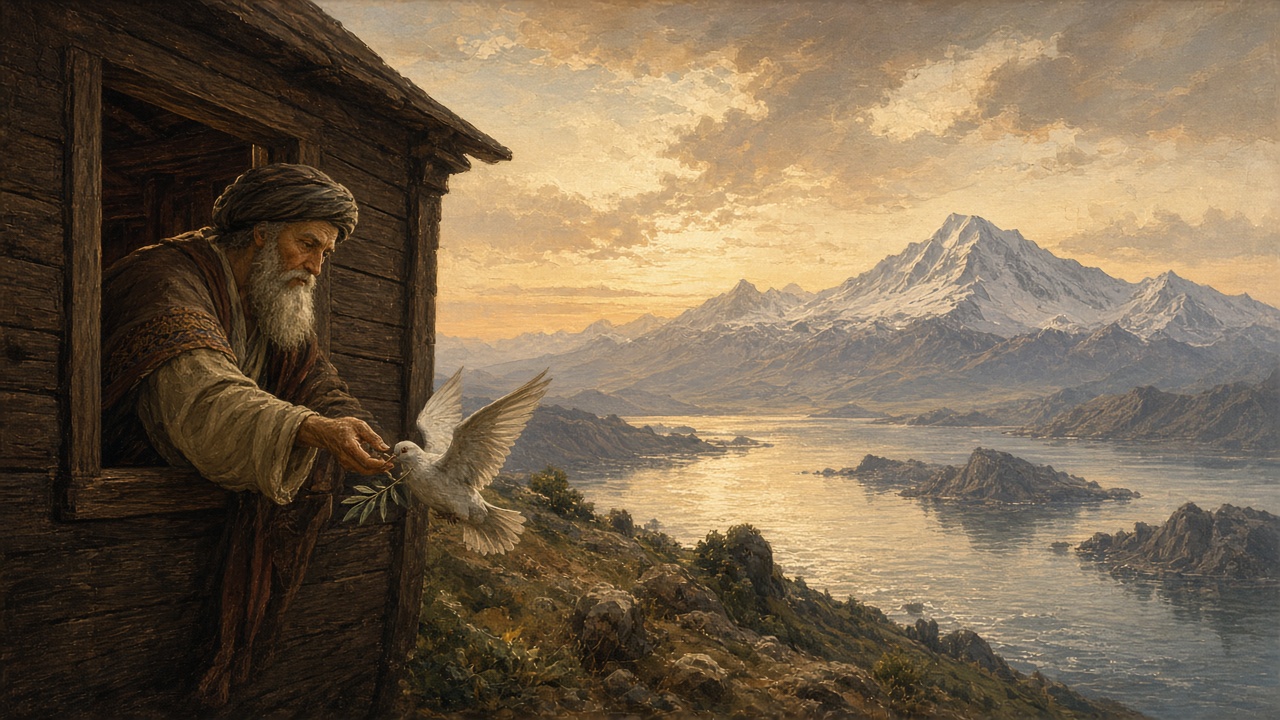
Noah Sends a Raven and a Dove
6And whanne fourti daies weren passid, Noe openyde the wyndow of the schip which he hadde maad, and sente out a crowe, 7which yede out, and turnede not ayen til the watris weren dried on erthe. 8Also Noe sente out a culuer aftir hym, to se if the watris hadden ceessid thanne on the face of erthe; 9and whanne the culuer foond not where hir foot schulde reste, sche turnede ayen to hym in to the schip, for the watris weren on al erthe; and Noe helde forth his hoond, and brouyte the culuer takun in to the schip. 10Sotheli whanne othere seuene daies weren abedun aftirward, eft he leet out a culuer fro the schip; 11and sche cam to hym at euentid, and bare in hir mouth a braunche of olyue tre with greene leeuys. Therfor Noe vndirstood that the watris hadden ceessid on erthe; 12and neuerthelesse he abood seuene othere daies, and sente out a culuer, which turnede `no more ayen to hym.
Exiting the Ark
13Therfor in the sixe hundrid and o yeer of the lijf of Noe, in the firste monethe, in the firste day of the monethe, watris weren decreessid on erthe; and Noe openede the roof of the schip, and bihelde and seiy that the face of the erthe was dried. 14In the secunde monethe, in the seuene and twentithe dai of the monethe, the erthe was maad drie. 15Sotheli the Lord spak to Noe; 16and seide, Go out of the schip, thou, and thi wijf, thi sones, and the wyues of thi sones with thee; 17and lede out with thee alle lyuynge beestis that ben at thee of ech fleisch, as wel in volatilis as in vnresonable beestis, and alle `reptils that crepen on erthe; and entre ye on the erthe, encreesse ye, and be ye multiplied on erthe. 18Therfor Noe yede out, and hise sones, and his wijf, and the wyues of hise sones with hym; 19but also alle lyuynge beestis, and werk beestis, and `reptils that crepen on erthe, bi her kynde, yeden out of the schip.
Noah Builds an Altar
20Forsothe Noe bildide an auter to the Lord, and he took of alle clene beestis and briddis, and offride brent sacrifices on the auter. 21And the Lord sauerede the odour of swetnesse, and seide to hym, Y schal no more curse the erthe for men, for the wit and thouyt of mannus herte ben redi in to yuel fro yong wexynge age; therfor Y schal no more smyte ech lyuynge soule as Y dide; 22in alle the daies of erthe, seed and ripe corn, coold and heete, somer and wyntir, nyyt and dai, shulen not reste.
Você sabia?
As águas recuam
- A arca pousou sobre os montes de Ararate, nome que significa “terra sagrada” ou “terra alta” e designa um país em cujas montanhas a arca parou depois do dilúvio. O Easton's Bible Dictionary (1897) sugere que esses montes eram, provavelmente, a cordilheira curda do sul da Armênia, embora o nome também seja comumente aplicado a um pico alto e quase inacessível que se ergue da planície do Araxes. Em 2 Reis 19:37 e Isaías 37:38, a Authorized Version traduz o nome por “Armênia” e a Revised Version por “terra de Ararate”, enquanto Jeremias 51:27 o usa para a Armênia central ou meridional.Fontes: Ararat · o próprio texto bíblico
- O nome hebraico de Noé significa “descanso”, e neste capítulo a própria arca encontra descanso enquanto as águas baixam. Ele era filho de Lameque e neto de Matusalém, e pai de Sem, Cam e Jafé. O Easton's Bible Dictionary o descreve como o elo entre o mundo antigo e o novo, e como um segundo grande progenitor da família humana.Fontes: Noah · o próprio texto bíblico
- Notas cronológicas situam o Grande Dilúvio em 2347 a.C., com duração de um ano; o recuo das águas em 2346 a.C., ao longo de 220 dias; e a saída da arca em 2346 a.C., num único dia. No próprio capítulo, as águas já baixaram depois de 150 dias e a arca pousa no décimo sétimo dia do sétimo mês; no primeiro dia do primeiro mês do ano seiscentos e um de Noé as águas secaram, e no vigésimo sétimo dia do segundo mês a terra está completamente seca.Fontes: The Great Flood · The flood subsides · Leaving the Ark · o próprio texto bíblico
Notas escritas com auxílio de IA a partir de fontes abertas (Theographic Bible Metadata, CC BY-SA 4.0; Easton’s Bible Dictionary, domínio público) e revisadas antes de publicar.
Lugares deste capítulo
- Ararat · Hoje: Urartu · 39.703, 44.300 · versículo 4
Só aparecem lugares com identificação de alta confiança (90% ou mais segundo as fontes acadêmicas reunidas pelo OpenBible). Mapa da época: DARE (Digital Atlas of the Roman Empire), CC BY 4.0; mapa atual: © colaboradores do OpenStreetMap; lugares: OpenBible.info (CC BY 4.0).
Créditos e licença desta tradução
Wycliffe Bible
This is the Pentateuch and Gospels from The Holy Bible, containing the Old and New Testaments, with the apocryphal books, in the earliest English version made from the latin Vulgate by John Wycliffe and his followers. c.1395
Public Domain
Language: Middle English (English)
Dialect: Middle
Translation by: John Wycliffe
2016-11-08
Títulos de seção adaptados da Berean Standard Bible (domínio público); não fazem parte do texto bíblico desta tradução.
Fonte: http://ebible.org/engWycliffe/ · eBible.org