Êxodo 15
Wycliffe Bible · Toque num versículo para ver as referências cruzadas.
The Song at the Sea
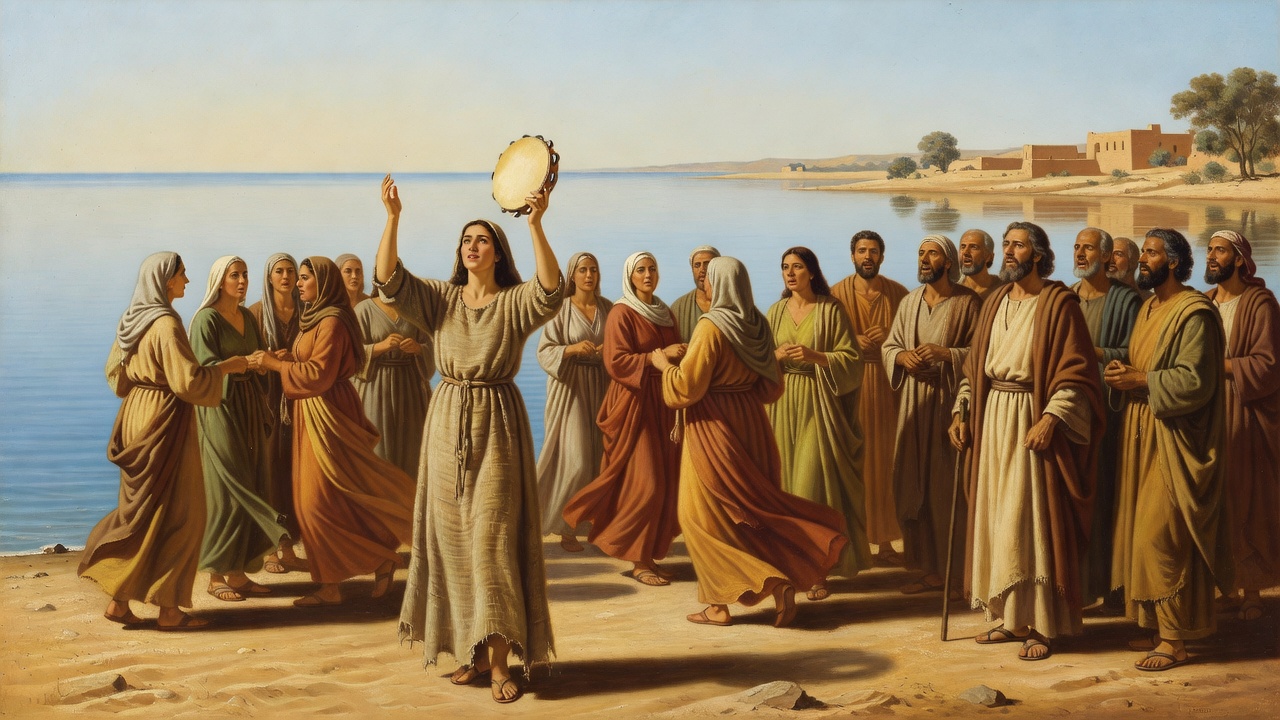
1Thanne Moises song, and the sones of Israel, this song to the Lord; and thei seiden, Synge we to the Lord, for he is magnefied gloriousli; he castide doun the hors and the stiere in to the see. 2My strengthe and my preisyng is the Lord; and he is maad to me in to heelthe. This is my God, and Y schal glorifie hym; the God of my fadir, and Y schal enhaunse hym. 3The Lord is as a man fiyter, his name is Almiyti; 4he castide doun in to the see the charis of Farao, and his oost. Hise chosun princis weren drenchid in the reed see; 5the depe watris hiliden hem; thei yeden doun in to the depthe as a stoon. 6Lord, thi riythond is magnyfied in strengthe; Lord, thi riythond smoot the enemye. 7And in the mychilnesse of thi glorie thou hast put doun alle myn aduersaries; thou sentist thin ire, that deuouride hem as stobil. 8And watris weren gaderid in the spirit of thi woodnesse; flowinge watir stood, depe watris weren gaderid in the middis of the see. 9The enemy seide, Y schal pursue, and Y schal take; Y schal departe spuylis, my soule schal be fillid. I schal drawe out my swerde; myn hond schal sle hem. 10Thi spirit blew, and the see hilide hem; thei weren drenchid as leed in grete watris. 11Lord, who is lijk thee in stronge men, who is lijk thee? thou art greet doere in hoolynesse; ferdful, and preisable, and doynge myraclis. 12Thou heldist forth thin hond, and the erthe deuouride hem; 13thou were ledere in thi merci to thy puple, which thou ayen bouytist; and thou hast bore hym in thi strengthe to thin holi dwellyng place. 14Puplis stieden, and weren wroothe; sorewis helden the dwelleris of Filistiym. 15Thanne the pryncis of Edom weren disturblid; tremblyng held the stronge men of Moab. 16Alle the dwelleris of Canaan `weren starke; inward drede falle on hem, and outward drede in the greetnesse of thin arm. Be thei maad vnmouable as a stoon, til thi puple passe, Lord; til this thi puple passe, whom thou weldidist. 17Thou schalt brynge hem in, and thou schalt plaunte in the hil of thin eritage; in the moost stidefast dwellyng place which thou hast wrouyt, Lord; Lord, thi seyntuarie, which thin hondis made stidefast. 18The Lord schal `regne in to the world and ferthere. 19Forsothe Farao, `a ridere, entride with his charis and knyytis in to the see, and the Lord brouyte the watris of the se on hem; sotheli the sones of Israel yeden bi the drie place, in the myddis of the see. 20Therfore Marie, profetesse, the `sistir of Aaron, took a tympan in hir hond, and alle the wymmen yeden out aftir hyr with tympans and cumpanyes; 21to whiche sche song bifore, and seide, Synge we to the Lord, for he is magnyfied gloriousli; he castide doun in to the see the hors and the stiere of hym.
The Waters of Marah
22Forsothe Moises took Israel fro the reed see, and thei yeden out in to the deseert of Sur, and thei yeden thre daies bi the wildirnesse, and thei founden not watir. 23And thei camen in to Marath, and thei miyten not drynk the watris of Marath, for tho weren bittere; wherfor and he puttide a couenable name to the place, and clepide it Mara, that is, bitternesse. 24And the puple grutchide ayens Moises, and seide, What schulen we drynke? 25And Moises criede to the Lord, which schewide to hym a tre; and whanne he hadde put that tre in to watris, tho weren turned in to swetnesse. There the Lord ordeynede comaundementis and domes to the puple, and there he asayede the puple, 26and seide, If thou schalt here the vois of thi Lord God, and schalt do that that is riytful byfore hym, and schalt obeie to his comaundementis, and schalt kepe alle hise heestis, Y schal not brynge yn on thee al the syknesse, which Y puttide in Egipt, for Y am thi Lord Sauyour.
Você sabia?
O cântico no mar Vermelho
- Miriã, irmã de Moisés e de Arão, é chamada profetisa neste capítulo. Ela tomou a dianteira no cântico de vitória depois que Israel atravessou o mar Vermelho, e as mulheres a seguiram com tamborins e danças.Fontes: Miriam · o próprio texto bíblico
- Do mar Vermelho, Moisés conduziu Israel ao deserto de Sur, uma região árida na fronteira nordeste do Egito que se estendia em direção à Filístia. O nome, que significa muro, provavelmente veio de fortificações egípcias, que iam de Pelúsio a Heliópolis, erguidas para defender essa fronteira das tribos do deserto. Por três dias caminharam sem achar água, e em Mara a água era amarga, por isso o lugar recebeu esse nome.Fontes: Shur · o próprio texto bíblico
- O cântico diz que a angústia tomará a Filístia, a terra dos filisteus; que os chefes de Edom, uma terra montanhosa e agreste no lado leste da Arabá, da cabeceira do golfo de Akabah até a extremidade do mar Morto, ficarão consternados; e que o tremor se apoderará dos líderes de Moabe, a leste do Jordão e do mar Morto e ao sul do Arnom. Diz também que os moradores de Canaã se derreterão.Fontes: o próprio texto bíblico · Philistia · Edom · Moab
Notas escritas com auxílio de IA a partir de fontes abertas (Theographic Bible Metadata, CC BY-SA 4.0; Easton’s Bible Dictionary, domínio público) e revisadas antes de publicar.
Lugares deste capítulo
- Philistia · 31.664, 34.546 · versículo 14
- Canaan · 32.767, 35.333 · versículo 15
- Edom · 30.746, 35.604 · versículo 15
- Moab · Hoje: Moab 1 · 31.181, 35.701 · versículo 15
- Egypt · 30.129, 31.308 · versículo 26
Só aparecem lugares com identificação de alta confiança (90% ou mais segundo as fontes acadêmicas reunidas pelo OpenBible). Mapa da época: DARE (Digital Atlas of the Roman Empire), CC BY 4.0; mapa atual: © colaboradores do OpenStreetMap; lugares: OpenBible.info (CC BY 4.0).
Créditos e licença desta tradução
Wycliffe Bible
This is the Pentateuch and Gospels from The Holy Bible, containing the Old and New Testaments, with the apocryphal books, in the earliest English version made from the latin Vulgate by John Wycliffe and his followers. c.1395
Public Domain
Language: Middle English (English)
Dialect: Middle
Translation by: John Wycliffe
2016-11-08
Títulos de seção adaptados da Berean Standard Bible (domínio público); não fazem parte do texto bíblico desta tradução.
Fonte: http://ebible.org/engWycliffe/ · eBible.org