Jó 39
Douay-Rheims 1899 · Toque num versículo para ver as referências cruzadas.
The LORD Speaks of His Creation
1Knowest thou the time when the wild goats bring forth among the rocks, or hast thou observed the hinds when they fawn? 2Hast thou numbered the months of their conceiving, or knowest thou the time when they bring forth? 3They bow themselves to bring forth young, and they cast them, and send forth roarings. 4Their young are weaned and go to feed: they go forth, and return not to them. 5Who hath sent out the wild ass free, and who hath loosed his bonds? 6To whom I have given a house in the wilderness, and his dwellings in the barren land. 7He scorneth the multitude of the city, he heareth not the cry of the driver. 8He looketh round about the mountains of his pasture, and seeketh for every green thing. 9Shall the rhinoceros be willing to serve thee, or will he stay at thy crib? 10Canst thou bind the rhinoceros with thy thong to plough, or will he break the clods of the valleys after thee? 11Wilt thou have confidence in his great strength, and leave thy labours to him? 12Wilt thou trust him that he will render thee the seed, and gather it into thy barnfloor? 13The wing of the ostrich is like the wings of the heron, and of the hawk. 14When she leaveth her eggs on the earth, thou perhaps wilt warm them in the dust. 15She forgetteth that the foot may tread upon them, or that the beasts of the field may break them. 16She is hardened against her young ones, as though they were not hers, she hath laboured in vain, no fear constraining her. 17For God hath deprived her of wisdom, neither hath he given her understanding. 18When time shall be, she setteth up her wings on high: she scorneth the horse and his rider. 19Wilt thou give strength to the horse, or clothe his neck with neighing? 20Wilt thou lift him up like the locusts? the glory of his nostrils is terror. 21He breaketh up the earth with his hoof, he pranceth boldly, he goeth forward to meet armed men. 22He despiseth fear, he turneth not his back to the sword, 23Above him shall the quiver rattle, the spear and shield shall glitter. 24Chasing and raging he swalloweth the ground, neither doth he make account when the noise of the trumpet soundeth. 25When he heareth the trumpet he saith: Ha, ha: he smelleth the battle afar off, the encouraging of the captains, and the shouting of the army. 26Doth the hawk wax feathered by thy wisdom, spreading her wings to the south? 27Will the eagle mount up at thy command, and make her nest in high places? 28She abideth among the rocks, and dwelleth among cragged flints, and stony hills, where there is no access. 29From thence she looketh for the prey, and her eyes behold afar off. 30Her young ones shall suck up blood: and wheresoever the carcass shall be, she is immediately there. 31And the Lord went on, and said to Job: 32Shall he that contendeth with God be so easily silenced? surely he that reproveth God, ought to answer him. 33Then Job answered the Lord, and said: 34What can I answer, who hath spoken inconsiderately? I will lay my hand upon my mouth. 35One thing I have spoken, which I wish I had not said: and another, to which I will add no more.
Você sabia?
O cuidado e o projeto de Deus no reino animal
- O discurso divino questiona Jó sobre a natureza indomável de animais como o jumento selvagem e o boi selvagem. Ao contrário dos animais domesticados usados na lavoura e na debulha, essas criaturas vivem livres no deserto e nas planícies salgadas, totalmente independentes do controle e do trabalho humano.Fontes: o próprio texto bíblico
- O texto destaca os hábitos peculiares de nidificação da avestruz, descrevendo como ela põe seus ovos na areia sem o cuidado protetor comum a outras aves, mas consegue superar o cavalo em velocidade ao correr em campo aberto.Fontes: o próprio texto bíblico
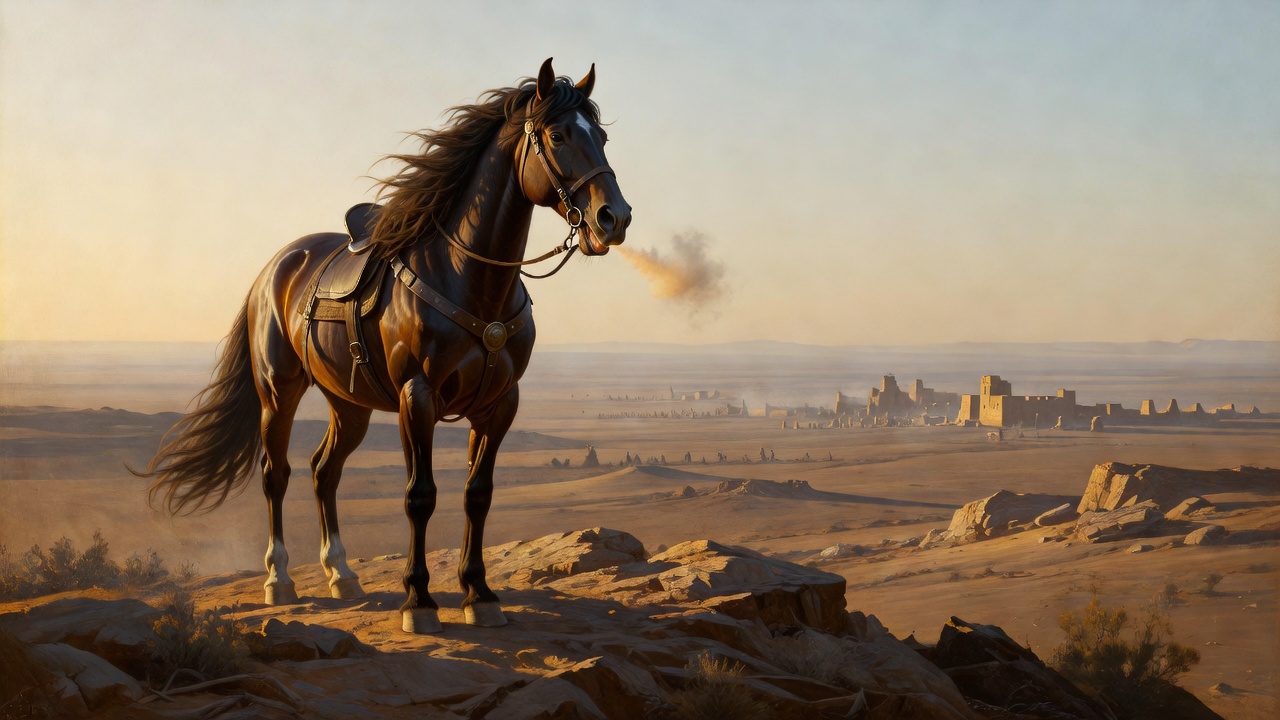
- O vívido retrato do cavalo de batalha descreve seu destemor, força e entusiasmo diante de armas e do toque da trombeta, enfatizando que sua coragem e natureza procedem de Deus, e não do domínio humano.Fontes: o próprio texto bíblico
Notas escritas com auxílio de IA a partir de fontes abertas (Theographic Bible Metadata, CC BY-SA 4.0; Easton’s Bible Dictionary, domínio público) e revisadas antes de publicar.
Créditos e licença desta tradução
Douay-Rheims 1899
The Holy Bible in English, Douay-Rheims American Edition of 1899, translated from the Latin Vulgate
Public Domain
Language: English
Dialect: archaic American
Translation by: English College, Douai
This Public Domain Bible text is brought to you courtesy of eBible.org.
Help support free Bible access at https://eBible.org/give.php .
2022-11-03
Títulos de seção adaptados da Berean Standard Bible (domínio público); não fazem parte do texto bíblico desta tradução.
Fonte: http://ebible.org/engDRA/ · eBible.org