Job 39
Douay-Rheims 1899 · Tap a verse to see its cross-references.
The LORD Speaks of His Creation
1Knowest thou the time when the wild goats bring forth among the rocks, or hast thou observed the hinds when they fawn? 2Hast thou numbered the months of their conceiving, or knowest thou the time when they bring forth? 3They bow themselves to bring forth young, and they cast them, and send forth roarings. 4Their young are weaned and go to feed: they go forth, and return not to them. 5Who hath sent out the wild ass free, and who hath loosed his bonds? 6To whom I have given a house in the wilderness, and his dwellings in the barren land. 7He scorneth the multitude of the city, he heareth not the cry of the driver. 8He looketh round about the mountains of his pasture, and seeketh for every green thing. 9Shall the rhinoceros be willing to serve thee, or will he stay at thy crib? 10Canst thou bind the rhinoceros with thy thong to plough, or will he break the clods of the valleys after thee? 11Wilt thou have confidence in his great strength, and leave thy labours to him? 12Wilt thou trust him that he will render thee the seed, and gather it into thy barnfloor? 13The wing of the ostrich is like the wings of the heron, and of the hawk. 14When she leaveth her eggs on the earth, thou perhaps wilt warm them in the dust. 15She forgetteth that the foot may tread upon them, or that the beasts of the field may break them. 16She is hardened against her young ones, as though they were not hers, she hath laboured in vain, no fear constraining her. 17For God hath deprived her of wisdom, neither hath he given her understanding. 18When time shall be, she setteth up her wings on high: she scorneth the horse and his rider. 19Wilt thou give strength to the horse, or clothe his neck with neighing? 20Wilt thou lift him up like the locusts? the glory of his nostrils is terror. 21He breaketh up the earth with his hoof, he pranceth boldly, he goeth forward to meet armed men. 22He despiseth fear, he turneth not his back to the sword, 23Above him shall the quiver rattle, the spear and shield shall glitter. 24Chasing and raging he swalloweth the ground, neither doth he make account when the noise of the trumpet soundeth. 25When he heareth the trumpet he saith: Ha, ha: he smelleth the battle afar off, the encouraging of the captains, and the shouting of the army. 26Doth the hawk wax feathered by thy wisdom, spreading her wings to the south? 27Will the eagle mount up at thy command, and make her nest in high places? 28She abideth among the rocks, and dwelleth among cragged flints, and stony hills, where there is no access. 29From thence she looketh for the prey, and her eyes behold afar off. 30Her young ones shall suck up blood: and wheresoever the carcass shall be, she is immediately there. 31And the Lord went on, and said to Job: 32Shall he that contendeth with God be so easily silenced? surely he that reproveth God, ought to answer him. 33Then Job answered the Lord, and said: 34What can I answer, who hath spoken inconsiderately? I will lay my hand upon my mouth. 35One thing I have spoken, which I wish I had not said: and another, to which I will add no more.
Did you know?
God’s Care and Design in the Animal Kingdom
- The divine speech challenges Job regarding the untamable nature of wild animals such as the wild donkey and the wild ox. Unlike domesticated livestock used for farming and threshing, these creatures dwell freely in the wilderness and salt flats, completely independent of human authority and labor.Sources: the Bible text itself
- The text highlights the ostrich’s peculiar nesting habits, describing how it leaves its eggs in the sand without the protective care seen in other birds, yet outruns horses when fleeing across open ground.Sources: the Bible text itself
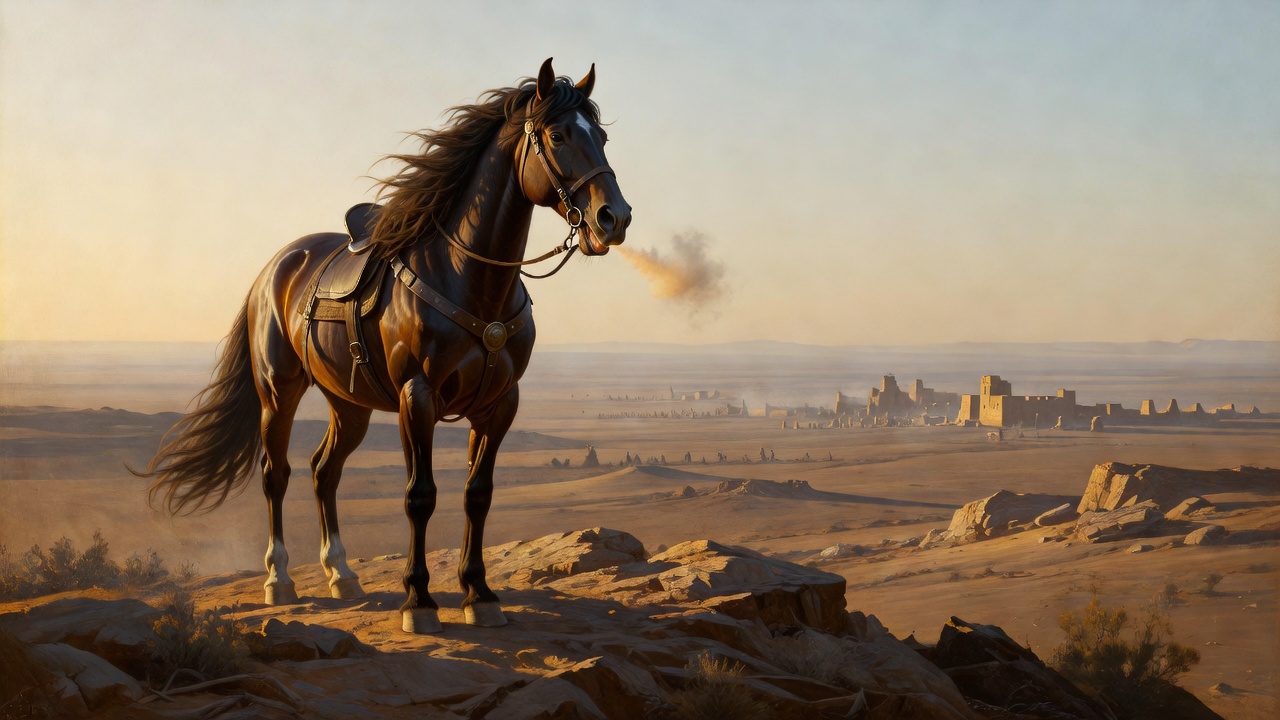
- The vivid portrait of the warhorse describes its fearlessness, strength, and eagerness in the face of weapons and battle horns, emphasizing that its courage and nature are bestowed by God rather than human mastery.Sources: the Bible text itself
Notes written with AI assistance from open sources (Theographic Bible Metadata, CC BY-SA 4.0; Easton’s Bible Dictionary, public domain) and reviewed before publishing.
Credits and license for this translation
Douay-Rheims 1899
The Holy Bible in English, Douay-Rheims American Edition of 1899, translated from the Latin Vulgate
Public Domain
Language: English
Dialect: archaic American
Translation by: English College, Douai
This Public Domain Bible text is brought to you courtesy of eBible.org.
Help support free Bible access at https://eBible.org/give.php .
2022-11-03
Section headings adapted from the Berean Standard Bible (public domain); they are not part of this translation’s text.
Source: http://ebible.org/engDRA/ · eBible.org