Isaías 64
Darby Translation · Toque num versículo para ver as referências cruzadas.
A Prayer for God’s Power
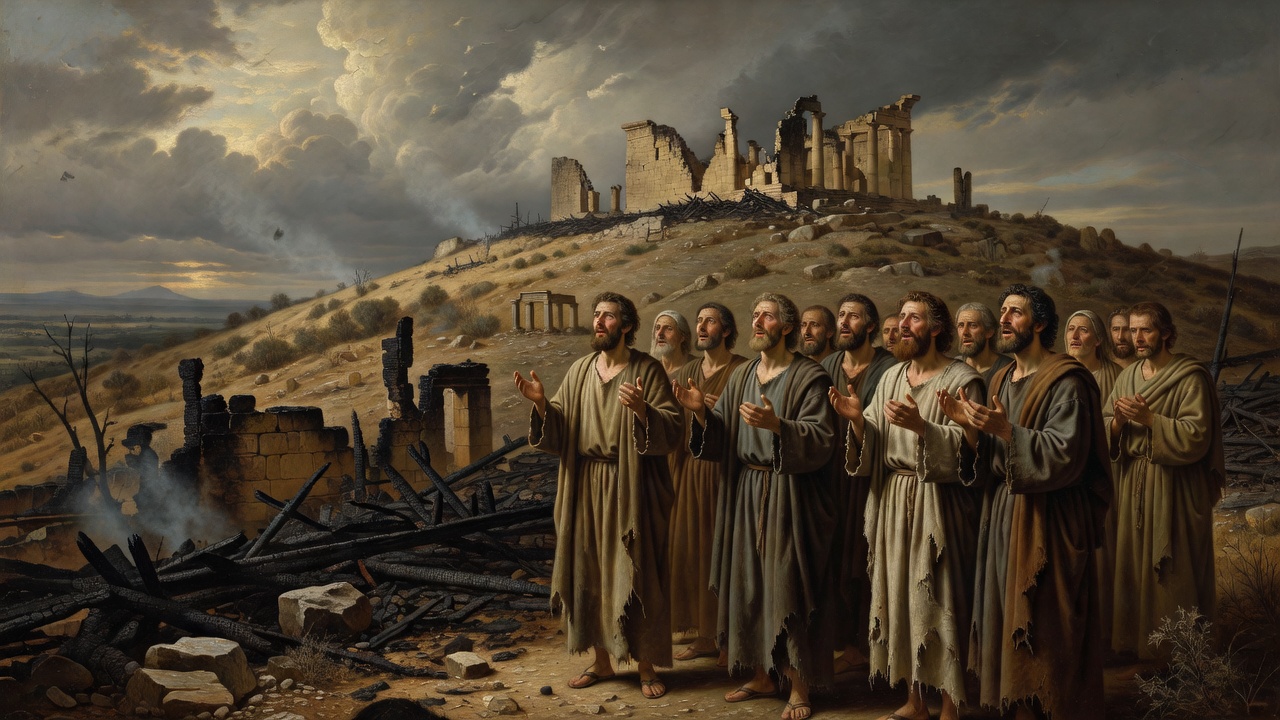
1Oh, that thou wouldest rend the heavens, that thou wouldest come down, — that the mountains might flow down at thy presence, 2— as fire kindleth brushwood, as the fire causeth water to boil, to make thy name known to thine adversaries, that the nations might tremble at thy presence! 3When thou didst terrible things [which] we looked not for, thou camest down, and the mountains flowed down at thy presence. 4Never have [men] heard, nor perceived by the ear, nor hath eye seen a God beside thee, who acteth for him that waiteth for him. 5Thou meetest him that rejoiceth to do righteousness, those that remember thee in thy ways: (behold, thou wast wroth, and we have sinned:) in those is perpetuity, and we shall be saved. 6And we are all become as an unclean [thing], and all our righteousnesses are as filthy rags; and we all fade as a leaf, and our iniquities, like the wind, have carried us away; 7and there is none that calleth upon thy name, that stirreth up himself to take hold of thee; for thou hast hidden thy face from us, and hast caused us to melt away through our iniquities. 8And now, Jehovah, thou art our Father; we are the clay, and thou our potter; and we all are the work of thy hand. 9Be not wroth very sore, O Jehovah, neither remember iniquity for ever. Behold, see, we beseech thee, we are all thy people. 10Thy holy cities are become a wilderness, Zion is a wilderness, Jerusalem a desolation. 11Our holy and our beautiful house, where our fathers praised thee, is burnt up with fire, and all our precious things are laid waste. 12Wilt thou restrain thyself in presence of these things, Jehovah? Wilt thou hold thy peace, and afflict us very sore?
Você sabia?
Uma Oração por Misericórdia em Meio às Ruínas
- A passagem começa com uma súplica para que Deus fenda os céus e desça com poder abalador, como fogo que acende a lenha. Contudo, contrasta esse desejo pela presença de Deus com uma confissão da indignidade humana, comparando as pessoas a folhas secas levadas por suas próprias iniquidades.Fontes: o próprio texto bíblico
- Em Isaías 64, a comunidade apela a Deus como Pai e artesão, declarando: "nós somos o barro, e tu és o nosso oleiro". Essa metáfora enfatiza a fragilidade humana e a total dependência de Deus, suplicando por misericórdia divina apesar do reconhecimento de suas culpas.Fontes: o próprio texto bíblico
- O capítulo lamenta a destruição dos espaços sagrados, descrevendo Sião e Jerusalém como desertos e desolações. O texto lamenta especificamente o incêndio e a ruína do templo sagrado onde as gerações passadas haviam prestado louvor.Fontes: o próprio texto bíblico · Zion · Jerusalem
Notas escritas com auxílio de IA a partir de fontes abertas (Theographic Bible Metadata, CC BY-SA 4.0; Easton’s Bible Dictionary, domínio público) e revisadas antes de publicar.
Lugares deste capítulo
Só aparecem lugares com identificação de alta confiança (90% ou mais segundo as fontes acadêmicas reunidas pelo OpenBible). Mapa da época: DARE (Digital Atlas of the Roman Empire), CC BY 4.0; mapa atual: © colaboradores do OpenStreetMap; lugares: OpenBible.info (CC BY 4.0).
Créditos e licença desta tradução
Darby Translation
The Holy Scriptures, a New Translation from the Original Languages by J. N. Darby
Public Domain
Language: English
Dialect: archaic British
Translation by: J. N. Darby
2019-11-15
Títulos de seção adaptados da Berean Standard Bible (domínio público); não fazem parte do texto bíblico desta tradução.
Fonte: http://ebible.org/engDBY/ · eBible.org